
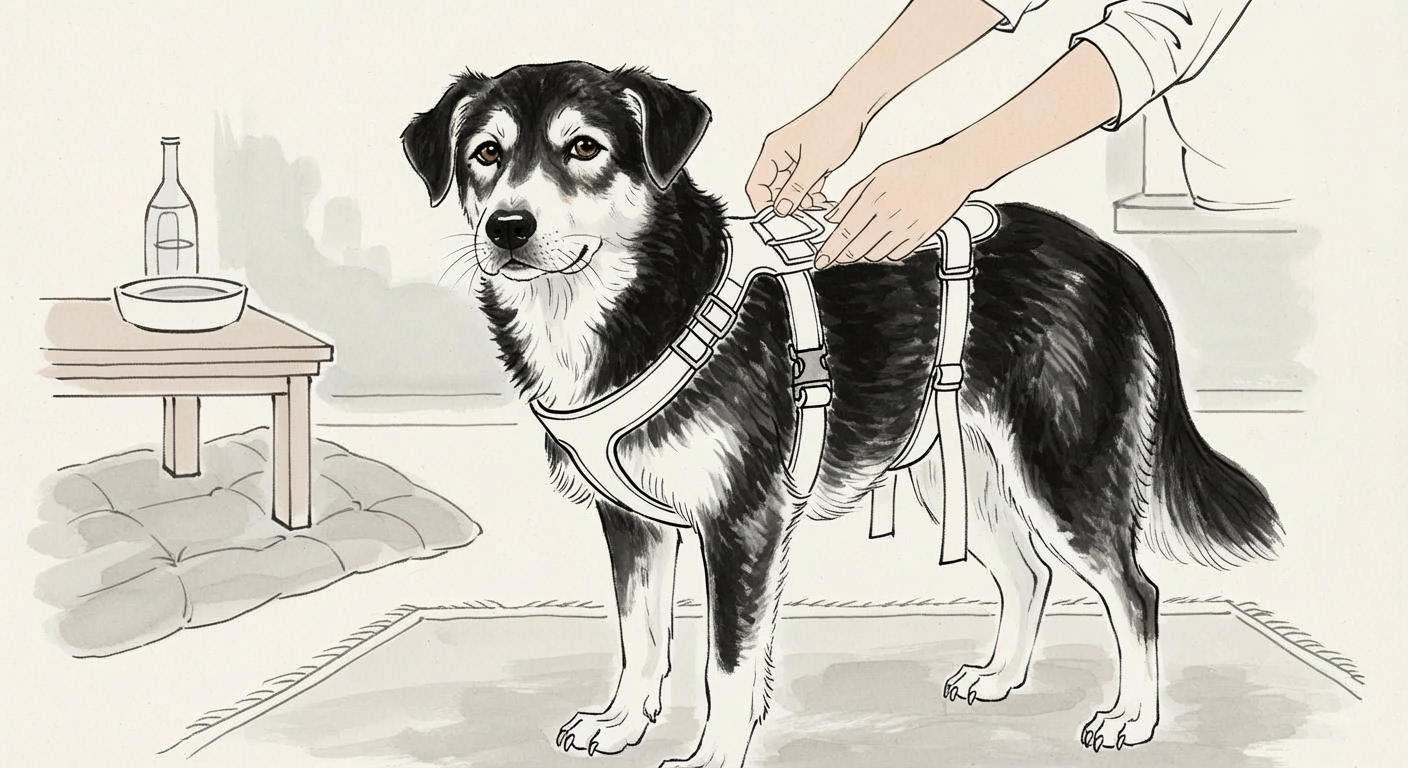
Senior dog mobility support harnesses can help when an older dog struggles to stand, walk short distances, use stairs, or go outside for bathroom breaks. The goal is not to make a weak dog more active than they should be, but to give controlled support during daily movement.
This article explains when a support harness may help at home, where it has limits, and what fit or comfort signs owners should check before using one every day.
Key Takeaways
Senior dogs often face mobility challenges due to arthritis and weakness. Look for signs like limping or difficulty standing to determine if your dog needs support.
Mobility harnesses provide essential support for senior dogs. Choose harnesses with ergonomic designs and adjustable straps for comfort and safety.
Different types of harnesses cater to specific needs. Rear-lift harnesses assist weak back legs, while full-body harnesses offer comprehensive support for recovery.
Regularly check the fit of your dog’s harness. A proper fit prevents rubbing and discomfort, ensuring your dog can move freely and safely.
Consult your veterinarian for personalized recommendations. They can help you select the best harness for your dog’s unique mobility needs.
Mobility Challenges in Senior Dogs

Signs of Mobility Issues
You may notice your senior dogs showing subtle changes in how they move. Common signs include hesitation or refusal to jump onto furniture or into cars. Many dogs struggle to rise from a lying or seated position. Slipping or losing balance on smooth floors often becomes more frequent. Some dogs limp or walk with an uneven gait, while others favor one limb. You might see a decreased interest in walks or playtime. Frequent licking or chewing at joints, vocalizing when moving, and signs of anxiety during routine activities are also important clues.
Hesitation with stairs or jumping
Difficulty standing up
Slipping on floors
Limping or uneven gait
Less interest in walks
Licking or chewing joints
Vocalizing during movement
Anxiety with daily routines
Veterinarians recommend keeping a detailed history of your pet’s health and mobility. You should observe when these signs are most pronounced and note any changes after rest or exercise.
Impact of Arthritis and Weakness
Arthritis and muscle weakness are leading causes of mobility challenges in senior dogs. These conditions cause pain, stiffness, and inflammation in the joints. Dogs may find walking or climbing stairs difficult. Osteoarthritis affects about 20% of adult dogs. This disease leads to inflammation and breakdown of cartilage, which reduces mobility and comfort. While arthritis cannot be cured, proper care helps dogs stay active and maintain their quality of life.
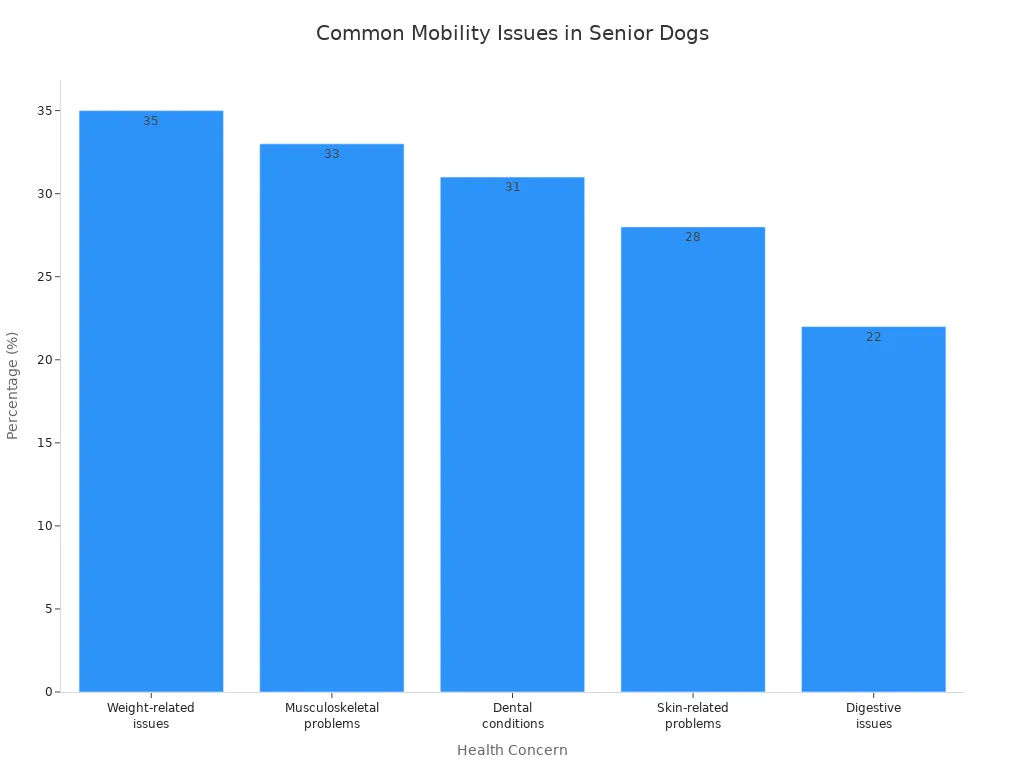
Health Concern | Percentage |
|---|---|
Weight-related issues | 35% |
Musculoskeletal problems | 33% |
Dental conditions | 31% |
Skin-related problems | 28% |
Digestive issues | 22% |
How Harnesses Help
Harnesses offer practical solutions for mobility challenges in senior dogs. You can use a mobility harness for senior dogs to support them during walks or help them stand. Lifting harnesses for old dogs make it easier to guide your pet up stairs or into vehicles. Hip support harnesses and arthritis support harnesses provide gentle assistance, reducing strain on painful joints.Well-designed mobility harnesses allow you to help your dogs move safely and comfortably, especially when they combine padded straps, strong handles, and good weight distribution. These harnesses improve independence and quality of life for both you and your pet.
Tip: Choose harnesses with ergonomic features and adjustable straps for the best fit and support.
Understanding Dog Harnesses for Mobility
What Is a Mobility Harness?
You want your dogs to move with comfort and safety, especially as they age. Mobility harnesses help you support dogs with arthritis, weakness, or recovery needs. Unlike standard dog harnesses, which focus on walking and control, mobility harnesses offer extra features for lifting and stabilizing. You will notice handles placed on the back or sides, allowing you to gently assist your dogs when they stand, climb stairs, or get into vehicles. These harnesses distribute weight across the chest and shoulders, reducing pressure on sore joints. Many owners choose a mobility harness for senior dogs, a lifting harness for old dogs, or a hip support harness to make daily life easier.
Tip: Mobility harnesses often include soft padding and adjustable straps to prevent rubbing and discomfort.
Types of Dog Harnesses
You can select from several types of dog harnesses, each designed for specific mobility needs. Here is a quick overview:
Product | Best For | Key Features |
|---|---|---|
Front-lift harness | Weak front legs | Handle near shoulders, chest support |
Rear-lift harness | Weak back legs | Handle near hips, rear leg support |
Full-body harness | Heavy assistance | Multiple handles, full torso coverage |
Integrated support harness | Rehab & daily living | Adjustable straps, ergonomic design |
Some harnesses, like arthritis support harnesses, focus on joint protection. Others, such as hip support harnesses, help dogs with hind leg weakness. You may find full-body harnesses useful for dogs needing extra help during rehabilitation.
Features That Matter for Daily Use
Harnesses in offer advanced comfort and support. You will see soft edging and wide straps that prevent chafing. Breathable materials keep your dogs cool during walks. Strong, reinforced handles make lifting safer and easier. Many dog harnesses now use waterproof fabrics for easy cleaning. Removable breastplates add comfort for sensitive dogs. Lightweight designs help distribute weight evenly, so your dogs can move freely. Adjustable buckles and reflective webbing improve safety and fit. These features make harnesses ideal for daily use, therapy, and outdoor adventures.
Note: Choose harnesses with non-restrictive fits and maintenance-free materials for long-lasting support.
Common Support Harness Types for Senior Dogs
Choosing the right senior dog mobility support harnesses 2025 can make a big difference in your dog’s comfort and independence. You will find several types of harnesses designed for arthritis, weakness, and daily living. Each style offers unique benefits for geriatric dog walking support, rehabilitation, and everyday activities. Let’s explore the key types and their best use cases.
Lift Harnesses and Orthotic Support for More Assistance
Some senior dogs need more than a basic walking harness. Lift harnesses, rear-support straps, and orthotic-style support products can help when the dog needs assistance standing, balancing, or moving short distances. The right choice depends on which part of the body is weak, how much lifting is needed, and whether the dog can still move comfortably with support.
For retailers, clinics, and product buyers, the safer comparison is fit stability, padding, handle placement, coverage, cleaning, and whether owners can check the dog’s skin after each use.
Feature | Benefit |
|---|---|
Medical-grade materials | Ensures durability and comfort for senior dogs. |
Adjustable design | Tailors to the specific needs of each dog, enhancing fit and support. |
Mobility support | Helps prevent muscle atrophy and encourages exercise. |
Mental health enhancement | Keeps dogs engaged and happy, improving their overall well-being. |
Injury support | Provides extra support during movement and may help reduce the risk of falls or strains. |
Many pet owners report a positive impact on their dog’s quality of life after using well-fitted orthotics and lifting straps. You can work with veterinarians and physical therapists to develop tailored treatment plans for your dog’s mobility needs. These harnesses fit into rehab plans and daily routines, making them a top choice for geriatric dog walking support.
Tip: Always consult your veterinarian before starting a new mobility support harness or orthotic device.
Rear-Lift Harnesses for Weak Back Legs
Rear-lift harnesses help dogs with weak hind limbs move safely and comfortably. You can use these harnesses to assist your dog on stairs, help them get into cars, and support them during outdoor trips. Rear-lift harnesses also work well with dog wheelchairs, providing extra stability and comfort.
Pros of Rear-Lift Harnesses:
Provides support for mobility, helping dogs with weak back legs to move around more easily.
Assists with navigating stairs, making it safer for dogs to climb.
Aids in getting dogs into cars, reducing the strain on their legs.
Facilitates outdoor trips, allowing dogs to relieve themselves comfortably.
Offers additional support when used with dog wheelchairs, enhancing comfort and stability.
Cons of Rear-Lift Harnesses:
Potential discomfort if the harness does not fit properly.
May require adjustment to ensure it is secure and supportive.
You can use a rear-lift harness to stabilize your dog on stairs, help them into vehicles, and provide lifting assistance for outdoor activities. These harnesses are essential for senior dog mobility support harnesses 2025, especially for dogs with arthritis or degenerative conditions.
Assist your dog on the stairs: Rear support harnesses help stabilize dogs with weak back legs, allowing them to navigate stairs safely.
Help pets into the car: A lifting device can assist dogs in jumping into or out of the car, providing necessary support.
Lifting assistance for trips outside: A rear lift harness allows for easy outdoor access, helping dogs relieve themselves while being fully supported.
Additional rear support in a dog wheelchair: Harnesses can provide extra support for dogs using wheelchairs, enhancing their comfort and mobility.
Note: Always check the fit of your harness to prevent rubbing or discomfort.
Full-Body and Hip Support Harnesses for Heavy Assistance
Full-body and hip support harnesses offer comprehensive support for dogs needing heavy assistance. You will find these harnesses especially helpful for dogs recovering from surgery, suffering from arthritis, or living with progressive mobility conditions like degenerative myelopathy.
Feature | Description |
|---|---|
Ergonomic Design | Provides comfort and support for dogs post-surgery, during rehabilitation, and in old age. |
Patented Hip Lift | Engineered to lift from under the dog’s sternum and pelvis, preventing strain on sensitive areas. |
Weight Distribution | Evenly distributes the dog’s weight to avoid back strain for the owner while assisting the dog. |
Joint Protection | Prevents pressure on joints, ligaments, abdomen, and bladder for pain-free support. |
Lifting Mechanism | Utilizes a lifting leash and handles to assist the dog in getting up or moving without pain. |
Full Body Support | Makes it easier to carry the dog without straining the owner. |
Joint Pressure Relief | Helps the dog move around without putting painful pressure on its joints. |
Support harnesses are beneficial for dogs needing assistance with their hind and/or front legs. You can use these harnesses for dogs recovering from surgery, suffering from arthritis, or dealing with balance issues. Full support lifting harnesses are ideal for dogs with degenerative myelopathy or intervertebral disc disease. These harnesses provide complete body support and help distribute weight evenly, reducing strain on both you and your dog.
Support harnesses help dogs with arthritis, post-surgery recovery, and mobility or balance issues.
Full-body harnesses are ideal for dogs with progressive conditions, offering complete support for daily living.
Tip: Choose a harness with ergonomic handles and adjustable straps for maximum comfort and safety.
Everyday Walking Harnesses with Mobility Support
Everyday walking harnesses with mobility support differ from standard walking harnesses. You get more than just control during walks. These harnesses include handles and support features that help you lift and steady your dog. They are perfect for dogs with arthritis, hip dysplasia, or mild weakness. You can use these harnesses for daily walks, short outings, and gentle exercise.
Mobility support harnesses for senior dogs combine comfort and function. You can help your dog stand, walk, or climb stairs without putting pressure on sore joints. These harnesses make geriatric dog walking support easier and safer for both you and your pet.
Note: Look for harnesses with breathable materials and soft padding to prevent chafing during daily use.
Rehab-Style Harnesses for Clinics and Home Therapy
Rehab-style harnesses play a vital role in veterinary clinics and home therapy settings. You can use these harnesses to support dogs during physical therapy, rehabilitation, and recovery from injuries. Rehab-style harnesses protect therapists from injuries and increase patient safety. Dogs feel more confident and less anxious, which encourages active participation in therapy.
Enhanced worker safety: Protects therapists from injuries while assisting patients.
Increased patient safety: Reduces fear of falling, encouraging patient participation in therapy.
Increased productivity: Allows therapists to focus on interventions without safety concerns.
Psychological benefits: Boosts patient confidence and reduces anxiety, promoting active participation.
You can use rehab-style harnesses for arthritis support, post-surgery recovery, and mobility training. These harnesses fit into senior dog mobility support harnesses 2025, offering reliable support for clinics and home care.
Tip: Work with your veterinarian or rehab therapist to choose the best harness for your dog’s therapy plan.
Comparing Budget and Premium Options
You will find both budget and premium senior dog mobility support harnesses 2025 on the market. Budget options offer basic support and are suitable for short-term use or mild mobility issues. Premium harnesses, like GaitGuard, provide advanced features such as medical-grade materials, ergonomic design, and full adjustability. Premium harnesses last longer and offer better comfort, making them ideal for dogs with chronic conditions or those needing daily assistance.
Type of Harness | Budget Option Features | Premium Option Features | Best Use Case |
|---|---|---|---|
Rear-Lift Harness | Basic support, simple handles | Adjustable fit, padded straps | Weak back legs, outdoor trips |
Full-Body Harness | Standard design, limited adjustability | Ergonomic handles, weight distribution | Heavy assistance, post-surgery |
Walking Harness | Basic control, minimal padding | Mobility support, lifting handles, soft padding | Daily walks, mild weakness |
Rehab-Style Harness | Simple straps, basic safety | Enhanced safety, psychological benefits | Clinics, home therapy |
GaitGuard Orthotics | Not available | Medical-grade, adjustable, rehab focus | Arthritis, recovery, joint protection |
You can select a harness based on your dog’s needs, your budget, and your veterinarian’s recommendations. Premium harnesses offer more features and better support for senior dogs with complex mobility challenges.
Note: Always measure your dog carefully and follow fitting instructions to ensure safety and comfort.
Senior dog mobility support harnesses 2025 give you a wide range of choices for arthritis, weakness, and daily living. You can find the right harness for your dog’s unique needs, whether you need geriatric dog walking support, a lifting harness for old dogs, or a hip support harness for rehabilitation.
Fitting and Safety with Dog Harnesses
Measuring and Sizing
Getting the right fit for harnesses is essential for your dog’s comfort and safety. Start by measuring your dog’s neck at the base, where the harness will rest. Wrap a soft tape measure around this area, making sure you can slip two fingers underneath. Next, measure the widest part of your dog’s chest, just behind the front legs. Record your dog’s weight, as this helps you select the correct size. Always check the manufacturer’s sizing chart before you buy.
Measure the neck at the base.
Measure the chest behind the front legs.
Note your dog’s weight.
Compare your measurements to the sizing guide.
Adjust the straps so two fingers fit between the harness and your dog’s body.
Let your dog walk around the house with the harness before heading outside. This step ensures a proper fit and helps your dog get used to the new gear.
Preventing Rubbing and Discomfort
A proper fit prevents rubbing and discomfort. Common mistakes include restricting shoulder movement or using harnesses that shift during walks. Choose designs that allow natural movement and offer multiple adjustment points.
Common Sizing Mistake | Explanation | How to Avoid |
|---|---|---|
Restricting shoulder movement | Limits mobility, causes discomfort | Choose designs allowing movement |
Harness shifts excessively | Risks injury, causes rubbing | Select snug, secure fit |
Minimal adjustability | Hard to fit unique shapes | Opt for multiple adjustment points |
Check sensitive areas like the armpits for signs of irritation. Adjust the straps regularly to maintain a secure and comfortable fit.
Supporting the Spine and Joints
Well-fitted mobility harnesses provide targeted support for dogs with weak legs and fragile joints. These harnesses help your dog rise, walk, and move with less strain on the spine and joints. Look for harnesses that distribute weight evenly and avoid pressure on sensitive areas. A hip support harness or arthritis support harness can make daily activities safer for your dog.
Using Harnesses with Ramps and Braces
You can combine harnesses with ramps, non-slip flooring, and joint braces for extra support. Ramps help your dog avoid jumping, which protects the joints. Non-slip mats prevent slipping on smooth floors. Joint braces work well with harnesses to stabilize weak limbs. Always check that all mobility aids fit together comfortably and do not interfere with each other.
Tip: Consult your veterinarian or rehab therapist to ensure a proper fit and safe use of all mobility aids.
Helping Your Dog Adjust to a Harness
Introducing the Harness
Helping senior dogs adjust to new harnesses takes patience and care. You want your dogs to feel safe and comfortable from the start. Begin by letting your dogs sniff and explore the harnesses before you try to put them on. Praise your dogs and offer treats to create a positive experience. This step helps reduce anxiety and builds trust.
When you first try the harnesses, check the fit carefully. Make sure you can slide two fingers under each strap. The harnesses should feel snug but never tight. A proper fit prevents rubbing and allows your dogs to move naturally. Start with short wear times. Let your dogs wear the harnesses for a few minutes, then gradually increase the time as they get used to the new feeling.
Always watch for signs of discomfort. Check your dogs’ skin, especially where the harnesses touch. Look for redness or pressure sores. If you notice any issues, adjust the fit or try a different style.
Tip: Use the harnesses to help your dogs with gentle activities, such as walking around the house or climbing a few stairs.
Daily Use Tips
Daily routines with harnesses can improve your dogs’ comfort and mobility. Choose harnesses made from soft, breathable materials to prevent irritation. Look for padded straps and smooth edges, especially for sensitive dogs. Adjustable harnesses allow you to fine-tune the fit as your dogs’ needs change.
Check the fit every day. Dogs can gain or lose weight, so straps may need adjustment. Make sure the harnesses stay snug but do not restrict movement. Watch how your dogs react during walks or therapy sessions. If you see any signs of discomfort, stop and check the fit right away.
Ensure the harnesses fit snugly but allow natural movement.
Select harnesses with padding and no rough edges.
Adjust the fit as needed for your dogs’ comfort.
Monitor your dogs’ skin and behavior for any changes.
A well-fitted harness supports your dogs’ independence and keeps them safe during daily activities.
Professional Advice for Vets and Retailers
Recommending the Right Harness
You want to help owners choose harnesses that support their senior dogs’ mobility and comfort. Start by assessing each dog’s needs. Look for signs of arthritis, weakness, or recovery from surgery. You should recommend harnesses that match the dog’s body shape and activity level. Use a simple table to guide your recommendations:
Criteria | Description |
|---|---|
Padding | Softer padding prevents irritation and makes walking easier. |
Adjustability | Straps should be adjustable for a secure yet not too tight fit. |
Easy to use | Older dogs often need harnesses with easy buckles and fastenings. |
Encourage owners to measure their dogs carefully. A proper fit ensures harnesses do not rub or restrict movement. Suggest trying different styles, such as a hip support harness or arthritis support harness, to find the best fit for each dog.
Integrating GaitGuard Gear into Mobility Plans
You can use GaitGuard gear to create a comprehensive mobility plan for senior dogs. Include hip braces and support wraps for extra stability. Teach staff and pet owners how to spot mobility issues early. Combine GaitGuard harnesses with physical therapy and exercise routines tailored to each dog. Provide printed guides or videos to show proper use and fit. Work closely with veterinarians to choose the right harnesses and adjust the plan as the dog’s needs change.
Use hip braces and wraps for stability.
Educate staff and owners about mobility signs.
Combine harnesses with therapy and exercise.
Share guides or videos for correct fit.
Consult with veterinarians for the best approach.
Stocking for 2025
You should plan your stock with care for 2025. Focus on harnesses made from high-quality materials. Offer customization options to ensure a good fit for all dogs. Choose products that meet the growing demand for safe and sustainable solutions. Stay informed about trends in senior dog care and mobility support. Stock a variety of harnesses, including lifting harnesses for old dogs and hip support harnesses, to meet the needs of your clients.
Tip: Regularly review your inventory and update your selection to match the latest advances in harness design and senior dog care.
Senior dog mobility support harnesses 2025 help your dog move safely and comfortably. You support your pet’s independence and reduce the risk of slips or falls. When you combine a mobility harness for senior dogs with regular vet care and gentle exercise, you improve balance, joint comfort, and overall health. Always choose a harness with soft padding and adjustable straps. Consult your veterinarian or rehab specialist to find the best lifting harness for old dogs or hip support harness for your dog’s unique needs.
Maintain your dog’s comfort and safety.
Encourage natural movement and bathroom habits.
Monitor mobility and adjust care as needed.
Choosing the right arthritis support harness and working with professionals ensures your senior dog enjoys a happier, more active life.
FAQ
How do I know if my senior dog needs a mobility harness?
You may notice your dog struggling to stand, walk, or climb stairs. Signs like limping, slipping, or hesitating on walks suggest your dog could benefit from a mobility harness for senior dogs.
Can I leave a lifting harness on my dog all day?
You should remove the lifting harness for old dogs when your dog rests or sleeps. This prevents rubbing and skin irritation. Always check for signs of discomfort during use.
What is the difference between a hip support harness and an arthritis support harness?
A hip support harness helps dogs with weak back legs or hip issues. An arthritis support harness provides gentle, overall joint support. Both improve comfort and mobility, but each targets different needs.
How do I clean my dog’s mobility harness?
Most harnesses use washable materials. Hand wash with mild soap and air dry. Check the manufacturer’s instructions for best results. Clean harnesses keep your dog comfortable and prevent skin problems.
Will my dog accept wearing a new harness?
Many dogs adjust quickly with positive reinforcement. Let your dog sniff the harness first. Use treats and praise. Start with short wear times and increase gradually. Patience helps your dog feel safe and comfortable.
