
Imagine you are walking your dog on a busy sidewalk. Bikes zip past, kids are playing nearby, and cars speed along the street. To keep everyone safe, it is important to follow your city’s 2025 dog leash laws and understand any safety harness rules for dogs. Staying up to date with local leash and harness regulations not only protects your dog but also keeps others around you safe. Because these rules can vary from city to city, always check your local code so you remain compliant with the 2025 dog leash laws in your area.
Note: This article provides general advice. For specific legal questions, please contact your local authorities.
Key Takeaways
Leash laws are important for safety in busy cities. They stop accidents and keep dogs and people safe.
Always look up local rules before you walk your dog. Leash and harness rules are different in each city.
Using a safety harness gives you more control over your dog. It helps stop injuries and keeps your dog from running away.
Keep your dog on a leash that is six feet or shorter in public places. This helps you control your dog and follow city rules.
Clean up after your dog every time. It keeps public places clean and helps you avoid getting fined.
Teach your dog to listen to simple commands. This can help stop barking and jumping in busy places.
Watch out for risky places like busy streets and parks. Use a harness for more control in these spots.
Stay updated about leash laws and safety harness rules. Check city websites and local news often.
Why Leash Laws Matter in Cities
Public Safety in Crowded Urban Areas
Walking your dog in a city means sharing space with lots of people. Leash laws help keep everyone safe. If your dog is not leashed, it can bother others. You might see bikes, strollers, and kids moving fast. Using a leash helps you control your dog. This stops problems before they start.
Here is a table showing common public safety risks when dogs are off-leash in crowded urban areas:
Safety Risk | Description |
|---|---|
Dog Fouling | Dog waste left in public spaces |
Zoonotic Infections | Diseases that can spread from dogs to people |
Dog Bites | Dogs biting people or other animals |
Aggressive Behavior | Dogs acting aggressively in busy places |
Noxious Smells | Bad odors from dog waste |
Noise | Barking and loud sounds causing disturbances |
Unruliness | Dogs behaving unpredictably |
Theft | Dogs being stolen in crowded environments |
Leash laws help you avoid these dangers. You keep your dog close and safe. Others around you stay safe too.
Protecting Dogs, People, and Property
City leash laws protect more than just people. They also keep your dog and property safe. Following 2025 dog leash laws lowers the chance of your dog running away. It also helps stop damage to gardens, cars, and other things.
A leash keeps your dog away from traffic and danger.
You follow the rules, so everyone feels safer.
Leash laws help stop injuries to dogs and people.
Here is a table that shows how leash laws help:
Evidence | Description |
|---|---|
Leash laws benefit dogs, people, and the community | They prevent accidents and keep everyone safe. |
Keeping dogs leashed prevents them from running away | This lowers the risk of injury and property damage. |
Compliance with leash laws can reduce dog bite incidents | Fewer dog-related injuries happen when you follow the rules. |
Preventing Accidents and Conflicts
Accidents can happen fast in a city. If your dog is not leashed, it might run into the street. It could jump on someone too. Leash laws help you stop these problems. You keep your dog close and avoid surprises.
Leash laws help stop dog bites, which worry people in public.
Accidents with unleashed dogs can scare or hurt people.
More rules and teaching help lower problems in busy places.
Following city leash laws makes walking your dog safer for everyone. Always check your local rules because they can change. Using a leash and following safety harness requirements protects your dog and your community.
Reducing Noise, Mess, and Nuisance
When you walk your dog in the city, you help keep the environment clean and peaceful. Following 2025 dog leash laws does more than keep your dog safe. You also reduce noise, mess, and nuisance for everyone around you. City leash law compliance means you take responsibility for your pet’s actions in public spaces.
Dogs can bark, jump, or run when they feel excited or scared. If you use a leash and a safety harness, you control these behaviors. You stop your dog from barking at strangers or chasing after bikes. This makes sidewalks and parks quieter and more pleasant for everyone.
Dog waste is another big concern in urban areas. If you keep your dog close, you notice when it needs to go. You can clean up right away. This keeps parks, sidewalks, and lawns clean. People appreciate a tidy neighborhood. You also help prevent bad smells and health risks.
Here are some ways you can reduce noise, mess, and nuisance during urban dog walking:
Always keep your dog on a leash and use a harness for better control.
Carry waste bags and clean up after your dog every time.
Teach your dog basic commands like “quiet” and “leave it.”
Avoid walking your dog near playgrounds or busy entrances.
Watch for signs that your dog feels anxious or excited.
Tip: Many cities have fines for not cleaning up after your dog. Check your local regulations to avoid penalties and keep your community happy.
You can see how leash laws and safety harness requirements for dogs in cities help everyone:
Problem | How Leash Laws Help |
|---|---|
Barking | You control your dog’s voice level |
Jumping | You prevent unwanted contact |
Running Loose | You keep your dog nearby |
Waste Left Behind | You clean up quickly |
Chasing | You stop your dog from running |
Urban dog walking safety depends on your actions. When you follow city leash law compliance, you show respect for your neighbors and the environment. You help make your city a better place for people and pets.
Remember, leash laws and safety harness requirements for dogs in cities can change. Always check your local rules before heading out. By staying informed and prepared, you keep your walks safe, clean, and enjoyable for everyone.
Understanding 2025 Dog Leash Laws and Urban Safety Harness Rules
Basic Leash Rules in Most Cities
You need to know the basic leash rules before you walk your dog in the city. Most cities do not have statewide leash laws. Local ordinances set the rules for each area. Some states, like Michigan, North Carolina, Kentucky, and Pennsylvania, have strong leash control laws. In most places, you must keep your dog leashed in public spaces. You are responsible for following your city’s rules.
Here is a table that shows how leash laws work in different states:
Key Points | Description |
|---|---|
Statewide leash law everywhere | No |
States with strongest leash control | Michigan (general), North Carolina and Kentucky (nighttime), Pennsylvania (quarantine) |
Real-world rule | Your local ordinance dictates your responsibility |
You should always check your local regulations. City leash law compliance helps you avoid fines and keeps your dog safe. Clear 2025 dog leash laws and urban safety harness guidelines make it easier for you to follow the rules and protect your pet.
Leash Length Limits and “Under Control” Standards
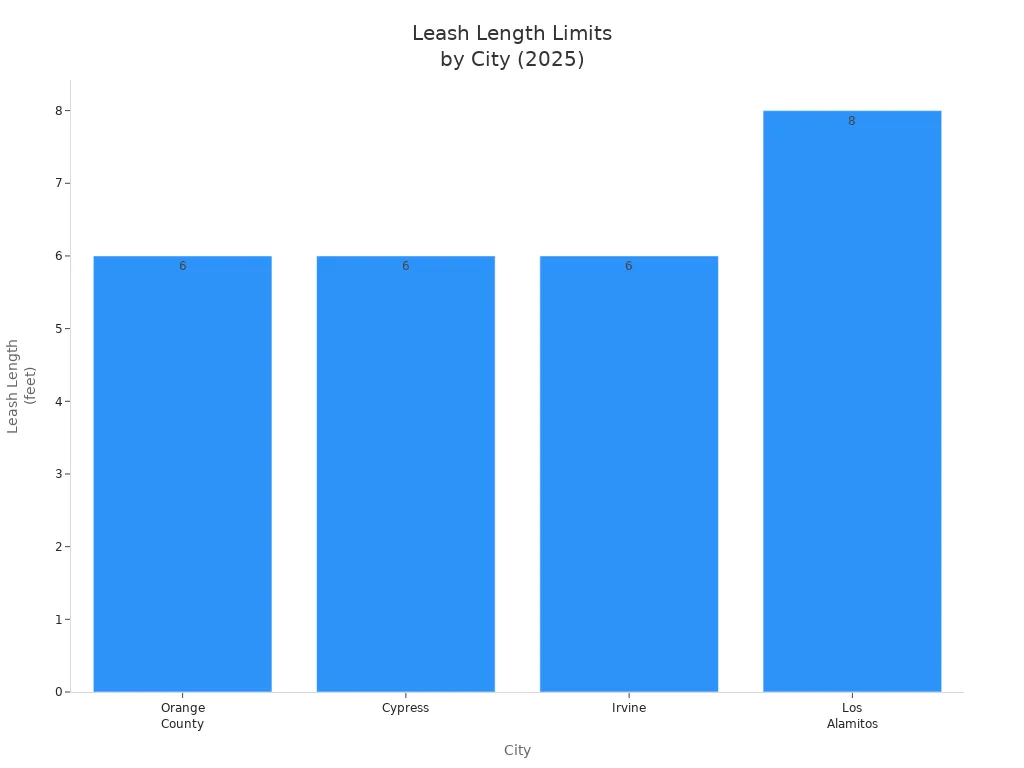
Cities set limits on leash length to help you control your dog. Most city ordinances require leashes to be six feet or shorter. Some cities allow up to eight feet. You must use a sturdy leash and keep your dog under control at all times. The person holding the leash must be able to manage the dog’s behavior.
Here is a table showing leash length limits and control standards in four cities:
City | Leash Length Limit | Control Standard |
|---|---|---|
Orange County | 6 feet | Dog must be restrained by a substantial chain or leash and under the charge of a competent person. |
Cypress | 6 feet | Dog must be restrained by a substantial chain or leash and under the charge of a competent person. |
Irvine | 6 feet | Dog must be restrained by a substantial leash and under the charge of a competent person. |
Los Alamitos | 8 feet | Dog must be on a secure leash held by a responsible person capable of controlling the dog. |
You should choose a leash that meets your city’s requirements. A strong leash and a well-fitted safety harness help you keep your dog under control. Updated 2025 leash laws and safety harness recommendations encourage you to use reliable equipment for urban dog walking safety.
Different Rules for Sidewalks, Parks, and Dog Parks
Rules change depending on where you walk your dog. Sidewalks, public parks, and dog parks have different leash and harness requirements. On sidewalks, you must keep your dog leashed or under control. Off-leash walking is not allowed unless your city says so. In public parks, dogs must stay on a leash except in special off-leash areas. Designated dog parks let dogs run off-leash, but you must supervise your pet.
Here is a table that explains the rules for each area:
Area | Leash Requirement | Off-Leash Conditions |
|---|---|---|
Sidewalks | Dogs must be leashed or under control | Not allowed unless specified |
Public Parks | Dogs must be leashed | Off-leash in designated areas only |
Designated Dog Parks | Dogs can be off-leash under supervision | Must be monitored by the owner |
You can see how cities like Houston, Dallas, and Fort Worth set their own rules:
In Houston, you must leash your dog in public spaces. The city holds you strictly responsible for violations.
Dallas requires you to restrain your dog on a leash when off your property. You cannot leave your dog tethered and unattended.
Fort Worth says your leash must be no longer than six feet in public areas. The city offers designated off-leash parks for dogs.
You should always check the signs and local rules before you walk your dog. The 2025 dog leash laws urban safety harness requirements help you understand what is expected in each area. Using a sturdy leash and harness keeps your dog safe and helps you follow the law.
Tip: Always carry a leash, even when visiting a dog park. You may need to leash your dog quickly if a problem arises.
You protect your dog and your community when you follow these rules. City leash law compliance makes urban dog walking safer for everyone.
How and Why Requirements Vary by Location
Leash and harness rules are different in each city. You may wonder why these rules change. Local governments make their own rules. Each city or town has special needs. Some places are busy, and some are quiet. You need to know these differences so you can follow 2025 dog leash laws and urban safety harness rules correctly.
Most states do not have one rule for all cities. Local leaders choose what works for their area. Leash length and harness rules can change by location. Crowded cities often have stricter rules. Rural areas may have easier rules. Always check your city’s website or ask officials before you walk your dog.
Parks and beaches often have their own leash and harness rules. These rules help keep people safe in special places. A city park may let dogs play off-leash in fenced areas. Near playgrounds or trails, leashes are needed. Beaches sometimes ban dogs during busy times. Some ask for harnesses to stop dogs from running into crowds.
Tip: Before you go to a new park or public place, look for signs or check online for leash and harness rules. This helps you follow the rules and avoid fines.
Here are the main reasons leash and harness rules change:
Local rules match what each city needs.
State laws sometimes guide cities, but local leaders decide most details.
Parks and beaches often have their own leash and harness rules.
These 2025 dog leash laws and safety harness requirements highlight how much rules can vary. You need to stay alert and ready to follow new regulations. When you travel or move, always check local rules. This keeps you and your dog safe and helps you maintain city leash law compliance.
Location Type | Who Sets the Rules? | What You Should Do |
|---|---|---|
City/Town | Local government | Check city ordinances |
State | State government | Review state guidelines |
Park/Beach | Site management | Look for posted signs |
You help your dog and your community when you know how leash and harness rules change. Following the 2025 dog leash laws urban safety harness requirements lets you enjoy safe walks in the city.
Urban Dog Walking Risks and Why Control Matters
Traffic Hazards: Cars, Buses, Bikes, and Scooters
City streets stay busy all day. You and your dog face many moving dangers. Cars, buses, bikes, and scooters can appear quickly. If your dog pulls or darts, you may not react in time. Using a leash and a safety harness gives you better control and helps prevent accidents.
Common traffic hazards during urban walks include:
Busy traffic areas where vehicles move fast and drivers may not see your dog.
Hot pavement that can burn your dog’s paws, especially in summer.
Ice or snow that can cause slips and falls for both you and your dog.
Overheating or dehydration, which can happen quickly on warm days.
Unfriendly animals, such as stray dogs or wildlife, that may surprise you near roads.
You should always use crosswalks and keep your dog close. A sturdy leash and harness help you guide your dog safely. City leash law compliance protects your pet from running into traffic or getting hurt.
Tip: Check the pavement with your hand before walks. If it feels hot, it can burn your dog’s paws.
Crowds, Shared Spaces, and Tight Sidewalks
Urban areas often have crowded sidewalks and shared spaces. You may walk past groups of people, strollers, or other pets. Narrow sidewalks make it hard to keep a safe distance. This can lead to stress for both you and your dog.
In cities, overcrowding in public spaces can cause conflicts between dog walkers and others. Limited space means you must stay alert. You may feel unsafe if you cannot manage your dog well. Walking multiple dogs becomes even harder. Congestion increases the risk of accidents or misunderstandings.
You can improve urban dog walking safety by:
Keeping your dog on a short leash in busy areas.
Watching for signs of stress in your dog, such as pulling or barking.
Avoiding rush hours when sidewalks are most crowded.
Practicing basic commands like “heel” and “wait” to keep your dog calm.
Always check your city’s leash and safety harness requirements for dogs in cities. Rules may change depending on the area.
Encounters with Other Dogs and Strangers
You will meet other dogs and people during city walks. Not every dog or person wants to interact. Some dogs feel scared or act out when approached by unleashed animals or strangers.
Typical outcomes of these encounters include:
Dog fights, especially if an unleashed dog approaches a leashed one.
Fear or discomfort in your dog, leading to barking or lunging.
Unleashed dogs running into traffic, which is very dangerous.
You can prevent problems by keeping your dog leashed and under control. Watch for other dogs and give space when needed. Teach your dog to ignore strangers unless you say it is okay.
Note: Leash laws vary by city. Always check local regulations before you walk. Following 2025 dog leash laws and using a safety harness keeps everyone safer.
Fast-Moving Objects and Startle Reactions
City streets stay busy. You see bikes, scooters, skateboards, and runners moving quickly. These fast-moving objects can surprise your dog. Many dogs feel startled when something rushes past them. Some dogs want to chase. Others freeze or bark. You need to understand why these reactions happen and how you can help your dog stay calm.
Dogs have strong instincts. Fast-moving objects often trigger a chase response. Your dog may lunge at a bike or scooter. This can put your dog and others in danger. Loud noises or sudden movements can also scare your dog. If your dog has had a bad experience or lacks socialization, startle reactions may happen more often.
You can see common reasons why dogs react to fast-moving objects:
Dogs often chase bikes and scooters because their natural instincts tell them to follow moving things.
Some dogs feel afraid if they have had negative experiences with fast-moving objects.
Quiet movement and speed make bikes and scooters hard for dogs to predict.
You can help your dog by using training methods. Desensitization teaches your dog to stay calm when fast-moving objects pass by. You start by exposing your dog to bikes or scooters from a distance. You reward calm behavior. Over time, you move closer. Counter-conditioning helps your dog learn that good things happen when bikes or scooters appear. Treats and praise work well.
Here are steps you can take to manage startle reactions:
Use a sturdy leash and a well-fitted safety harness for better control.
Practice walking near bikes and scooters in quiet areas first.
Reward your dog for calm behavior with treats or praise.
Keep your dog close on busy sidewalks.
Watch for signs of stress, such as barking, lunging, or pulling.
Tip: If your dog gets startled, stay calm. Speak softly and guide your dog away from the object. Do not punish your dog for being afraid.
A table can help you see how to train your dog to handle fast-moving objects:
Training Method | What You Do | Expected Result |
|---|---|---|
Desensitization | Gradually expose dog to object | Dog stays calm |
Counter-conditioning | Reward calm behavior | Dog feels safe |
Controlled walks | Use leash and harness | Better control |
You improve urban dog walking safety when you prepare for startle reactions. City leash law compliance means you keep your dog leashed and under control. Safety harness requirements for dogs in cities help you manage sudden movements. Always check your local leash laws before you walk. Every city has different rules. You protect your dog and others by staying informed and using good equipment.
Safety Harness Requirements and Best Practices in Cities
Local Rules and Building Policies About Harnesses
Some cities and buildings have their own harness rules. Many apartments and condos make rules to keep people safe. These places often want you to use a leash and sometimes a harness in shared spaces. Shared spaces include lobbies, elevators, and hallways. Some buildings put up signs or send out notices about pet control. You should always check your building’s pet policy before walking your dog in common areas.
City rules can also change how you walk your dog. Most city laws talk about leashes, but some places say harnesses are important for extra control. This is true in busy or tall buildings. There is a Standard Consumer Safety Specification for Dog Harnesses for Motor Vehicle Safety. This rule gives advice for harnesses in cars. It also shows harnesses help stop injuries during walks. You should look at your city’s website or ask your building manager about harness rules.
Tip: Rules can change. Check your city or building’s website often to stay updated.
When a Harness May Be Recommended or Required
You might wonder when you need a harness instead of just a collar and leash. In many cities, harnesses are a good idea for better control and safety. Some times, harnesses are very important:
Situation | Requirement/Recommendation |
|---|---|
Urban settings | Strongly recommended for better control and safety |
Senior dogs | |
Public spaces | Dogs must be leashed according to local laws |
Local ordinances | Often require leashes in public areas |
Penalties for non-compliance | Fines or dog impoundment may occur |
If your dog is old or has trouble moving, a harness can help you guide them safely. In busy places, a harness gives you more control and helps stop accidents. Some cities want harnesses in crowded parks or near playgrounds. Always check the rules before you go out. Using a harness can help you avoid fines and keep your dog safe.
Harnesses vs. Collars for Urban Control and Safety
Picking a harness or a collar is important for city walks. Harnesses, especially front-clip types, are good for dogs that pull. They help you guide your dog without hurting them. Collars can press on your dog’s neck and may cause injuries. This is worse for dogs with short noses or sensitive necks.
Harnesses, especially front-clip ones, help stop pulling by making it harder for your dog to move forward.
Collars can put pressure on your dog’s eyes and neck, which can hurt, especially for some breeds.
Back-clip harnesses are good for calm dogs, and flat collars may work for dogs that do not pull.
You want your dog to be safe and comfortable on every walk. Harnesses give you more control in crowded places and help stop escapes. If your dog needs extra help, like seniors or dogs healing from injury, you can use an extra lifting strap like the one from GaitGuard. This tool helps you move your dog and keeps both of you safer.
Note: Always check your city’s leash and harness rules. Rules can change, so stay informed to keep your walks safe and legal.
High-Risk Areas Where Extra Control Is Essential
You face many challenges when you walk your dog in the city. Some places need extra control to keep your dog safe. High-risk areas can surprise you with dangers that are not always easy to see. You must stay alert and use the right equipment to protect your dog and others.
Urban environments often have mechanical dangers. Revolving doors and escalators can trap or injure your dog if you do not pay attention. You should keep your dog close and use a sturdy safety harness when you enter buildings with these features. A harness gives you better control and helps you guide your dog safely.
Toxic substances also pose a threat in cities. Many urban areas use rat poison to control rodents. Dogs can sniff out these substances in alleys, parks, or near dumpsters. You should avoid places with high rodent populations and watch for signs that your dog wants to eat something off the ground. A harness lets you redirect your dog quickly if you spot danger.
Some neighborhoods have higher crime rates or many vacant properties. These areas often see more dog bite incidents. You need to stay cautious and keep your dog leashed at all times. Extra control helps you prevent your dog from reacting to sudden noises or strangers. You can use a harness with a handle or an auxiliary lifting strap, like the one from GaitGuard, to keep your dog close and calm.
Urban wildlife can also create risky situations. Coyotes and other animals sometimes appear in city parks or near trash bins. If your dog spots a wild animal, it may try to chase or bark. You should train your dog to stay calm and use a harness for better control during these encounters.
Here are some steps you can take to improve urban dog walking safety in high-risk areas:
Watch for mechanical dangers such as revolving doors and escalators.
Avoid places with high rodent activity to reduce the risk of toxic exposure.
Stay alert in neighborhoods with high crime rates or vacant properties.
Train your dog to handle encounters with urban wildlife safely.
Tip: Always check your local leash laws before you walk in new areas. City leash law compliance and safety harness requirements for dogs in cities help you avoid accidents and keep your dog safe.
You make city walks safer when you use the right gear and stay aware of your surroundings. The 2025 dog leash laws encourage you to use a harness for extra control in high-risk areas. Remember, every city has different rules. You should check your local regulations and choose equipment that fits your dog’s needs.
Choosing Urban-Friendly Safety Harnesses

Fit and Sizing for Different Breeds and Body Types
You want your dog’s harness to fit well. A good fit keeps your dog comfortable and safe during city walks. Dogs come in many shapes and sizes. Some have broad chests, while others have slim bodies. You need to measure your dog’s chest and neck before you buy a harness. Look for adjustable straps. These help you get a snug fit without squeezing or rubbing.
GaitGuard offers harnesses made with medical-grade materials. These harnesses feel soft but stay strong. You can adjust them for different breeds and body types. If your dog is growing or recovering from an injury, an adjustable harness works best. Always check the harness for signs of wear. Replace it if you see fraying or broken clips.
Tip: Try the harness on your dog before your first walk. Make sure you can fit two fingers between the harness and your dog’s body.
Design Features for City Use (handles, reflective strips, ID points)
City walks bring special challenges. You need a harness with smart design features. Handles help you control your dog in busy areas. Reflective strips make your dog easy to see at night. An ID holder lets you show your contact information. These features improve safety and make city leash law compliance easier.
Here is a table showing useful design features for urban harnesses:
Design Feature | Description |
|---|---|
Reflective Strips | Provides visibility at night, enhancing safety in urban environments. |
ID Holder | Clear vinyl pocket for displaying ID or credentials, useful for identification. |
Handle | Offers better control over the harnessed individual, crucial in busy areas. |
You should look for these features when you choose a harness. They help you keep your dog safe and make walks easier.
Front-Clip vs. Back-Clip for Better Control on Busy Streets
Harness clip placement matters in the city. A front-clip harness gives you more steering control. You can guide your dog away from distractions. This helps you manage small dogs and those that pull. On busy streets, you need quick control. The front-clip design lets you redirect your dog easily.
A back-clip harness allows more forward movement. This can be a problem if your dog pulls hard. You get moderate control, but it may not be enough in crowded places. For urban dog walking safety, you should choose a front-clip harness. It helps you keep your dog close and calm.
Note: Always check your local leash and harness rules. City leash law compliance means using the right equipment for your dog and your environment.
Daily Comfort for Dogs Who Walk in the City Every Day
Your dog should feel good every time you go outside. City walks can be hard, but you can make them fun and safe. Think about how your dog feels and acts in busy places. Make sure your dog is comfortable and can handle city life.
A safety harness that fits well lets your dog move easily. It should not rub or pinch your dog’s skin. GaitGuard’s harnesses use soft materials that feel gentle. You can adjust the straps to fit any dog. When your dog feels good, it pulls less and does not scratch or act stressed.
City walks are noisy and crowded. You can help your dog get used to loud sounds. Start with short walks in quiet places. Slowly try busier streets with more noise. This helps your dog stay calm when sirens or construction sounds happen.
Crowds are everywhere in cities. You can teach your dog to stay calm near people and other dogs. Give treats and praise when your dog acts relaxed. Practice walking past groups and pets. Your dog learns to pay attention to you, not the busy street.
Many dog owners use buses or trains. If you want your dog to ride, let it see the station first. Use a harness with a handle for better control. This keeps your dog safe and comfortable while traveling.
Urban dogs sometimes get too excited or feel lonely. You can help with training and routines. Let your dog rest after busy walks. Use rewards to teach good habits. If your dog seems worried, ask a trainer or vet for help.
Here is a table with tips for daily comfort during city walks:
Tip | How It Helps Your Dog |
|---|---|
Use a soft, adjustable harness | Prevents rubbing and discomfort |
Practice noise desensitization | Reduces anxiety in loud environments |
Train for crowd navigation | Keeps your dog calm around people |
Prepare for public transit | Ensures safe travel experiences |
Address behavior issues | Improves overall well-being |
Remember: Leash laws and safety harness requirements for dogs in cities can change. Always check your local rules before you walk. Following city leash laws keeps your walks safe and fun.
You help your dog enjoy every walk when you focus on comfort. Pick good gear, teach good habits, and help your dog feel calm in the city. Your care makes daily walks happy for you and your pet.
Harness Control vs Collar Control
Key Safety Benefits of Harness Control
When you walk your dog in the city, you want to keep both of you safe. Harnesses offer several important safety benefits over collars. You get better control, which helps you guide your dog through busy sidewalks and crowded parks. Harnesses also protect your dog’s body in ways collars cannot.
Harnesses spread pressure across your dog’s chest and back, not just the neck.
You lower the risk of choking or hurting your dog’s throat.
Harnesses work well for small dogs or breeds with short noses, like Bulldogs and Pugs.
Dogs with breathing problems or delicate necks stay safer with a harness.
You can manage strong pullers more easily, which helps prevent accidents.
Using a harness supports urban dog walking safety and helps you meet safety harness requirements for dogs in cities. Always check your local rules, as city leash law compliance can differ.
Handling Strong, Reactive, or Young Dogs
Strong, young, or reactive dogs often pull or lunge during walks. In a busy city, this can lead to dangerous situations. Harnesses give you more control than collars. You can guide your dog away from distractions, like bikes or other dogs, without causing pain.
If your dog gets excited or scared, a harness helps you keep them close. You can use the handle on some harnesses to hold your dog steady in crowded places. This extra control makes walks safer for everyone. Harnesses also help you train your dog to walk calmly by your side.
Tip: Practice walking in quiet areas before heading into busy streets. This helps your dog learn good habits and builds your confidence as a handler.
Reducing Neck and Trachea Strain Compared to Collars
Collars put pressure on your dog’s neck. This can cause pain or injury, especially if your dog pulls hard. Harnesses solve this problem by spreading the force across the chest and back. You protect your dog’s neck and trachea, which is important for breeds with delicate airways.
Here is a table that shows the difference:
Restraint Method | Force Distribution | Risk of Injury |
|---|---|---|
Neck Collar | Localized | Increased |
Chest Harness | Distributed | Reduced |
Studies show that harnesses reduce neck strain. You help prevent health problems, like coughing or breathing trouble, by choosing a harness. Some dogs may pull more with a harness, so you should use training and positive reinforcement to teach good walking habits.
Remember, leash laws and harness rules can change from city to city. Always check your local regulations before you walk. Using a harness keeps your dog comfortable and safe, making every city walk a better experience.
Preventing Escape from Collars and Slip-Outs
You want your dog to stay safe on every walk. Some dogs slip out of collars, especially in busy cities. This can be very dangerous. If your dog escapes, it might run into traffic or get lost. Using good equipment helps keep your dog safe.
Harnesses stop escapes better than collars. They have extra straps and go around your dog’s body. This makes it hard for your dog to slip out. You get more control and feel less worried.
Here is a table that shows how harnesses keep your dog secure:
Feature | Description |
|---|---|
Additional Straps | Harnesses often include extra straps that secure the dog more effectively than traditional collars. |
Proper Fit | A well-fitted harness prevents slipping, as it is designed to accommodate the dog’s body shape. |
Limited Slip Design | Some harnesses tighten under leash pressure, preventing the dog from backing out. |
Chest/Belly Strap | A strap around the chest or belly area helps to keep the harness in place, reducing escape risk. |
Avoids Soft Tissue Pressure | Harnesses are designed to avoid putting pressure on sensitive areas, unlike some collars. |
Always check your dog’s harness before you walk. The straps should be snug but not too tight. You should be able to fit two fingers under the harness. Dogs with thin heads or thick necks can slip out of collars. Harnesses fix this by wrapping around the chest and belly.
Some harnesses have a limited slip design. When your dog pulls, the harness tightens a little. This stops your dog from backing out. You get better control in crowded places. If your dog tries to escape, the harness holds tight but does not hurt.
Here are some easy tips to stop escapes during city walks:
Pick a harness with adjustable straps for a good fit.
Look for chest and belly straps to keep the harness in place.
Use a harness with a limited slip feature for extra safety.
Check the harness often for damage.
Practice putting the harness on and taking it off calmly.
Tip: Always watch your dog in public places. Even with a harness, stay alert and ready to act.
City leash law compliance means using gear that keeps your dog close. Safety harness requirements for dogs in cities help you avoid problems and keep your pet safe. Leash laws are different in each city. Check your local rules before every walk. You keep your dog and your community safe when you use a strong harness and know the rules.
Owner Responsibilities Under City Leash Laws
Keeping Dogs Leashed Where and When Required
You play a key role in urban dog walking safety. City leash law compliance means you must keep your dog leashed in public areas. Most cities require a leash no longer than six feet. You need to hold the leash and control your dog at all times. This rule helps protect your dog and others around you. If you let your dog roam without a leash, you risk fines and safety issues.
Here is a simple list of your main responsibilities:
Always leash your dog in public spaces.
Use a leash that does not exceed six feet.
Stay in control of your dog during walks.
A table can help you see these rules clearly:
Responsibility | Description |
|---|---|
Leashing Dogs | Dogs must be leashed with a leash not exceeding six feet in public areas. |
Control | You or another person must be able to control the dog using the leash. |
Penalties | Fines for non-compliance: First Offense: $100, Second Offense: $250, Third Offense: $500. |
Tip: Leash laws change from city to city. Always check your local regulations before you walk your dog.
Cleaning Up Waste and Protecting Shared Spaces
You help keep your city clean when you pick up after your dog. Immediate cleanup prevents pollution and health risks. You should bag your dog’s waste and place it in a trash bin or pet-waste station. Many communities provide pet stations with bags and bins to make this easier. If you leave waste behind, you may face fines.
A table shows common rules for cleaning up waste:
Rule/Practice | Description |
|---|---|
Immediate Cleanup | Pick up dog waste right away to prevent pollution and health risks. |
Proper Disposal | Bag waste and place it in trash bins or pet-waste stations. |
Community Responsibility | All pet owners must clean up after their pets to maintain shared spaces. |
Use of Pet Stations | Use provided bags and bins for proper waste disposal. |
Fines for Non-compliance | Fines may apply if you do not clean up after your dog. |
Remember: Cleaning up after your dog shows respect for your neighbors and helps protect shared urban spaces.
Preventing Nuisance: Barking, Jumping, and Lunging
You need to prevent your dog from causing a nuisance in public. Barking, jumping, and lunging can disturb others and create unsafe situations. Teach your dog basic commands like “quiet” and “sit.” Use a safety harness for better control, especially in crowded areas. If your dog gets excited or anxious, redirect its attention with treats or praise.
Here are some practical steps:
Practice calm walking in quiet areas before visiting busy streets.
Reward your dog for good behavior during walks.
Watch for signs of stress and act quickly to calm your dog.
Note: City leash law compliance includes preventing nuisance behaviors. You help make your city safer and more pleasant for everyone.
Always remember that leash laws and safety harness requirements for dogs in cities can change. Check your local rules often and use practical tips to keep your walks safe and enjoyable.
Reading Signs and Following Local Rules and Time Limits
When you walk your dog in the city, you see many signs and notices. These signs tell you where dogs can go, when they must be leashed, and what time limits apply. You need to read every sign carefully. Some parks allow dogs only during certain hours. Other places require leashes at all times. You help keep your dog safe and avoid fines when you follow these rules.
You find signs at park entrances, sidewalks, and building lobbies. Each sign gives you important information. Some signs show leash length limits. Others list hours when dogs can visit. You may see rules about cleaning up waste or using a safety harness. Always look for these details before you enter a new area.
Tip: Take a photo of posted rules with your phone. You can check them later if you forget.
Local rules change from city to city. You must check your city’s website or ask officials for updates. Some cities change leash laws every year. Others set special rules for holidays or busy seasons. You stay prepared when you review these updates often.
Here is a table to help you remember what to look for:
Location | What to Check For | Example Sign Text |
|---|---|---|
City Park | Leash length, allowed hours | “Dogs must be leashed. 6 ft max. Allowed 7am-7pm.” |
Sidewalk | Leash required, clean-up rules | “Leash your dog. Clean up waste.” |
Building Lobby | Harness or leash policy | “Pets must use safety harness in lobby.” |
Dog Park | Off-leash rules, supervision | “Off-leash allowed. Owner must supervise.” |
You also need to follow time limits. Some parks close at sunset. Others allow dogs only in the morning. You help with urban dog walking safety when you respect these hours. If you break time limits, you may face fines or lose access to the area.
You show respect for your neighbors and your city when you follow posted signs and rules. You help keep public spaces clean and safe for everyone. Always remember that 2025 dog leash laws and safety harness requirements for dogs in cities can change. City leash law compliance means you stay alert and informed.
Note: This blog gives general advice. For case-specific questions, contact your local authorities or check official city websites.
Special Cases and Extra Control Options
Senior or Disabled Dogs in Busy Urban Environments
Older dogs and dogs with disabilities need extra help in cities. Busy sidewalks and loud sounds can make walks hard. You can help by picking a safety harness that supports your dog’s body. This keeps your dog comfortable and safe. GaitGuard’s braces and lifting straps give you more control. These tools help your dog move better. They use strong materials and can be adjusted to fit your dog.
Watch your dog for signs of tiredness or pain. If your dog slows down or limps, stop and let them rest. Try to avoid busy places when lots of people are out. Pick quiet streets for your walks. Always check your city’s leash laws before you go. Some cities have special rules for older or disabled dogs.
Tip: Bring water and treats for your dog. Short and gentle walks are best for older or healing pets.
Support Tool | Benefit |
|---|---|
Rehabilitation Brace | Helps joints and muscles stay steady |
Lifting Strap | Makes it easier to move your dog |
Anti-Lick Device | Stops your dog from licking wounds |
Reactive, Anxious, or Strong Working Breeds
Some dogs get nervous or excited in cities. You might have a working breed or a young dog. Some dogs feel scared around new people or animals. These dogs need extra control on walks. A strong safety harness with a front clip helps you guide your dog. GaitGuard’s harnesses fit well and have strong handles for better control.
Practice commands like “sit,” “stay,” and “leave it” before busy walks. Give treats and praise when your dog stays calm. If your dog gets upset, move to a quieter place. You can use two leashes for extra safety. Always follow your city’s leash laws and safety harness rules.
Note: If your dog barks or lunges, stay calm. Help your dog focus on you and avoid crowded places.
Apartment, Condo, and HOA-Specific Dog Rules
If you live in an apartment or condo, you must follow pet rules. Many buildings want you to use a leash and sometimes a harness in shared spaces. Shared spaces include lobbies, elevators, and hallways. Some places put up signs with pet rules. Read these rules and ask your manager if you have questions.
Keep your dog close and under control in common areas. Use a harness with a handle for extra safety. Always clean up after your dog. Some HOAs set walk time limits or block some areas. Check for new building rules and city leash law updates.
Tip: Take a photo of pet rules with your phone. This helps you remember them and follow the rules.
Location | Common Rule | What You Should Do |
|---|---|---|
Apartment Lobby | Leash or harness required | Keep your dog close and leashed |
Elevator | Control dog at all times | Use a harness with a handle |
HOA Grounds | Clean up waste right away | Carry waste bags |
You keep your dog safe and your neighbors happy when you follow these rules. Always check your city’s and building’s rules before each walk.
Using Muzzles, Double Leashes, or Extra Control Gear Safely
You want every walk with your dog to be safe and stress-free. Sometimes, you need extra tools to help manage your dog in busy city environments. Muzzles, double leashes, and other control gear can make a big difference when you follow best practices.
Muzzles help prevent biting or eating unsafe items. You may need a muzzle if your dog feels anxious around strangers or other dogs. Choose a basket-style muzzle that lets your dog pant and drink. Practice at home first. Let your dog wear the muzzle for short periods. Give treats and praise to build positive feelings. Never use a muzzle as punishment.
Double leashes give you more control, especially with strong or reactive dogs. You attach one leash to the harness and one to the collar. This setup helps you guide your dog and stop sudden lunges. Double leashing works well in crowded areas or near traffic. Always check that both leashes fit securely. Hold both leashes firmly, but do not pull too hard.
You may also use extra control gear like harnesses with handles, auxiliary lifting straps, or anti-lick devices. GaitGuard offers medical-grade harnesses and lifting straps that help you manage your dog’s movement. These tools support dogs recovering from injury or surgery. They also help senior dogs walk safely in busy places.
Tip: Always check your city’s leash laws before using extra gear. Some cities have special rules for muzzles or double leashing. City leash law compliance keeps you and your dog safe.
Here is a table to help you choose the right gear:
Gear Type | When to Use | Safety Tip |
|---|---|---|
Muzzle | For anxious or reactive dogs | Use basket-style for comfort |
Double Leash | For strong or unpredictable dogs | Attach to both harness and collar |
Lifting Strap | For senior or disabled dogs | Support gently, avoid pulling |
Anti-Lick Device | For dogs recovering from wounds | Ensure proper fit and comfort |
You should always introduce new gear slowly. Let your dog get used to each item at home. Watch for signs of stress or discomfort. Adjust the fit as needed. If you feel unsure, ask a trainer or veterinarian for advice.
Remember, leash laws and safety harness requirements for dogs in cities can change. Check your local regulations before each walk. You help your dog stay safe and comfortable when you use the right gear and follow city rules.
Staying Updated on 2025 Dog Leash Laws
Using City and County Websites for Current Rules
You need to know the latest 2025 dog leash laws. City and county websites have the newest updates. These sites show rule changes and important news. Look for sections called “Animal Services” or “Pet Owner Resources.” Many websites have a search bar. Type “dog leash laws” or “safety harness requirements for dogs in cities” to find what you need.
Here is an easy checklist for using these websites:
Go to your city or county’s official website.
Find the pet or animal control section.
Check for new leash laws and harness rules.
Save the page so you can find it again.
Sign up for email alerts if you can.
Tip: Knowing the rules helps you follow city leash law compliance. Always check your local website before you walk your dog. Look for new signs or changes in your area.
Checking Parks and Recreation or Animal Control Departments
You can get updates from Parks and Recreation or Animal Control offices. These departments make rules for pets in public places. Staff members know about leash length, off-leash spots, and safety harness requirements for dogs in cities. You can call, email, or visit their office. Many parks show rules at entrances or on bulletin boards.
Here is a table to help you find information:
Department | How to Get Updates | What to Ask For |
|---|---|---|
Parks & Recreation | Visit website, call, or email | Park leash rules, off-leash areas |
Animal Control | Visit office, call, or check online | Leash laws, harness requirements |
Note: Rules can change for holidays or special events. Always ask these departments before you visit a new park or public place.
Asking Building Management or HOAs About House Rules
If you live in an apartment, condo, or HOA neighborhood, you need to know the pet rules. Building managers and HOAs make their own leash and harness rules for shared spaces. These rules might be different from city laws. Ask your manager or HOA for the pet policy. Look for leash length, harness use, and where dogs can go.
Follow these steps:
Talk to your building manager or HOA office.
Ask for the newest pet policy.
Read the rules for common areas and outdoor spaces.
Ask about fines for breaking the rules.
Keep a copy of the policy for later.
Reminder: Leash laws and safety harness requirements for dogs in cities can change. Always check with your building or HOA before you walk. This helps you avoid fines and keeps your dog safe.
You stay ready when you check these sources often. Urban dog walking safety depends on what you know and do. Always look for updates and follow the rules in your city and building.
Consulting Trainers, Vets, or Legal Professionals When Needed
Sometimes, you have questions about 2025 dog leash laws or safety harness requirements for dogs in cities. City websites or building managers may not have the answers. You might feel confused about walking a strong or anxious dog. You may wonder if your gear follows city leash law compliance. In these cases, you should ask experts for help.
Dog trainers teach you how to control your dog in busy places. They show you how to use a harness the right way. Trainers help your dog learn good walking habits. They give tips for leash pulling, barking, or lunging. If your dog gets scared by crowds or loud sounds, a trainer can help you feel confident and keep walks safe.
Veterinarians know about your dog’s health and body needs. If your dog has neck or joint problems, a vet can suggest the best harness or support gear. Vets help you pick equipment for older dogs or those healing from surgery. You should ask your vet about harness fit and comfort. This is important if your dog needs extra support.
Legal professionals explain local leash laws in tricky situations. You may get a citation or need to know rules for service animals. Lawyers help you understand city leash law compliance. They guide you through appeals or disputes. You should talk to a legal expert if you have questions about fines or special cases.
Tip: Ask the right expert for your problem. Trainers help with behavior. Vets help with health. Legal professionals help with rules.
Here is a table to help you choose who to ask:
Expert Type | When to Consult | How They Help |
|---|---|---|
Dog Trainer | Behavior issues, leash training | Teaches control and safe walking |
Veterinarian | Health concerns, gear recommendations | Advises on harness fit and comfort |
Legal Professional | Legal disputes, citations, service animal rules | Explains laws and rights |
You should keep a list of trainers, vets, and legal contacts nearby. Ask friends or your building manager for good recommendations. If you move to a new city, find experts who know the local leash laws and urban dog walking safety rules.
Remember, leash laws and safety harness requirements for dogs in cities change from place to place. Experts help you stay up to date and make smart choices for your dog. Always check your local rules and ask for advice when you need it. You keep your dog and your community safe by staying prepared and getting help when needed.
You help keep your dog and your city safe by following 2025 dog leash laws and using an appropriate safety harness. Pick strong gear that fits your dog well. Check your city’s rules before each walk and inspect your leash and harness often to make sure they still work properly. If you need more control or comfort, try trusted brands like GaitGuard. Laws can change, so stay alert. Use this guide for general advice only and ask local officials for the newest rules.
Tip: Being a responsible dog walker means following the law, using good gear, and showing respect for others.
FAQ
What is the main purpose of 2025 dog leash laws in cities?
You protect your dog and others when you follow leash laws. These rules help prevent accidents and keep public spaces safe. Always check your city’s regulations before each walk.
How long should my dog’s leash be for city walks?
Most cities require a leash no longer than six feet. You should use a sturdy leash that gives you control. Check your local rules for specific length requirements.
Do I need a safety harness for my dog in urban areas?
Many cities recommend harnesses for better control. Some buildings or parks may require them. You should use a harness if your dog pulls or needs extra support. Always review local policies.
Where can I find my city’s leash and harness rules?
You can visit your city’s official website or contact animal control. Look for posted signs in parks and public spaces. Rules change often, so check for updates regularly.
What should I do if my dog gets anxious in crowded places?
You can use a harness with a handle for extra control. Practice calm walking in quiet areas first. Reward your dog for relaxed behavior. Ask a trainer for help if needed.
Are there special rules for senior or disabled dogs?
Some cities and buildings offer exceptions or extra support options. You should use a supportive harness or lifting strap. Always check local rules for guidance on walking senior or disabled dogs.
Can I let my dog off-leash in city parks?
Most parks require leashes except in designated off-leash areas. You must supervise your dog at all times. Read park signs and follow posted rules to avoid fines.
What gear helps prevent my dog from escaping during walks?
You should use a well-fitted harness with chest and belly straps. Some harnesses have limited slip designs for extra security. Check your gear before each walk to keep your dog safe.
