
Senior dog frailty means your dog has become weaker and less able to cope with everyday life. It is more than just getting old. You may notice your dog getting tired quickly, moving slowly, or choosing to rest instead of play. This stage matters because spotting it early gives you and your veterinarian more time to help. With the right care, many frail senior dogs can feel more comfortable and enjoy a better quality of life.
Veterinary studies show that understanding frailty helps owners plan better care. Modern support tools, such as braces and lift harnesses from brands like GaitGuard, can make it easier for frail dogs to move and stay involved in family life. Always talk to your veterinarian before changing your dog’s care. This article provides general information only and is not a substitute for professional advice.
Key Takeaways
Look for signs of frailty in your dog, like weakness, weight loss, or trouble moving. Finding these signs early helps you give better care.
Ask your veterinarian for help with mobility aids, such as braces and harnesses. These tools can make it easier for your dog to move.
Make your home safe by using non-slip mats and ramps. This lowers the chance of falls and helps your dog with daily life.
Give your dog a balanced diet and gentle exercise often. Good food and activity help your dog stay healthy and strong.
Keep up with your dog’s routine. Use simple and regular activities to help your dog feel safe and happy.
Senior Dog Frailty: What It Means
Defining Frailty in Dogs
You might wonder what frailty really means for your dog. Frailty describes a state where your dog has lost strength, resilience, and body reserves. In this stage, even small stresses — such as a minor illness, a change in routine, or a slip on the floor — can have a much bigger impact than before. Frailty changes how well your dog can handle daily tasks like walking, climbing stairs, or getting up from bed, and it also affects how quickly they recover after being sick.
Veterinary research explains frailty in dogs like this:
Definition | Description |
|---|---|
Frailty | A drop in the body’s reserves that makes it easier to get stressed. It explains why dogs of the same age can be so different in health. |
Frailty | Many problems build up and cause less reserve. This makes it easier for dogs to become disabled, need help, or die. |
You may see frailty syndrome if your dog has trouble with daily life. Your dog might look tired, move slowly, or not want to play. Frailty in older dogs can show as weakness, losing weight, or moving with difficulty. Watch for these signs and talk to your vet if you notice them.
Frailty vs. Normal Aging
All dogs get older. Your dog may get gray fur, sleep longer, or move slower. Frailty syndrome is not the same. Frailty means your dog cannot recover well from stress or sickness. Only about 10% of older dogs get frail just from age. Most older dogs stay strong, but some get frail because of health issues or injuries.
Here are ways to tell them apart:
Normal aging: Your dog still likes walks, eats well, and gets better from small problems.
Frailty: Your dog may lose muscle, have trouble standing, or need help with simple things.
Tip: If your dog seems weaker or needs more help, ask your vet about frailty syndrome. Getting help early can really help your dog.
Why Early Detection Matters
Finding frailty early helps you care for your dog better. Studies show watching for frailty in older dogs can help them feel better. Therapy and mobility aids for senior dogs may help your dog stay active and comfortable.
Here is a summary of research about early detection and help:
Aspect | Details |
|---|---|
Study Focus | Watching frailty in older dogs and how it affects their health. |
Objective | See if therapy can help frail dogs get healthier. |
Duration | Six months with many visits for health checks and therapy. |
Comparison | Frail dogs with therapy compared to those without therapy. |
Conclusion Implication | Finding frailty early and helping can make older dogs’ lives better. |
You can help your dog by looking for frailty signs and working with your vet. Acting early may help your dog stay happy and able to move. Helping frail older dogs often means gentle exercise, good food, and mobility aids for senior dogs. Your vet can help you pick the best care and products.
Note: Senior dog frailty is a stage that can lead to disability and shorten your dog’s life. You can help your dog by acting early and getting advice from your vet.
Frailty Signs and Risk Factors in Senior Dogs
Senior dog frailty often shows up as a mix of visible signs and hidden health problems. On the outside, you may notice weight and muscle loss, slow or unsteady movement, trouble getting up, or changes in appetite and mood. Under the surface, chronic pain or disease can make these signs worse and push your dog further into frailty.
Noticing frailty in older dogs helps you care for them better. Frailty syndrome shows up as changes in health, movement, and behavior. You can see these signs early and talk to your vet. This helps your dog feel good and stay happy.
Chronic Illness and Long-Term Pain
Chronic illness and long-term pain are major drivers of senior dog frailty. A dog that hurts every day naturally moves less, sleeps more, and may seem sad or withdrawn. Over time, this loss of activity leads to weaker muscles and lower confidence, which makes frailty worse.
Arthritis and joint problems
Dental disease
Cancer and other chronic illnesses
Pancreatitis
Aural infections
Bladder infections
Gastrointestinal disorders
Hip dysplasia
Elbow dysplasia
Cruciate ligament disease
Pain can make your dog quiet and less playful. Frailty syndrome can start when pain lasts a long time. Watch for limping, slow walking, or eating less. Your vet can help with pain and suggest mobility aids for senior dogs.
Tip: If your dog looks hurt or acts strange, call your vet. Treating pain early can help slow frailty.
Arthritis, Joint Issues, and Past Injuries
Arthritis and joint problems are big reasons for frailty in older dogs. Old injuries can also make moving hard. Dogs with arthritis may have trouble standing or walking. You might see stiffness after naps or less interest in playing.
Veterinary studies show how often these problems happen:
Region | Prevalence Rate | Age Group |
|---|---|---|
UK (Primary) | 6.6% | All ages |
UK (Referral) | 20% | All ages |
North America | 20% | Dogs older than 1 year |
North America | 80% | Dogs older than 8 years |
More than 50% diagnosed aged 8-13 years |
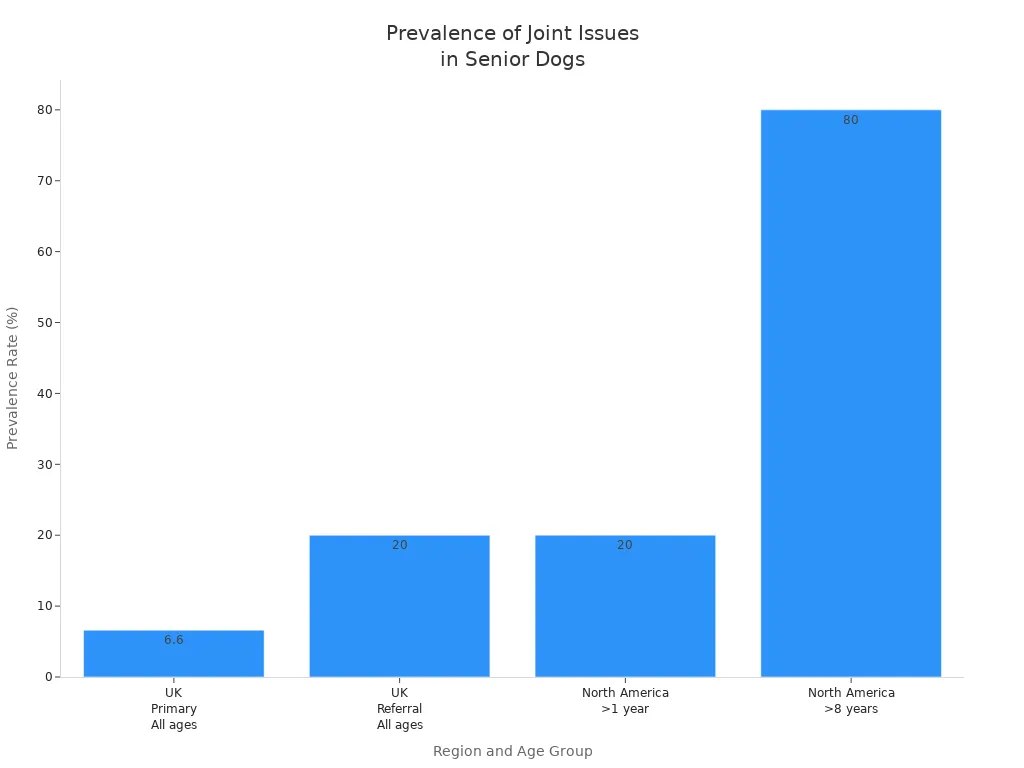
Osteoarthritis is common in older dogs. It affects joints like hips, elbows, and stifles. Frailty syndrome can start when joint pain makes moving hard. Arthritis can come from getting older or from old injuries. Think about your dog’s age and injury history when checking joint health.
Note: Helping frail dogs with joint problems means gentle exercise, pain care, and mobility aids for senior dogs. Your vet can help you choose the best support.
Heart, Kidney, and Neurological Conditions
Frailty in older dogs can also come from heart, kidney, or brain problems. These illnesses can cause weakness or confusion. Your dog may get tired fast, drink more, or act lost.
Heart disease can make your dog breathe harder and get tired. Kidney problems may cause weight loss and less eating. Brain issues, like dementia or nerve damage, can change how your dog moves or thinks. Frailty syndrome can get worse as these problems grow.
Watch your dog for new symptoms and tell your vet. Getting help early can make your dog more comfortable and slow frailty.
Nutrition, Exercise, and Lifestyle Factors
Food, exercise, and daily life matter a lot for frailty. Older dogs need food that fits their needs. Bad nutrition can make frailty worse and cause more sickness. Moving often helps keep muscles strong.
You can help your dog by:
Giving food made for older dogs
Visiting the vet to check health and muscles
Doing easy activities like short walks or gentle play
Making a calm home to lower stress
Playing and spending time with family helps slow frailty. Keep your dog busy with toys and puzzles. Work with your vet to change food and exercise as your dog gets older.
Callout: Frailty in older dogs is not just about age. You can slow it down with good food, regular movement, and a caring home. Always ask your vet before making changes.
Frailty syndrome affects many older dogs, but you can help. Finding signs early and giving kind care, like mobility aids for senior dogs, keeps your dog comfortable. Your vet is the best person to help you care for frail senior dogs.
How Veterinarians Assess Frailty
Physical Exams and Mobility Checks
Your vet uses different ways to check for frailty. They look at your dog’s spine, legs, and joints. They check if your dog feels pain or is stiff. Your vet may score your dog’s body to see health and nutrition. Muscle scoring shows if your dog lost strength. Your vet might ask about your dog’s energy and how they move. They also ask about how your dog acts with people. These steps help your vet find frailty early and plan care.
Checking for musculoskeletal disease like osteoarthritis
Watching changes in body weight and condition
Using a frailty questionnaire about food, energy, movement, muscle, and social life
Doing physical checks for body and muscle health
If your dog has trouble moving, your vet may suggest mobility aids. Always talk with your vet to pick the best support.
Lab Work and Diagnostic Tests
Lab tests help vets find health problems in older dogs. These tests show how organs work and help watch changes.
Test Type | Purpose |
|---|---|
Bloodwork | Finds age-related problems early |
Urinalysis | Checks kidneys and overall health |
CBC | Looks at general health |
Biochemistry Panel | Measures proteins, sugar, kidney and liver, electrolytes |
T4 | Checks thyroid health |
SDMA | Finds kidney disease |
NT-proBNP | Shows heart health |
Cobalamin and Folate | Checks stomach and gut health |
Cytology | Looks at lumps or bumps |
Routine Wellness Testing | Watches health changes over time |
These tests help your vet make a care plan for your dog.
Frailty Scores, Scales, and Tracking Over Time
Vets use frailty scores to help care for dogs. These scores measure changes in body and mind. Your vet may use simple tests and questions to track frailty. Researchers made tools like the frailty phenotype and frailty index for dogs. These tools look at weight loss, tiredness, activity, muscle, and walking speed.
Component | Description | Equivalent Measure in Dogs |
|---|---|---|
Unintentional weight loss | Losing more than 10 pounds in a year | Changes in body and eating |
Self-reported exhaustion | Feeling tired or short of breath | How your dog acts |
Low physical activity | Energy used each week | How active your dog seems |
Weakness | Grip strength | Muscle health |
Slow walking speed | Walking speed | How your dog walks and joint pain |
Frailty scores help your vet choose treatments and plan care. You and your vet can watch these scores and change care as needed. Always ask your vet for advice to help your older dog.
Home Care for Frail Senior Dogs
Creating a Safe and Comfortable Environment
You can make your home safer for frail senior dogs. Dogs with frailty may slip on floors or have trouble with stairs. Try these ideas to help your dog feel safe:
Use ramps for cars, stairs, and furniture.
Add support slings or harnesses for dogs who need help.
Put non-slip mats or carpets on hard floors.
Pick a pet bed warmer that keeps a safe temperature.
Set up raised dog bowls to help your dog’s neck.
Place extra water bowls around your home.
Install nightlights to help dogs see at night.
These changes help stop falls and make life easier. Always ask your veterinarian about the best choices for your dog.
Gentle Exercise and Low-Impact Movement
Exercise helps keep muscles strong in senior dogs. You should pick gentle activities that are easy on joints. Here is a table of safe exercises:
Exercise Type | Description |
|---|---|
Water-based exercises | Water helps joints and builds muscle. |
Gentle walking routines | Short walks keep dogs moving without stress. |
Modified play activities | Soft fetch games give fun and help the mind. |
Stretching and flexibility | Gentle stretches help comfort and lower stiffness. |
Safe exercise environment | Soft grass protects paws and joints. |
Start with short walks, five to ten minutes, twice a day. Morning walks help when joints feel stiff. Watch your dog’s mood and change the routine if needed. Use soft ground and stay away from hot pavement. Mobility aids for senior dogs, like harnesses, can make exercise safer.
Mental and Emotional Support for Anxious or Confused Dogs
Senior dog frailty can make dogs feel worried or confused. You can help by making things calm and predictable. Try these ideas:
Keep a regular schedule for meals and walks.
Use familiar things and quiet spaces.
Give puzzle toys and gentle play for the mind.
Practice ways to lower stress and help your dog feel safe.
Show love and patience every day.
Ask your veterinarian about calming products or medicine.
Being kind and steady helps your dog feel safe. Always talk to your veterinarian if you see changes in your dog’s behavior.
Nutrition and Weight Management at Home
Nutrition is important for frail senior dogs. You can help by making small changes:
Feed smaller meals more often.
Use flavor boosters if your dog is picky.
Warm up food to make it smell better.
Try serving food on a plate instead of a bowl.
Watch your dog’s weight and change food as needed.
If your dog does not want to eat, ask your veterinarian about ways to help. Taking care of frail senior dogs means watching their health and working with your veterinarian.
Mobility Aids and Rehabilitation Products
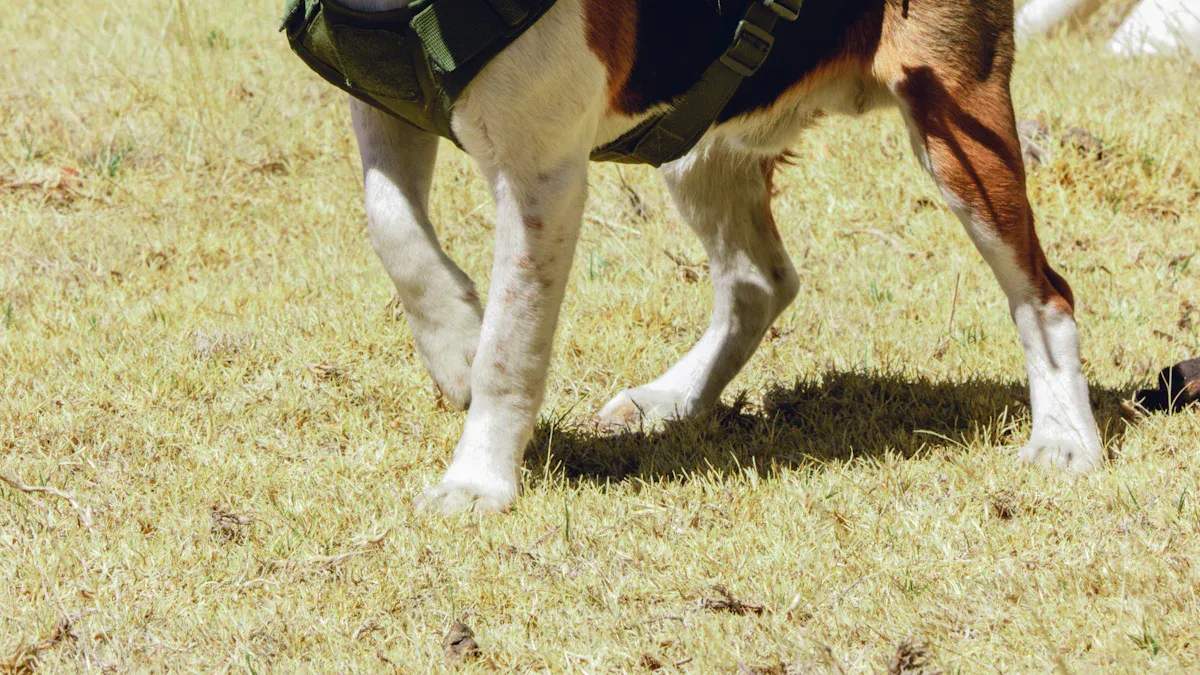
If your dog is frail, you want them to move as safely and confidently as possible. Mobility aids for senior dogs can make daily life much easier. GaitGuard offers joint braces, lifting straps, and other rehabilitation products designed to support weak joints and unstable dogs. When used under your veterinarian’s guidance, these tools can improve comfort, prevent falls, and support recovery.
Joint Braces for Weak or Painful Joints
Joint braces help weak or sore joints feel stronger. Your dog may walk easier and hurt less with a brace. Here are some ways joint braces help:
They keep the joint steady and stop painful moves.
They help your dog put weight on the leg.
They are good if your dog cannot have surgery.
They lower pain and help your dog move better.
GaitGuard has braces for knees, hips, and backs. These braces protect joints and help your dog move. Always ask your veterinarian before you use a brace.
Support and Lift Harnesses for Everyday Help
Support and lift harnesses help you lift your dog. You can help your dog stand, walk, or go up stairs. These harnesses spread your dog’s weight so it is easier for you both. Some harnesses, like the Help ‘Em Up Harness, are made to help sore joints. Vets and rehab experts often suggest these for frail senior dogs.
Wheelchairs, Carts, and Slings for Severe Mobility Issues
Some dogs need more help to move. Wheelchairs, carts, and slings help dogs with big problems. These tools help dogs with arthritis, hip dysplasia, or after surgery. A sling helps if your dog can walk but needs support. If your dog cannot walk, a wheelchair lets them move and play. These aids help dogs with weak legs or after injury.
Choosing Safe, Medical-Grade Products with Veterinary Guidance
Always pick medical-grade products for your dog. The right material, like medical-grade neoprene, keeps your dog cool and comfy. Here is a quick comparison:
Feature | Medical-Grade Neoprene | SBR (Standard) |
|---|---|---|
Breathability | Air can pass through | Holds in heat |
Hypoallergenic | Good for skin | May cause allergies |
Durability | Lasts a long time | Good for short use |
Fit and Comfort | Snug and comfy | Not as snug |
A good fit is important for your dog’s comfort. Your veterinarian can help you measure and fit the device. Check the aid often to make sure it still works as your dog changes.
Tip: Always talk to your veterinarian when picking and fitting mobility aids for senior dogs. This helps your dog stay healthy and happy at every stage of frailty.
Daily Routines and Quality of Life
Balancing Rest and Activity Throughout the Day
You can help your dog by making a simple daily plan. Frail senior dogs need more breaks and shorter walks. Try splitting walks into small sessions, about 30–40 minutes total. Watch your dog’s energy and change the plan if needed. Here is a table with common problems that affect daily routines:
Component | Description |
|---|---|
Under-nutrition | Not eating enough can lower energy and health. |
Exhaustion | Feeling tired makes activity harder. |
Low physical activity | Moving less can lead to weaker muscles. |
Poor mobility | Trouble walking or standing affects quality of life. |
Weakness | Less strength means less independence and activity. |
Gentle walks, short play times, and lots of rest help your dog feel good. Always ask your veterinarian before you change your dog’s activity.
Adapting Routines as Frailty Progresses
As frailty gets worse, you may need to change your dog’s routine. Keeping things the same helps your dog feel safe. You can make these changes:
Adaptation Type | Description |
|---|---|
Daily Routine | Keep meals, walks, and rest at the same times. |
Exercise Modification | Pick gentle exercises that are easy on joints. |
Increased Potty Breaks | Give more potty breaks to stop accidents. |
Short walks and calm leash walks work best as your dog slows down. Keep training short and match your dog’s skills. Mobility aids for senior dogs, like harnesses, can help your dog move. Always talk to your veterinarian before making changes.
Keeping Your Dog Involved in Family Life
You should keep your frail senior dog part of family life. Here are some ways to do this:
Take short walks to give your dog fresh air and exercise.
Play easy games like fetch or hide-and-seek to keep your dog’s mind busy.
Use puzzle toys to help your dog think and solve problems.
Make your home safe for your dog. Use non-slip mats and raised food bowls. Give your dog a spot with easy access to water and food. Use baby gates and remove things that could hurt your dog. Always work with your veterinarian to check your dog’s quality of life and change routines when needed. 🐾
When to Consult Your Veterinarian
Warning Signs That Need Immediate Attention
You should look for serious signs in older dogs. Some problems need your vet’s help right away. If you notice any of these, call your vet fast:
Trouble breathing, like fast or shallow breaths, coughing, or wheezing
Sudden falling down or feeling very weak
Seizures or shaking that will not stop
Losing weight for no clear reason
Not able to walk or dragging their legs
Hurts when moving or sudden trouble walking
These signs can mean heart, lung, or brain emergencies. Frailty in senior dogs can make these problems worse. Acting quickly and getting help from your vet is best for your dog.
Tip: Always keep your vet’s phone number close for emergencies.
Pain Management, Rehab, and Palliative Options
Older dogs often need help with pain and comfort. Your vet can tell you about different ways to help. Pain care may use medicines like COX-inhibitors, gabapentin, or opioids. Other ways, like massage, acupuncture, and gentle therapy, can also help. Rehab services help dogs move better and feel less pain. Your vet might suggest mobility aids for senior dogs, changes at home, or advice about food.
Helping frail senior dogs means caring about their comfort and happiness. Your vet will help you pick the best plan for your dog. You can ask about extra care, like fluids or special treatments, to help your dog feel good.
Talking About Long-Term Plans and End-of-Life Care
You should talk with your vet about long-term plans for frail senior dogs. Checking your dog’s quality of life helps you make big choices. Look for signs like losing weight or acting different. Your vet can help you give comfort and care during your dog’s last days.
Note: Planning ahead with your vet helps your dog get the best care and respect. You can make choices that keep your dog happy and comfortable.
You play a key role in helping your dog through senior dog frailty. When you notice changes early and work closely with your veterinarian, you can do more to protect your dog’s comfort and dignity. Regular checkups, smart home changes, and well-fitted mobility aids all work together to support your aging friend. Focus on keeping your dog safe, pain-controlled, and included in family life — that is what matters most in their senior years.
Key Finding | Description |
|---|---|
Early Detection | Blood tests help you and your vet find frailty faster. |
Owner Engagement | Taking care of your dog every day helps them stay healthy. |
Work with your vet, make smart changes at home, and pick good mobility aids. Always try to keep your dog comfortable and happy.
FAQ
What is the difference between normal aging and senior dog frailty?
Normal aging means your dog slows down but still enjoys daily life. Senior dog frailty shows up as weakness, weight loss, or trouble moving. You should talk to your veterinarian if you notice these changes.
How can I support a frail senior dog at home?
You can create a safe space, use mobility aids for senior dogs, and keep routines simple. Gentle exercise and a calm environment help. Always work closely with your veterinarian to adjust care for frailty in senior dogs.
When should I consider mobility aids for my senior dog?
If your dog struggles to stand, walk, or climb stairs, mobility aids for senior dogs can help. Braces, harnesses, or slings support weak joints. Ask your veterinarian before choosing any product.
Can nutrition help with senior dog frailty?
Yes, proper nutrition supports frail senior dogs. You should feed balanced meals and monitor weight. Your veterinarian can recommend the best diet for your dog’s needs.
Why is it important to work with a veterinarian for frail senior dogs?
Your veterinarian can spot early signs of frailty in senior dogs and guide you in care choices. They help you select safe mobility aids and create a plan that keeps your dog comfortable.