
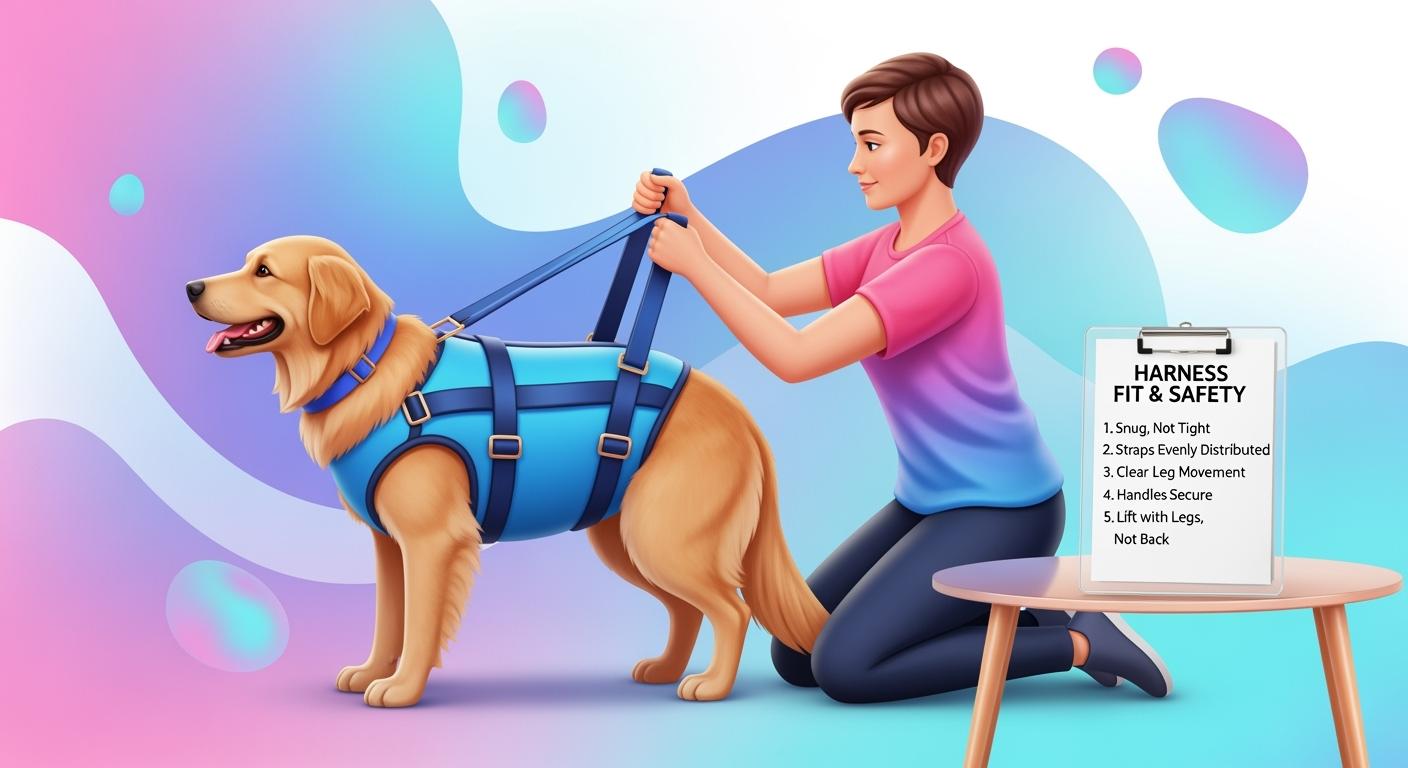
To lift a large dog safely, you need the right tools and a calm space. You protect your back and your dog’s healing tissues by using smart lifting methods. Always check your equipment before each lift. Keep your movements steady and controlled. If unsure, pause and call your vet. With the right steps, you can help your dog move with less risk.
Key Takeaways
Always use proper lifting techniques to protect your back and your dog’s health. Avoid twisting and overreaching.
Check your equipment and environment before lifting. Ensure the area is clear of obstacles and your dog is calm.
Use a harness or sling for support, especially for dogs over 15 kg (33 lb). Always lift with a partner if your dog is heavy or wiggly.
Monitor your dog for signs of pain or discomfort during lifting. If unsure, pause and consult your vet.
Create a safe lifting environment at home by using non-slip mats and blocking access to stairs or jumps.
Why Safe Lifting Technique Matters
Preventing Injury to You and Your Dog
You protect yourself and your dog when you use safe lifting techniques. Lifting a heavy dog without proper form can cause serious injuries. Many people hurt their backs or shoulders because they twist or overreach. The table below shows common causes and risks for people who lift large dogs the wrong way:
Common Causes of Injury | Risks |
|---|---|
Overexertion | Back strain |
Awkward postures | Herniated discs |
Sudden animal movement | Shoulder injuries |
Repetitive strain injuries |
Dogs also face risks if you do not lift them correctly. You can strain their muscles or cause pain if you grab or move them the wrong way. You may also make their injury worse if you twist their body or let them slip.
Repetitive lifting can tire your dog and strain their muscles.
Lifting a dog that is too heavy increases the chance of injury.
Slippery floors or poor grip can lead to falls.
Twisting or turning while lifting puts stress on your back and your dog’s neck.
Dogs in pain or fear may move suddenly, making lifting harder.
If unsure, pause and call your vet.
Why Wiggly Dogs Are Riskier
A wiggly dog can shift weight quickly. You may lose your balance or grip. Sudden movement increases the risk of dropping your dog or hurting yourself. Always ask for help if your dog cannot stay still. Calm your dog before you try to lift a large dog safely.
When Not to Lift
Do not lift your dog if you feel pain or weakness. Stop if your dog cries out, struggles, or seems afraid. Wait for help if your dog is too heavy or hard to control. If unsure, pause and call your vet.
Quick Rules to Lift a Large Dog Safely
Callout: If your dog is over 15 kg (33 lb), always use two people or a harness system.
You can lift a large dog safely by following these five steps:
Risk Scan: Check your space for slippery floors, clutter, or anything that could trip you. Make sure your dog feels calm.
Method Selection: Use the table below to choose the safest way to pick up a dog based on your dog’s ability today.
Body Setup: Stand close to your dog. Keep your feet shoulder-width apart. Bend your knees, not your back.
Support Technique: Use a harness or sling if possible. Support both the chest and hips. Keep your dog’s spine straight.
Set Down and Skin/Strap Check: Lower your dog slowly. Check for any redness or strap marks. Adjust the fit if needed.
Tip: If your dog wiggles or feels heavy, ask for help before you try to pick up a dog.
When to Use Two People
You should use two people if your dog weighs more than 15 kg (33 lb), cannot stand, or moves a lot. One person supports the front. The other supports the rear. This teamwork helps you safely pick up your dog and prevents twisting.
Worked Example:
Your dog weighs 20 kg (44 lb) and feels nervous. You notice he tries to squirm. You decide to use a harness and ask a friend to help. You both agree on commands before you lift.
Sling vs Carrying
A rear sling helps if your dog has weak back legs but can still walk. Let your dog bear most of his weight. Only carry a dog if you must move him over a short distance and he cannot walk at all.
Full-Body vs Rear Support
Use a full-body harness for dogs with spinal issues or weakness in all legs. Choose a rear sling for dogs with only back leg weakness. Always check the fit before each use.
Dog’s ability today | Safest tool | What to avoid |
|---|---|---|
Can stand, rear weakness | Rear support sling | Lifting by legs or belly |
Cannot stand, full weakness | Full-body harness, 2 people | Dragging or solo lift |
Spinal precautions | Full-body harness | Twisting, uneven support |
Wiggly or >15 kg/33 lb | Harness + 2 people | Solo lift, no support |
Post-op, needs help walking | Sling or harness | Carrying unsupported |
Tip: If unsure, pause and call your vet.
Prepare Your Home for Lifting
A safe home environment helps you protect both your dog and yourself. You can reduce the risk of slips and falls by making a few simple changes before you lift or carry a dog.
Add Non-Slip Mats
You should place non-slip mats or runners along the paths your dog uses most. These mats give your dog better grip and help you keep your balance. Ultra-thin yoga mats work well on slippery floors. Rubberized or carpeted surfaces also improve stability for dogs who feel weak or unsteady. Some pet owners use ToeGrips, which fit on the dog’s nails and increase traction. Research shows that ToeGrips improve stability for large dogs who need help moving. Veterinary orthopedic surgeons support their use, and studies show they do not change the way most dogs walk.
Evidence Type | Description |
|---|---|
Study Findings | The study indicated that ToeGrips provide improved stability for dogs on slippery surfaces, which is crucial for large dogs needing assistance. |
Gait Analysis | Changes in gait due to ToeGrips were minimal, suggesting they do not adversely affect normal dogs while enhancing stability for those with mobility issues. |
Veterinary Endorsement | Research conducted by veterinary orthopedic surgeons supports the effectiveness of ToeGrips in preventing slips and falls in dogs. |
Tip: Always check mats for wrinkles or curled edges that could trip you or your dog.
Block Stairs and Jumps
You should block access to stairs and furniture that your dog might try to jump on or off. Use baby gates or sturdy barriers. This step prevents sudden movements that could lead to injury. Adding indoor ramps or block steps next to furniture helps your dog stay independent and reduces the need to carry a dog. Choose wide, gently sloping ramps with textured surfaces for the best safety.
Place ramps or steps near beds and couches.
Make sure all surfaces have good traction.
Supervise your dog during recovery.
If unsure, pause and call your vet.
Set Up a Transfer Zone
Set up a clear, safe area for lifting or moving your dog. Remove clutter and keep the space well-lit. Use non-slip mats in this zone. Agree on commands with anyone helping you, such as “Ready, lift, step, set.” A transfer zone helps you focus on safe body mechanics and keeps your dog calm during each move.
Note: Review your setup each day to keep your home safe for both you and your dog.
How to Lift a Large Dog Safely: Body Mechanics
Before you lift a large dog safely, you need to check your space, your equipment, and your own body position. Good body mechanics protect your back and your dog’s healing tissues. You can use the checklist below before every lift.
Printable Pre-Lift Safety Check
Is the floor dry and clear of clutter?
Are non-slip mats in place?
Is your dog calm and ready?
Is your harness or sling fitted using the two-finger snug rule?
Do you have help if your dog is over 15 kg (33 lb) or wiggly?
Have you agreed on commands with your helper?
Do you know your path and destination?
If unsure, pause and call your vet.
Foot Position and Squat Technique
You should always set your feet shoulder-width apart. This stance gives you balance and power. Place your toes forward and stand close to your dog. Bend your knees and hips to lower yourself, not your back. Keep your spine straight and your chest up. Do not twist or reach over your dog. Move your feet to turn instead of twisting your back.
Tip: Lift with your legs, not your back. Keep the dog close to your body.
The table below shows the core principles that help you avoid injury when you pick up a dog:
Core Principle | Explanation |
|---|---|
Maintain a neutral spine | Keep the natural curve in your back. This reduces stress on your discs and ligaments. |
Engage the core muscles | Tighten your stomach muscles. This supports your lower back. |
Lift with the legs | Use your thigh and hip muscles. These are the strongest muscles in your body. |
Keep the load close to your body | Hold your dog close. This reduces strain on your back. |
Use smooth, controlled movements | Move slowly and steadily. This prevents slips and strains. |
Plan the lift and pathway | Know where you will go before you start. This keeps you and your dog safe. |
Hand Placement for Support
Correct hand placement helps you support your dog’s weight and keeps the spine straight. Follow these steps for safe lifting:
Step | Description |
|---|---|
1 | Stand beside your dog. |
2 | Bend your knees to lower yourself while keeping your back straight. |
3 | Place one hand gently on the collar or around the neck for control. |
4 | Slide your other arm under the belly, just in front of the hind legs. |
5 | For large or weak dogs, ask a helper to support the front or rear. |
6 | If your dog is very heavy, always use two people and a harness or sling. |
Micro-tip: Never lift by the legs, tail, or underarms. Always support the chest and hips.
If your dog has a harness, use the handles to guide your lift. Make sure the harness fits snugly but does not pinch. Check for redness or rubbing after each move.
Teamwork Commands
Clear communication makes lifting safer. You and your helper should agree on simple commands before you start. Use words like “Ready,” “Lift,” “Step,” and “Set.” Speak in a calm, steady voice. Count down together if needed.
Example Teamwork Sequence:
“Ready?” (Both helpers confirm)
“Lift.” (Both lift at the same time)
“Step.” (Move together)
“Set.” (Lower the dog gently)
If your dog starts to wiggle or panic, stop and set him down safely. Reassure your dog and try again when calm.
The table below helps you spot problems during lifting and tells you what to do next:
Normal Adjustment | Concerning Sign | What to Do Next |
|---|---|---|
Dog stays calm and steady | Dog cries out or struggles | Stop, set down, check for pain |
Harness fits snug, no redness | Redness or swelling under straps | Adjust fit, check skin, call vet if needed |
You feel balanced and strong | You feel pain or weakness | Pause, ask for help, call vet if unsure |
Path is clear and safe | You trip or lose balance | Set dog down, clear path, try again |
If unsure, pause and call your vet.
Summary: To lift a large dog safely, use your legs, keep your back straight, and hold your dog close. Plan your moves, use the right support, and work as a team. Always check for signs of pain or discomfort. If you have any doubts, call your vet for advice.
Assisting with a Rear Sling
A rear sling helps your dog when he has hind-end weakness or needs support during potty trips. You can use a sling to help your dog walk outside or move short distances. This tool lets your dog bear most of his own weight while you guide and steady him. You should never use a sling to carry a dog for long distances.
Correct Sling Placement
You need to place the sling under your dog’s abdomen, just in front of the hind legs. Make sure the sling supports your dog’s weight evenly. Always check the fit before each use. The sling should feel snug but not tight. You want to avoid discomfort or restricted breathing. You should check your dog’s skin for redness or sores every day, especially around the lower leg, thigh, and belly.
Best Practice | Description |
|---|---|
Snug Fit | Ensure the sling is snug but not too tight to avoid discomfort or restricted breathing. |
Periodic Checks | Regularly check for sores and complications, especially around the lower leg, thigh, and abdomen. |
Comfort | Make sure the sling is comfortable and does not cause chafing or rubbing. |
Supervision | Always supervise your dog while using the sling. |
Veterinary Guidance | Consult a veterinarian for specific guidance on sling use for your dog’s condition. |
Tip: If unsure, pause and call your vet.
How Much Help to Give
You should let your dog do most of the work when using a rear sling. Your job is to guide and steady him, not to lift all his weight. This helps your dog stay strong and recover faster. Dog slings work well for dogs with mobility issues, especially after surgery or injury. Always talk to your vet about how much help your dog needs. The right sling and technique can improve comfort and safety.
Dog slings help dogs with mobility issues, especially during recovery.
You should use the sling as your vet recommends.
The correct sling can make your dog feel safer and more comfortable.
Note: If your dog struggles or seems uncomfortable, stop and check the fit.
Common Sling Mistakes
You can prevent problems by avoiding these common mistakes:
Adjust the sling for the best fit. Check straps for security and comfort. Make sure the weight is distributed evenly and your dog stays balanced.
Help your dog get used to the sling. Start with short sessions and use treats or praise. Let your dog adjust slowly.
Reminder: Always check your dog’s skin for redness or rubbing after each use. If unsure, pause and call your vet.
Choosing Between Rear Sling and Full-Body Harness
Post-Op Recovery
After surgery, your dog may need extra support to move safely. You should choose a rear sling if your dog can stand and bear some weight but feels unsteady. This tool supports the middle of the body and avoids pressure on healing wounds. Many vets recommend a rear sling after surgeries like TPLO or cruciate ligament repair. If your dog cannot support himself at all, a full-body harness works better. This harness lets you lift your dog completely off the ground and keeps his spine level. Always check with your vet before using any support device.
If unsure, pause and call your vet.
Neurologic or Spinal Issues
Dogs with spinal injuries or nerve problems need even support. A full-body harness helps you keep your dog’s back straight and prevents twisting. You can use this harness for dogs with general weakness or those who need spinal precautions. A lifting harness designed for dogs gives you handles to guide your dog safely during transfers. Never use a rear sling alone if your dog cannot control his front legs or has severe balance loss.
Senior Dogs and Slippery Floors
Older dogs often slip on smooth floors. You can use a rear sling for mild hind-end weakness. This tool helps your dog walk short distances. For dogs with more severe weakness or balance problems, a full-body harness gives better control and stability. You may need this harness for stairs or long transfers. Always check the fit and watch for skin irritation.
Comparison Table: Sling vs Harness
Feature | Rear Lift Sling | Full-Body Harness |
|---|---|---|
Main support area | Hind end only | Front and rear (entire body) |
Best for | Mild to moderate hind weakness | Moderate to severe weakness, balance loss |
Control on stairs | Limited stability | Higher stability and control |
Ease of putting on | Fastest | Slower but more secure |
Wear time | Short periods | Can be worn longer (not 24/7) |
Fall prevention | Some, if dog can still stand | More, especially for wobbly dogs |
Fit check | Two-finger snug at belly | Two-finger snug at chest, belly, rear |
Always check for redness, rubbing, or dampness under straps. Adjust fit as needed. If unsure, pause and call your vet.
Fit and Skin Checks
Two-Finger Snug Rule
You should always check the fit of your dog’s harness or sling before each use. The two-finger snug rule helps you find the right balance between comfort and security.
Slide two fingers between the harness and your dog’s chest or neck. The harness should feel snug but not tight.
If you cannot fit two fingers, the harness is too tight. Loosen it to prevent discomfort.
If you can fit more than two fingers, the harness is too loose. Tighten it so your dog cannot slip out.
This rule helps you keep your dog safe and comfortable during every lift.
If unsure, pause and call your vet.
Preventing Chafing
You can protect your dog’s skin by following a few simple steps. Chafing often happens when a harness or sling rubs against the skin for too long or fits poorly.
Check all contact points for redness or rubbing every day.
Adjust the harness as your dog’s size or shape changes.
Brush your dog’s coat to keep the fur clean and reduce irritation.
Give your dog breaks from the harness to let the skin breathe.
Use soothing creams for any irritated spots, but ask your vet for advice first.
Talk to your vet about any ongoing skin problems.
If you see any redness or sores, stop using the harness until you fix the problem. If unsure, pause and call your vet.
Bathroom Access
Enhance your dog’s quality of life by enabling them to walk and move. Hold your pet’s back in alignment and prevent further injury.
Your dog’s wheelchair or harness should let them pee and poop without trouble. These aids encourage your dog to move and help their body work naturally.
When your dog stands upright and moves more, they can relieve themselves as needed. Always check that straps do not block bathroom access before you go outside.
If unsure, pause and call your vet.
When to Call the Vet
Red Flags to Stop
You need to know when to stop lifting or moving your dog and call your veterinarian. Some signs mean you should get help right away. Others mean you should watch your dog closely and check again soon. Always put your dog’s safety first.
If unsure, pause and call your vet.
Here is a table to help you decide what to do if you see certain signs:
Red Flag | Call Vet Urgently | Monitor and Re-Check |
|---|---|---|
Sudden paralysis or limb weakness | ✅ | |
Collapse or inability to stand | ✅ | |
Severe trauma (accident, fall) | ✅ | |
Difficulty breathing (wheezing, open mouth) | ✅ | |
Continuous vomiting or unproductive retching | ✅ | |
Seizure activity | ✅ | |
Struggling to urinate | ✅ | |
Signs of acute pain (panting, aggression) | ✅ | |
Mild limping or stiffness | ✅ | |
Occasional coughing | ✅ | |
Mild weakness after exercise | ✅ |
You should call your vet right away if your dog cannot move, breathe, or stand, or if you see signs of severe pain. If your dog vomits many times, cannot urinate, or has a seizure, get help fast. Watch for changes in gum color or breathing. These can show serious problems.
What to Record for the Vet
You help your vet by sharing clear details. Write down what happened and what you saw. This helps your vet prepare for your dog’s care.
Note the time and type of problem (collapse, pain, trouble breathing).
Describe your dog’s breathing and gum color.
List any visible injuries or swelling.
Record if your dog could walk, stand, or urinate.
Mention any recent falls, accidents, or seizures.
Tell your vet what support or equipment you used.
Always call your veterinarian as soon as your pet is secure. Give as much detail as possible. This helps the veterinary team get ready for your arrival.
If you face an emergency, use a slip lead for control and support your dog’s body. Ask someone to help you lift. Use a blanket or board to keep your dog’s spine straight if needed. Avoid twisting your dog’s neck or back.
If unsure, pause and call your vet.
You can lift a large dog safely by following a few key steps. First, check your space and equipment. Use gentle control and reward your dog with treats to keep him calm. Always use stable, nonslip surfaces and proper lifting techniques. Work as a team when possible. Teamwork helps you share the load, communicate clearly, and keep your dog comfortable. If unsure, pause and call your vet.
FAQ
How do I know if my dog needs a harness or a sling?
You should choose a harness for full-body support or spinal issues. Use a rear sling for mild hind-end weakness. If unsure, pause and call your vet.
Can I lift my large dog by myself?
You should not lift a dog over 15 kg (33 lb) alone. Always ask for help or use a harness system. If unsure, pause and call your vet.
What should I do if my dog resists being lifted?
Stay calm and speak softly. Try treats or gentle praise. Stop if your dog struggles or shows pain. If unsure, pause and call your vet.
How often should I check the harness or sling fit?
Check the fit before every use and after walks. Look for redness or rubbing. Adjust as needed. If unsure, pause and call your vet.
Is it safe to use a towel as a sling?
You can use a folded towel in an emergency. Make sure it supports your dog’s belly and does not twist the spine. If unsure, pause and call your vet.
