
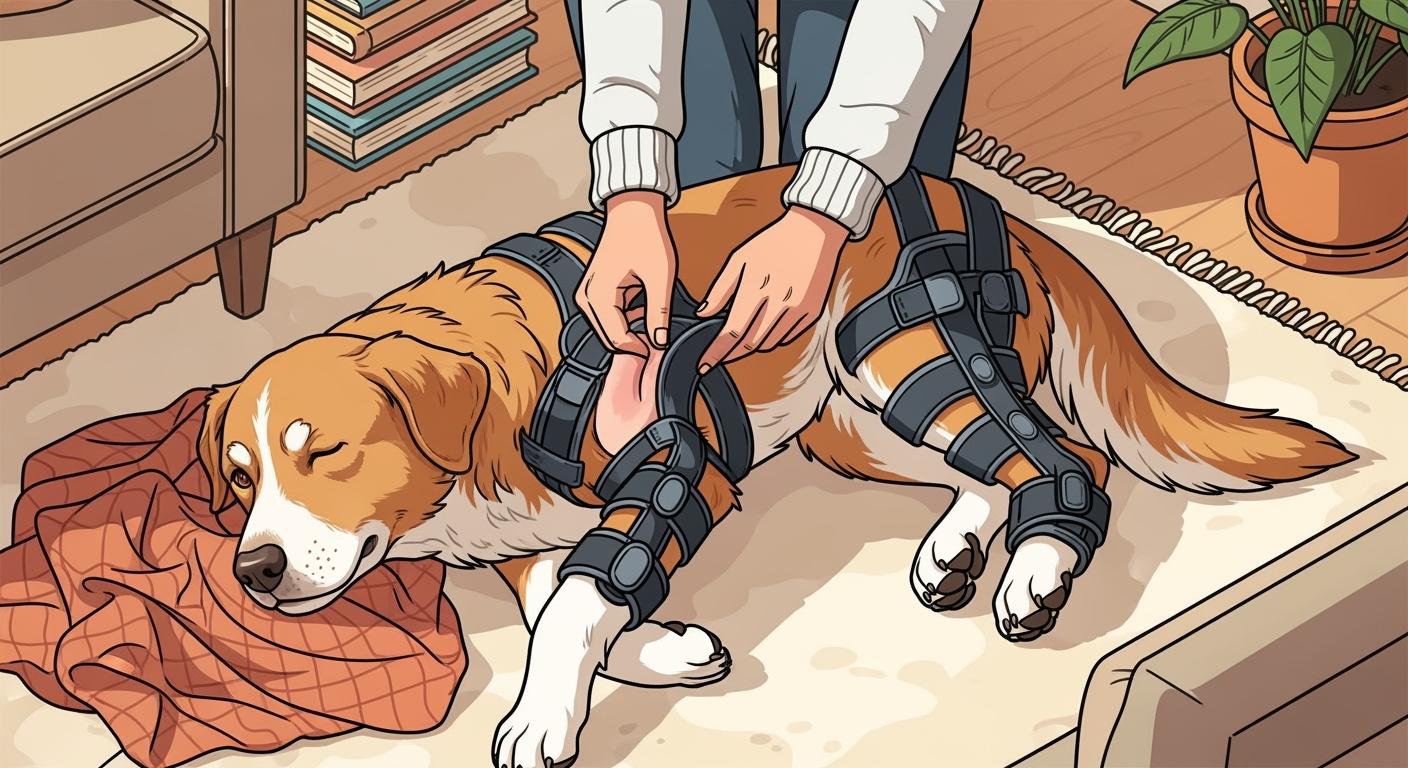
Brace sores can get worse fast. Always listen to your vet first.
Many dog owners worry when they see red skin or irritation from braces. Pressure sores on dogs are common, especially in the first few weeks. Studies show almost half of dogs with orthopedic braces get skin problems. Skin sores are the most common issue. You can help stop dog brace pressure sores by checking your dog’s skin every day. Make sure the braces fit right. Most pressure sores on dogs can be stopped with easy habits. Keep the skin clean and dry. Use soft bedding. Help your dog move gently. These steps help your dog feel good and stay safe.
If you are comparing several recovery problems at once-stairs, potty breaks, lifting support, incision protection, brace fit, and pressure checks-start with the Dog Recovery Support Guide before choosing a specific brace, lift harness, sleeve, or anti-lick product.
Key Takeaways
Look at your dog’s skin every day for red spots or irritation. Finding problems early stops bigger issues from happening.
Make sure the brace is tight but not too tight. A good fit lowers pressure and rubbing on the skin.
Keep your dog’s skin and brace clean and dry. Wet skin can cause sores, so dry it well.
Use soft bedding and move your dog often. This helps take pressure off sore spots.
Call your veterinarian if you see any sores or pain. Acting fast can stop injuries from getting worse.
Quick Reference: Daily Skin and Fit Checklist
Brace sores can worsen quickly; veterinary guidance overrides generic advice.
Quick Reference: Daily Skin and Fit Checklist
Daily checks help you catch problems early and keep your dog comfortable in braces. Prevention starts with a simple routine. You should always check your dog’s skin and the fit of the brace every time you put it on or take it off. Try to do this at least twice a day.
Skin check before and after brace use
Look under the brace for any redness, swelling, or hair loss.
Use the “redness rule”: If you see mild pinkness that fades within 20–30 minutes after removing the brace, this can be normal during break-in. Redness that lasts longer means you should pause use and adjust the fit.
Check for open sores, blisters, or any foul odor. These signs mean you should stop using the brace and call your veterinarian.
Clean your dog’s skin and the brace area to remove sweat, dirt, or debris.
Take a quick photo if you notice any changes. This helps you track skin health over time.
Tip: Consistent lighting makes it easier to spot changes in your dog’s skin.
Redness and Skin Changes Table
Symptom | What it suggests | What to do |
|---|---|---|
Mild pinkness (fades in 20–30 min) | Normal break-in irritation | Shorten wear, recheck fit, add liner |
Redness lasts longer or sharp strap line | Too much pressure/poor fit | Pause use, adjust fit, consider vet review |
Hair loss, thickened skin, moist spot | Friction + moisture | Stop use, clean/dry area, vet if worsening |
Open sore, blister, swelling | Pressure injury/circulation | Stop immediately, seek veterinary care |
Fit check: straps, slippage, and comfort
Make sure the brace fits snugly but does not pinch your dog.
Straps should lie flat and not twist or dig into the skin.
Check for slippage or rotation. If the brace moves, pressure points can shift and increase sore risk.
Remove any sand, hair, or debris from the lining before each use.
If you notice discomfort, limping, or sudden changes in how your dog moves, stop and reassess the fit.
Prevention means fewer setbacks and a more comfortable rehab for your dog. Daily checks make it easier to spot problems early and know when to call the vet.
Dog Brace Pressure Sores: Signs and Risks
Brace sores can worsen quickly; veterinary guidance overrides generic advice.
Pressure, friction, and moisture causes
Dog brace pressure sores develop when the skin cannot handle repeated stress. You see this most often in dogs who wear braces for support. Pressure happens when the brace pushes on one spot for too long. This reduces blood flow and can cause tissue damage. Friction occurs when the brace rubs against your dog’s skin, especially if the fit is not perfect or the brace slips. Moisture builds up from sweat, wet weather, or not drying the area well. This softens the skin and makes it easier for sores to form. Think about how your feet feel in wet socks—dogs can get similar problems under a brace.
You need to watch for these risk factors:
Dogs with trouble walking or who cannot move well
Older dogs who rest more and have less muscle padding
Large breeds that put more weight on their joints
Dogs with thin skin, little fat, or short hair
Dogs who cannot feel their limbs well
Common signs of dog brace pressure sores include hair loss, exposed skin, excessive licking, skin calluses, or discoloration. You might also see stained hair, fluid-filled spots, or open wounds.
Pressure vs Friction vs Moisture Table
Cause | What you see | Quick fix | When to call vet |
|---|---|---|---|
Pressure | Redness that does not fade, swelling, open sore | Pause use, adjust fit, add padding | Redness >30 min, open wound, swelling |
Friction | Hair loss, thickened skin, sharp strap line | Clean/dry area, add liner, check for debris | Skin breakdown, worsening irritation |
Moisture | Moist “hot spot”, odor, soft skin, discharge | Dry area, remove cover, change liner | Foul odor, pus, persistent wetness |
Common sore locations by brace type
You will find dog brace pressure sores most often over bony points. Knee braces can cause sores near the knee cap or ankle. Hock braces may rub the back of the leg or heel. Carpal braces can irritate the wrist or top of the paw. Always check under straps and at the edges of the brace. These spots get the most pressure and friction. Dogs with thin coats or little padding need extra care. If you see any warning signs, stop using the brace and call your veterinarian.
Home Checks for Pressure Sores on Dogs
Brace sores can get worse fast. Always listen to your vet first.
Home Checks for Pressure Sores on Dogs
What to look for: redness, swelling, odor, hair loss
You are important in finding pressure sores early. Start by taking off the brace gently. Let your dog rest and feel calm. Look closely at your dog’s skin. Use the redness rule. If you see light pink skin that goes away in 20–30 minutes, this is usually okay when starting a new brace. If the redness stays longer, the brace might not fit right or is causing irritation.
Watch for these signs:
Skin that looks red, purple, or pink
Spots where hair is missing
Swelling or skin that feels thick
Fur that is stained red, pink, or brown
Wounds that smell bad or have pus
Open wounds or blisters
Your dog licking or grooming too much
Your dog moving less or acting like they are in pain
If you see any of these signs, stop using the brace. Call your veterinarian for help. Finding problems early keeps your dog safe and helps them heal faster.
Tip: Always check under the straps and on bony spots. These places get the most pressure.
Redness and Skin Changes Table
Symptom | What it suggests | What to do |
|---|---|---|
Mild pinkness (fades in 20–30 min) | Normal break-in irritation | Shorten wear, recheck fit, add liner |
Redness lasts longer or sharp strap line | Too much pressure/poor fit | Pause use, adjust fit, consider vet review |
Hair loss, thickened skin, moist spot | Friction + moisture | Stop use, clean/dry area, vet if worsening |
Open sore, blister, swelling | Pressure injury/circulation | Stop immediately, seek veterinary care |
Using a photo log to track changes
A photo log helps you watch for skin changes. Take clear pictures of your dog’s skin before and after using the brace. Try to use the same light and angle every time. This makes it easier to see new redness, swelling, or hair loss. If you notice changes, look at old photos to compare. Show these pictures to your veterinarian if you need to. Photo logs are an easy way to keep track of pressure sores and help your dog get good care.
Note: Keeping good records makes daily checks easier. It also helps you know when to call the vet.
Fit Problems and How to Prevent Pressure Sores
Brace sores can worsen quickly; veterinary guidance overrides generic advice.
A good fit is the most important step in preventing pressure sores on dogs. When a brace does not fit right, it can cause pressure, rubbing, and skin breakdown. You need to know how to spot these problems early and fix them before they turn into bigger issues. Daily checks and small adjustments help keep your dog safe and comfortable.
Slippage and rotation tests
Braces should stay in place during movement. If a brace slips or rotates, it can create new pressure points and increase the risk of pressure sores on dogs. You can test for slippage by gently moving the brace side to side and up and down. The brace should feel snug but not tight. It should not twist or slide out of position when your dog walks or lies down.
Fit Failure Modes Table
Fit Problem | Description |
|---|---|
Too Tight | Can lead to pressure sores due to excessive pressure on the skin. |
Too Loose | Can cause chafing, which may also result in skin irritation and sores. |
If you notice the brace leaving deep marks, causing swelling, or making your dog limp, it may be too tight. If the brace moves around, bunches up, or your dog can slip a paw out, it is likely too loose. Both problems can lead to skin damage.
How to spot and fix slippage or rotation:
Watch your dog walk and sit with the brace on. Look for any shifting or twisting.
Check for new red spots or hair loss after each use.
Adjust the straps so they are snug but not pinching.
Use anti-slip liners or extra padding if needed.
If you cannot stop the brace from moving, contact your veterinarian for help.
Tip: Always check the brace after your dog plays, goes outside, or naps. Movement can change the fit.
Strap placement and edge rubbing
Straps and edges are common trouble spots for pressure sores on dogs. Poor strap placement or rough edges can rub against the skin, especially over bony areas. You should check that straps lie flat and do not twist or dig in. Edges should have soft padding and not press into the skin.
Common problems include:
Straps that are too tight or too loose
Edges that lack padding or have rough seams
Straps that shift during movement
You can prevent these issues by following a few simple steps:
Place straps away from joints and bony points when possible.
Make sure straps are flat and evenly tightened.
Use thick, soft padding (at least 10mm of neoprene or memory foam) under straps and along edges.
Check for any signs of rubbing, such as hair loss or sharp lines on the skin.
Practical tips for preventing pressure sores:
Choose braces with adjustable straps and breathable liners.
Match the size and weight of the brace to your dog’s build.
Align the brace’s hinge with your dog’s joint to avoid rubbing.
Clean and dry the skin and brace area before each use.
Inspect your dog’s skin every time you put on or remove the brace.
Schedule regular check-ins with your veterinarian to review fit and skin health.
Note: Proper fitting and daily monitoring are essential for preventing pressure sores on dogs. Small changes in fit can make a big difference in your dog’s comfort.
Why accurate fit and monitoring matter
Recommendation | Importance |
|---|---|
Proper Fitting | Essential to prevent skin complications, including pressure sores. |
Monitoring | Regular checks are necessary to identify and address fit issues promptly. |
You play a key role in preventing pressure sores. By checking for slippage, adjusting straps, and using soft padding, you help your dog stay comfortable and heal faster. If you see any warning signs, pause brace use and call your veterinarian. Early action means fewer setbacks and a smoother recovery for your dog.
B2B sourcing note: For pet brands or sourcing teams reviewing brace fit, liner, strap, and pressure-distribution issues, see GaitGuard’s OEM/ODM pet orthotics support for product adaptation, material discussion, sample review, and bulk production coordination.
Step-by-Step Fixes for Preventing Pressure Sores
Brace sores can worsen quickly; veterinary guidance overrides generic advice.
Step-by-Step Fixes for Preventing Pressure Sores
You can prevent pressure sores in dogs by following a clear, daily routine. These steps help you keep your dog comfortable, reduce the risk of skin breakdown, and make rehab easier.
Clean and dry routine for brace and skin
Keeping your dog’s skin and brace clean and dry is the foundation for healthy skin. Dirt, sweat, and moisture can build up under braces and increase the risk of pressure sores. You should follow these steps every day:
Gently remove the brace and inspect your dog’s skin for any redness, swelling, or hair loss.
Clean the area under the brace with a mild antiseptic solution or saline. This removes dirt and debris without irritating the skin.
Pat the skin dry with a soft towel. Make sure no moisture remains, especially in skin folds or under straps.
If your veterinarian recommends it, apply a thin layer of topical ointment or a protective dressing to any irritated spots.
Change your dog’s bedding often to keep the resting area clean and dry.
Prevent your dog from licking or scratching the area. Use an Elizabethan collar if needed.
Reposition your dog every 2–3 hours if they rest for long periods. This relieves pressure on bony spots.
Tip: Always check for urine or feces near the brace. Clean these areas right away to prevent skin irritation.
If you take your dog outside and use a temporary cover to keep the brace dry, remember the outdoor wetness rule. Remove any plastic or waterproof cover after 20 minutes to avoid trapping moisture and heat.
Liner, padding, and protective strategies
Soft liners and padding play a big role in reducing rubbing and moisture under braces. You can use several types of materials to protect your dog’s skin:
Fleece liners provide a soft, cushioned layer between the brace and your dog’s skin. They help cover seams and edges that might irritate sensitive areas.
Foam padding works well inside leg braces and boots. It reduces pressure on bony points and protects against friction.
Sheepskin pads can help absorb moisture and prevent bacterial growth.
Make sure all liners and pads are clean and dry before each use. Wash them regularly to remove sweat, dirt, and hair.
Choose braces with breathable liners and adjustable straps. This allows you to customize the fit and reduce pressure on problem spots.
Note: Never add extra padding to cover up a sore. Always address the cause of redness or irritation first.
Re-fit after adjustments
Checking and adjusting the fit of your dog’s brace is essential to prevent pressure sores. You should inspect the fit at least twice daily, especially during the first week of use. Increase checks if your dog is new to braces or if you notice any changes in skin condition.
Look for signs of irritation such as redness, swelling, wetness, or tender spots.
If you see redness that lasts longer than 20–30 minutes after removing the brace, pause use and adjust the straps or padding.
Remove the brace immediately if you see open sores, blisters, or swelling.
After making any adjustments, re-fit the brace and check for slippage or rotation. The brace should stay in place without pinching or twisting.
Watch your dog walk and rest with the brace on. Make sure the brace does not shift or cause discomfort.
Mini Scenario: Resolving Strap-Line Redness
Imagine you notice a sharp red line under your dog’s brace strap after a walk. The redness does not fade after 30 minutes. Here is what you should do:
Remove the brace and let your dog’s skin air out.
Clean the area gently and pat it dry.
Adjust the strap tension so it is snug but not tight.
Add a soft fleece liner under the strap to cushion the area.
Wait until the redness fades before putting the brace back on.
Re-check the skin after the next wear session. If redness returns, pause use and call your veterinarian.
Call your veterinarian if you see open sores, swelling, or if your dog seems uncomfortable. Early action prevents worse injury and helps your dog heal faster.
By following these step-by-step fixes, you can prevent pressure sores, make daily checks easier, and support a more comfortable recovery for your dog.
When to Call the Veterinarian
Brace sores can get worse fast. Always listen to your vet first.
When to Call the Veterinarian
Red-flag symptoms and urgent signs
You should know when to stop using a brace and call your veterinarian. Some signs mean you need to act right away. These symptoms show your dog might have a serious problem. Watch your dog every day for these warning signs. If you see any of these, call your veterinarian right away:
Open wounds, blisters, or sores under the brace
Swelling that gets bigger or feels hot
Redness that stays after 30 minutes
Bad smell, pus, or fluid from the skin
Sudden pain, limping, or your dog will not walk
Cold, blue, or swollen toes
Joint that is stuck or cannot move
Signs of infection like heat, redness, or leaking fluid
More pain after your dog seemed better
Bleeding that will not stop
Trouble breathing, fast or shallow breaths
Passing out or having a seizure
Bad vomiting or diarrhea
Here is a quick table to help you know what to do:
Red Flag | What to Do |
|---|---|
Sudden limp | Stop activity, call your veterinarian |
Joint stuck | Do not force movement, seek help |
Paw dragging | Remove brace, get a diagnosis |
Swelling or cold toes | Stop use, call your veterinarian |
Open wound or blister | Stop use, urgent veterinary appointment |
Signs of infection | Call your veterinarian right away |
If you see any of these signs, stop using the brace. Do not wait. Acting early helps your dog heal faster and stops worse injury.
Why stopping early prevents worse injury
You are important in helping prevent pressure sores in dogs. Taking action early makes a big difference. If you stop using the brace when you see a problem, you lower the risk of deep wounds. Checking your dog’s skin and keeping it clean helps you find problems before they get bad. Clean the area gently and keep it dry. Good food helps your dog’s skin heal. If you see redness, swelling, or pain, pause brace use and call your veterinarian. Do not try to hide sores with extra padding. Always ask your veterinarian for the best way to treat pressure sores.
If you act fast, you help your dog avoid wounds that are hard to fix. If your dog cannot control pee or poop, keep the area clean and dry. For mild redness, clean the skin and use a cover. For open sores or deep wounds, your dog needs to see the veterinarian. Your veterinarian will tell you the best steps for treatment and prevention.
Remember: Acting early means fewer problems, easier checks, and a more comfortable recovery for your dog. Always trust your veterinarian if you are not sure.
Preventing Pressure Sores During Rehab
Brace sores can worsen quickly; veterinary guidance overrides generic advice.
Preventing Pressure Sores During Rehab
Break-in schedule and gradual increase
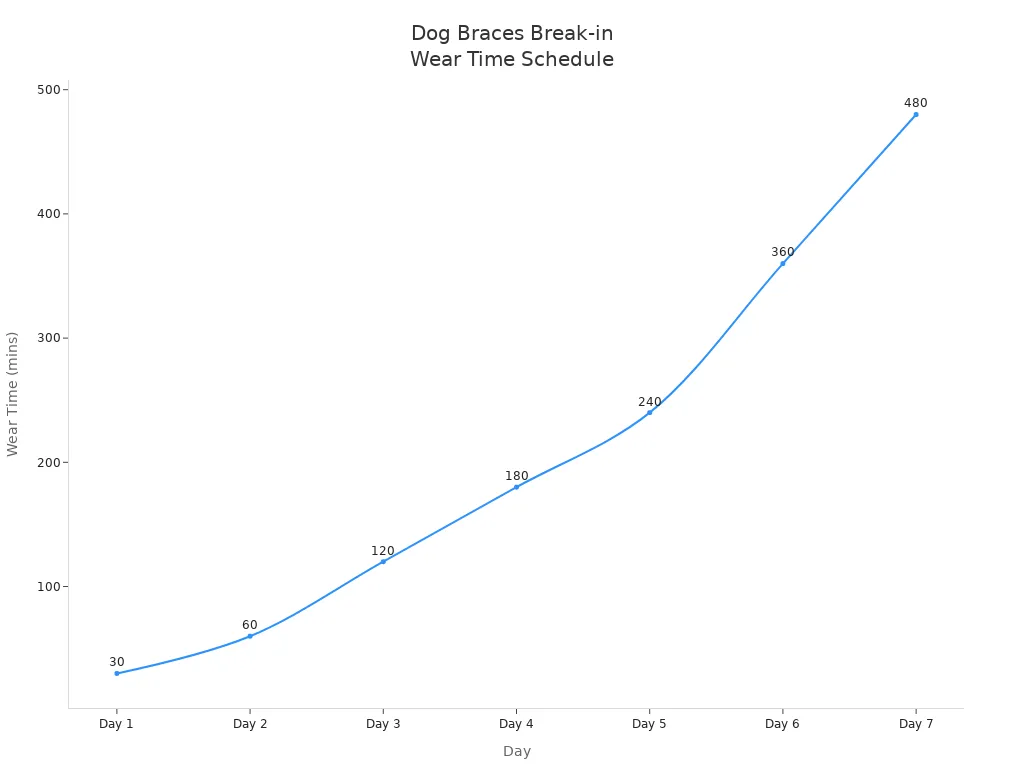
You help your dog adjust to a new brace by following a careful break-in schedule. Start with short wear times and increase slowly. This lets your dog’s skin get used to the brace and lowers the risk of pressure sores. Most dogs do best when you begin with 30 to 60 minutes, two to five times a day. Check your dog’s skin every time you remove the brace. If the skin looks healthy, add more time each day.
Here is a sample break-in schedule for dogs:
Day | Wear Time (mins) | Frequency (times/day) |
|---|---|---|
1 | 30 | 2-3 |
2 | 60 | 2-3 |
3 | 120 | 2-3 |
4 | 180 | 2-3 |
5 | 240 | 2 |
6 | 360 | 1 |
7 | 480 | 1 |
You should remove the brace at night and during crate time unless your veterinarian says otherwise. Watch your dog for any signs of discomfort or redness. If you see irritation, pause and let the skin recover before increasing wear time.
Managing moisture, bedding, and movement
You can prevent pressure sores by keeping your dog’s skin dry and using the right bedding. Moisture under the brace makes sores more likely. Always dry your dog’s skin before putting the brace back on. Change liners and pads if they get wet.
Give your dog a soft, flat bed that is large enough for them to stretch out. Orthopedic beds or pressure-relieving mats help protect the skin. Move your dog every few hours if they rest for long periods. This reduces pressure on bony spots and helps blood flow.
Use soft bedding to keep your dog comfortable.
Choose a bed that is easy to get on and off.
Reposition your dog often to avoid pressure on one area.
Clean the bedding often to keep it dry and free of dirt.
By following these steps, you make daily checks easier and help your dog recover with fewer setbacks. Always check for warning signs and call your veterinarian if you see any problems.
Choosing Skin-Friendly Braces for Dogs
Brace sores can get worse quickly. Always listen to your veterinarian.
Choosing Skin-Friendly Braces for Dogs
Materials, breathability, and adjustability
You want your dog to feel good and stay safe in a brace. Picking the right materials and design helps stop pressure sores. Soft, breathable fabric is best for comfortable dog knee braces. These materials help protect your dog’s skin from pressure sores and calluses. They also help keep your dog from licking, which helps wounds heal.
Here are some features to look for in dog knee braces:
Soft lining that feels gentle on your dog’s skin
Mesh fabric lets air flow and keeps moisture away
Straps that you can adjust for a snug fit
Flat edges that do not rub or poke the skin
Strong materials like high-quality neoprene for comfort
Material/Feature | Benefit |
|---|---|
High-Quality Neoprene | Lasts long and feels comfortable |
Sandwich Mesh Fabric | Lets air move and keeps skin cool |
Secure Double-Layer Velcro | Stays closed for all sizes |
Gentle Non-Woven Fabric Lining | Feels soft against the skin |
Flat Cloth Strip Edging | Stops rubbing and irritation |
A safe brace spreads pressure out and helps your dog move. Always check for redness or swelling when you use new dog knee braces.
When to consider alternative devices
Sometimes, comfortable dog knee braces are not right for every dog. You might need other devices to keep your dog safe and avoid skin problems.
Slings help hold up your dog’s front or back legs during rehab. They lower strain and help stop pressure sores.
Harnesses are good for dogs with arthritis or nerve trouble. They give gentle support for walks and longer wear.
Boots protect your dog’s feet if they drag their paws or slip. Boots help stop injuries and sores from scuffing.
If your dog has thin skin, big movement problems, or keeps getting sores, talk to your veterinarian about other choices. You might need to switch from dog knee braces to a harness or boots for better comfort.
Tip: Pick the device that fits your dog’s needs and check the skin every day. Your veterinarian can help you choose what works best.
Buyer’s Checklist for Skin-Friendly Dog Knee Braces
Safety Consideration | Description |
|---|---|
Proper Fitting | Custom-fit braces spread pressure and keep joints lined up |
Gradual Introduction | Start with short sessions and add more time each day |
Regular Monitoring | Check for skin problems, swelling, or slipping every day |
Veterinary Oversight | Keep your vet involved for advice and changes |
Comprehensive Rehab Plan | Use braces with exercise, therapy, and weight control |
Picking the right brace or device helps your dog avoid problems and makes daily checks easier. Always follow your veterinarian’s advice for the best results.
Brace sores can get worse fast. Always listen to your vet first.
Conclusion
You can stop pressure sores in dogs by doing a few simple things.
Use a wheelchair if your dog cannot walk well.
Try a lifting harness to help your dog stand and move.
Give your dog a soft bed and change their position often.
Make sure your dog’s skin stays clean and dry.
Change diapers a lot if your dog cannot control pee or poop.
Check your dog’s skin and brace every day to catch problems early.
Adjust the brace and follow the break-in plan your vet gives you.
Call your vet if you see redness, sores, or your dog seems hurt.
Careful checks keep your dog safe and happy in their brace.
FAQ
How often should I check my dog’s skin under the brace?
You should check your dog’s skin every time you put the brace on and take it off. This helps you catch problems early. Dogs with sensitive skin may need even more frequent checks.
What should I do if my dog’s brace gets wet?
Remove the brace right away. Dry your dog’s skin and the brace completely before putting it back on. Moisture increases the risk of sores in dogs. Always follow the outdoor wetness rule for safety.
Can dogs wear their brace all day?
Most dogs should not wear a brace all day at first. Start with short sessions and increase time slowly. Watch your dog for redness or discomfort. Your veterinarian will give you the best schedule for your dog.
What are the first signs of pressure sores in dogs?
Look for redness, swelling, hair loss, or a bad smell under the brace. Dogs may lick or chew at sore spots. If you see these signs, stop using the brace and call your veterinarian.
How can I make my dog more comfortable in a brace?
Use soft bedding and keep your dog’s skin clean and dry. Make sure the brace fits well and does not slip. Dogs feel better when you check for problems often and adjust the brace as needed.
