
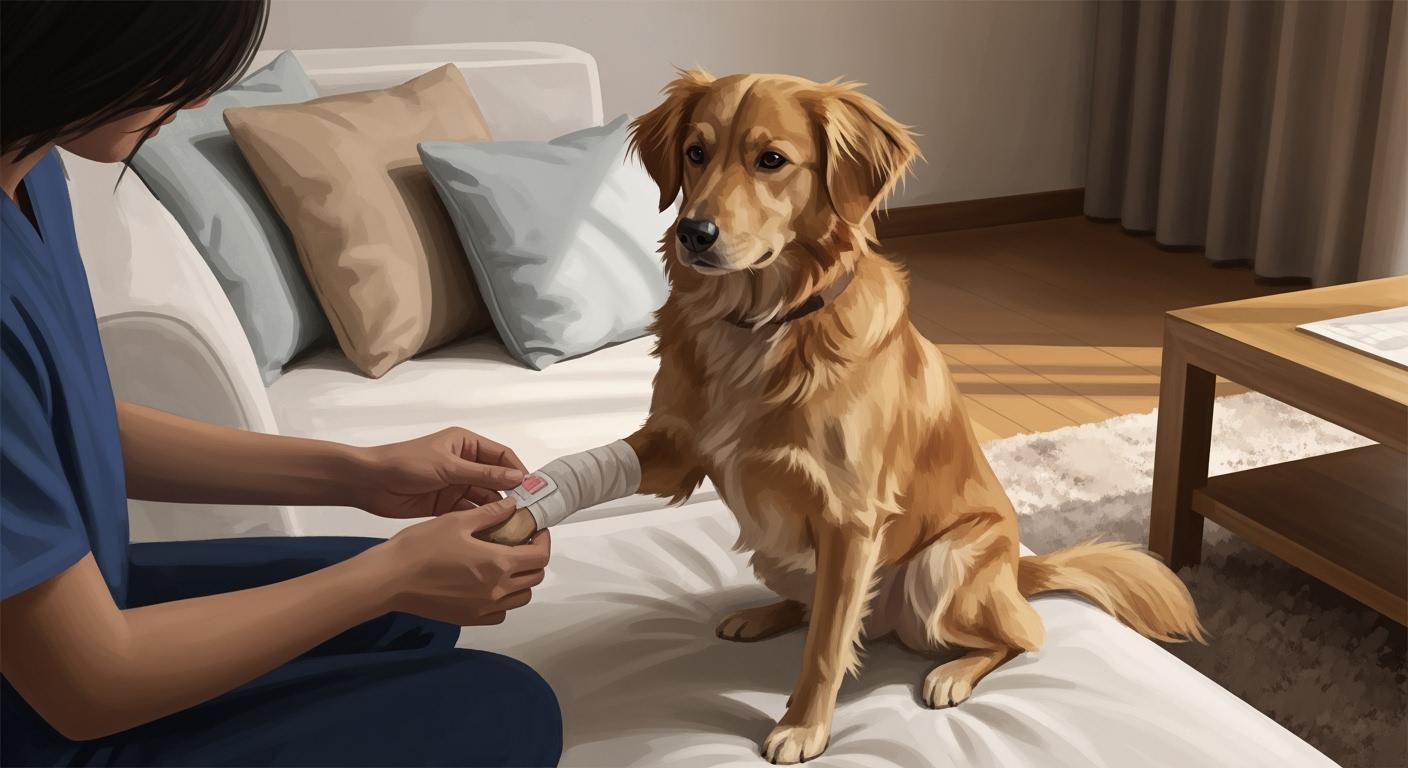
If you notice the bandage on your dog slipping, getting wet, or smelling bad, you likely need a vet recheck. First, check your dog’s toes for swelling, coolness, or color changes. This helps you spot urgent risks. If you wonder about dog bandage slipping what to do, stay calm and restrict your dog’s movement. A loose bandage can cause swelling or skin problems. Never try to tighten or tape the bandage at home. Contact your vet for advice to keep your dog safe.
Key Takeaways
Stay calm if your dog’s bandage slips. Keep your dog from moving too much to stop more injury.
Look at the bandage two times each day for wetness, bad smell, or red skin. Finding problems early can stop bigger issues.
If you see bleeding, press on it for 5 to 10 minutes. Call your vet if the bleeding does not stop.
Stop your dog from licking or chewing by using an E-collar or recovery sleeve. This keeps the wound safe and helps it heal.
Call your vet right away if you see swelling, a bad smell, or bleeding that will not stop. Acting fast is very important for your dog’s safety.
Why bandage slipping matters
Risks: pressure, swelling, delayed healing
You want your dog to get better fast and stay safe. If a bandage slips, it can cause many problems. Some problems can get worse if you do not notice them soon. Here are some common problems you should look for:
Skin irritation can happen when the bandage rubs your dog’s skin. This can be mild redness or even bad dermatitis.
Decubitus sores, or pressure sores, can show up on bony spots. These sores hurt and take a long time to heal.
Swelling in the toes or lower leg, called distal swelling or edema, can happen if the bandage is too tight or moves. This swelling can stop blood flow and may hurt tissue if not fixed fast.
Check your dog’s bandage two times every day. This helps you find problems early. If you see swelling, redness, or your dog acts upset, call your vet. Acting fast can stop slow healing and keep your dog safe.
How bandages slip: common patterns
Bandage slippage happens more than you think. Knowing why it happens can help you stop it next time. Here are some common reasons:
Dogs might chew or lick the bandage if it feels bad. This can make the bandage loose and slip.
Sometimes, the bandage slips because of how it was put on. If it is twisted or not tight enough, it can move out of place.
Pain or discomfort from the injury can make your dog move and shift the bandage.
You should always watch for these signs. If you see your dog chewing or the bandage twisting, keep your dog still and call your vet. Keeping the bandage in place helps your dog heal and lowers the risk of problems.
Dog bandage slipping what to do
Stay calm and restrict movement
You may feel worried when you see a bandage falls off or slips. The first thing you should do is stay calm. Dogs can sense your stress, which may make them more anxious. Calm handling helps your dog feel safe. You should restrict your dog’s movement right away. This step prevents further injury to the dog’s paw or leg. If you suspect a broken bone or spinal trauma, gently slide your dog onto a firm surface like a towel or board. Avoid lifting your dog directly. Keeping your dog still lowers the risk of making the injury worse.
Tip: Minimize movement until you can assess the severity of the problem. This helps protect the injured paw pad or cut paw from more damage.
Quick safety check: toes, swelling, odor
After you calm your dog, do a quick safety check. Look at the bandage and the area around it. This helps you spot urgent problems early. Here is a checklist you can follow:
Check if the bandage is wet or dirty. A wet bandage can cause infection.
Smell the bandage. A foul odor means you should contact your vet.
Watch if your dog is licking, chewing, or biting the bandage. This can mean pain or discomfort.
Make sure the bandage has not slipped further over the toes. If the bandage falls off or moves, it can cut off blood flow.
Touch your dog’s toes. If they feel cool, cold, or swollen, this is a warning sign.
Look for swelling above or below the bandage. Swelling can mean the bandage is too tight or has moved.
Check the color of your dog’s toes. Pale, blue, or purple toes need urgent attention.
You should check your dog’s bandage twice daily. This habit helps you catch problems before they get serious. If you notice any of these signs, call your vet for advice.
Control the bleeding
If you see bleeding after a bandage falls off, you need to act fast. Bleeding can happen with a cut paw or an injured paw pad. You should control the bleeding to keep your dog safe. Here are the first aid steps:
Apply pressure to the wound with a clean cloth or gauze for 5 to 10 minutes. This helps stop the bleeding.
If the bleeding does not stop in 10-15 minutes, seek veterinary help right away.
For a cut paw, wrap the area in gauze and keep applying pressure.
For a leg injury, use a clean towel and wrap it around the wound. Raise the leg if possible.
For a torso wound, you may need to tape a towel in place until you reach the vet.
You should not try to change your dog’s bandage or rewrap it at home. Home rewrapping can cause more harm than good. Focus on comfort and safety until you get professional help.
Note: Always clean the cut gently with mild soap and water if the wound is dirty. Pat the area dry before covering it with a clean cloth.
Prevent licking and chewing
Dogs often lick or chew at a slipped bandage. This can slow healing and cause infection. You can use several safe aids to prevent this:
Use an E-collar (cone) to stop your dog from reaching the bandage.
Try a recovery sleeve or a soft, breathable lick protection sleeve for limb injuries.
Put a snug-fitting T-shirt on your dog if the wound is on the body.
Ask your vet about medical-grade wraps or bitter-tasting sprays to deter licking.
Use a harness for walks to avoid pressure on the bandage.
These tools help protect the wound and keep your dog comfortable. They also lower the risk of the bandage falls off again. Remember, never tighten or tape over the bandage at home. This can cut off blood flow and cause swelling or pain.
If you wonder about dog bandage slipping what to do, always focus on safety checks and comfort. Do not try to fix the bandage yourself. Contact your vet for advice if you see any warning signs. Keeping your dog calm and protected gives the best chance for a quick recovery.
Wet, dirty, or smelly bandage
When moisture is a problem
You need to keep your dog’s bandage dry and clean at all times. Moisture under the bandage can quickly cause problems. If the bandage gets wet, bacteria can grow in the warm, damp space. This can lead to a bad smell and even skin infections. A wet bandage may also tighten as it dries, which can cut off blood flow and cause swelling. You might notice your dog’s toes look puffy or feel cold. These are warning signs that you should not ignore.
Tip: Always check the bandage after your dog goes outside or walks on wet ground. If you see any dampness, contact your vet for advice. Keeping the bandage dry is a key part of good bandage care.
Moisture can also soften your dog’s skin, making it easy for wounds to open or for new sores to form. If you see the bandage is dirty or smells bad, bacteria may already be present. This can slow healing and make your dog uncomfortable.
Infection and skin risks
A dirty or smelly bandage is a sign that something is wrong. Infection can develop fast if you do not act. Watch for these signs:
Redness that spreads or gets brighter
Swelling that feels hot or painful
Thick discharge, especially if it is yellow, green, or smells bad
Dark or black skin near the wound
Extra bleeding or pus
If you notice any of these, call your vet right away. Infection can make your dog very sick and delay healing. Keeping the area clean and dry helps prevent these risks. Regular checks help you spot problems early and protect your dog’s health.
Remember: Good bandage care means checking for moisture, dirt, and odor twice daily. Quick action keeps your dog safe and helps wounds heal faster.
Contact your vet
Urgent signs: swelling, pain, odor
You need to know when a slipping bandage means you should contact your vet right away. Some signs show that your dog needs proper veterinary care as soon as possible. Watch for these high-risk signals:
Swelling in the toes or limb, especially if the toes look puffy or feel cold.
Pain that makes your dog limp, cry, or refuse to use the leg.
Bad odor coming from the bandage or wound.
Bleeding that does not stop after 10-15 minutes of gentle pressure.
Discharge that is yellow, green, or thick.
Bandage that has moved out of place or fallen off.
Your dog keeps licking or chewing the bandage and will not stop.
If you see any of these signs, contact your vet immediately. These problems can get worse quickly. Fast action helps prevent infection, tissue damage, or delayed healing.
When to schedule a recheck
Sometimes, you can observe your dog at home before you visit the vet. You should check the bandage twice daily. If you see mild redness or your dog acts normal, you may wait and watch. If the bandage stays clean, dry, and in place, you can continue home bandage care. You should schedule a recheck with your vet if you notice:
The bandage gets wet, dirty, or smells bad.
Your dog starts limping or avoids using the leg.
Swelling appears in the toes or limb.
Bleeding starts again or does not stop.
The bandage slips or loosens more than once.
Safety tip: Always choose to contact your vet if you feel unsure. Early help protects your dog’s health.
Phone Communication Script Example:
When you call your vet, share these details for faster help:
What you observed (bandage slipped, bleeding, odor, swelling).
How long the problem has lasted.
Any odor or discharge from the bandage.
Whether your dog is using the leg or avoiding it.
If the toes are swollen, cold, or look different.
This information helps your vet decide how urgent the situation is and what steps to take next.
Prevent future slipping
Keep bandage dry and clean
You want your dog’s bandage to stay in place and protect the wound. Keeping the bandage dry and clean is the best way to prevent problems. A dry bandage helps stop moisture from causing skin irritation or infection. Clean bandages stay secure and do not slip as easily. When you keep the bandage well-maintained, you lower the risk of complications and help your dog heal faster.
Dry bandages prevent bacteria from growing.
Clean bandages reduce the chance of slippage.
Good care means fewer visits to the vet.
Tip: Always check the bandage after your dog goes outside or walks on wet ground. Replace wet or dirty coverings right away.
Safe movement and environment
You can help your dog avoid bandage slipping by creating a safe space. Limit running, jumping, or rough play. Use non-slip mats on floors to prevent falls. Walk your dog with a harness to avoid pressure on the bandage. These steps keep the bandage in place and protect the healing area.
Some bandage techniques help prevent slipping. Stirrups anchor the bandage, especially on legs. Tape strips can secure foot bandages. Torso straps and figure 8 wraps hold the bandage steady. Never tape the bandage directly to fur or skin, as this can cause irritation.
Safety tip: A calm environment helps your dog rest and recover. Less movement means less risk of the bandage slipping.
Twice daily checks
You should check your dog’s bandage two times every day. This habit helps you find problems early. Look for swelling, odor, or changes in color. Make sure the bandage stays dry and clean. If you see any warning signs, contact your vet.
Regular checks prevent serious issues.
Early action keeps your dog safe.
Most bandage problems can be fixed if you notice them quickly.
Reminder: Do not leave a bandage unchanged for more than 10 to 14 days. Schedule regular rechecks with your vet.
Quick reference checklist
If you see your dog’s bandage has slipped, follow this checklist. Safety is the most important thing. Each step helps keep your dog healthy and comfortable.
🚦 Red-Yellow-Green Safety Signs
Color | What to Look For | What You Should Do | Vet Visit Needed? |
|---|---|---|---|
🟥 Red | Swelling, cold toes, bad odor, bleeding that won’t stop, bandage off | Keep your dog still, call your vet right away | Emergency visit |
🟨 Yellow | Mild redness, loose bandage, dog licking or chewing, damp bandage | Watch your dog closely, check two times a day, stop licking | Same-day recheck |
🟩 Green | Bandage clean, dry, in place, dog comfortable | Keep checking two times a day, keep bandage dry | Home care, plan a routine recheck |
Tip: Always look at your dog’s toes and skin above and below the bandage for swelling or color changes. This helps you find problems early.
Do/Don’t Checklist
Do:
Check the bandage many times each day.
Feel your dog’s toes for warmth and swelling.
Keep your dog from moving too much to stop more injury.
Use an E-collar or recovery sleeve to stop licking.
Call your vet if the bandage slips or gets wet.
Don’t:
Do not try to rewrap or tighten the bandage at home.
Do not take off the bandage unless your vet says so.
Do not let your dog run, jump, or play rough.
Why: These steps help stop pain, infection, and slow healing. You keep your dog safe and happy.
Essential Supplies for Bandage Care
Self-adhering bandage wrap
Gauze pads and roll
Tape (medical or bandaging)
Blunt-tipped scissors
Tweezers
Gloves (rubber or latex)
Antibiotic ointment
Keep these things ready so you can help your dog fast. They help you handle small problems until you get to your vet.
Remember: Checking two times a day and acting fast helps your dog heal well.
You can handle most bandage slips safely if you stay calm and check your dog right away. Twice daily checks help you catch problems early. Call your vet if you see warning signs like swelling, odor, or if your dog shows:
Diarrhea
Vomiting
Lethargy
Lack of appetite
These signs mean your dog’s recovery may be at risk. Quick action keeps your dog safe and comfortable.
For more tips, see: [post-op swelling normal or not], [incision infection signs], [cone alternatives], [how to lift a large dog safely], and [slippery floor traction tips].
FAQ
What should you do if your dog’s bandage slips off completely?
You should keep your dog still and call your vet. A slipped bandage can expose the wound. This increases the risk of infection or injury. Quick action helps protect your dog’s healing process.
Can you rewrap or tighten the bandage at home?
You should not rewrap or tighten the bandage yourself. Home wrapping can cut off blood flow or trap bacteria. Only a vet can safely adjust the bandage to avoid complications.
Why do you need to check your dog’s toes twice daily?
You need to check for swelling, coolness, or color changes. These signs can show poor blood flow or infection. Early checks help you catch problems before they become emergencies.
How can you stop your dog from licking or chewing the bandage?
You can use an E-collar, recovery sleeve, or a soft T-shirt. These tools prevent licking and chewing. This protects the wound and lowers the risk of infection.
When should you call your vet about a slipping bandage?
You should call your vet if you see swelling, odor, bleeding, or if the bandage falls off. These signs can mean serious problems. Fast help keeps your dog safe.
