Selecting the Right Canine Rehabilitation Brace: Key Factors for Fit, Comfort, and Safety

January 14, 2026
Selecting the Right Canine Rehabilitation Brace: Key Factors for Fit, Comfort, and Safety

You want your dog to get better fast. Picking the right canine rehabilitation brace means looking at fit, comfort, and safety. The right brace helps your dog heal and move better. More than 80% of dogs walk better when the brace fits right. You should talk to your veterinarian before you choose a brace.

Key Takeaways

  • Talk to your veterinarian to pick the right brace. They know what your dog needs. They can tell you which brace is best.

  • Make sure the brace fits your dog well. A good fit helps your dog feel better. It stops skin problems and helps your dog move.

  • Check your dog’s skin and comfort often. Look for red spots or swelling under the brace. Change the brace if your dog feels bad.

Understanding Canine Rehabilitation Braces

Purpose and Limitations of Dog Braces

A canine rehabilitation brace helps your dog feel steadier. It gives extra support while your dog heals. Dog braces help keep joints stable. They can lower pain and help your dog move easier. Braces do not fix injuries. They help with symptoms and healing. Custom-made braces use digital tools to fit your dog’s limb. This makes the brace more comfortable and spreads pressure better. Still, about 91% of dogs may have small problems. These problems include skin irritation or the brace slipping. You need a professional to fit the brace. You should check the brace often to keep your dog safe and comfy. Dog braces work best with a full rehab plan. They do not replace care from your vet.

Types of Dog Braces and Their Uses

There are many kinds of dog braces for different needs. The most common types are dog leg braces, dog hock brace, dog wrist brace, dog elbow brace, dog hip brace, and dog back brace. Each brace helps a certain joint or body part. For example, a dog hock brace helps with hock injuries and after surgery. Dog leg braces help with ACL injuries and give support. The table below lists the main types of dog braces and what they do:

Type of Brace

Specific Uses

Dog Leg Brace

Leg injuries, ACL support, natural movement

Dog Hock Brace

Hock injuries, post-surgery recovery

Dog Wrist Brace

Instability, nerve issues in front legs

Dog Elbow Brace

Arthritis, instability in front leg tendons

Dog Hip Brace

Arthritis, hip pain, mild hip dysplasia

Dog Back Brace

Spine support, back pain, IVDD

Your dog may need different braces for pain relief and better support. The type depends on your dog’s health.

Setting Realistic Expectations for Recovery

Most dogs use a canine rehabilitation brace for support and less pain while healing. About 3–5% of dogs get cranial cruciate ligament disease. Up to 50% may have problems in the other knee in 12–18 months. Osteoarthritis affects about 2.5% of dogs each year. Skin irritation happens in about half of dogs at first. You should check your dog’s skin often. Healing after surgery or injury takes 6–12 weeks. There is a big step at about 8 weeks. Use a dog hock brace as your vet tells you. Do not expect a brace to fix everything. Always think about safety, comfort, and keep seeing your vet.

When to Use a Canine Rehabilitation Brace

Best Scenarios for Brace Use

Sometimes dogs need braces for different reasons. Dog braces help with hock injuries and joint pain. They also help if your dog feels weak. Many veterinarians say braces are good after surgery. This is true, especially after orthopedic surgery. You can use a dog hock brace for torn ligaments. It helps your dog move better while healing. Braces are helpful for older dogs or dogs with health problems. If surgery is not possible, a brace can help. A dog hock brace gives extra support and keeps your dog safe. It can stop more injuries from happening. If you ask if a dog hock brace helps with instability, the answer is yes most times.

  • Use a brace for:

    • Healing after surgery

    • Helping painful or weak legs

    • Stopping more injuries

    • Helping with joint hyperextension, patellar luxation, or proprioceptive issues

When to Consult a Veterinarian First

Always talk to your veterinarian before using a brace. Some signs mean you need a vet right away. If you see swelling, sudden limping, or wounds, do not use a dog hock brace. Your vet will look at how your dog walks and checks muscle strength. They will also check your dog’s skin. The vet will decide if a brace is safe for your dog.

  • Call your vet if you notice:

    • Sudden limping and not using the leg

    • Open wounds or infection

    • Bad pain or swelling

Deciding Between Bracing, Rehab, or Urgent Care

Dog braces work best with a full rehab plan. Physical therapy helps your dog move better and feel good. After surgery, a dog hock brace helps your dog heal. If you wonder if a dog hock brace helps with instability, it often does. But you need the right plan for your dog. Custom neoprene braces are soft and can be changed to fit your dog. Always pick the brace that matches your dog’s needs.

Decision Table: Brace Candidate vs. Vet-First vs. Alternative Support

What you see

What it might mean

What to do next

Mild limp, weak hock

Instability, pain flare

Brace OK + watch your dog

Swelling, warm hock

Possible complication

Vet visit before using brace

Sudden non-weight-bearing

Severe injury

Go to vet, do not use brace

Red skin under brace

Skin irritation

Fix brace, check how it fits

Slow recovery, less mobility

Needs more support

Add rehab, check brace again

Finding the Right Brace for Your Dog

Finding the Right Brace for Your Dog

Matching Brace Type to Injury or Condition

To find the right brace, you need to know your dog’s injury. Each injury needs a different kind of support. A dog hock brace helps with hock injuries or after surgery. If your dog has a torn ligament or weak hock, pick a brace that gives steady support. It should help your dog move better. The best hock brace for dogs with arthritis or pain should feel comfortable and bend a little.

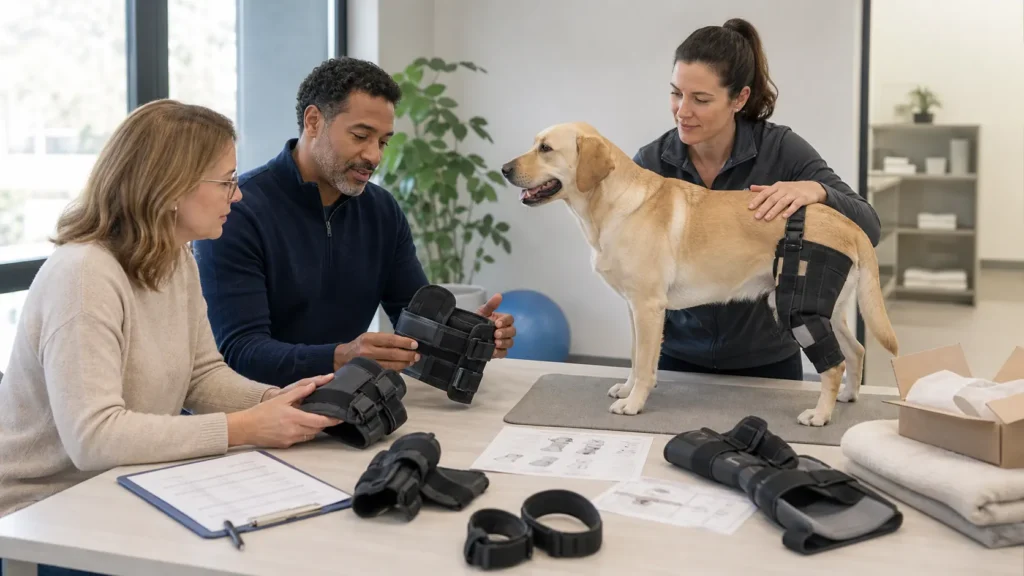
Start with a veterinary diagnosis. Your vet will help you choose the right dog brace. Certified orthotists or rehab specialists can help you find a good brace and make sure it fits. If the brace does not fit well, it can rub, slip, or cause new problems. You want a brace that fits your dog’s size and shape. It should support the hock and keep your dog comfy while healing.

Tip: Check the brace’s fit and comfort in the first weeks. Look for redness or swelling near the hock.

Here is a simple guide to what matters most:

Factor

Description

Type of Injury

Different injuries need different support and stabilization.

Size and Fit

A bad fit can make the injury worse or cause new problems.

Comfort and Material

The brace’s material affects comfort and healing.

Durability and Maintenance

Strong and easy-to-clean braces are best for active dogs.

Dynamic Brace vs. Rigid and Semi-Rigid Options

You have a few choices for your dog’s hock brace. The main types are dynamic, rigid, and semi-rigid. Each type gives different support and movement.

A dynamic brace supports the hock but lets your dog move. This is good for dogs who need to walk while healing. The dynamic bracing system helps stop joint injuries and is great for rehab. If your dog has mild instability, a dynamic brace is often best.

Rigid braces give the most support and keep the hock still. These are best for serious injuries or after surgery when movement must be limited. Semi-rigid braces give both support and some movement. They protect the hock but let your dog move a little.

Type of Orthosis

Advantages

Clinical Outcomes

Dynamic

Supports while allowing movement

Good for rehab and stopping joint injuries

Rigid

Maximum stability, keeps joint still

Works well for severe joint instability

Semi-Rigid

Mixes flexibility and support

Useful when some movement is needed

Note: Dynamic bracing systems are used for dogs who need to walk and play while healing. Rigid and semi-rigid braces are better for dogs who need strict support.

Materials, Straps, and Adjustability Features

The brace’s material and design matter for comfort and safety. When picking a brace, look for features that match your dog’s activity and healing needs.

  • Fabric braces are soft, light, and let air through. These are good for mild hock injuries or as a soft dog hock brace. They may wear out faster if used a lot.

  • Plastic braces are strong and waterproof. These are good for dogs who need more support or use the brace in water. Some dogs may not find them as comfy.

  • Adjustable straps help you get a snug fit. This lowers the chance of slipping or rubbing. The best hock brace for dogs should have easy straps and let you check the fit often.

Material Type

Advantages

Disadvantages

Fabric Braces

Soft, light, lets air through

May wear out faster with lots of use

Plastic Braces

Strong, lasts long, waterproof

Less flexible, may not be as comfy

Adjustability

Helps get a snug fit without hurting

N/A

Alert: Always keep the hock and skin under the brace clean and dry. Take off the brace if it gets wet or if your dog seems hurt.

Comparison Table: Custom, Off-the-Shelf, and Soft Dog Braces

When picking a brace, you can choose custom, off-the-shelf, or soft dog braces. Each has good points and trade-offs. The best hock brace for dogs depends on your dog’s injury, size, and how active they are.

Option

Best for (Use-Case and Patient Type)

Trade-offs (Comfort, Cost, Adjustability, Compliance)

Fit-risk Notes (Slippage, Rubbing, Sizing Complexity)

Custom

Serious injuries, special limb shapes, long healing

Very comfy, costs more, best fit, high compliance

Low slippage, low rubbing, sizing is tricky but exact

Off-the-Shelf

Mild injuries, short-term use, normal limb shapes

Costs less, less adjustable, may wear out faster

Higher slippage risk, some rubbing, sizing is easier but less exact

Hinged

Dogs who need to move, active healing

Good comfort, medium cost, adjustable, good compliance

Some slippage, low rubbing, sizing can be hard

Non-Hinged

Dogs who need strict support, after surgery

Most support, less comfort, not very adjustable

Low slippage, more rubbing risk, sizing is simple

Rigid

Serious hock instability, after surgery

Most support, less comfort, costs more

Low slippage, more rubbing, sizing must be exact

Semi-Rigid

Medium instability, slow return to activity

Mixes support and comfort, medium cost

Some slippage, low rubbing, sizing is medium

  • Custom braces fit perfectly and last longer. These are best for dogs with special needs or serious hock injuries.

  • Off-the-shelf braces are easy and cheap. These work for mild injuries but may not last as long.

  • Soft dog braces are flexible and comfy. These are best for early healing or mild support.

Tip: Always check your dog’s hock and skin for irritation. Adjust the straps if you see redness or swelling.

Finding the right brace means matching the brace to the injury, checking the fit, and picking the right material. The best hock brace for dogs will support the hock, help healing, and keep your dog comfy. Always work with your vet team to make the best choice for your dog’s movement and safety.

Fit and Comfort: Key to Success

A dog brace only works well when you get the fit right. The right fit gives your dog support, comfort, and safety. You help your dog move better and heal by making sure the brace fits snugly and does not cause pain. Many dogs need a dog hock brace for hock injuries or after surgery. You must know how to measure and fit a dog brace to avoid problems like rubbing, slipping, or swelling.

Measurement Checklist for Dog Braces

You need to measure your dog carefully before you choose a brace. Accurate measurements help you get the proper fit and give your dog the best support. Dr. Lisa Kramer, a DVM and orthopedic specialist, says that a good fit is key for the brace to work with your dog’s body. Luna, a 7-year-old Golden Retriever, had trouble with her knee brace because it was not measured right. After a proper fitting, she showed better stability and comfort.

Follow this checklist to measure your dog for a hock brace:

  • Measure the thigh circumference: Wrap the tape around the upper thigh, about one inch above the knee joint.

  • Measure the knee circumference: Place the tape directly over the knee cap. This helps with hinge placement.

  • Measure the lower leg circumference: Wrap the tape just below the knee for a snug fit.

  • Measure the leg length: Start at the top of the thigh and measure down to the ankle or hock joint.

  • Measure the distance between legs: For a double knee brace, measure between the inner thighs.

  • Note your dog’s weight and breed: This helps you select the right brace size.

Tip: Always use a soft tape measure. Keep your dog calm and standing straight for the most accurate results.

If you want to know how to measure and fit a dog brace, follow these steps every time you order or adjust a brace. An ill-fitting brace can rub, shift, or limit movement. This can make knee pain worse and put more strain on other joints.

Signs of Proper and Improper Fit

You must check the fit every time you put on the brace. A proper fit means the brace stays in place, supports the hock, and does not cause pain. Your dog should walk with better stability and mobility. The brace should not slip or twist during movement.

Look for these signs of a proper fit:

  • The brace sits snugly on the hock and does not move when your dog walks.

  • Your dog shows improved support and stability.

  • There is no redness, swelling, or skin irritation after wearing the brace.

  • The straps stay tight but do not pinch or cut into the skin.

  • Your dog walks with more confidence and less pain.

Watch for these signs of improper fit:

  • Skin irritation, redness, or sores under the brace.

  • Swelling around the hock or toes.

  • The brace slips, rotates, or moves out of place.

  • Your dog limps more or avoids using the leg.

  • The straps leave deep marks or cause discomfort.

Up to 91% of dogs may have minor problems like skin irritation or brace slippage if the fit is not right. You must check for these issues often, especially in the first weeks of use.

How to do a first fitting and alignment check

You can follow these five steps to make sure your dog’s brace fits well and gives the right support:

  1. Prepare: Calm your dog, make sure the coat is dry, and trim fur if needed. Have treats ready to reward your dog.

  2. Position: Place the brace on the hock, using bony landmarks to confirm the correct orientation.

  3. Strap sequence: Tighten the straps evenly. Watch for any rotation as your dog takes a few slow steps.

  4. Movement check: Let your dog walk slowly and turn both directions. Watch for slipping or twisting of the brace.

  5. Post-check: Remove the brace and inspect the skin right away for any redness or irritation.

Alert: Never leave the brace on if you see swelling, redness, or if your dog seems uncomfortable. Always check the skin before and after each session.

Coordinating Fit Checks with Professionals

You should work closely with your veterinary team to keep your dog safe and comfortable. Regular check-ins with your vet help you track your dog’s recovery and adjust the brace for better fit and support. These visits let your vet spot problems early, such as changes in gait, skin irritation, or loss of stability. Your vet can also guide you on how to measure and fit a dog brace if you have questions.

Schedule follow-up appointments to review the fit and make changes as your dog heals. Your vet may suggest new exercises or adjust the brace to improve support and mobility. Good communication with your veterinary team helps you avoid common mistakes and keeps your dog on the path to recovery.

Note: Fit checks are not a one-time task. You must check the fit every day and after every adjustment. Your dog’s comfort and safety depend on it.

Dog braces play a big role in your dog’s recovery, but only if you get the fit right. Take time to measure, check, and adjust the brace. Work with your vet to make sure your dog gets the best support for the hock and the whole limb. This helps your dog move better, feel better, and heal safely.

Break-In and Wear Routines for Safety

Standardized Break-In Schedule

You help your dog adjust to a new hock brace by following a careful break-in plan. Start slow to protect the skin and improve fit. Use this step-by-step guide:

Break-in schedule that prioritizes skin safety

  1. Start with 10–15 minutes per walk during week 1.

  2. Inspect skin before and after every session.

  3. If skin is normal and gait is comfortable, add about 10 minutes per walk each week.

  4. If redness persists, reduce time, reassess fit, and pause ramping.

  5. Keep daily vigilance during the first 3 months.

During the first three days, let your dog wear the brace for 30 minutes at a time, two to three times daily. By days four to seven, increase to 45–60 minutes, three to five times daily. Always supervise your dog and check the skin after each session. In weeks two to four, use the brace during walks, potty breaks, and light play for up to four hours per day. For dogs needing more support, your vet may suggest longer wear during active hours.

Skin Checks and Early Warning Signs

You must check your dog’s skin before and after every brace session. Watch for redness, chafing, or swelling near the hock. Look for licking, chewing, or reluctance to walk. Changes in gait or new limping can signal poor fit or loss of stability. Early action prevents bigger problems and keeps recovery on track.

Cleaning, Drying, and Liner Use

Remove the brace gently and inspect the hock for redness or hair loss. Clean the area with mild antiseptic or saline. Dry the skin well before putting the brace back on. Change bedding often to keep the area clean and dry. Use a liner if your vet recommends it. Prevent licking or scratching to protect the skin and maintain support. Reposition your dog every few hours to relieve pressure and help mobility.

Integrating Braces into Rehabilitation Plans

Pairing Braces with Controlled Activity

You help your dog heal by using a hock brace and gentle activity together. The brace keeps the hock steady and safe. This lets your dog move without hurting the joint. You should not use only a brace for rehab. The brace is just one part of the plan. It protects the joint while your dog slowly does more movement. This way, your dog can get stronger and avoid new injuries.

  • The brace keeps the hock steady while your dog heals.

  • You let your dog do more activity in small steps.

  • Using both the brace and gentle activity helps your dog recover better.

Weekly Progression and Ramp-Up Rules

You need to follow a simple plan to help your dog get used to the hock brace. Begin with short times inside the house. Watch your dog’s skin and comfort every day. Only use the brace during walks or play, not all day long. Always check the fit and call your vet if you see red spots or pain.

Time of Day

Activity Description

Morning

Short 5-minute leash walk, joint supplement with breakfast

Midday

Sit-to-stand exercise or gentle hill walking

Evening

Massage or range-of-motion stretches, then rest

Tracking Outcomes and Adjustments

You can keep track of your dog’s healing by writing down limp-free days and changes in mood or energy. Take pictures or videos to see if your dog moves better. Go to the vet often to check the fit and support of the hock brace. Working with your vet as a team gives your dog the best chance to heal safely.

How to decide whether to progress, hold, or step back:

  1. Look at comfort: eating, sleeping, and wanting to walk.

  2. Watch movement: is limping better or worse than last week?

  3. Check skin: are there any sore spots or hair loss?

  4. Pick what to do: move forward, wait, slow down, or call your vet.

You are important in your dog’s healing. Watch your dog, write down changes, and talk to your vet. This helps you change the brace, support, or activity plan so your dog can get better.

Risks, Red Flags, and Common Mistakes

Red-Yellow-Green Triage and Red-Flag Table

You must watch for warning signs when using dog braces. Acting fast keeps your dog safe and helps healing. Use this triage table to know what to do next:

Signal

Examples of Signs

Action

🟢 Green

Hock looks normal, skin healthy, dog walks with support

Keep following the plan, check fit every day

🟡 Yellow

Mild redness, slight limping, hock seems sore after walks

Wear the brace less, check fit again, keep watching

🔴 Red

Open wounds, swelling, sudden pain, hock locks, dog cries

Take off the brace, call your vet right away

Tip: Always look at the hock before and after each use. Take off the brace if you see any red-flag signs.

Common Mistakes with Dog Braces

Many owners make easy mistakes that slow healing or hurt the dog. You can stop these problems by following simple steps:

  • Making the brace too tight or too loose

  • Leaving the brace on all night

  • Not checking the hock skin every day

  • Using the brace but not limiting activity

  • Not paying attention to pain or swelling

  • Letting the brace get wet or dirty

  • Straps not lined up right, which lowers support

Dog braces work best when you check the fit, keep the hock clean, and use the brace only as told. Only use the brace for support during gentle activity, not all day long.

Special Considerations for Certain Dogs

Some dogs need extra care when wearing a brace. Older dogs and those with osteoarthritis may have sore hock joints. You should check the fit often and change it if needed. Dogs with thick fur may need a trim for better comfort and support. Nervous dogs may need calm handling and treats. Watch for tiredness and changes in how your dog moves. Keep your dog happy with toys and gentle play to help their mind.

Note: Every dog is unique. Check your dog often and talk to your vet team to give the best support and help your dog’s hock heal.

Standardizing Success in Clinics and Pet Care

Intake Checklist and Owner Handoff

You help your dog by following a clear plan at the clinic. First, make sure the diagnosis is right and a hock brace is needed. Measure the hock and leg with care. Write down your dog’s weight and breed. Tell the owner why the brace is important and how it helps the hock heal. Show how to put the brace on and take it off. Teach how to look for redness or swelling on the hock. Give written steps for cleaning and checking the skin every day. Make sure the owner knows when to call the clinic if there are problems.

Follow-Up and Documentation

You need to keep track of what happens after the brace is put on. Plan visits to check the hock and change the brace if needed. Write down skin checks, changes in fit, and any pain signs. Take pictures to see how the hock and brace look over time. Keep notes about support and how your dog moves. This helps you see changes and act fast if the hock needs more help.

Setting Realistic Expectations

You should tell owners that braces give support but do not cure injuries. Let them know about half of dogs may get mild skin problems at first. Explain that healing takes time and needs careful use of the brace. Remind owners to check the hock every day and use the brace as part of a full rehab plan. Never say the brace will fix everything or bring perfect movement.

Clinic Workflow Table for Brace Fitting

Step

Action

Goal

Intake

Confirm diagnosis, measure hock, select brace

Accurate fit and support

Owner Education

Teach brace use, review hock checks

Safe home care

Fitting

Apply brace, check hock alignment

Comfort and stability

Follow-Up

Schedule checks, adjust brace as needed

Ongoing support and safety

Documentation

Record fit, skin checks, mobility changes

Track recovery and outcomes

Tip: Doing the same steps each time helps keep every hock brace patient safe and supported.

You help your dog by picking the right brace. Work with your vet team for the best care. Make sure the brace matches what your dog needs. Check how the brace fits every day. Look for any changes in your dog’s hock. Use the brace when your dog does gentle activities. This helps your dog heal and move better. Keep the hock clean and dry all the time. Check the fit often and talk to your vet. Most owners see their dogs walk better when they watch the brace and hock closely. Use a dog hock brace as part of your dog’s full recovery plan. Stay active in your dog’s care and ask for help if you see problems.

Teamwork in Rehabilitation

Description

Team Effort

You, your vet, and rehab staff work together for the best results.

Mutual Trust

Everyone shares updates and respects each role in your dog’s care.

Good Cooperation

Strong communication helps your dog heal safely and comfortably.

  • Many owners see their dogs move better with braces, gentle exercise, and daily checks.

  • Writing down changes in the hock helps you care for your dog and supports healing.

Stay alert. Watching fit, comfort, and safety helps your dog recover.

FAQ

How long should my dog wear a rehabilitation brace each day?

Start with 10–15 minutes per walk in week one. Increase time slowly if your dog’s skin stays healthy and your vet agrees.

What should I do if I see redness or swelling under the brace?

Take off the brace right away. Check your dog’s skin. Contact your veterinarian before using the brace again.

Can my dog swim or bathe while wearing the brace?

No. Remove the brace before swimming or bathing. Always keep the brace and your dog’s skin clean and dry.

Get A Free Quote

Table of Contents

Get A Free Quote Now !

If you have any questions, please do not hesitate to contatct with us.

Types of Dog Braces for Different Conditions
  • MOQ (Minimum Order Quantity): 500 units
  • Lead Time: Approximately 30-45 days after deposit confirmation.
  • Payment Terms: T/T – 30% deposit in advance, balance to be paid before shipment.