
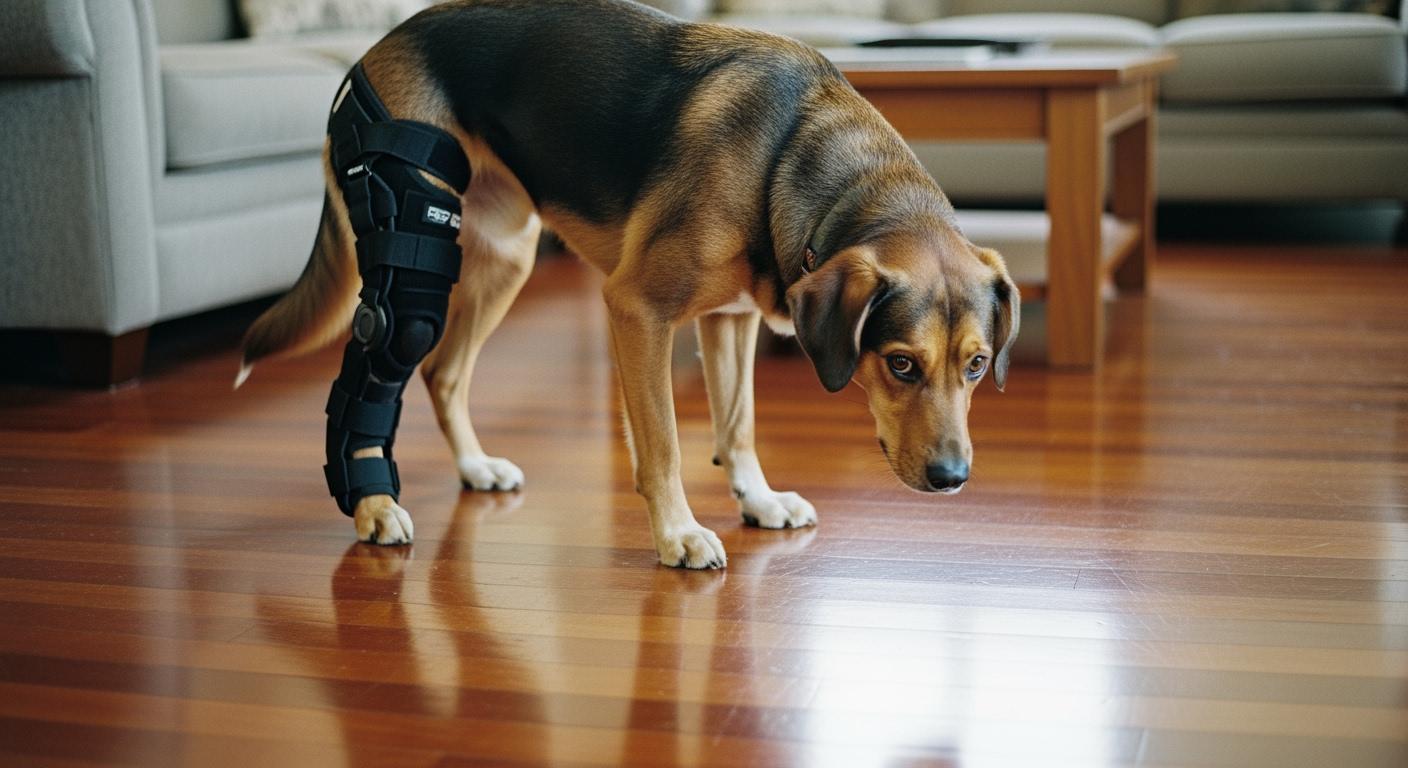
Dog ACL knee brace for slippery floors means combining knee support with better traction, not relying on a brace alone. A brace can help stabilize the knee during daily movement, but smooth tile, hardwood, and other slick surfaces still increase the risk of slips, twisting, and loss of confidence. If you want a broader overview of ACL brace fit, support level, and daily-use planning before focusing on floor traction, start with this dog knee brace ACL support guide.
Quick check: if your dog still slides on smooth flooring after the brace is fitted, the next step is usually to improve floor traction and route setup rather than tighten the brace further.
A brace should support movement, not replace diagnosis or home safety changes. Dogs usually do best when you combine the brace with better flooring traction, slower walking routes, and consistent daily monitoring. If you still need a broader recovery framework after reading this page, compare it with dog cruciate ligament brace solutions for knee stability and recovery.
Key Takeaways
- A knee brace can help on slippery floors, but it works best when paired with better traction and safer walking routes.
- Floor grip matters because a stable knee still cannot perform well if the paws keep sliding on smooth surfaces.
- Daily monitoring should focus on slipping, gait changes, brace movement, and confidence during short indoor walks.
Why Slippery Floors Are a Risk
Slip Hazards for ACL-Injured Dogs
Tile, hardwood, laminate, and other smooth floors are difficult for dogs with ACL or CCL injuries because the paws lose traction before the knee can stay controlled. Even a small slide can increase strain on the injured leg or force the dog to compensate heavily onto the opposite side. That is why slippery floors become a daily recovery problem, not just a housekeeping detail.
Note: Stairs, thresholds, and dog doors can be even riskier than open floor space because the dog has to push off and rebalance quickly. For that reason, compare this article with the dog stairs after surgery safety guide if stairs are part of the dog’s normal routine.
Block off stairs or dog doors while your dog heals. Watch your dog closely when they walk on slick floors.
Impact on Recovery and Mobility
Slippery floors make recovery harder because they turn simple daily movement into repeated instability. Each slide can reduce confidence, increase guarding, and slow the dog’s return to steadier walking. The problem is often worse when the dog also has hind-end weakness, hip strain, or a habit of rushing across the floor.
You can lower this risk by treating traction as part of the recovery plan. Rugs, yoga mats, and runners help because they reduce the number of uncontrolled steps the dog takes each day. A softer, safer walking path often makes the brace more effective without changing the brace itself.
Every step you take to stop slips helps your dog’s ccl knee injuries heal. Giving your dog good traction and watching them are important for a safe recovery.
Dog ACL Knee Brace for Slippery Floors
Brace Stability and Its Limits
When you look for a dog ACL knee brace for slippery floors, the goal is not just knee support. The real goal is knee support plus enough traction for the dog to use that support safely. A brace can help control knee motion, but it cannot create floor grip by itself. That is why brace selection and traction planning need to happen together.
Stability means your dog’s leg does not shake or move too much. The brace keeps the knee steady and stops odd movements. You may notice your dog walks better and feels less pain. Hinged braces can help dogs move easier. But even with a brace, your dog can still slip if the floor is too smooth.
Here are some results from recent studies:
Study | Findings |
|---|---|
2020 Study in Veterinary Surgery | Dogs with hinged braces walked better and had steadier knees, with less odd movement. |
University of Tennessee Clinical Trial (2018) | Using two braces helped dogs balance weight and lowered strain on the other leg, so fewer dogs hurt their other ccl. |
Meta-Analysis (2021) | Bracing with weight control and therapy cut pain and made life better, especially for small and medium dogs. |
These findings support a simple point: brace stability helps, but it works better when it is part of a larger recovery plan. On smooth floors, traction support and route control matter just as much as knee support.
If you want a stronger next step for fit, support level, and daily use, compare this article with the dog knee brace for ACL injury guide before moving into product selection.
What to Check Before Use
Before you use a dog ACL knee brace on slippery floors, check three things first: whether the brace fits correctly, whether the floor route has enough grip, and whether the dog can still move in a controlled pattern once the brace is on.
| Pre-Use Check | Why It Matters |
|---|---|
| Brace fit and strap position | Loose or unstable fit makes slips harder to control. |
| Walking route traction | Rugs, mats, or runners reduce uncontrolled sliding. |
| Dog comfort and readiness | A stressed or fatigued dog is more likely to slip on smooth flooring. |
Place rugs, runners, or traction mats where the dog walks most often. Keep sessions short enough that the dog stays controlled rather than rushing, sliding, or overusing the injured leg.
Check the brace fit every time before use. Make sure the brace is tight on your dog’s leg. Loose straps or bad fit make slips more likely. Watch for signs of pain or rubbing. If you see red skin or swelling, stop using the brace and call your vet.
Many people make mistakes when putting on the brace. These mistakes can make the brace less steady and hurt your dog. Here are some common errors:
Mistake Type | Description |
|---|---|
Bracing Angle | Diagonal braces should be set between 35 and 50 degrees to work well. |
Construction | If the brace is too loose, it will not be steady; plates should be short and tight. |
Detailing | Diagonals must line up with the center to stop extra stress. |
Continuity | Bracing should go across all levels, so weight is spread out and stress is not added. |
Follow the instructions for putting on the brace. The right angle, tightness, and fit help your dog stay steady. If you use a custom leg brace or stifle braces, check the maker’s guide. You can find more tips about brace fit and support on our Pillar page about brace selection and fit.
A dog ACL knee brace can improve knee support, but the dog still needs grip to use that support safely. Better home setup usually makes the brace more useful because the dog is no longer fighting the floor on every step.
Traction Support Solutions
Toe Grips, Boots, and Socks
You want your dog to move safely on slippery floors, and that usually means pairing the brace with some kind of traction aid. Toe grips, boots, and socks can all help, but the right choice depends on paw tolerance, floor type, and how stable the dog already feels in the brace. For broader movement-planning support, compare this article with the dog mobility support solution page.
Tip: Choose the traction aid your dog will actually tolerate. Better grip only helps if the dog can walk naturally without chewing, kicking off, or fighting the product.
Here is a quick look at popular paw traction products:
Product Type | Advantages | Disadvantages |
|---|---|---|
Dog Boots | Lightweight, natural rubber, good for traction. Most dogs tolerate them. | Can spin on the paw, not breathable, not for long-term use. |
Traction Socks | Breathable, protective, can be layered for comfort. | May not give as much traction as boots in some conditions. |
Toe Grips | Improve mobility and stability, restore confidence, easy to use. | May need regular checks to stay in place. |
Toe grips stand out for dogs with ACL injuries. They help dogs transition from lying down to standing. Traction socks and boots also support your dog, but you should check fit and comfort often.
If you want more detail on support planning for ACL recovery before choosing add-on traction tools, go next to the dog cruciate ligament brace solution page.
Floor Mats and Coverings
You can make your home safer for your dog by adding floor mats and coverings. Dogs need steady footing to heal and move well. Many clinics use yoga mats, rug runners, or interlocking foam tiles to create safe paths.
Here are some effective traction products for dogs:
Type of Product | Description |
|---|---|
Interlocking Foam Floor Mat Tiles | Great for traction and comfort, washable, and protect your floors. |
Rug Runners | Easy to place in hallways or busy areas, help dogs walk without slipping. |
Yoga Mats | Simple to cut and move, provide extra grip for your dog. |
Anti-Slip Dog Socks | Made with anti-slip grip technology, help dogs on hardwood floors. |
Dogs with ACL injuries usually benefit more from a consistent traction route than from scattered mats placed randomly around the home. Put mats in high-traffic paths, near beds, and near doors so the dog can move through normal routines with fewer uncontrolled steps.
Note: Always check mats and coverings for wear. Replace them if they lose grip or become bunched up.
For more guidance on condition-based support planning and brace use, continue to the ACL recovery support solutions page.
Home Safety Setup
Creating Safe Walking Paths
You want the dog to move through the home on safer, repeatable routes during ACL recovery. Start by limiting access to the slickest surfaces and then create clearer walking paths with non-slip rugs or mats. Block stairs or other high-risk areas when you cannot supervise closely. If stairs are unavoidable, compare this page with the dog stairs after surgery safety guide before turning stair use into part of the routine.
Set up a confined area with a cushioned orthopedic bed. Make sure your dog can reach the bed without jumping. Ramps or steps help your dog get on furniture or into the car. Elevated food and water bowls reduce strain on joints. Non-slip booties or paw treads add extra grip for your dog. A supportive harness gives you control during walks and helps your dog balance.
Tip: Use a leash with handles for better control during walks. This tool helps you guide your dog and prevent sudden movement.
Here is a quick checklist for safe path setup:
Place non-slip rugs and mats in walking routes.
Use baby gates to block stairs and unsafe areas.
Provide a soft, easy-to-reach bed.
Add ramps or steps for furniture access.
Try non-slip booties or paw treads.
Use a supportive harness and leash.
If you are ready to compare knee-brace products after improving home traction, review the dog knee brace category before choosing a daily-use option.
Monitoring Movement and Adjustments
You need to watch your dog’s movement every day. Supervised movement helps your dog heal and lowers the risk of new injuries. Start with short, controlled walks on a leash. Avoid letting your dog run or jump. Adjust the walking route if you see your dog slip or struggle.
Rehabilitation includes gentle exercises, like walking on soft mats or using ramps. Physical therapy, such as hydrotherapy or passive range of motion, can help your dog regain strength. Always follow your vet’s advice for exercise and rest.
Check your dog’s comfort and confidence daily. Look for signs of pain, swelling, or limping. Change the setup if your dog seems unsure or slips often. Small changes, like moving a rug or adjusting a ramp, can make a big difference.
Note: Supervised movement and regular adjustments help your dog recover safely. If you notice problems, contact your vet or rehab specialist.
If you need a better next step after watching movement indoors, continue to the ACL recovery support solutions page and then compare current options in the dog knee brace category.
Common Mistakes and Limitations
Overlooking Floor Hazards
You may think the brace solves most of the problem, but floor hazards often stay in place even after the brace is fitted. Smooth flooring, loose runners, wet spots, and fast turns between rooms can still trigger slips. A brace helps the knee, but it does not remove the need to manage the environment.
Tip: Walk through your home and look for spots where your dog might lose traction. Place non-slip mats in these areas. Remove loose rugs and keep pathways clear.
Use this short checklist to spot floor hazards before the dog starts moving:
Check for wet spots or spills.
Look for loose rugs or mats.
Identify areas with smooth flooring.
Watch for clutter in walking paths.
You help dogs recover by making their environment safer. You reduce the risk of new injuries when you address these hazards.
Misusing Braces or Traction Aids
You want to support the dog with the right tools, but many problems come from using them without enough daily checking. A brace that is too loose can shift. A brace that is too tight can rub. Traction socks or boots can also twist or get kicked off if they do not match the dog’s paw shape or tolerance. For a better fit-check process before blaming the floor alone, use this brace sizing and fit-check guide.
Here is a table showing common mistakes and how to avoid them:
Mistake | How to Avoid |
|---|---|
Loose brace straps | Adjust straps for a secure fit |
Over-tightening brace | Check for signs of discomfort |
Wrong size traction aid | Measure your dog’s paw before buying |
Ignoring wear and tear | Inspect aids daily |
Note: Correct use means checking both the brace and the traction aid after movement, not just trusting the initial setup.
You improve your dog’s safety and recovery when you avoid these mistakes. You also support dogs by monitoring their comfort and adjusting aids as needed.
When to Seek Professional Guidance
Signs for Veterinary or Rehab Input
You want the dog to heal and walk safely, but sometimes the setup still is not enough. Watch for these signs if the dog has ACL injuries and still moves on slippery floors:
- The dog hesitates or freezes before stepping onto smooth flooring.
- The dog slips even after rugs, mats, or traction aids are added.
- The dog limps more, licks the knee, or avoids bearing weight.
- The dog struggles to stand up, turn, or change direction safely.
- The dog looks more anxious or less confident during indoor walking.
If you notice any of these signs, call your vet or rehab specialist. They can check your dog and find out what is wrong. Early care helps your dog get better faster. Do not wait if your dog is stiff, limps, or cannot get up easily. These problems can slow healing after surgery or brace use.
Tip: Keep a simple daily note of slipping, brace fit, and walk confidence. A short written record makes it easier to tell whether the problem is changing or repeating.
Custom Solutions for Complex Cases
Some dogs need more than a regular knee brace on slippery floors. Older dogs, larger dogs, or dogs with multiple mobility problems may need a different brace style, more structured home setup, or a broader support plan. If you need to compare brace types before deciding, review the hinged vs soft dog knee brace guide before adding more accessories at random.
- Better traction for paws on smooth flooring
- A brace with more stable daily-use fit
- A more controlled indoor route with fewer fast turns
- Professional review when the dog still slips despite support changes
Your vet or rehab team can help you pick the best aids. Custom plans use different products and exercises. This way, your dog gets what they need and stays safe. Always listen to your vet when you change your dog’s support plan.
Note: Dogs with more complex support needs usually improve faster when the support plan is simplified and checked step by step rather than adding too many tools at once.
Dog ACL knee brace for slippery floors works best when knee support and traction support are planned together. The brace helps control the knee, while the floor setup helps the dog use that support safely. The best home setup usually combines shorter walking routes, better floor grip, regular fit checks, and realistic daily monitoring instead of relying on one product alone.
For next steps, continue to the dog knee brace ACL support guide, the ACL recovery solutions page, or the dog knee brace category depending on whether you still need education, condition planning, or product comparison. Data authenticity note: This article is for educational purposes only. It is designed to help readers combine ACL knee brace support with safer floor traction, not to replace veterinary diagnosis or individualized rehabilitation planning.
FAQ
How do I help my dog adjust to a knee brace on slippery floors?
Introduce the brace slowly, add traction support before the dog walks on smooth floors, and supervise the first few sessions closely. Confidence usually improves when the dog has both support and grip.
Can traction aids replace a dog ACL knee brace?
Traction aids help the paws grip the floor, but they do not stabilize the knee. Dogs with ACL injuries usually need both better traction and better knee support when slippery floors are part of daily life.
How often should I check my dog’s brace and traction aids?
Check the brace and the traction aids every day, especially after walking. Look for slipping, twisting, skin irritation, or signs that the dog is resisting the setup.
What signs show my dog needs more support or veterinary help?
Ask for veterinary or rehab input if the dog limps more, avoids smooth floors, struggles to stand, or still slips after you improve traction and brace fit. Those signs usually mean the current plan is not enough.
Are all traction products safe for dogs with ACL injuries?
No. The best traction aid depends on paw tolerance, floor type, and how much support the dog already gets from the brace. Use the option your dog can actually tolerate and keep in place during normal movement.
