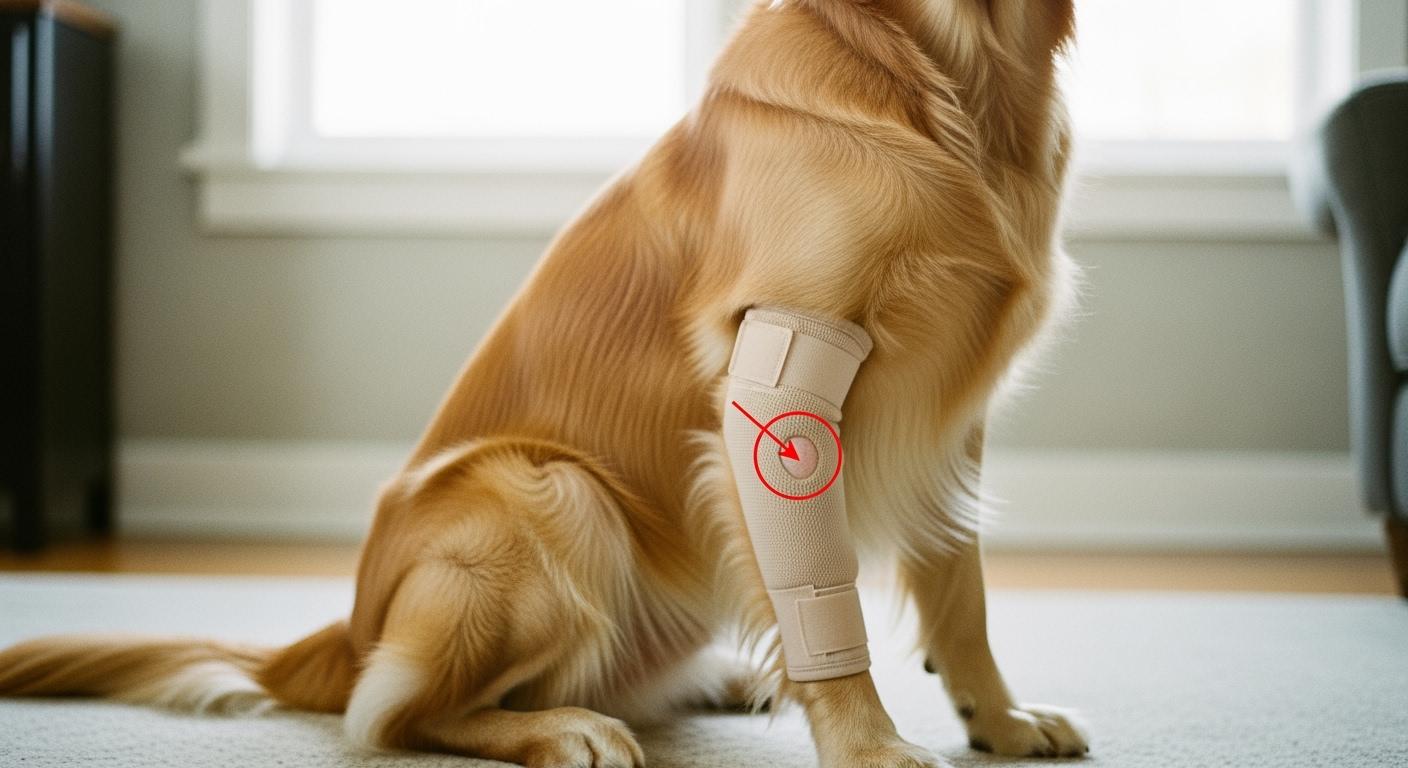
A lick sleeve is a barrier, not a bandage. It only protects what it physically covers, and a sleeve that sits two inches above the wound does nothing. The real question when choosing the best lick sleeve for your dog’s hind leg is not which sleeve looks most durable. It is whether the sleeve will actually block your dog’s tongue from the exact spot that needs protection. That depends on wound location first, then on fit and daily checks.
Why Wound Location Decides Sleeve Success
A hind-leg recovery sleeve can help protect a healing wound, but it cannot replace a cone, bandage, or veterinary wound care when the wound is in a spot the sleeve cannot seal off. Every wound location on the hind leg presents a different coverage challenge.
Knee or stifle incision
Knee incisions are common after TPLO and other stifle surgeries. A sleeve can cover a knee incision at rest, but the real test is what happens when the dog sits, stands, and walks. The sleeve edge can ride up or gap open during movement, exposing the top of the incision. Check the sleeve at the knee crease after each position change. Redness, swelling, warmth, or discharge around the incision means the sleeve is not the right tool for this wound or the fit is failing.
Hock or ankle area
The hock is a high-motion joint, which makes sleeve stability hard to hold. A sleeve that bunches behind the hock or slides down past the joint during walking creates a false sense of protection. The fabric can also press directly on bony points, causing rubbing that the owner may not see until skin breaks down. If the sleeve will not stay centered over the hock through a full short walk, add a cone or switch to a vet-directed wrap.
Lower leg wounds
Lower-leg wounds are the most straightforward to cover with a sleeve, but the fit still fails in predictable ways. Sleeves twist as the dog moves, straps loosen, or the fabric rides up and leaves the lower portion exposed. A sleeve that is too tight can trap fluid in the lower leg. Loose sleeves slide into useless positions. Check the wound edge and strap marks twice daily.
Paw, toe, or paw pad problems
A sleeve rarely solves paw and toe wounds because most dogs can still reach the paw by bending around the sleeve opening or working the fabric back with their teeth. Interdigital cysts, pad cuts, cracked paw skin, and pad hyperkeratosis usually need a boot, bandage, or cone rather than a sleeve alone. If the dog can bend and lick the paw while wearing the sleeve, the sleeve is not providing real protection.
| Wound Location | Decision Direction | Main Limitation | Better Option if Sleeve Fails |
|---|---|---|---|
| Knee or Stifle | Often suitable with careful edge monitoring | Edge gap opens when sitting or bending | Cone or vet-approved wrap |
| Hock or Ankle | Sometimes suitable if sleeve stays centered | Bunching, sliding, pressure on bony points | Cone, boot, or custom wrap |
| Lower Leg | Often the best match for a sleeve | Twisting, riding up, strap loosening | Cone, boot, or vet plan |
| Paw / Toe / Pad | Rarely enough on its own | Dog can bend and reach paw past sleeve opening | Boot, bandage, cone, or vet plan |
| Open or Infected Wound | Not suitable for sleeve use | Traps moisture, hides infection progression | Vet-directed wound care only |
Quick decision rule: Choose a sleeve when the wound is on the lower leg or knee and you can confirm full coverage during movement. Choose a cone, boot, or wrap when the wound is on the paw, hock, or any site the sleeve cannot seal off after a short walk. Reassess if the sleeve shifts, the dog reaches the wound, or skin changes appear.
When a Sleeve Is a Good Match for Hind-Leg Protection
A dog anti-lick sleeve can reduce the need for a cone when it fits the wound location and the dog tolerates it. But a sleeve that covers the right area but slips, bunches, or irritates skin is not a working solution.
What a working sleeve looks like day to day
| Check Point | Pass Signal | Fail Signal | Why It Matters |
|---|---|---|---|
| Coverage during movement | Sleeve stays centered, wound hidden after walking, sitting, lying down | Edge rides up, gap opens, dog licks near the sleeve opening | A sleeve that shifts exposes the wound at the worst moment |
| Strap security | Straps stay snug, no twisting, no red marks after removal | Straps loosen during wear, leave deep indentations, or cause rubbing | Loose straps lose coverage; tight straps damage skin |
| Dog tolerance | Dog walks, rests, eats without pawing or chewing the sleeve | Chewing, freezing, panic, repeated attempts to remove | A dog that fights the sleeve gets no benefit from wearing it |
| Skin under sleeve | Skin looks calm, no lasting marks, no moisture trapped | Redness that persists, rash, odor, dampness after removal | Hidden skin problems can progress faster than the wound heals |
A sleeve designed to stop licking can keep a healing incision clean and dry, but it cannot do that job if the fit degrades over the course of a day. A sleeve that passes checks in the morning can fail by afternoon if straps stretch or the dog’s activity level changes.
Tip: Start with a supervised 30-to-60-minute trial on a non-slip surface. Watch the dog walk, sit, and lie down. Remove the sleeve and check skin immediately afterward. If the wound is still fully covered and skin looks normal, extend wear time gradually over several days.
Soft coverage versus full-head restriction
A well-fitted sleeve lets a dog eat, drink, and rest without the stress of a cone. That matters for dogs that panic, refuse to move, or bang into doorways when wearing an e-collar. But soft coverage only works when the sleeve physically prevents tongue contact. If the dog can still reach the wound by bending or working the fabric edge, the sleeve is a comfort item, not a protective device. At that point, a cone, inflatable collar, or recovery suit becomes the more honest tool.
Features that actually affect rear-leg sleeve performance
| Feature | Why It Matters | What to Watch |
|---|---|---|
| Coverage length | Short sleeves leave wound edges exposed; too-long sleeves bunch at joints | Sleeve must extend visibly past the wound on both ends |
| Strap placement and number | Straps above and below the wound keep the sleeve from migrating | Single-strap designs rotate more; top-only straps let the bottom ride up |
| Breathability | Non-breathable fabric traps heat and moisture, softening skin and slowing healing | Dampness or odor after removal means the material is not breathing enough |
| Joint flexibility | A sleeve that resists bending at the knee or hock changes gait and causes rubbing | Dog should walk with a natural stride, not a stiff or shortened gait |
Note: A sleeve with the right features still fails if the wound location is wrong for sleeve protection. Feature checklists do not override the location-first decision in the table above.
When a Sleeve Is Not Enough
Dog can still reach the wound
Dogs are persistent. If the wound is near the top or bottom edge of the sleeve, many dogs will find a way to lick it by bending, twisting, or working the fabric back with their teeth. A hind-leg sleeve that slips or leaves gaps is not protecting anything. If the dog can reach the wound even once, the sleeve needs to be replaced with a different tool or combined with a cone.
Paw and toe wounds need a different approach
Sleeves are built for limb coverage, not paw enclosure. Most sleeves leave the paw exposed or can be pushed back by the dog’s muzzle. Boots, bandages, and cones each solve the paw-access problem in ways a sleeve cannot. If the wound is on the paw pad, between toes, or at the nail bed, start with those tools instead.
Sleeve hides warning signs
A sleeve that stays on for hours without removal can hide the early signals of infection or skin breakdown. Owners who check under the sleeve once a day can miss changes that happen in hours. Remove the sleeve at least twice daily. Look for swelling, heat, discharge, odor, or wound edges that are spreading instead of closing. If any of these appear, stop sleeve use and contact your veterinarian.
Device comparison: sleeve, cone, boot, bandage
| Protection Tool | Best Use Case | Main Limitation | Key Safety Check |
|---|---|---|---|
| Sleeve | Knee and lower-leg wounds with confirmed full coverage | Cannot seal off paw, hock, or wound edges reliably | Coverage after movement, skin under sleeve twice daily |
| Cone | Any wound site, full lick prevention | Eating, drinking, spatial disorientation | Fit, no rubbing on neck, wound still inaccessible |
| Boot | Paw, toe, and pad injuries | Cannot protect knee or hock wounds | Fit, moisture inside boot, no slipping off |
| Bandage | Open wounds with drainage, post-op dressings | Slipping, tightness, cannot stay on without vet change schedule | Clean and dry, no odor, no swelling above or below |
Escalation rule: If the sleeve gets wet, dirty, or develops an odor, remove it immediately. If you see swelling, discharge, bleeding, or if your dog chews through the sleeve, stop use and contact your veterinarian the same day.
Daily Safety Routine for Hind-Leg Sleeves
Supervised first session
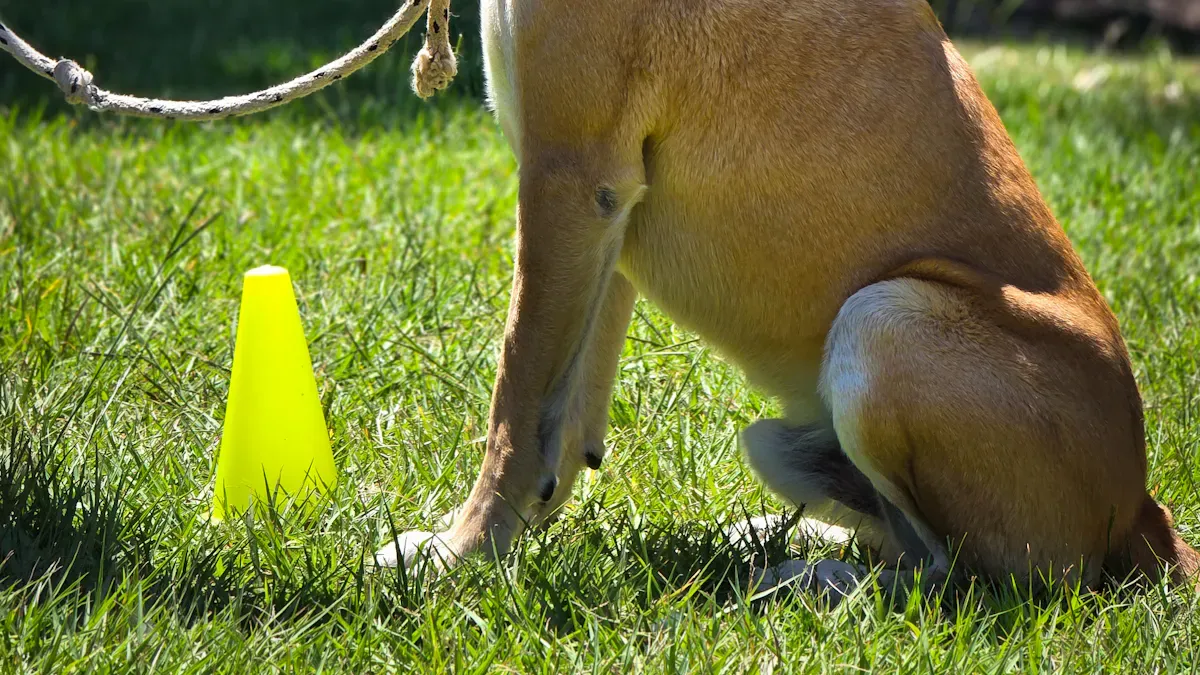
Start with 30 to 60 minutes of supervised wear on a non-slip indoor surface. Watch the dog stand, walk a few steps, sit, and lie down. The sleeve should not twist, slide, or gap open at either end. After removal, check the skin along every strap line and at the wound edges.
Twice-daily skin and incision checks
Remove the sleeve at least twice a day. Look at the wound edges, skin under the straps, and any area the fabric touches. Healthy healing shows fading redness, swelling that decreases day over day, and wound edges that are closing. Warning signs include redness that deepens or spreads, swelling that increases, heat, discharge, odor, or wound edges that are pulling apart.
Rotation and the clean-dry rule
A sleeve that stays damp against skin for hours softens the tissue and invites bacteria. Keep two sleeves and rotate them so a clean, dry sleeve goes on at each change. If a sleeve becomes wet, soiled, or develops an odor during wear, remove it immediately and switch to the spare. The typical protection window after surgery is 10 to 14 days, but only your veterinarian can set the right duration for your dog’s specific wound.
Continue, adjust, or stop
| Signal Level | What You See | Action |
|---|---|---|
| Green | Sleeve stays centered, skin calm, dog ignores the sleeve, wound looks stable | Continue supervised use and routine twice-daily checks |
| Yellow | Mild sliding, brief edge licking, loose fabric, strap marks that fade within 15 minutes | Adjust fit and strap tension, shorten wear time, recheck size chart |
| Red | Swelling, heat, discharge, odor, bleeding, persistent chewing, limping, pain signs | Stop sleeve use and contact your veterinarian |
Workflow tip: Rotate two sleeves, check skin at each change, and write down one note per check. A three-word note is enough to catch a pattern before it becomes a problem.
A daily sleeve fit and protection routine keeps these checks on track between vet visits. A lick sleeve and a bandage serve different purposes, and confusing the two can delay proper wound care. The sleeve is a licking barrier. A bandage is a wound dressing. When the wound needs absorption, compression, or medication contact, a bandage under vet direction is the right tool, and the sleeve becomes a secondary cover at most.
FAQ
How do I know if a lick sleeve fits my dog’s hind-leg wound?
Check coverage after the dog walks, sits, and lies down. The sleeve must cover the full wound with margin to spare during all three positions. If any wound edge shows at any point in the movement cycle, the fit is not working.
Can a dog wear a lick sleeve all day?
No. Remove the sleeve at least twice daily to check skin and the wound. Between checks, watch for signs the sleeve has shifted, gotten damp, or started to bother the dog. Never leave a sleeve on overnight without a veterinarian’s specific instruction.
What should I do if my dog chews or pulls off the sleeve?
Stop sleeve use. Check for pressure points, rubbing, or skin irritation that may be causing the behavior. Your dog may need a different size, a different style, or a different tool entirely. If chewing continues despite adjustments, switch to a cone or contact your veterinarian.
Is a lick sleeve safe for paw or toe wounds?
A sleeve rarely provides reliable protection for paw or toe wounds because most dogs can reach the paw by bending around or pushing back the fabric. Use a boot, bandage, or cone for paw wounds unless your veterinarian confirms that a sleeve alone is sufficient for your dog’s specific injury.
When should I stop using the lick sleeve and call the veterinarian?
Stop and call if you see increasing swelling, heat, discharge, odor, bleeding, wound edges spreading apart, or your dog starts limping or refusing to put weight on the leg. Also stop if the dog chews through the sleeve or the sleeve repeatedly fails to stay in place after adjustment.
Disclaimer: This article is for educational use. It does not replace a veterinary exam, diagnosis, or wound-care plan. Always consult your veterinarian before starting, changing, or stopping any wound protection device.