
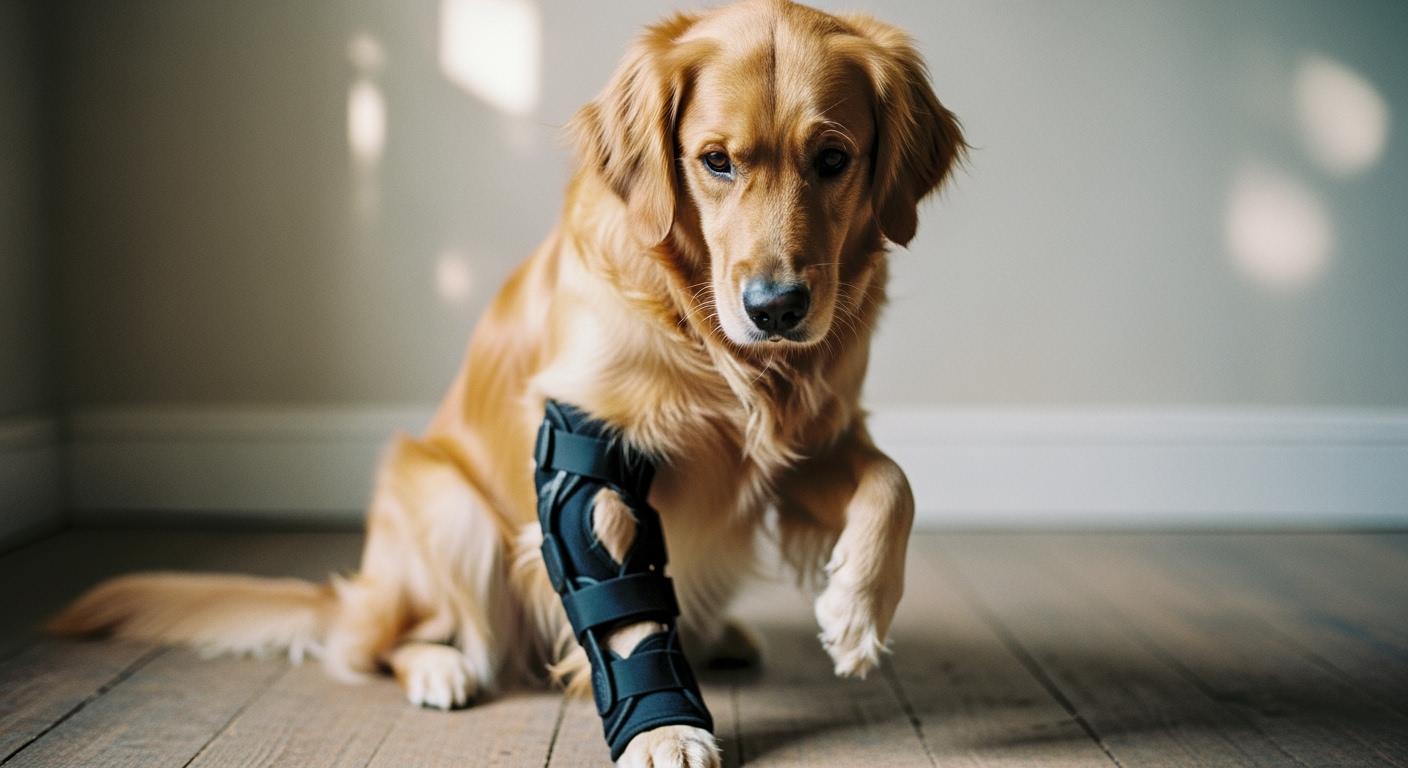
A dog knee brace for luxating patella can help stabilize the kneecap during walks, but it cannot correct the bone alignment that causes the patella to slip out of place. The difference between a brace that helps and one that sits unused comes down to fit: whether it stays centered, whether the straps hold without digging in, and whether the dog tolerates it through a full walk. When a brace slides down, twists sideways, or leaves red marks, it is not doing its job.
Why a Knee Brace for Luxating Patella May Not Work
A knee brace for luxating patella can support the joint and reduce limping during controlled walks, but it cannot repair the shallow groove or misaligned tendon that allows the kneecap to dislocate. The brace stabilizes soft tissue and can help a dog move with more even weight distribution, but it does not change the underlying anatomy. This distinction matters because owners who expect the brace to fix the condition may delay surgery that is genuinely needed.
Which Grades a Brace Can Realistically Help
Grade I luxating patella, where the kneecap can be moved by hand but stays in place on its own, is the best match for brace support. Some Grade II cases, where the patella occasionally slips and returns with movement, may also benefit. A brace can improve comfort and reduce skip-step limping in these milder presentations. Grade III cases, where the patella sits out of place but can be manually reduced, usually need surgical evaluation rather than brace management. Grade IV, where the kneecap is permanently dislocated, requires surgery, not bracing.
| Grade | What Happens to the Kneecap | Brace Decision Direction | Main Limitation |
|---|---|---|---|
| I | Can be moved manually but stays in place | Best brace candidate; support during walks | Brace does not change the shallow groove |
| II | Occasionally slips out, returns with movement | May benefit with close monitoring | Frequent dislocation episodes still need surgical consult |
| III | Sits out of place, can be pushed back manually | Usually needs surgery, not bracing | Brace cannot hold a chronically displaced patella |
| IV | Permanently dislocated, cannot be reduced | Not a brace case; surgery required | Bracing delays necessary surgical correction |
Quick decision rule: Use a knee brace for Grade I or mild Grade II luxating patella confirmed by a veterinarian. Stop and seek surgical evaluation for Grade III or IV, frequent dislocation, worsening limp, or visible muscle loss in the affected leg.
Fit Failure: Slipping, Rotation, and Rubbing
A dog knee brace that does not stay in position provides zero support. The three most common fit failures are slipping down the leg, rotating sideways during movement, and rubbing skin raw under the straps. Each has a different root cause and fix.
Brace slides down the leg
A brace that slides down during walks has usually lost suspension at the thigh or the top strap is too low to anchor against the leg’s natural contour. The knee joint is wider above than below, and a brace that cannot lock into that natural taper will migrate downward with every step. Check whether the top strap sits high enough on the thigh and whether the brace length matches the leg segment. A brace that is too short or too long for the dog’s leg will slide regardless of strap tension.
Brace rotates or twists sideways
Rotation usually comes from uneven strap tension or a brace shell that does not match the dog’s leg shape. If one strap is tighter than the other, the brace pulls toward the tighter side. If the brace hinges are not aligned with the knee joint center, rotation starts the moment the dog bends the leg. Recheck strap tension on both sides and verify the hinge points sit at the knee crease, not above or below it.
Rubbing, redness, and skin breakdown
Rubbing happens when the brace moves against the skin with each step instead of moving with the leg. Deep strap marks that do not fade within 15 to 20 minutes after removal mean the fit is too tight. Redness that spreads or develops into a sore means the rubbing has crossed from irritation into tissue damage. Hair loss, moisture trapped under the brace, and odor are early signals that skin is breaking down. Remove the brace and let the skin recover before trying again.
| What You See | Likely Cause | Why It Matters | Next Step |
|---|---|---|---|
| Brace slides down during walks | Top strap too low, brace length wrong for leg | Joint support is lost when the brace migrates down | Refit, check thigh anchor, verify size chart |
| Brace rotates or twists sideways | Uneven strap tension, hinges misaligned with knee | Support shifts off the joint, rubbing starts | Even out strap tension, realign hinges |
| Red marks, sores, or hair loss under straps | Straps too tight or brace moving against skin | Skin breakdown progresses faster than the knee issue | Remove brace, let skin heal, reduce tension |
| Brace feels loose or falls off | Straps too loose or wrong size entirely | No joint support, brace is dead weight | Tighten straps, re-measure leg, check size |
| Dog chews, freezes, or refuses to move | Pain, poor tolerance, or wrong brace type | Dog gets no benefit fighting the brace | Stop use, reassess brace type and fit |
| Limp worsens during brace use | Brace is causing strain or fit is obstructing gait | Injury may worsen instead of stabilizing | Remove brace, contact veterinarian |
Tip: Measure the dog standing in a natural position with a flexible tape. The top strap should anchor on the thigh above the widest part of the knee. If the brace still slides after sizing correctly, the design may not match your dog’s leg shape.
Strap Tension, Skin Checks, and First-Week Trial
A daily knee brace fit and support routine catches strap loosening before the brace migrates. A knee brace for patellar luxation requires a structured break-in, not just putting it on and hoping. The first week tells you whether the brace and the dog are a match.
Start short and supervised
Begin with 15-minute supervised sessions on a non-slip indoor surface. Watch the dog walk a few steps, stand, and settle. After removal, check the skin along every strap line and over the kneecap. If skin looks normal and the dog stayed calm, repeat for 2 to 3 days before increasing duration.
Strap tension: snug, not tight
Straps should feel snug enough that the brace does not shift during movement, but loose enough that you can slide one fingertip under each strap without forcing it. Too-tight straps leave deep marks, restrict circulation, and cause the dog to chew or freeze. Too-loose straps let the brace migrate, twist, or fall off entirely. Check strap tension before and after each session because it can change as the dog moves.
Twice-daily skin inspection
Remove the brace at least twice a day and look at every area the brace touches. Healthy skin under a well-fitted brace looks calm with no lasting marks. Warning signs include redness that persists more than 15 minutes after removal, swelling, heat, moisture trapped under the fabric, odor, or any broken skin. If any of these appear, stop brace use and let the skin fully recover before trying again.
When to increase or stop
| Signal Level | What You See | Action |
|---|---|---|
| Green | Dog walks comfortably, brace stays centered, skin calm after removal | Continue supervised use, gradually extend wear time |
| Yellow | Mild redness that fades, slight slipping, brief licking at brace | Pause, adjust strap tension, recheck size and alignment |
| Red | Sores, swelling, heat, persistent limping, refusal to walk | Stop use immediately, contact veterinarian |
Escalation rule: If the brace slides, rotates, or rubs after two adjustment attempts, stop using it. A brace that cannot hold position through a supervised walk is not the right brace for that dog.
When a Brace Is Not Enough
Signs that surgery is the right path
Some luxating patella cases need surgery, not a brace. Daily kneecap dislocation, persistent limping that does not improve with rest, visible muscle wasting in the affected leg, and pain when the joint is touched all point toward surgical correction. Delaying surgery while relying on a brace in these cases can lead to cartilage damage, arthritis progression, and a harder recovery later.
| Clinical Sign | What It Suggests | Decision Direction |
|---|---|---|
| Daily kneecap dislocation | Joint instability exceeds what bracing can control | Surgical evaluation strongly indicated |
| Persistent limping or skipping gait | Condition is worsening, not stabilizing | Surgical consult needed |
| Visible muscle loss in the leg | Chronic disuse is causing atrophy | Surgery or intensive rehab required |
| Pain when joint is touched or moved | Active inflammation or cartilage damage | Stop brace, veterinary exam before further use |
| Arthritis visible on X-ray | Advanced degeneration already present | Long-term management plan, not brace-only approach |
Poor tolerance and product mismatch
Some dogs never accept a knee brace regardless of fit quality. Chewing, freezing, panic, or repeated escape attempts are not stubbornness. They are the dog communicating that the brace is causing distress or pain. A dog that fights the brace gets no stabilizing benefit, and the stress of struggling can worsen the knee condition. If a dog rejects the brace after a reasonable break-in attempt, it is the wrong product for that dog.
Brace wear and structural failure
Even a well-fitted brace degrades over time. Velcro that no longer holds, stretched-out straps, loose or misaligned hinges, thinning fabric, and broken seams all turn a working brace into an unreliable one. Check the brace itself at each skin inspection. A hinge that feels loose changes how force transfers through the joint. A seam that is starting to split will fail during a walk. Replace or repair the brace before it fails, not after.
Escalation rule: If the dog’s limp worsens, skin breaks down, or the brace will not stay in position after two fit adjustments, stop use and contact your veterinarian. Continuing with a failing brace risks more harm than going without one.
A brace for mild luxating patella can help a dog walk with less skipping and more even weight distribution when the grade, fit, and tolerance all align. But a brace cannot replace surgery when the kneecap dislocates daily, muscle loss is visible, or pain persists. The decision to continue bracing or pursue surgery should be revisited every few weeks, not made once and forgotten.
FAQ
What should I do if the knee brace keeps slipping or rotating?
Stop use. Check whether the top strap anchors high enough on the thigh and whether the brace length matches your dog’s leg segment. If the brace still slips after refitting, try a different size or design. A brace that cannot stay in place provides no support.
How do I know if the brace straps are too tight or too loose?
Too tight: deep strap marks that do not fade within 15 minutes, redness, swelling, or the dog chewing at the straps. Too loose: the brace shifts during movement, twists, or falls off. Adjust so one fingertip fits under each strap without forcing it.
When should I stop using the knee brace?
Stop if you see sores, swelling, heat, persistent limping, or if your dog refuses to walk. Also stop if the brace repeatedly fails to stay in position after two adjustment attempts. Contact your veterinarian before trying again.
Can a knee brace cure luxating patella?
No. A brace can stabilize the kneecap and reduce limping during walks in mild cases, but it cannot correct the bone structure that allows the patella to dislocate. Grade III and IV cases usually need surgery.
What if my dog tries to remove or bite the brace?
Stop using the brace. Chewing, freezing, or escape attempts signal pain or poor tolerance. Check for pressure points and skin irritation. If the behavior continues after fit adjustments, the brace is not the right product for your dog.
Disclaimer: This article is for educational use. It does not replace a veterinary exam, diagnosis, or treatment plan. Always consult your veterinarian before starting, changing, or stopping brace use for a luxating patella.
