
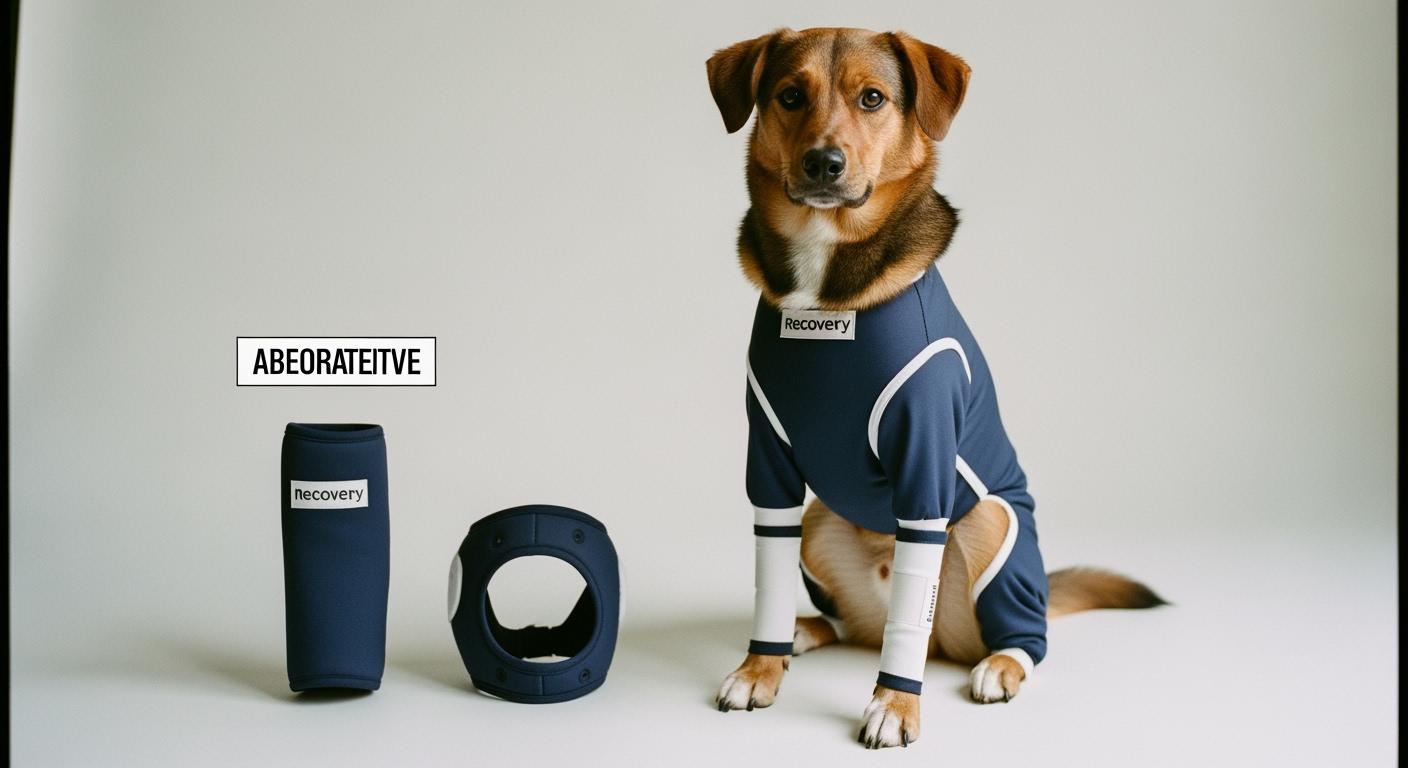
A recovery suit can sit perfectly flat across the chest when the dog stands still. The fabric looks smooth. The leg openings appear to clear the armpit by a comfortable margin. Then the dog walks across the room, lies down, gets back up — and within half an hour there is a red line tracing the front-leg opening, or the dog is chewing at the binding. The suit did not suddenly shrink. The problem was there all along. It just does not reveal itself until movement loads the fabric. Armpit rubbing is rarely caused by one factor alone. Leg-opening geometry may create the first pressure point, while trapped moisture and repeated movement can increase friction. In some cases, the suit is also the wrong protection category for the wound location. Identifying which problem is active matters more than simply noticing that the suit rubs.
Why the Front-Leg Opening Fails During Movement
The armpit of a dog is not a static crease. Every stride stretches it, folds it, and rotates the skin surface through an arc that a flat fabric panel cannot follow. A leg opening that appears to clear the armpit while the dog stands may move into the fold once the dog begins walking. This is a geometry problem, not a sizing problem. When the opening is cut too small or rides too high on the chest wall, the fabric edge cannot distribute tension evenly around the leg during forward reach. Instead, tension concentrates at the apex — the point where the opening rim meets the deepest part of the armpit crease. Each stride repeatedly loads and releases that point. The binding or seam can then concentrate pressure along a narrow line. If the fit problem is not corrected, repeated friction may progress from temporary redness to hair loss or skin damage. What makes this hard to catch is that the failure happens dynamically. A recovery suit designed for post-surgery protection can pass every static measurement — neck, chest, length — and still concentrate pressure at the armpit because the opening shape does not match the three-dimensional motion envelope of the shoulder. The number on the size chart is not the problem. The pattern is. A narrower opening also shortens the dog’s stride. The fabric pulls against forward reach, and the dog compensates by taking shorter, choppier steps. You can check this during a brief supervised movement test on a flat surface. Compare the front-leg binding before and after the dog walks, sits, lies down, and stands again. If the edge repeatedly migrates into the armpit crease, the opening geometry is not moving well with the dog’s gait. Chest tension makes this worse. If the suit is snug across the chest — even if the chest measurement matches the chart — forward leg reach pulls the entire front panel rearward. That rearward pull drags the leg opening deeper into the armpit from behind. The dog then shortens its stride further. And the cycle tightens.
Fabric, Moisture, and the Friction Cascade
Moisture enters the system from several directions. A post-surgical wound may ooze serum. The dog licks the suit fabric, saturating it from the outside. Urine splash reaches the belly panel. Even ambient humidity trapped inside a low-breathability suit raises the moisture content at the skin surface. When the inner surface stays damp, the skin may soften and become more vulnerable to friction. Repeated movement can then transfer more shear to the same contact area than it would under dry conditions. The result is a friction cycle: trapped moisture reduces skin tolerance, repeated movement increases shear, and irritation can develop sooner if the suit remains damp. Check the inner lining and armpit area during an early supervised fitting session and again after movement. Dampness, unusual warmth, or persistent moisture suggests that the fabric is not drying quickly enough for the conditions. Breathable panels or a recovery sleeve made from moisture-managing material may reduce the time moisture remains against the skin. Allow the garment to dry fully before reuse; keeping a second clean suit may help when frequent changes are needed.
Note: Persistent dampness under a recovery suit can increase friction and skin irritation. If the armpit remains damp at repeated checks, review both the fabric and the fit rather than assuming the opening size is the only problem.
| What the caregiver sees | Why the product fails | Better structure or choice |
|---|---|---|
| Red armpit line | Leg opening too small or rides too high | Wider, anatomically shaped opening with softer binding |
| Short front-leg stride | Fabric tension pulls into armpit during forward reach | Stretch shoulder panels, correct chest circumference |
| Fabric bunching behind shoulder | Chest measurement too tight or seam placed at fold point | Flatlock seams offset from armpit crease, anatomical torso shaping |
| Dog chewing the opening edge | Binding too stiff or seam sits in armpit crease | Softer rolled binding, seam moved away from the fold line |
| Damp or warm skin under fabric | Low breathability traps moisture, multiplying friction | Breathable fabric panels, rotate between two suits |
| Wound still reachable | Suit coverage does not extend to wound location | Lick sleeve for limb wounds, head protector for persistent lickers |
When a Recovery Suit Is the Wrong Tool
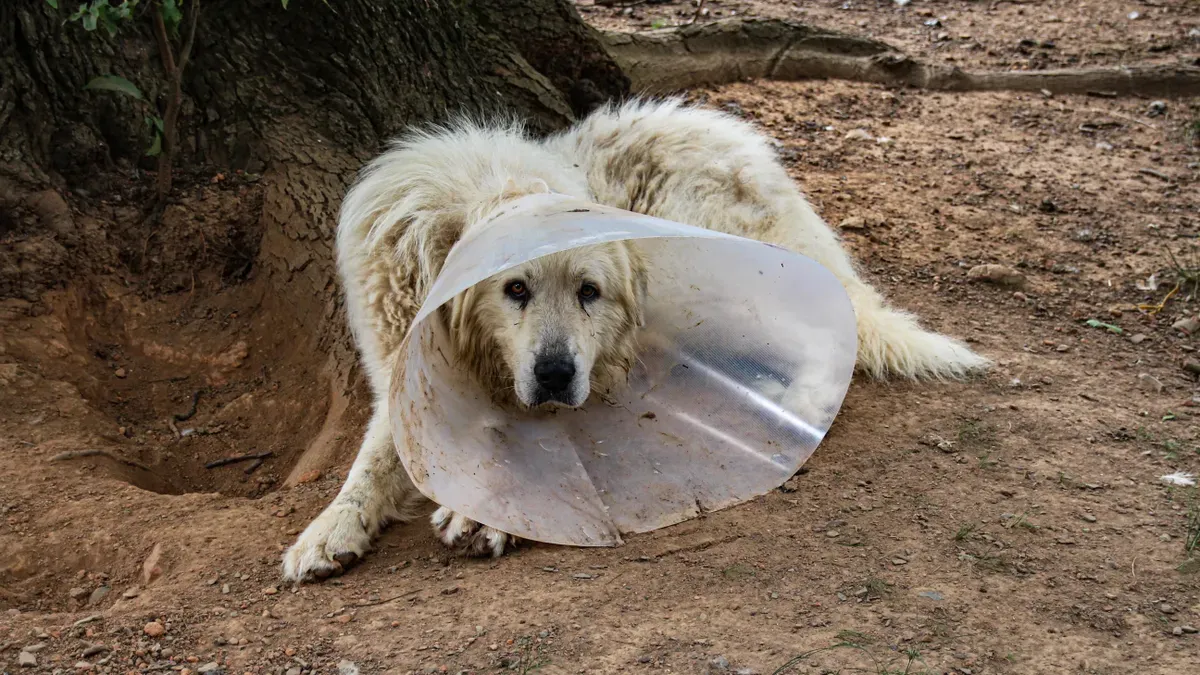
Not every wound needs a full-body suit. Using a suit for a wound it cannot effectively cover creates two problems: the suit rubs where protection is not needed, and the wound remains reachable despite the coverage. A recovery suit covers the torso — chest, belly, flanks. That is its design envelope. A wound on the front leg, particularly below the elbow, sits outside that envelope. The suit fabric may extend partway down the limb, but the leg opening is designed to encircle the upper leg, not to seal against it. The dog can still nose or lick at the wound through the opening or by pushing the fabric upward. Meanwhile, the opening rim is rubbing the armpit with every step — friction applied to a zone that did not need coverage in the first place. That tradeoff fails fast. A lick sleeve for a front-leg wound targets the limb directly. It covers the wound site without encircling the chest or loading the armpit at all. A targeted sleeve avoids wrapping the chest and may reduce armpit contact when it fully covers the wound location. For selected wounds at or below the elbow, it may be a lower-friction option than a full-body suit. Sometimes neither a suit nor a sleeve is sufficient. A dog with strong willpower may contort to reach a wound on the hind leg, the flank, or the base of the tail — areas that a suit should cover in theory but that a determined dog can still access by pushing fabric aside or chewing through it. In those cases, the suit is not failing structurally. It is failing functionally: the dog defeats it. A head protector or cone blocks mouth access at the source rather than trying to out-cover the dog’s reach. Some wound locations — high on the shoulder, deep in the groin, at the very base of the tail — sit at the edge of what any fabric garment can shield. A sleeve extends to a fixed length. If the wound is proximal to that length, no amount of cuff tension changes the geometry. A cone or collar becomes the safer choice.
Disclaimer: This check assumes a short-coated dog where rub marks are visible on the skin surface. Double-coated breeds may show subtler signs — the undercoat can mask redness, and the rub may present as a damp, warm patch rather than a visible line. For these dogs, hand-check the armpit skin by parting the coat rather than relying on visual inspection alone. If the dog’s leg conformation falls outside the breed norms this garment was patterned for — particularly dogs with angular limb deformities or very deep chests — the fit checks described here may not catch every pressure point.
| Product type | Better for | Where it tends to fail | Selection trigger |
|---|---|---|---|
| Recovery Suit | Chest, belly, flank, torso wounds | Armpit rubbing on deep-chested or narrow-bodied dogs | Wound is on the torso and dog tolerates full-body coverage |
| Lick Sleeve | Front-leg or hind-leg wounds, targeted licking | Can slip on very tapered limbs, limited coverage above shoulder or hip | Wound is on a limb and suit causes armpit friction |
| Head Protector / Cone | Preventing mouth access to any wound | Some dogs still reach hindquarters, stress in confined spaces | Dog persistently reaches wound despite suit or sleeve coverage |
Design Details That Change Daily Wear Performance
Most recovery suit descriptions list features. What matters is which features actually change the mechanical conditions at the armpit during a walk — and which ones sound useful in a product photo but do almost nothing under load. Binding softness is not a comfort detail. It is a pressure-distribution mechanism. A stiff, narrow binding can concentrate fabric tension along a small contact line. A softer, wider binding can distribute that pressure across a broader area. The total tension may not disappear, but reducing concentrated contact can lower the chance of a visible pressure line after wear. Seam placement relative to the armpit fold matters for the same reason. A seam that runs directly through the deepest part of the crease doubles the pressure concentration: the fabric fold already compresses the skin, and the seam ridge adds a second linear load on top of it. Moving the seam away from the deepest part of the crease so it sits on the chest wall or shoulder area can reduce that second pressure line. In manufacturing terms, this is a pattern-making decision, not a sewing decision. The seam offset has to be built into the panel shape before the fabric is cut. Stretch panels at the shoulder change how tension routes through the suit during forward reach. Without a stretch zone, all the displacement from the moving shoulder has to come from fabric sliding across the skin — which is friction. With a stretch panel, part of the displacement is absorbed by the textile itself elongating and recovering. Less sliding means less friction. The anti-lick products that use targeted stretch zones tend to generate fewer rub complaints because they reduce the total shear distance per step cycle. Choosing between a suit, a sleeve, and a head protector is not about ranking products from best to worst. It is about matching the protection geometry to the wound location and the dog’s behavior. A sleeve for a front-leg incision wins over a suit not because it is a better product but because its design envelope actually contains the wound. That is the metric that matters. Not feature count. Not price. Whether the protection geometry fits the problem.
FAQ
Why does rubbing only show up after walking, not when the dog stands still?
Standing places the shoulder in a relatively neutral position, where the armpit crease may look shallow. During walking, the shoulder and upper leg move through a wider range, deepening and shifting the crease with each stride. A leg opening that looks clear while standing may enter the crease during forward reach.
Can I tighten the suit to stop it from rubbing?
Tightening usually worsens the problem. A tighter suit increases the tension in every fabric panel, which raises the force pressing the binding into the armpit. It also reduces the fabric’s ability to slide and redistribute during movement, so pressure stays concentrated at the same point cycle after cycle. If the opening shape is wrong, more tension does not correct the shape — it just drives the wrong shape harder into the skin.
What is the safest way to check fit before leaving the suit on unsupervised?
Run a brief supervised movement check that includes walking, sitting, lying down, and getting up — not just standing. Then remove or open the suit and inspect the armpit and front-leg root for redness, unusual warmth, dampness, hair disruption, swelling, or chewing at the binding. Do not leave the suit on unsupervised if it migrates into the crease or leaves persistent marks, even when the chart measurements appear correct.
When should I switch from a recovery suit to a lick sleeve?
Switch when the wound is on a limb rather than the torso, or when armpit rubbing persists after correcting for opening shape and fabric breathability. A lick sleeve isolates protection to the wounded limb and removes the armpit from the friction zone entirely. If the wound sits above the elbow or above the stifle — too high for a sleeve cuff to reach — a head protector paired with a suit may be necessary instead.
