
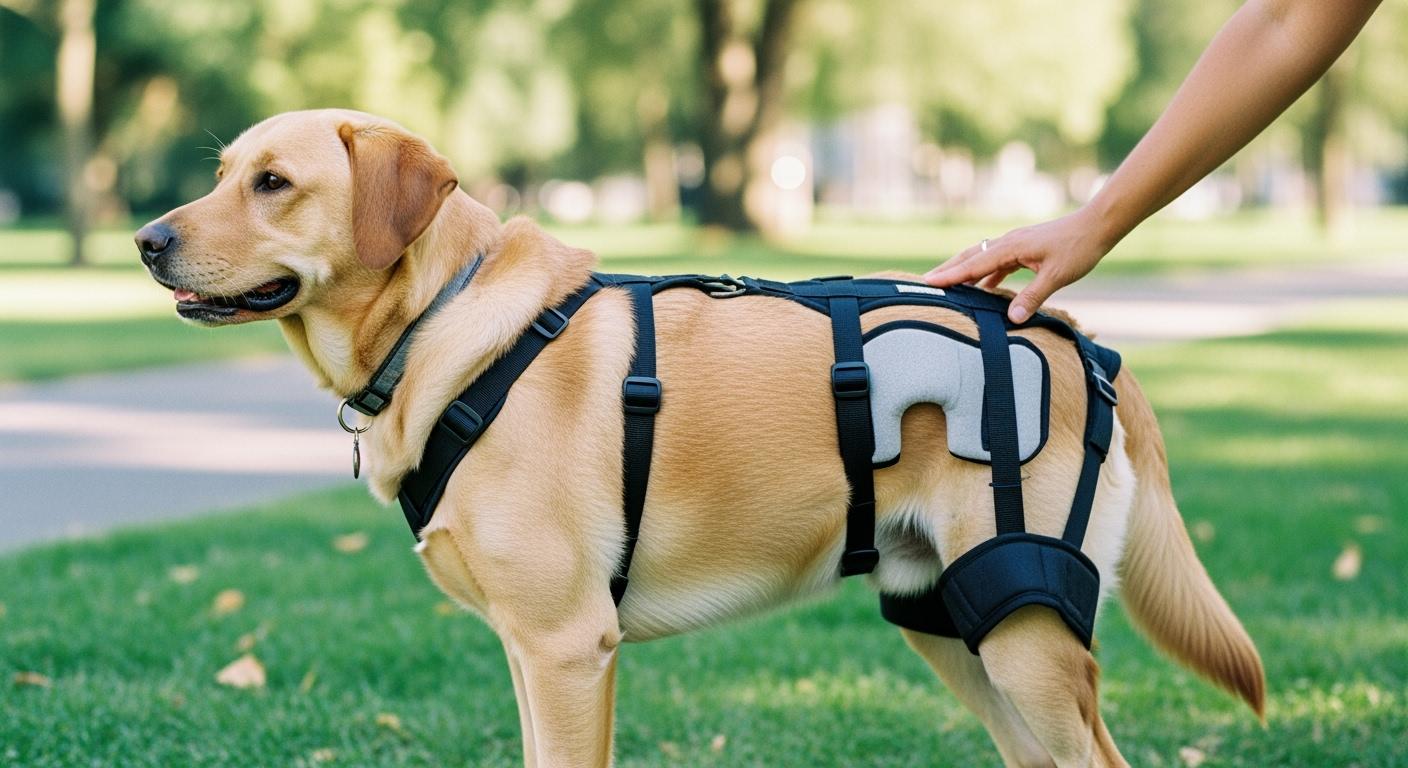
You lift your dog with a rear harness. Standing still, the fit looks right. The dog squats to potty — and the edge of the opening presses into soft tissue. The dog freezes. Shifts weight. Sits down mid-squat and refuses to finish.
This is not just discomfort. Dog rear harness potty opening rubbing is a structural failure signal. It means the cutout is not staying open under load, the rear panel is drifting forward during squatting, or the support balance is wrong for that dog’s front-leg strength. Understanding which failure is happening determines whether you adjust fit, switch harness type, or stop use altogether.
Why the Potty Opening Edge Rubs During Squatting
The harness cutout has one mechanical job during a potty break: stay open while the dog changes shape. When the dog stands, the cutout sits clear. When the dog squats, the abdomen compresses, the pelvis tilts, and the effective strap path shortens. If the cutout edge is stiff — a rigid binding with no give — it cannot follow that shape change. The edge digs in.
The more common failure is forward drift. Abdominal compression during squatting shortens the strap path. That excess strap length pools at the lowest-tension zone — the groin. No rigid structure blocks travel there. The strap edge contacts the urethral area. The dog braces, hesitates, or breaks the squat early. This is a mechanical chain: compression shortens the strap path → excess length migrates to the low-tension zone → the groin has no structural barrier → edge contacts sensitive tissue → the dog stops squatting.
Narrow straps make this worse. A one-inch strap concentrates lift force along a thin line. When the dog squats and load shifts, that line becomes a pressure ridge. The edge rolls. The harness rotates. Support disappears at the moment it is needed most. A harness that uses a wider pelvic cradle and anti-slip lining resists this drift because friction is distributed across more square inches of contact.
You can verify whether drift is happening. Before a potty break, mark the harness edge position against the fur with a small piece of tape. Walk the dog. After the dog squats, check the tape. If the harness has shifted forward more than half an inch, forward drift is active. The same check applies across different harness designs — the mechanisms that cause rear harness rubbing overlap with the broader fit and pressure-point failures common to rear lift harnesses.
How Harness Structure Creates Edge Pressure and Drift
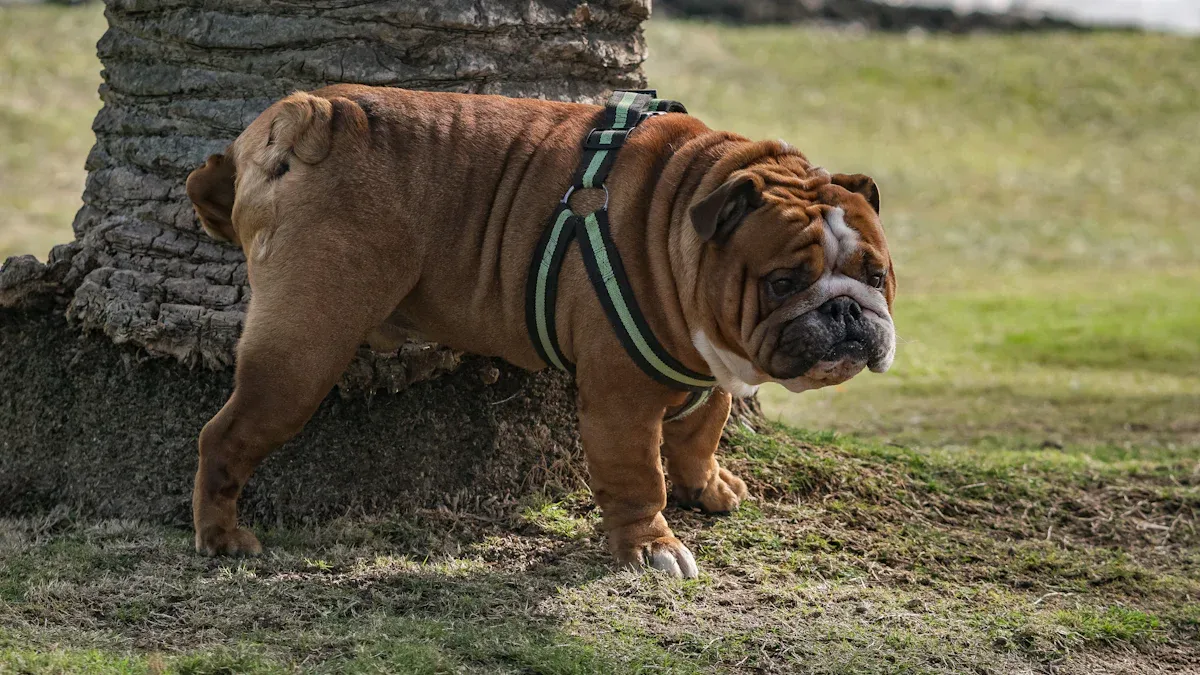
A short lift handle pulls the rear panel forward on every lift. The angle steepens. The cutout drifts toward the groin. The dog compensates by tensing, which makes the squat shallower, which makes urination incomplete. Adjustable handles change the lift vector — a longer handle keeps the pull closer to vertical, so the rear panel stays anchored and the cutout stays where it was positioned before the squat began.
Poor cutout placement produces a different failure. If the opening does not account for both male and female anatomy, or if it sits too far forward even at rest, squatting pushes the edge directly into the urethral or anal area. The dog cannot finish. This is not behavioral stubbornness. It is mechanical obstruction.
Rear-only support has a structural limit that shows up most clearly during potty breaks. When the harness lifts only the hind end, the front legs absorb a larger share of body weight. If those front legs are already weak — common in dogs that need lift assistance — the dog trembles or splays. That changes the squat posture, which changes how the harness sits on the body, which changes where the cutout edge lands. A dog whose front legs shake during squatting is sending a clear signal: rear-only lift is shifting too much load forward. For these dogs, lift solutions designed for hind-leg weakness balance the load differently.
A second observable check: after a potty break, run your fingers along the inner edge of the cutout. If the fabric feels warmer than the panel surface two inches away, friction is concentrating along that edge line. Warmth means rubbing — even if the skin looks fine at a glance.
Design Features That Keep the Opening Clear During Potty Breaks
Breathable padding does two things that change rubbing outcomes. It lets moisture escape during use, and it dries faster between bathroom trips. Wet fabric softens skin. Softened skin abrades faster under the same friction load. A harness that stays dry near the opening produces measurably less skin damage over repeated daily use. The fit checks that work for standard rear-support harnesses apply here too — the fit principles for back-leg lift harnesses emphasize the same moisture-management and edge-clearance priorities.
A wide pelvic cradle spreads lift force across more surface area. Less force per square inch means lower edge pressure. The panel resists curling inward because tension is distributed, not concentrated. Anti-slip lining on the inner face creates friction against the coat — not the skin — which resists forward creep when the dog squats. These features work together: a harness that drifts less produces less edge friction, and a harness with soft edge binding tolerates whatever minor movement remains.
When front-leg strength is compromised, a full-body lift harness changes the force equation. Instead of the front legs absorbing all the forward weight shift alone, the front support panel shares the load. The rear panel drifts less because the whole system moves as one unit rather than being pulled out of alignment from one end. The potty opening stays positioned correctly because the harness is not fighting its own support imbalance. This is why comparing rear-only lift to full-body support is not about which is “better” — it is about matching the support type to the dog’s actual front-leg capacity during the squat.
When a Rear Harness Works — and When It Does Not
A rear harness is the right support tool when the dog has stable front legs and primarily needs hind-end assistance to stand, walk, and maintain balance. The potty-opening rubbing risk is manageable if the cutout is generous, the edge binding is soft, and the pelvic support panel is wide enough to distribute lift force without drifting.
A rear harness is the wrong tool when specific failure signals appear repeatedly:
- The dog’s front legs tremble or buckle during squatting — rear-only lift is overloading them.
- The dog has very deep-chested or narrow-hipped conformation that pulls the cutout forward even at rest.
- The dog panics, fights the harness, or repeatedly refuses to squat after fit adjustments.
- Redness, hair loss, or persistent dampness appears near the opening after every use regardless of fit tweaks.
When these signals are present, moving to a harness type with wider pelvic support and balanced lift across both ends changes the outcome — not because the rear harness was “bad” but because the support structure did not match the dog’s actual load distribution during squatting. The same design features that prevent rubbing in a rear harness determine whether a full-body harness slips or rubs on large dogs: panel width, edge binding, and anti-slip lining remain the controlling variables regardless of harness type.
Disclaimer: These fit checks assume a short-coated dog where skin and edge position are visible. Double-coated breeds may show subtler rub marks — a hand-check running fingers against the grain of the fur near the cutout edge is more reliable than visual inspection alone. If the dog’s leg conformation falls outside typical breed proportions, particularly dogs with angular limb deformities or very deep chests, the standard cutout placement may not match their anatomy, and the checks described here may not catch every pressure point.
| Failure sign | Likely structural cause | What to check | Better support direction |
|---|---|---|---|
| Edge rubbing near potty opening | Cutout too short or stiff | Opening shape and binding | Wider pelvic cradle, soft edge |
| Harness sliding toward groin | Narrow rear strap, poor lining | Panel position after squat | Anti-slip lining, broad support |
| Dog refuses to squat | Steep lift angle, poor clearance | Handle angle, cutout placement | Adjustable handles, anatomical cutout |
| Front legs shaking | Rear-only lift overload | Front leg strength during squat | Full-body support option |
| Wet or dirty fabric near opening | Trapped moisture, poor padding | Fabric dryness after use | Breathable padding, dry lining |
| Redness after short use | Repeated edge friction | Skin inspection after each trip | Soft binding, after-use checks |
| Product type | Best for | Potty opening risk | Support limitation | Better design feature |
|---|---|---|---|---|
| Rear harness | Stable front legs | Moderate | May overload front legs | Wide pelvic panel, anti-slip lining |
| Full-body lift harness | Weak front or rear legs | Lower | More complex fit | Balanced lift, anatomical clearance |
| Level | What you see | Next action |
|---|---|---|
| Green | Opening stays clear, no rubbing, calm squat, harness stays anchored | Continue use, routine checks |
| Yellow | Mild shifting, light redness, damp fabric, dog hesitates | Adjust fit, inspect skin, monitor |
| Red | Swelling, heat, hair loss, bleeding, discharge, odor, pain, collapse, repeated refusal to potty | Stop use, contact veterinarian |
The decision to adjust, switch harness type, or stop use turns on what you observe during and after each potty break. A harness with generous cutout clearance, soft edge binding, wide pelvic support, and anti-slip lining reduces rubbing risk. If the dog’s front legs are weak, a full-body support option changes the load distribution enough to keep the opening clear. The lift harness designs available vary in these specific structural dimensions — panel width, binding type, handle adjustability — and the difference between a harness that rubs and one that does not often comes down to how those dimensions match the dog’s actual squat mechanics.
FAQ
Why does my dog’s rear harness rub only during potty breaks?
Squatting changes the dog’s abdominal profile. The strap path shortens under compression, excess length pools at the groin, and the cutout edge that looked clear at rest now presses into tissue. A cutout that is too short or too stiff cannot follow the shape change.
Can I prevent rubbing by tightening the straps?
No. Tighter straps increase edge pressure. The fix is structural: softer edge binding, a wider pelvic panel to distribute lift force, and anti-slip lining to resist forward drift — not more tension.
When should I switch from a rear harness to a full-body lift harness?
When the dog’s front legs tremble, buckle, or splay during squatting. That signal means rear-only lift is overloading the front end. Balanced support across both ends keeps the harness from drifting and the cutout from shifting into sensitive tissue.
