
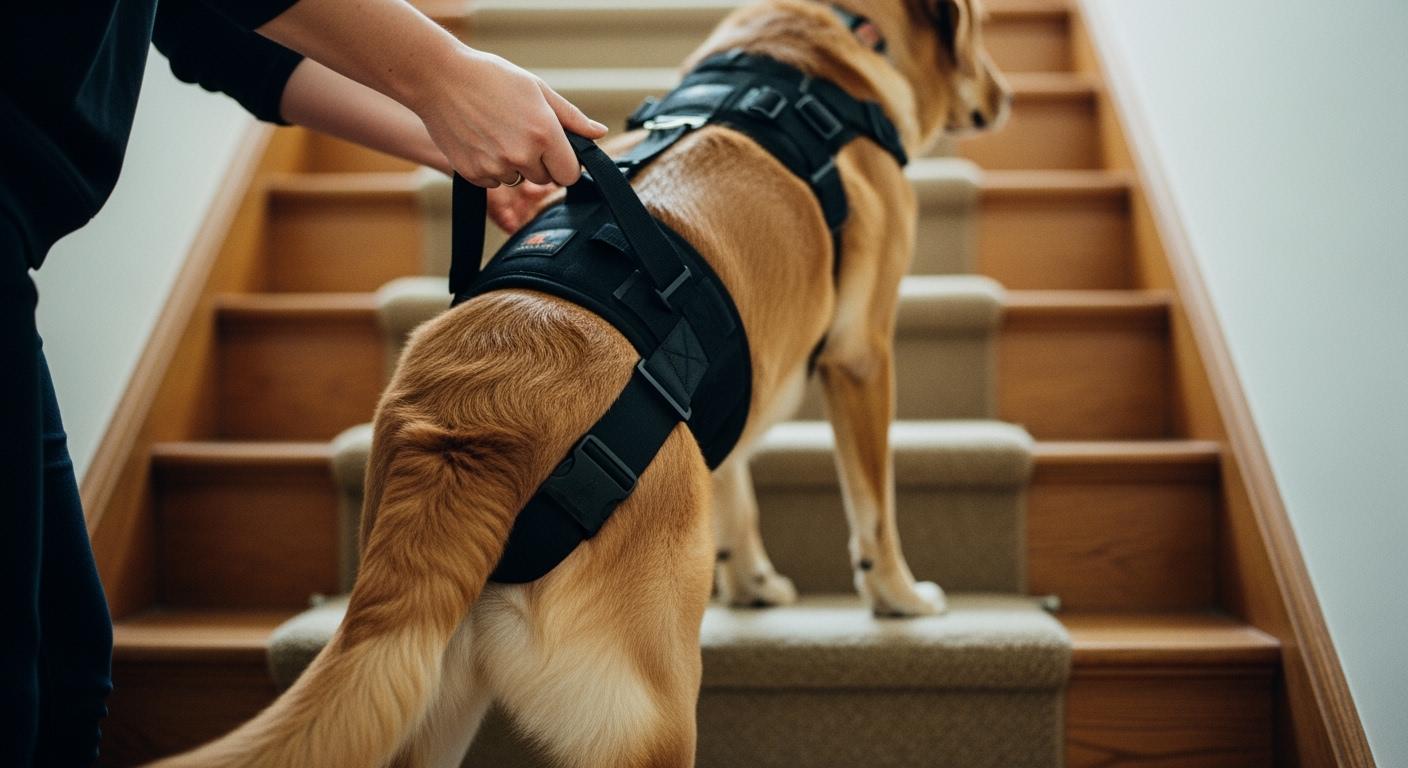
You need good handle control and balanced support to help a dog on stairs. Bad handle placement can make things risky for you and your dog. Many accidents happen when dogs use stairs without the right harness. These accidents include:
Muscle strain
Torn ligaments
Dislocated shoulder or elbow
Broken bones or hurt cartilage from falls
Choosing the right dog lift harness for stairs handle control lowers these risks. You can check handle position, support balance, and stair safety to keep your dog safe and comfortable.
Key Takeaways
Choose a dog lift harness with the handle positioned above your dog’s middle for better control and safety on stairs.
Always check the harness fit before use. A well-fitted harness prevents injuries and ensures comfort for your dog.
Use non-slip mats or tape on stairs to improve traction and reduce the risk of slipping.
Move slowly and give clear cues to your dog while using the harness. This helps your pet feel secure and confident.
If your dog shows signs of discomfort or struggles on stairs, consult a vet for advice on the right harness and support.
Handle Control in Dog Lift Harness for Stairs
Why Handle Position Matters
You need to hold the handle in the right place when helping your dog on stairs. Stairs are harder for dogs than flat ground. Each step changes how your dog stands. If you hold the handle wrong, your dog might lose balance or get scared. Good handle placement helps you guide your dog up or down each step. This is very important for dogs with weak back legs or those healing from injuries.
Veterinarians say that a dog lift harness for stairs handle control gives better support and safety. You can help your dog move with less chance of slipping or falling. The right handle spot also makes it easier on your own body. You can read more about handle comfort and helping your dog move in our mobility support guide.
Tip: Always make sure the handle is above your dog’s middle. This spot gives you the best control and helps your dog feel safe.
Risks of Poor Handle Control
If you use the handle wrong, you and your dog could get hurt. Bad handle control can make your dog’s weight shift suddenly. Your dog might trip or fall. You could also hurt your back or arms if you lift from a bad angle. Some common problems are:
Losing balance on stairs
More chances of falling or slipping
Extra pressure on your dog’s joints
Trouble guiding your dog around corners
New dog lift harness for stairs handle control designs have features to lower these risks. Look for handles that fit your dog’s size and needs. The table below lists some good features for handle placement and safety:
Feature | Description |
|---|---|
Front handle & ‘D’ ring | Lets you attach a leash and lift easily |
‘T’ pad | Lifts under the chest for better support |
Adjustable strap | Fits dogs of different sizes |
Rear handle with reflective strips | Makes it safer in the dark |
Patented hip lift | Helps lift both you and your dog comfortably |
You can learn more about these features in our dog harness selection guide.
Buyer Priorities for Stair Safety
When picking a dog lift harness for stairs handle control, focus on safety and balance. Buyers and vets want harnesses that give strong support and stop falls. Check these things before using a harness on stairs:
Make sure the harness fits your dog well but does not squeeze.
Pick a harness with front and back handles for better balance.
Find harnesses with straps you can adjust for size.
Choose harnesses with reflective strips for dark stairs.
Ask your vet which harness is best for your dog’s health.
Vets often suggest certain harnesses based on your dog’s needs. You can find more about safe stair use and harness choices in our assisted movement solutions.
A dog lift harness for stairs handle control helps you keep your dog safe. You can lower the chance of injury and make stairs easier for both you and your dog.
Support Balance and Harness Selection
Front-and-Rear Support Considerations
You need to think about how a support harness helps your dog move safely on stairs. Dogs with mobility problems often need help in both the front and rear. A rear support leash style harness gives gentle help to the back legs. This type works well for dogs who need stability but can still use their front legs. A rear harness offers targeted support for weak back legs. It spreads your dog’s weight evenly, which helps with stair navigation. A full body harness wraps around the chest and abdomen. This design gives balanced support for dogs with severe mobility issues. Senior dogs often need this kind of lifting harness for stairs. You can find more about these options in our mobility solutions for senior dogs.
Harnesses with adjustable straps and ergonomic handles make lifting easier. These features help you keep control and give your dog confidence on stairs. Some harnesses offer three lifting modes: front-only, rear-only, or full-body. This makes them useful for different mobility needs.
Harness Fit and Adjustment for Stairs
A proper fit is key for safe stair use. You should always check the size of the support harness before using it. Many brands, like Delta Plus, offer sizes for different dogs. Adjust the belt just above the pelvic bones. Make sure it does not press on the sternal anchor point. For thigh and shoulder straps, you should fit your hand under the strap, but not your fist. The dorsal anchor point should sit between the shoulder blades. The sternal anchor point must be in the right spot to avoid injury. These steps help you get the best fit and support for your dog.
Tip: A well-fitted lifting harness keeps your dog safe and gives you better control on stairs.
Limitations and When to Seek Guidance
Sometimes, a support harness does not give enough balance. Watch for signs like tipping, swaying, or reluctance to use stairs. If your dog moves down stairs too fast or shows weakness in both ends, the harness may not provide enough support. Here is a quick reference:
Sign of Inadequate Support | Description |
|---|---|
Tipping or Swaying | The harness may not give enough balance for your dog. |
Weakness in Both Ends | A rear-only harness may not be enough for stability. |
Senior dogs often need more than one type of support harness. If you see these signs, talk to a veterinary professional. They can help you choose the right lifting harness for your dog’s mobility needs. Always check for a proper fit and balanced support before using stairs. For more details, visit our product category page for support harnesses.
Practical Stair Navigation with Dog Lift Harness
Handle Position and Grip Techniques
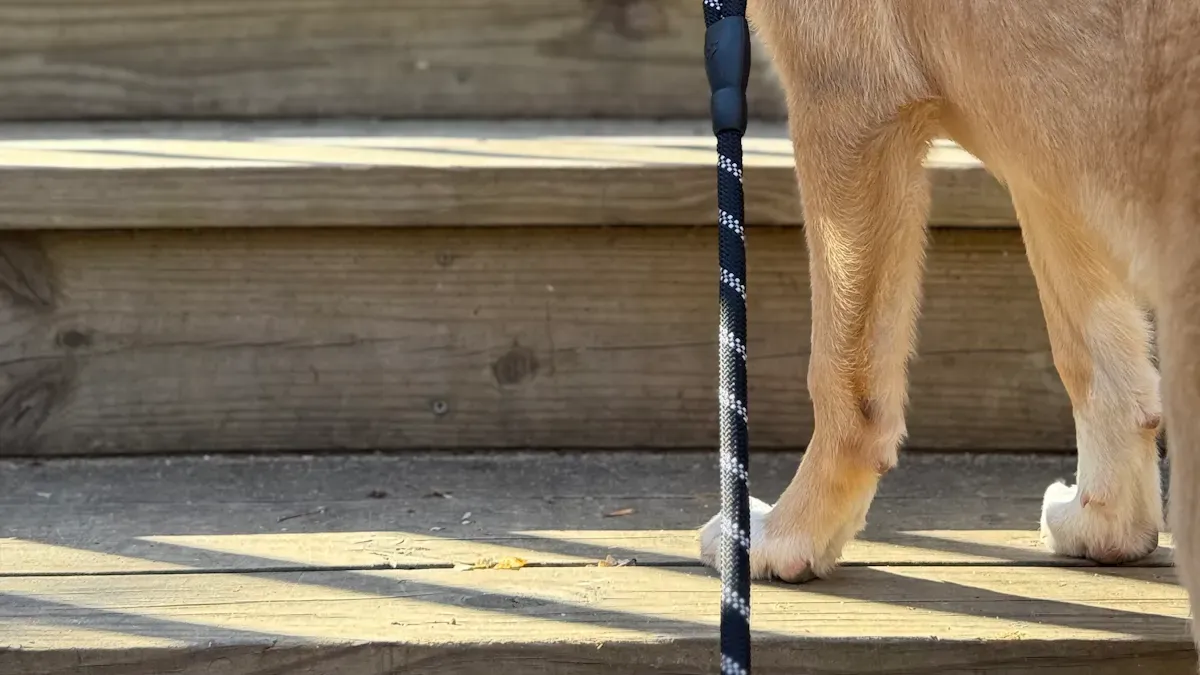
You need to use the right grip and handle position when you help your pet climb stairs. Good grip techniques make stair use safer for both you and your dog. Here are the best steps for using a dog lift harness on stairs:
Talk to your helper if you have one. Use clear words like “Ready, lift” or “Pause” so you both move together.
Support both the front and rear of your pet at the same time. Lift gently and keep your dog’s spine straight.
Only lift as much as your pet needs. Do not raise your dog too high. Give just enough assistance for each step.
Move slowly. Keep your pet calm and use a loose lead to guide your dog.
If your pet is large or disabled, use a rear sling and a front support. One person lifts the back, and the other lifts the front. Place a non-slip runner on the stairs for better traction.
You can find more details about grip and handle options in our mobility support solutions.
Tip: Always check your grip before you start. A steady hold on the dog lift harness helps prevent slips and gives your pet more comfort.
Maintaining Balance on Stairs
Balance is key when you help your dog use stairs. You need to use a dog lift harness that takes weight off your pet’s weak legs. This improves stability and helps your pet feel safe. Make sure the stairs have a non-slip surface. You can add non-slip tape or a runner for better traction. If your pet has severe mobility challenges, consider using a ramp instead of stairs.
Here are some ways to keep balance and safety:
Use a full body harness for pets with weakness in both front and back legs.
Stand close to your pet. Keep your knees bent and your back straight.
Move at a slow pace. Let your pet take one step at a time.
Give clear cues and praise your pet for each step.
If the stairs are narrow, make sure you have enough space to turn and guide your pet safely.
You can learn more about harness options for disabled pets in our product category page for support harnesses.
Common Mistakes and Safety Tips
Many people make mistakes when they use a dog lift harness for stairs. These errors can put your pet at risk. Here are the most common mistakes and how to avoid them:
Mistake | How to Avoid It |
|---|---|
Lifting too quickly | Move slowly and give your pet time to adjust |
Not checking harness fit | Adjust straps before each use |
Using stairs with slippery steps | Add non-slip tape or a runner for traction |
Not practicing on short stairs | Start with a few steps before longer flights |
Trying to help alone with a large dog | Ask for help from another person |
Safety Tip: Teach your pet to wear the dog lift harness before using stairs. Practice on small steps first. Reward your pet for calm behavior.
Checklist for Safe Stair Navigation:
Check the fit of the dog lift harness and adjust as needed.
Make sure the stairs have good traction.
Use a full body harness for pets with severe mobility challenges.
Give clear cues and move at a slow pace.
Ask for help if your pet is large or disabled.
Avoid stairs if your pet shows pain or fear.
Reward your pet after each safe climb.
You can find more safety tips and harness options in our assisted movement solutions.
A dog lift harness for stairs handle control can make life easier for you and your pet. With the right assistance, you help your dog stay safe and comfortable while preventing injuries. Always use mobility aids as recommended by your veterinary professional.
You want your dog to feel safe on stairs. Begin with just a few steps at first. Give your dog a treat for doing well. Use a harness with a handle for more support. Always check if the harness fits before lifting your dog. Stand next to your dog and guide gently. Put non-slip mats or tape on the stairs. Pick a lift harness that fits your dog’s size. Look for things like weight limit, non-slip grip, and easy straps. If you are a clinic or reseller, check for certifications and warranty. Ask an expert if you are not sure about which harness to use. For more help, see our mobility support guide, solution page, or product list for lift harnesses.
Checklist for safe stair use:
Begin with a few steps and give your dog a treat.
Use a lift harness with a handle for support.
Make sure the harness fits before each lift.
Add non-slip mats or tape to the stairs.
Ask a professional for help picking a lift harness.
FAQ
How do you use handle control on stairs with a dog lift harness?
You hold the handle above your dog’s middle. This spot gives you the best balance and control. Move slowly and guide your dog step by step. Always check that the harness fits well before you start.
What features help with stair safety in a dog lift harness?
Look for front and rear handles, adjustable straps, and non-slip materials. Reflective strips help in low light. These features give you better control and help your dog feel secure on stairs.
Can you use any dog lift harness for stairs?
Not every harness works for stairs. You need a dog lift harness for stairs handle control. Choose one with strong handles and a snug fit. Ask a veterinary professional if you are unsure which harness to use.
What should you do if your dog struggles on stairs, even with a harness?
If your dog tips, sways, or seems scared, stop using the stairs. Check the harness fit. Talk to your vet or rehab specialist for advice. Your dog may need a different type of support.
How can you make stairs safer for your dog?
Add non-slip mats or tape to each step.
Use clear cues and move at a slow pace.
Practice on a few steps first.
Reward your dog for calm behavior.
These steps help your dog feel safe and confident.
