
Choosing the right senior dog mobility support starts with understanding your dog’s comfort and needs. Most senior dogs over eight years old face mobility challenges, so you want to keep your aging pets active and safe. Mobility aids like braces, slings, harnesses, and dog wheelchairs can reduce the risk of falls, support independence, and boost your dog’s quality of life. Proper fit matters for safety and comfort. This guide gives you practical checklists, real-life examples, and reminders to work with your veterinarian.
Key Takeaways
Assess your senior dog’s mobility needs by observing their movement and behavior. Look for signs of discomfort or difficulty in daily activities.
Choose the right mobility aid based on your dog’s specific challenges. Options include slings for hind leg support, braces for joint stability, and full-body harnesses for overall assistance.
Regularly check your dog’s skin for irritation or pressure sores under mobility aids. Daily inspections help prevent discomfort and ensure safety.
Start with short wear sessions for mobility aids, gradually increasing the time as your dog adjusts. Monitor their comfort and response during use.
Always consult your veterinarian for guidance on mobility aids and any changes in your dog’s health. Their advice is crucial for your dog’s well-being.
Senior Dog Mobility Support: Quick Start Guide
Fast Choices for Support and Safety
You want to help your aging pets stay active and safe. Start with a quick decision checklist to guide your next steps:
Check if your senior dog struggles to get up after naps.
Watch for difficulty climbing stairs or going for walks.
Look for signs of pain or discomfort when moving.
Make sure your dog maintains comfort and does not show distress.
Provide daily exercise that matches your dog’s ability.
Schedule regular veterinary visits, at least twice a year.
If you notice your dog hesitates before standing or tires quickly, consider mobility aids like braces, rear lift slings, or full-body support harnesses. Dog wheelchairs may help dogs with severe hind leg weakness. These tools support independence and reduce the risk of falls. For dogs who tire easily, you can use a dog carrier backpack for short outings. Keep your dog’s mind active with gentle play and interaction.
Tip: Explore our product categories to find the right senior dog mobility support gear for your dog’s specific needs.
When to Call the Vet
You should contact your veterinarian if your senior dog shows any of these signs:
Sudden inability to stand or walk.
Persistent pain despite using support gear.
Swelling, redness, or sores under mobility aids.
Loss of appetite or changes in behavior.
Difficulty urinating or defecating.
Your veterinarian can recommend pain medications, joint supplements, or refer you to rehabilitation facilities for physical therapy. Always follow your vet’s advice when choosing and fitting mobility aids.
Note: This guide does not replace veterinary diagnosis. Always consult your veterinarian for health concerns and before starting new support gear.
Mobility Aids Selection Framework
Choosing the right mobility aids for your senior dog starts with a clear plan. You want to match your dog’s symptoms and daily challenges with the best support gear. This framework helps you break down the process into manageable steps, so you can make confident decisions for your aging pets.
Identify Problem Area
Start by observing your dog’s movement and behavior. Senior dogs often develop mobility issues from arthritis, joint pain, or muscle weakness. You may notice your dog hesitating before standing, struggling with stairs, or avoiding activities they once enjoyed. These signs point to specific problem areas that need support.
Look for stiffness in the hips, knees, or spine.
Watch for limping or favoring one leg.
Check if your dog slips on hard floors or has trouble getting up.
Notice if your dog avoids jumping onto furniture or into the car.
Most mobility problems in seniors come from arthritis, which causes pain and inflammation in the joints. This makes it hard for your dog to walk, climb, or play. Weakness in the hind legs is also common and can lead to falls or loss of independence.
Tip: Keep a daily log of your dog’s movement and note any changes. This helps you track progress and share details with your veterinarian.
Common Mobility Aid Options
You have several types of mobility aids to choose from, depending on the problem area:
Type of Aid | Description |
|---|---|
Slings | Support the dog’s hindquarters to assist in walking. |
Offer additional support for mobility issues in joints. | |
Dog wheelchairs | Provide support and stability for dogs with advanced arthritis or severe hind leg weakness. |
Ramps | Help dogs get in and out of cars, up and down stairs, and onto furniture. |
Stairs | Useful for dogs who struggle with ramps, providing an alternative for climbing. |
You want to focus on slings, braces, harnesses, and recovery suits for most senior dog mobility support needs.
Define Support Goals
Once you know the problem area, set clear goals for your dog’s mobility and comfort. Think about what you want your dog to achieve with the right support.
Increase your dog’s ability to walk short distances.
Help your dog stand up without pain.
Allow safe bathroom breaks outside.
Prevent falls and injuries.
Maintain your dog’s independence for as long as possible.
Veterinary guidelines recommend setting measurable goals. For example, you can start with 10–15 minute leisurely walks and increase time as your dog tolerates. Swimming offers full-body exercise without stressing the joints. Always use a life vest for safety. Gentle fetch or tug games can keep your dog engaged, but stop if you see signs of fatigue.
Exercise Type | Measurable Goals |
|---|---|
Leisurely Walks | Start with 10–15 minutes, gradually increase time based on tolerance |
Swimming | Full-body exercise without joint stress, use a life vest for safety |
Gentle Fetch and Tug | Limit repetitions, stop if signs of fatigue appear |
Canine Fitness Tools | Use under supervision to challenge coordination and build strength |
Step-by-Step Selection Checklist
Observe and record symptoms: Note where your dog struggles most—hind legs, front legs, or overall weakness.
Define your support goals: Decide if you want to improve walking, standing, toileting, or overall comfort.
Select the aid type by body part: Choose braces for joint support, slings for hindquarters, harnesses for full-body help, or recovery suits for skin protection.
Measure your dog: Use a soft tape measure to get accurate girth, length, and limb measurements.
Check the fit: Make sure the aid does not pinch, rub, or restrict movement. Adjust straps for a snug but comfortable fit.
Create a wear schedule: Start with short sessions and increase as your dog adjusts.
Plan for daily skin checks: Look for redness, chafing, or pressure sores under the gear.
Note: Always consult your veterinarian before starting new mobility aids, especially if your dog has sudden changes in movement or pain.
Scenario Example
If your senior dog has arthritis in the knees and struggles to stand, you might choose a knee brace to stabilize the joint. If your dog’s hind legs are weak after surgery, a rear lift sling can help you support them during walks and bathroom breaks. For dogs with overall weakness, a full-body support harness gives you control on stairs and helps prevent falls.
Effectiveness of Mobility Aids
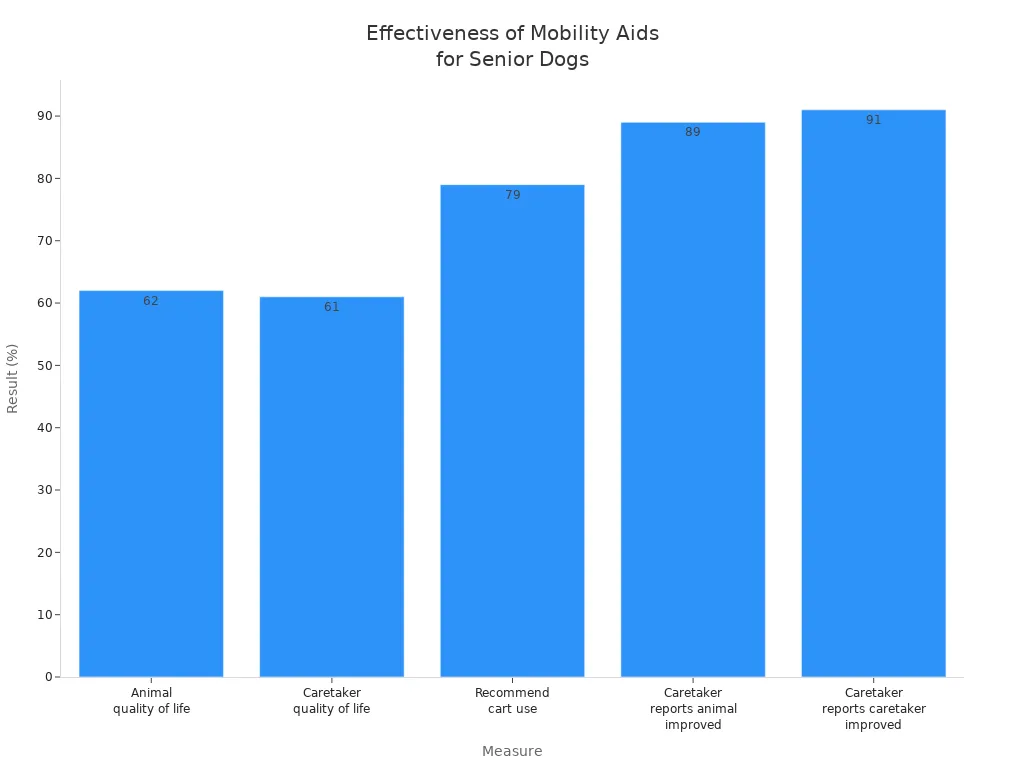
Mobility aids can make a real difference for both dogs and their caretakers. Studies show that 62% of dogs experience improved quality of life with the right support gear. Caretakers also report less stress and more confidence in daily routines.
Explore our measurement and fitting guides to ensure you select the right size and adjust your dog’s mobility aid for maximum comfort and safety.
Braces for Senior Dogs: Types and Uses
Knee, Hock, and Carpal Braces
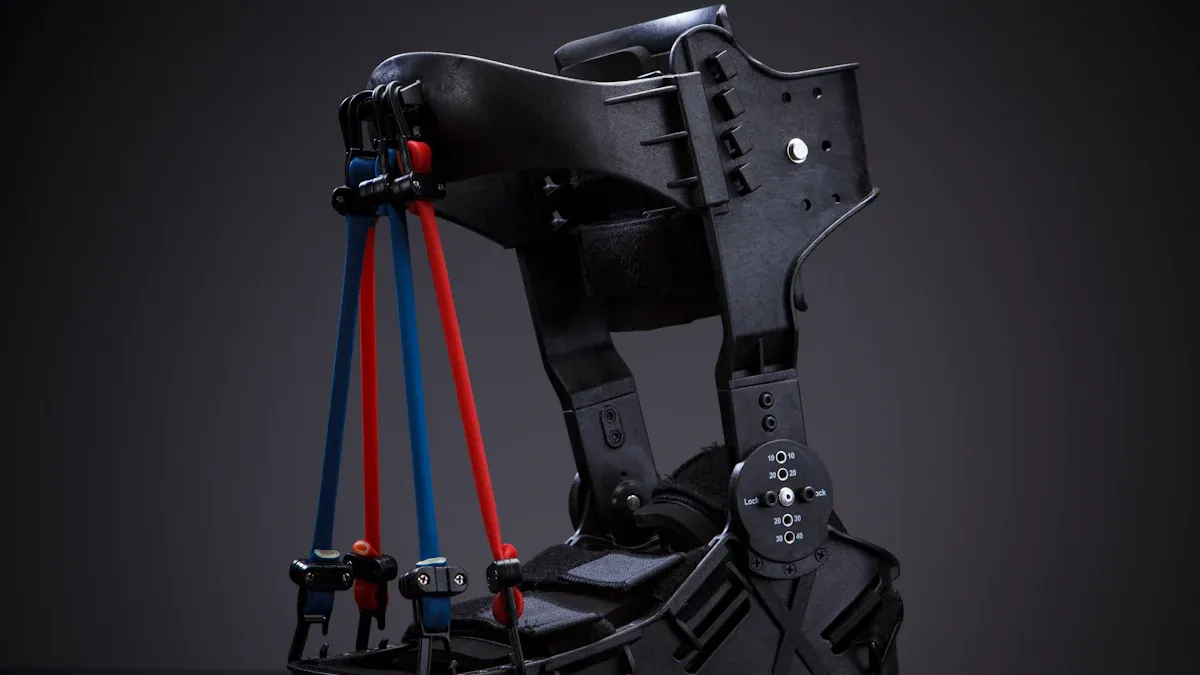
You can choose from several types of braces to help your senior dog with arthritis or limited mobility. Knee braces stabilize the joint and reduce inflammation. They work well for dogs with arthritis, ligament injuries, or after knee surgery. Hock braces support the lower back leg. They help with arthritis, Achilles tendon injuries, and hock dislocation. Carpal braces fit the front legs and support the wrist joint. These braces help with sprains, arthritis, and hyperextension. Elbow braces also exist for dogs with elbow dysplasia or arthritis.
Knee braces: Stabilize the knee, reduce pain, and support healing.
Hock braces: Reduce pain in the hock joint and improve traction for aging pets.
Carpal braces: Support the wrist, help with arthritis, and improve traction on slippery floors.
A recent study found that 65% of dogs using knee braces for moderate injuries showed better mobility within eight weeks.
When to Use Braces
You should consider braces if your senior dog has trouble getting up, climbing stairs, or shows signs of pain. Braces help if your dog limps, favors one leg, or has swelling in the knee. After surgery, a brace can support recovery and prevent further injury. Braces also help with nighttime mobility, short walks, car transfers, and vet visits. They provide traction and stability during bathroom breaks and on stairs.
Tip: Always check for proper fit and skin safety. Adjust the brace to avoid rubbing or pressure sores.
Pros, Cons, and Limits
Pros | Cons |
|---|---|
Provide crucial support | Not a cure for arthritis |
Help reduce pain | Limited help for advanced arthritis |
Prevent further injury | Fitting and comfort issues |
Promote faster healing | Cost and upkeep considerations |
Improve comfort and confidence | Requires regular use |
Braces offer non-invasive relief for senior dogs with arthritis or injury. They improve traction and comfort, especially for dogs who cannot use dog wheelchairs. Bracing is not a substitute for surgery in severe cases, but it supports healing and helps your dog stay active.
Rear Lift Slings: Support for Mobility
Best Uses for Slings
Rear lift slings give you a simple way to help your senior dog move when they have trouble standing or walking. You can use a sling if your dog has hind leg weakness, joint pain, or is recovering from surgery. Slings slide under your dog’s back legs and attach over the top, giving you a handle to support their weight. This design lets you help your dog stand up, walk outside, or go up a few steps without putting extra strain on your own back.
Many owners find slings helpful for bathroom breaks or short walks. If your dog struggles to get up after naps or slips on hard floors, a rear lift sling can make daily routines safer. Adjustable handles on most slings let you control the amount of support your dog needs.
Tip: Choose a sling with soft padding and a wide band to avoid pinching or rubbing your dog’s skin.
Key Pressure Points and Safety
You want to keep your dog comfortable and safe while using a rear lift sling. Always check for pressure points, especially around the belly, thighs, and groin. To place the sling, roll your dog gently to one side, slide the sling under their back, then roll them to the other side and pull it through. Make sure the sling sits flat and does not twist.
Before lifting, check that the sling is attached and adjusted. Lock wheels on any nearby carts or wheelchairs and clear the area to prevent accidents. Lift your dog slowly and avoid jerky movements. Talk to your dog during the process to keep them calm. Clean and inspect the sling after each use to prevent skin irritation or infection.
Checklist for Safe Lifting and Toileting:
Check your dog’s skin for redness or sores before and after use.
Place the sling under your dog’s back legs using gentle rolling.
Adjust handles for even support.
Keep the sling clean and dry.
Watch for signs of discomfort or distress.
Scenario Example:
If your senior dog has arthritis and hind leg weakness, you may notice they hesitate before standing or need help getting outside. A rear lift sling lets you support their back end, making it easier for them to move without pain. This tool can help your dog stay active and reduce the risk of falls.
Full-Body Support Harnesses for Senior Dogs
Long-Term Assistance
Full-body support harnesses give you a reliable way to help your senior dog stay active every day. These harnesses wrap around your dog’s chest and hips, letting you lift and guide them without causing pain. You can use them for dogs with arthritis, muscle weakness, or after surgery. Many owners choose these harnesses for long-term help because they make daily routines easier and safer.
Here are some top choices for full-body harnesses:
Product Name | Description |
|---|---|
Help ‘Em Up Harness | A full-body dog lift harness designed to provide mobility assistance and extra leverage for senior dogs. |
CareLift™ Support Harness | Offers even weight distribution for easier carrying, supporting senior dogs without straining the owner’s back. |
Dog Support Harnesses and Lifts | Includes various options for front or rear legs and full-body slings to help maintain balance and activity. |
When you pick a harness, look for features like adjustable straps, padded handles, and easy-to-clean materials. These details help you fit the harness correctly and keep your dog comfortable.
Checklist for Harness Selection and Fitting:
Measure your dog’s chest and hips before buying.
Choose a harness with adjustable straps for a snug fit.
Check for padding to prevent rubbing or chafing.
Make sure the harness is easy to put on and take off.
Inspect the harness daily for wear or damage.
Explore our product guides and fitting tutorials for step-by-step help with harness selection and adjustment.
Stairs, Cars, and Daily Activities
You can use full-body harnesses to help your dog with stairs, car rides, and walks. These harnesses let you lift your dog safely and prevent falls. You can support your dog when they stand up, walk, or get into the car. Most harnesses have velcro or buckle closures, so you can put them on quickly. Lightweight and waterproof designs make them easy to use in any weather.
Help your dog stand up without strain.
Support your dog during walks, car entry, or stairs.
Prevent falls by offering balanced support.
Use harnesses with easy closures for quick dressing.
Choose lightweight, waterproof harnesses for convenience.
If your senior dog hesitates at the stairs or struggles to get into the car, a full-body harness gives you control and keeps your dog safe. You can use the harness for bathroom breaks, vet visits, or daily walks. Always check your dog’s skin for redness or pressure spots after each use.
For more tips, visit our tutorial pages and learn how to fit and use harnesses for your senior dog’s daily needs.
Recovery Suits and Skin Protection
Post-Surgery and Sensitive Skin
You want to protect your dog’s skin, especially after surgery or if your dog has sensitive skin. Recovery suits offer a gentle way to cover wounds, surgical sites, or irritated areas. Many veterinary professionals recommend these suits because they help wounds heal faster and keep your dog comfortable. Recovery suits allow your dog to move freely and maintain daily routines. The snug fit helps your dog feel secure and calm during recovery.
Recovery suits shield surgical sites and reduce the risk of infection or wound reopening.
They provide a less intrusive alternative to cones, so your dog can eat, sleep, and walk with ease.
The stretchy material supports mobility and comfort, which is important for healing.
These suits prevent licking and scratching, which can slow healing or cause new skin problems.
Preventing Chafing and Pressure Sores
Skin safety is essential when your dog wears any mobility aid. Friction, pressure, or moisture can cause chafing, hot spots, or pressure sores. You should check your dog’s skin every day, especially under braces, slings, harnesses, or recovery suits. Early signs include redness, swelling, hair loss, or warm spots. If you see open sores or your dog seems uncomfortable, stop using the gear and contact your veterinarian.
Daily Skin Check and Cleaning Checklist:
Remove all support gear and inspect your dog’s skin.
Look for redness, swelling, or hair loss.
Gently clean the skin and suit with mild soap and water.
Dry the area completely before putting the suit back on.
Rotate or adjust gear to relieve pressure points.
If your senior dog just had surgery, use a recovery suit to protect stitches and prevent licking. For dogs with sensitive skin, these suits help avoid further irritation and support healthy healing.
Sizing and Fit Checks for Mobility Aids
Proper sizing and fit checks are essential for your dog’s comfort and safety. When you measure and fit mobility aids correctly, you help your senior dog move with confidence and reduce the risk of skin problems or injury. This section guides you through accurate measurement, fit assessment, and common mistakes to avoid.
How to Measure Your Dog
Accurate measurements form the foundation for a well-fitting mobility aid. You want to measure your dog while they stand naturally, with weight evenly distributed. This helps you select the right size and avoid discomfort.
Step-by-Step Measurement Checklist:
Set up a safe area: Place your dog on non-slip flooring. This keeps them steady and relaxed.
Simulate a natural stance: Use a sling or towel if your dog has trouble standing. This reduces pain and helps you get true measurements.
Measure from floor to groin: Gently place your hand between the rear legs and push up to the pelvic floor. Measure straight down to the floor.
Measure widths at three spots: Use a metal tape measure or yardstick. Measure across the widest points at the shoulders, ribs, and rump. Leave about a quarter-inch clearance for smooth-coated dogs.
Measure height and length: Measure from the floor to the shoulder blade. Then, measure from the shoulder blades to the base of the tail.
Measure chest girth: Wrap the tape around the largest part of the chest, just behind the front legs.
Weigh your dog: Make sure the mobility aid can support your dog’s weight.
Record exact numbers: Write down each measurement to the nearest quarter inch. Avoid rounding up or down.
Double-check your work: Measure twice for accuracy. Take photos or videos from the side for reference.
Keep your dog calm: Use treats and gentle praise to make the process positive.
Tip: Always part the fur and keep the tape straight against the skin. This ensures you measure the dog, not the coat.
Fit Assessment and Adjustment
Once you have the right size, you need to check the fit and make adjustments. A well-fitted mobility aid should feel snug but not tight. It should allow your dog to move naturally and distribute pressure evenly.
Key Fitting Checkpoints:
The aid should not pinch, rub, or restrict movement.
Straps should lie flat and not twist or curl.
You should fit two fingers comfortably between the aid and your dog’s body.
The aid should not slip, sag, or rotate during movement.
Your dog should walk with a normal gait and show no signs of limping or discomfort.
Check for any changes in your dog’s hair or skin under the aid, such as redness, swelling, or hair loss.
Adjust straps or closures as needed to maintain a secure fit.
Monitor your dog during the first few uses and after long walks or activity.
Scenario Example:
If you notice your dog’s harness slides to one side or leaves marks on the skin, stop and readjust the straps. A proper fit helps your dog stay active and prevents pressure sores.
For detailed instructions, visit our sizing chart and fitting tutorial pages. These resources help you select and adjust mobility aids for every body type.
Common Sizing Mistakes
Many pet owners make simple mistakes when measuring or fitting mobility aids. Avoiding these errors keeps your senior dog comfortable and safe.
Common Mistakes and How to Avoid Them:
Using a cloth tape or measuring while your dog sits. Always use a metal tape or yardstick and measure in a standing position.
Guessing widths or rounding numbers. Record exact measurements to the nearest quarter inch.
Ignoring breed differences. Some breeds have unique body shapes that affect fit.
Choosing a size that is too large. Oversized aids can slip, hinder movement, and cause discomfort.
Selecting a size that is too small. Undersized aids may not provide enough support and can lead to health issues.
Forgetting to weigh your dog. The aid must support your dog’s weight for safety.
Not checking the fit after your dog moves. Always observe your dog walking, sitting, and lying down with the aid on.
Choosing the correct size and fit for mobility aids promotes independence and helps your dog maintain muscle tone. Ill-fitting gear can restrict movement and cause distress.
Table: Sizing Do’s and Don’ts
Do | Don’t |
|---|---|
Measure while standing | Measure while sitting |
Use a metal tape or yardstick | Use a cloth tape |
Record exact numbers | Round up or guess |
Check fit after movement | Ignore slippage or curling |
Adjust for breed differences | Assume all dogs fit the same |
For more help, explore our sizing chart and fitting tutorials. These guides walk you through every step and help you avoid common pitfalls.
Wear Schedule and Daily Routines
How Long to Wear Support Gear
You want your dog to benefit from mobility aids without causing discomfort. Start with short wear periods. Let your dog wear the brace, sling, or harness for 15–30 minutes at a time. Watch for signs of irritation or fatigue. Gradually increase the wear time as your dog adjusts. Most senior dogs do well with support gear during walks, bathroom breaks, or when moving around the house. Remove all gear at night or when your dog rests for long periods. This gives the skin time to breathe and helps prevent pressure sores.
Checklist for Wear Time and Daily Routines:
Begin with 15–30 minute sessions.
Check your dog’s skin after each use.
Increase wear time slowly over several days.
Use support gear for walks, stairs, and bathroom trips.
Remove gear during naps and overnight.
Clean and inspect all equipment daily.
Tip: Always monitor your dog’s comfort and adjust the schedule if you see redness or swelling.
Building Positive Habits
You can help your dog accept new mobility aids by making the experience positive. Introduce the gear in a calm setting. Offer treats and praise when your dog wears the aid. Let your dog explore and move at their own pace. If your dog hesitates, try short practice sessions with lots of encouragement.
Some tools and routines can support positive habits:
Anti-knuckling shoes help correct paw placement and improve walking.
Soft, padded harnesses reduce pressure and make movement easier.
Carpeting or soft mats in favorite areas add comfort and safety.
Swimming offers gentle exercise and builds confidence with support gear.
Scenario Example:
Your senior dog may resist a new harness at first. Start by letting your dog sniff and wear the harness for a few minutes. Reward calm behavior. Gradually increase the time and use the harness during short walks. Over a week, your dog will likely feel more comfortable and confident.
When to Consult Your Veterinarian
Red Flags and Urgent Symptoms
You want to keep your senior dog safe while using mobility aids. Some symptoms mean you should contact your veterinarian right away. Watch for these red flags:
Breathing difficulties, such as rapid or labored breathing.
Lethargy that lasts more than a few hours or seems unusual for your dog.
Visible bleeding from any part of the body.
Inability to stand or sit up, especially if this is new or sudden.
If you see any of these signs, remove the mobility aid and call your veterinarian. Quick action can prevent further complications and help your dog recover faster.
Always follow your veterinarian’s advice when using support gear. This guide does not replace professional medical care.
Following Vet Instructions
Your veterinarian will create a plan that fits your dog’s needs. You should follow their instructions closely to keep your dog comfortable and safe. Start by assessing your dog’s mobility and sharing updates with your vet. Modify your dog’s routine as recommended. Use mobility aids like harnesses, slings, or braces as directed. Make sure you check your dog’s skin daily for redness or sores. Keep your dog at a healthy weight with a balanced diet. Encourage gentle exercise, such as short walks, to maintain muscle strength. Manage pain with medications or therapies prescribed by your vet.
Checklist for Following Veterinary Guidance:
Assess your dog’s mobility and report changes to your veterinarian.
Use mobility aids as prescribed and check for proper fit.
Monitor your dog’s skin and comfort every day.
Adjust your dog’s activity level based on veterinary advice.
Give medications or treatments exactly as instructed.
Schedule regular follow-ups to track progress.
You play a key role in your dog’s health. By working with your veterinarian, you help your senior dog stay active and comfortable.
Resource Navigation and Further Support
Product Guides and Tutorials
You can find step-by-step guides and tutorials to help you choose, fit, and use mobility aids for your dog. These resources walk you through measuring your dog, checking fit, and preventing skin issues. Each guide focuses on a specific product, so you can match your dog’s needs with the right solution.
Mobility Aid | Best For | Benefits |
|---|---|---|
Knee Brace | Knee arthritis, ligament injuries | Stabilizes joint, reduces pain |
Hock Brace | Hock instability, arthritis | Supports lower back leg, improves traction |
Carpal Brace | Wrist weakness, sprains | Supports front leg, prevents hyperextension |
Rear Lift Sling | Hind leg weakness, post-surgery | Assists with walking, eases bathroom trips |
Full Body Support Harness | Overall weakness, stairs, car transfers | Provides balanced lift, prevents falls |
Recovery Suit | Post-op care, skin protection | Shields wounds, prevents licking |
Traction Boots | Slippery floors, paw injuries | Improves grip, prevents slips |
You can also visit our sizing guide, how to fit, prevent chafing, and pressure sore prevention pages for more detailed instructions. These tutorials help you avoid common mistakes and keep your senior dog comfortable.
Tip: Start with the product category that matches your dog’s main symptom. Follow each tutorial for best results.
Related Articles and Support Pages
You have access to a wide range of articles and support pages that answer common questions and provide expert tips. These resources cover everything from choosing the right mobility aid to daily care routines.
You can explore these articles to learn more about mobility support, fitting checks, and skin safety. Internal guides on measurement, skin safety, and post-op care offer practical advice for daily routines.
For ongoing support, check our product categories and support articles. These resources help you make informed decisions and keep your senior dog active and safe.
Choosing the right senior dog mobility support can improve your dog’s quality of life. You should assess your dog’s condition, select the best aid—like slings, harnesses, or dog wheelchairs—and monitor comfort daily. Common causes of mobility issues include arthritis, hip dysplasia, and surgical recovery. Use checklists and resources to track fit and comfort.
Start with one aid, observe your senior dog’s response, and consult your veterinarian for ongoing guidance.
Resource | Benefit |
|---|---|
Gentle guidance and lift | |
Health Monitors | Track activity and detect changes |
Reduce joint strain |
Explore our fitting tutorials and product guides to find the best match for your dog’s needs.
FAQ
How do I know which mobility aid is right for my senior dog?
You should observe your dog’s movement and note where they struggle most. Choose a brace for joint support, a sling for hind legs, or a harness for full-body help. See our selection guide for step-by-step help.
How often should I check my dog’s skin under mobility aids?
Check your dog’s skin every day. Look for redness, swelling, or hair loss under braces, slings, or harnesses. Early checks help you prevent chafing and pressure sores.
Can my dog wear a support harness all day?
Let your dog wear a harness during walks, bathroom breaks, or when moving around the house. Remove the harness at night or during long rest periods. This gives your dog’s skin time to breathe.
What if my dog resists wearing a brace or sling?
Introduce the aid slowly. Use treats and praise to create a positive experience. Start with short sessions and increase time as your dog gets comfortable.
Do I need to measure my dog every time I buy new gear?
Yes. Measure your dog before each purchase. Dogs can change shape with age or illness. Accurate measurements ensure a safe and comfortable fit. Visit our sizing guide for tips.
