
You should look at how much skill and care an oem dog brace manufacturer has before you trust them with your pet brands. Many suppliers say they help brands, but only some follow tough safety rules. Pet brands need to think about safety, especially since there are many pet homes. Pet owners want things that keep their dogs safe. You should choose manufacturers who know what pets need and can show they have done this work before.
More than 68 million homes in the United States have at least one dog.
Key Takeaways
Pick OEM manufacturers who care about safety and quality. Find suppliers that follow strong safety rules and give proof to keep pets safe.
Learn the differences between OEM, ODM, and private label choices. Each one gives you different control and ways to change your pet products.
Use a checklist to check possible suppliers. Look for fit tools, good materials, and if they follow pet safety rules to make sure pets get the best products.
OEM Dog Brace Manufacturer Offerings in B2B Programs
When you want to work with a pet product maker, you should know what they sell. Most oem suppliers have different kinds of dog rehab braces, anti-lick gear, and lift-assist supports. This lets pet brands and clinics help many dogs. Some dogs need help after surgery. Other dogs need help moving every day.
OEM vs ODM vs Private Label Differences
There are three main ways to make pet products: OEM, ODM, and private label. Each way gives you a different amount of control and change.
Type | What You Get | Customization | Who Owns Design |
|---|---|---|---|
OEM | You provide the design, and the manufacturer builds to your specs | High | You |
ODM | Manufacturer leads design, you shape features and branding | Medium | Manufacturer |
Private Label | You brand existing products with your logo and packaging | Low | Manufacturer |
OEM lets you control everything and own your design. ODM lets you change some things, but the factory owns the design. Private label is quick and simple, but you cannot change the main product. Many brands, like gaitguard.com, use all three ways. This helps them sell rehab braces, anti-lick, and lift-assist gear. It also helps them work with fewer vendors and lower risk.
Key Dog Brace Categories: Stifle, Carpal, Tarsal
Most oem programs have three main types of braces:
Stifle braces help the knee and support dogs with ligament injuries or arthritis.
Carpal braces protect the wrist and help with soft tissue injuries.
Tarsal braces support the hock and help with weak or hurt tendons.
These braces do not take the place of surgery or a vet’s advice. They are used as part of a rehab plan from a vet.
Anti-Lick and Lift-Assist Gear Integration
You can also add anti-lick sleeves and lift-assist harnesses to your products. These items help dogs heal and move safely. More pets are getting older and need extra care, so the market for back leg support is growing. Many oem suppliers now have sizes for different breeds, anti-pull features, and eco-friendly materials to match new pet care trends.
Dog Brace Demand Drivers in Veterinary Rehab
Dog braces are needed for a few big reasons. More clinics now use braces to help dogs get better. Braces help dogs heal, move easier, and feel less pain.
CCLD Prevalence and Case Volume
Cranial cruciate ligament disease is a top reason dogs need braces. This problem can happen to both young and old dogs. In the United States, about 3–5% of dogs get CCLD. Treating CCLD costs over $1 billion every year. If your clinic helps 2,000 dogs each year, about 60–100 may have CCLD. Braces help these dogs during rehab, but always listen to the veterinarian.
More dogs have ligament injuries now
Older pets get arthritis more often
Braces help dogs after surgery
Active or at-risk dogs use braces to prevent injury
Bilateral Risk and Long-Term Needs
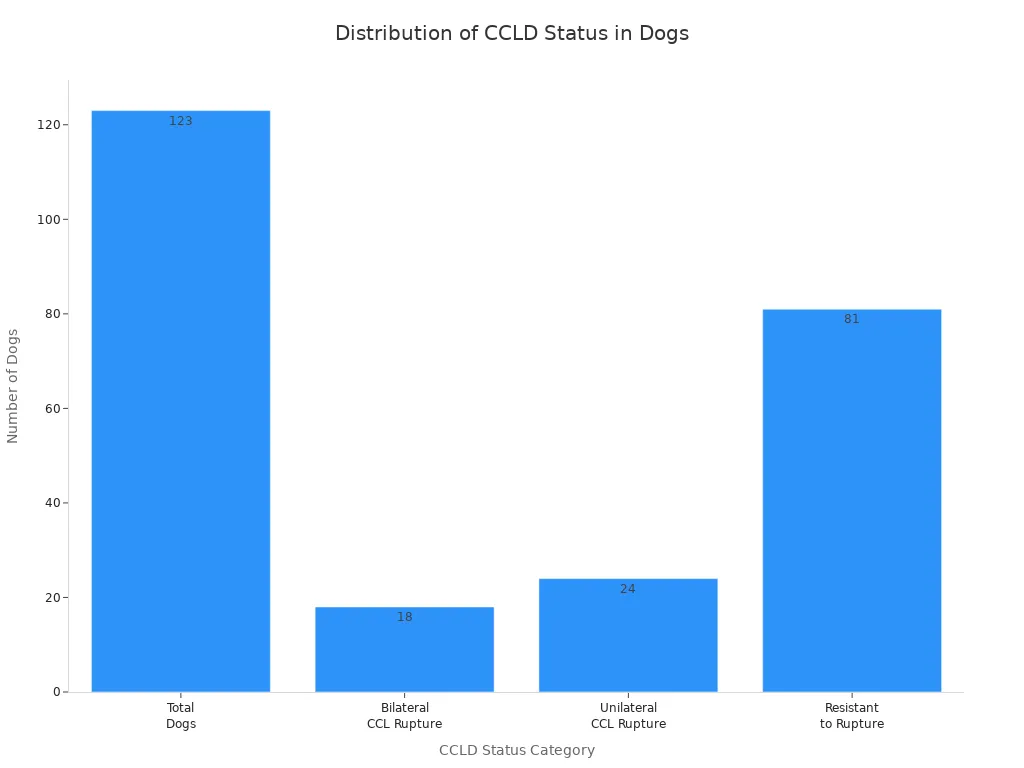
Many dogs with CCLD in one knee get it in the other knee later. Studies say up to half of these dogs have this problem in 12–18 months. Clinics should plan for more care and extra braces. Keeping dogs at a healthy weight and caring for their joints helps them stay active.
Category | Number of Dogs |
|---|---|
Total Dogs in Cohort | 123 |
Dogs with Bilateral CCL Rupture | 18 |
Dogs with Unilateral CCL Rupture | 24 |
Dogs Resistant to CCL Rupture | 81 |
Osteoarthritis and Mobility Support
Osteoarthritis hurts about 20% of dogs over one year old. It affects up to 80% of dogs older than eight. This makes it hard for dogs to walk and play. Braces help by taking stress off joints and making life easier. More people want to help their dogs move better, so the market for these products is growing.
Note: Braces are part of a pet’s rehab plan and should be used with a veterinarian’s help. They do not take the place of a diagnosis or surgery.
OEM Vetting Checklist for Product Quality
Picking the right oem dog brace manufacturer means you need a good plan. You must check product quality and safety. Every brace should meet high standards before pets use them. Use this checklist to help you check your supplier and control quality.
Fit Tools and Measurement Validation
You need fit tools that help people measure dogs the right way. Good suppliers give clear guides, size charts, and fitting videos. This helps lower returns and makes sure each brace fits well.
Step-by-step vetting process:
Ask for the supplier’s way to measure and sample guides.
Request a demo of their fit check, like photos or videos before shipping.
See if they have training for clinics and pet owners.
Make sure their sizing works for many breeds and body types.
Review how they check measurements before sending braces.
Tip: Good fit tools and checks stop pets from getting sore or having skin problems.
Materials and Comfort Features
Good braces use materials that keep pets safe and comfy. Look for suppliers who use strong, soft, and airy fabrics. These things help pets move and lower the chance of skin problems.
Common comfort features in high-quality dog braces:
Airy materials keep pets cool and comfy.
Strong build lets pets play and move in many places.
Neoprene and sandwich mesh make braces strong and let air in.
Double-layer Velcro keeps the brace tight but gentle.
Soft sandwich mesh does not bother sensitive skin.
Non-woven fabric lining adds more comfort.
Flat cloth edges make the brace smooth.
Reflective thread helps pets stay safe at night.
Always ask what materials touch the pet’s skin. Make sure the supplier uses certified factories and follows strict rules for pet products.
Documentation and Pet Product Safety Standards
Check that your supplier meets all pet safety rules and gives the right papers. Dog braces are important for safety. They need more than just basic pet product rules. You should get proof of testing, clear records, and proof they follow the rules.
Ask your supplier for:
Test papers for all materials and finished braces.
Safety papers that show they follow U.S. pet safety rules.
Papers for each batch, like lot numbers and check reports.
Training papers for clinics and pet owners, like fitting guides.
Labels and packaging that meet safety rules.
Note: Braces help with vet rehab plans. They do not take the place of a vet’s advice or surgery. Always work with a vet to keep pets safe.
Decision Table: Key Vetting Requirements
Requirement | Why it matters | How to verify |
|---|---|---|
Measurement guides | Makes sure each pet gets the right fit | Ask for sample guides and videos |
Sizing system | Works for all breeds and body types | Check size charts and breed lists |
Fit validation process | Lowers returns and stops discomfort | Ask for photo/video fit checks |
Pre-shipment inspection | Finds mistakes before shipping | Review inspection checklist |
Breathable materials | Keeps pets comfy while wearing | Ask for material samples and specs |
Durable construction | Handles daily use | Ask for durability test results |
Non-irritating lining | Stops skin problems | Check for certificates and owner feedback |
Double-layer Velcro closures | Gives a tight, gentle fit | Look at product samples |
Reflective features | Makes pets safer at night | Check product photos and specs |
Testing certifications | Shows the product is safe | Ask for certificates and test reports |
Safety certifications | Meets U.S. pet safety rules | Check with official papers |
Documentation for each batch | Tracks quality and safety | Ask for sample batch records |
Training assets | Helps clinics and pet owners | Ask for handouts and guides |
Clear labeling and packaging | Makes use safe and easy to see | Look at packaging samples |
Warranty and return policy | Protects your business and customers | Check policy papers |
Certified factories | Shows they care about quality and rules | Ask for factory certificates |
Crash-tested harnesses (if offered) | Adds more safety for moving pets | Ask for crash test results and certificates |
Use this table as a checklist when you check suppliers. Good quality checks and clear papers show a supplier cares about quality.
Remember: Pick suppliers who follow strict safety rules and give all the right papers. This keeps pets, clinics, and your brand safe.
Lead Times and Production Planning
You must plan your pet product orders carefully. Lead times can change for many reasons. The type of brace, how much you want to customize, and how busy the factory is all matter. If you plan well, you can help clinics and pet owners get what they need on time.
Fabrication Time Benchmarks
Most factories use a set timeline for making braces. If you order a simple brace, it can be ready in 5 to 9 business days. The factory starts building after you send in the dog’s measurements. If you want extra steps like fit checks, special packaging, or shipping, it takes longer. Most pet brace orders take about 3 weeks from start to finish. This helps you tell clinics and pet owners when to expect their order.
Example: If you order a custom stifle brace, the team might build it in 7 days. But with checks and shipping, the whole process can take up to 3 weeks.
Queue, Rework, and Rush Options
Factories usually have a line of orders waiting. Each order moves through the steps one by one. If you need a brace fast, ask if the factory can rush your order. Some factories will do this for an extra fee. If a brace does not fit right, it may need to be fixed. Fixing a brace takes more time, so check the fit before shipping. Talking often with the factory helps you avoid waiting too long.
Service-Level Expectations for Clinics
Clinics want to know they can count on good service. You should get clear updates about your order and how long it will take. Most ready-made pet products let you return them in 30 days. Custom braces usually cannot be returned, but some factories will fix or adjust them. Always ask about these rules before you buy. Good factories give clear timelines, help, and training for clinics. This lets you give pets the best care.
Note: Braces help with rehab and should be used with a vet’s advice. They do not replace a vet’s diagnosis or surgery. Always work with a vet to keep pets safe.
Fit and Break-In SOP to Reduce Returns
You want every pet to feel comfortable in a new brace. A good break-in routine helps lower returns and keeps pets safe. Always ask a veterinarian to guide you through these steps.
Initial Wear Schedule Guidance
Start slow when you fit a brace for a pet. Begin with short sessions, about 30 to 60 minutes, three to five times each day. Watch how your pet moves and acts. If your pet seems relaxed, you can add more time each day. This slow start helps your pet get used to the brace and lowers the chance of skin problems.
Tip: Always supervise your pet during the first week. If your pet chews or tries to remove the brace, talk to your clinic for advice.
Conservative Schedule for Sensitive Dogs
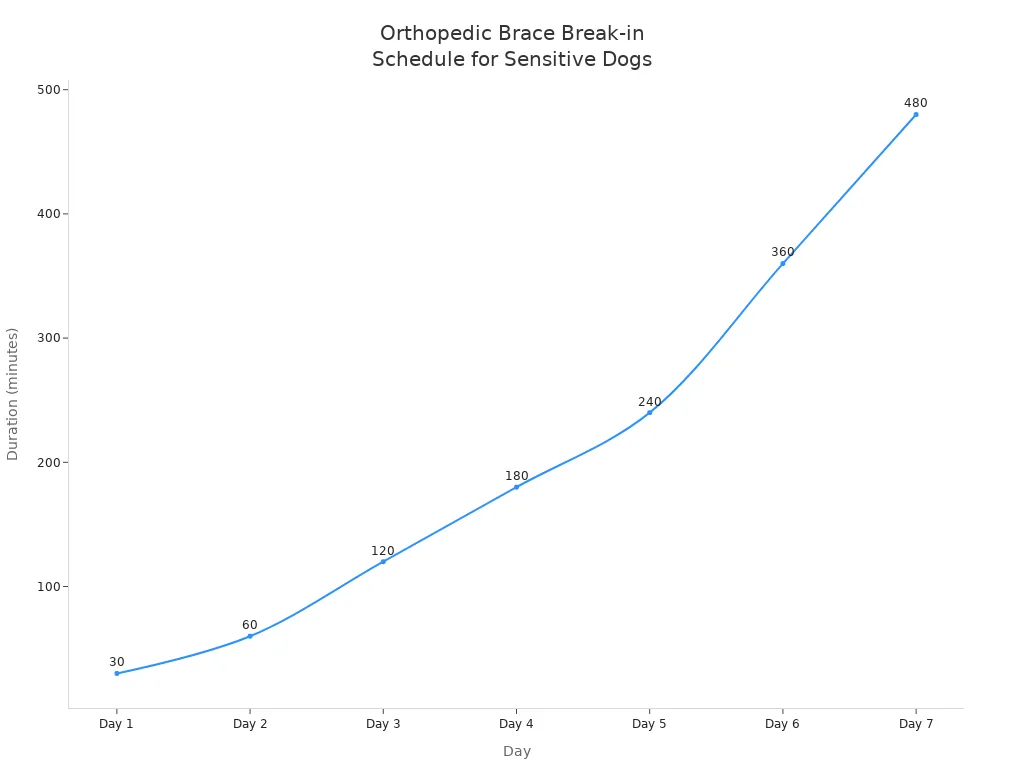
Some pets have sensitive skin or feel nervous with new gear. Use a gentle schedule for these pets. Increase the time slowly over one week. Here is a sample plan:
Day | Duration (per session) | Frequency |
|---|---|---|
1 | 30 mins | 2-3 times |
2 | 1 hour | 2-3 times |
3 | 2 hours | 2-3 times |
4 | 3 hours | 2-3 times |
5 | 4 hours | 2 times |
6 | 6 hours | 1 time |
7 | 8 hours | 1 time |
Keep the brace off at night. Watch your pet for any signs of discomfort. If you see chewing or licking, pause and check with your vet.
Skin Checks and Redness Rule
Check your pet’s skin every day. Look for redness, hair loss, or chafing where the brace touches the skin. Clean and dry the area before you put the brace back on. Inspect the skin under the brace twice daily. Trim any fur that bunches under straps. Watch for swelling, licking, or if your pet does not want to walk. These signs may mean the brace needs adjustment.
Note: Mild pinkness that fades in 20 to 30 minutes is normal. If redness lasts longer, stop using the brace and ask your vet for help.
Braces support your pet’s rehab plan. They do not replace a diagnosis or surgery. Always follow your veterinarian’s advice for safe use.
Quality Control Process for OEM Dog Braces
You need a good quality control process when picking an OEM dog brace manufacturer. This process helps make sure every product is safe and comfortable for pets. You can check many steps from far away, so you do not need to visit the factory. This saves you time and helps your brand stay trusted.
QC Photos at Checkpoints
You can ask your supplier to send pictures at important steps during production. These pictures show each part of the quality control process. You see how workers cut, sew, and put together the braces. You also check that the right materials are used. Pictures help you find problems early, so you can fix them before shipping.
You can also ask for live video tours. These tours let you watch the assembly line and see how workers follow safety rules. You can ask questions and get answers right away. This makes it easier to trust the supplier’s quality control.
Here is a table that shows steps you can check from far away:
Key Step | Description |
|---|---|
Verify Certifications | Ask for ISO 13485 and other safety certifications. Review factory audit reports. |
Conduct Virtual Factory Audits | Watch live video tours of the assembly line and quality control checkpoints. |
Ensure Compliance with Standards | Check material safety data sheets and independent testing results. |
Evaluate Supplier Environments | Look at cleanroom conditions and quality checkpoints during virtual inspections. |
Tip: Always ask for the latest certifications and safety papers. These papers show the factory cares about safety and quality.
Consistency Checks: Straps, Padding, Hardware
You want every brace to feel and work the same way. Consistency checks help make sure each part meets your standards. You can ask for pictures or videos that show how workers check straps, padding, and hardware.
Workers check these things:
Neoprene for softness and stretch
Breathable fabrics for air flow
Velcro straps for easy use and a snug fit
Hinges for joint support and safe movement
Plastic or metal parts for strength and comfort
Foam padding for skin protection
They also check how workers cut, sew, shape, and join the materials. Skilled workers put together each brace and test it for quality. You can see these steps in a table:
Material/Technique | Description |
|---|---|
Neoprene | Soft, flexible, resists water, stretches for fit |
Breathable Fabrics | Keeps skin cool and dry, prevents irritation |
Velcro Straps | Adjustable, easy to use, prevents slipping |
Hinges | Supports joints, allows controlled movement |
Plastic/Metal Parts | Lightweight, strong, adds stability |
Foam Padding | Protects skin, reduces rubbing |
Cutting | Ensures correct fit |
Sewing | Strong stitching for durability |
Molding | Shapes parts for better support |
Bonding | Joins materials, reduces irritation risk |
Assembly | Skilled work ensures function and quality |
Note: Consistency checks help you avoid returns and keep pets safe. Always ask for proof of testing and quality checks.
Packaging, Labeling, and Spare Parts
Good packaging and clear labels protect the brace and help clinics use it safely. You should check that each box has the right labels, batch numbers, and instructions. Labels must show the size, type, and safety warnings. This helps clinics and pet owners use the brace the right way.
You can ask for pictures of the packaging before shipping. You can also check if the supplier adds spare parts, like extra straps or padding. These parts help clinics adjust the brace if needed. Good suppliers put training guides and safety instructions in every box.
Remember: Braces help a pet’s rehab plan. They do not replace a diagnosis or surgery. Always follow your vet’s advice for safe use.
A good quality control process protects your business, your customers, and every pet who uses your products. You can check many steps from far away, so you always know what you are getting.
Vendor Red Flags and Policy Checks
Picking the right suppliers for pet rehab gear is important. You need to watch out for warning signs. Some suppliers do not follow pet product safety rules. Others skip important steps that keep pets safe. If you miss these signs, you could make costly mistakes. You want every pet to stay safe.
Here are some warning signs to look for:
Suppliers will not send you samples.
Size charts are missing or not clear.
You cannot find out what materials are used or where products are made.
They say their products are “luxury” but give no proof.
Prices are much lower than normal.
There is no clear skin-care SOP for pets.
Delivery times are not clear or keep changing.
They cannot show they follow safety rules.
There is no warranty or repair policy.
No training guides for clinics or pet owners.
Risk Level | Red Flag or Policy Pitfall | Impact on Quality and Safety |
|---|---|---|
🔴 High | You cannot check quality or fit | |
🔴 High | No material or origin info | You do not know if it is safe |
🔴 High | Legal trouble and safety risks | |
🔴 High | No skin-care SOP | Pets could get hurt |
🟡 Medium | Vague size charts | Bad fit and more returns |
🟡 Medium | Unclear lead times | Clinics and pet owners wait longer |
🟡 Medium | No warranty or repair info | No help after you buy |
🟡 Medium | No training assets | People may use it wrong, pets at risk |
🟢 Low | Clear documentation and labeling | Easier to use and safer for pets |
🟢 Low | Transparent pricing | You can trust them and plan better |
Non-Returnable Custom Devices
Most custom pet braces cannot be returned. Each one is made for a single pet. Always ask about the return policy before you order. Good suppliers will fix or adjust the brace if needed. They should give clear instructions for clinics and pet owners.
Warranty, Repairs, and Turnaround
You want suppliers who promise good quality. Most give a warranty for up to 12 months. This covers problems with materials or how it was made. The table below shows what you can expect:
Aspect | Details |
|---|---|
General Warranty | Covers problems with materials or how it was made for up to 12 months after you buy it. |
Warranty Limitations | Does not cover if you use it wrong, break it, or if the owner changes. |
Warranty Claim Procedure | Fill out a form and send it to the warranty team. |
Replacement Policy | They may send a new design if the old one is not made anymore. |
Free Products Policy | Free replacements have the same warranty as the first one. |
Warranty Period | Lasts up to 12 months from when you buy it. |
Claim Processing Time | They check claims within three working days. |
Always read these rules before you buy. Fast repairs and clear help keep pets safe and clinics happy.
Claims Language and Compliance Risks
You must follow pet product safety rules and use careful words. Never promise a cure or say results are guaranteed. Braces help with rehab and follow a vet’s advice. They do not replace a diagnosis or surgery.
In 2022, a court said a driver was partly at fault after a pet harness failed in a crash. The harness did not meet safety rules. The court said missing safety tests showed poor care.
Some harnesses do not connect safely to car seatbelts. If a harness loop goes on a regular seatbelt, it might not protect the pet in a crash. This can make the harness break and put pets and people in danger.
You should always check that your suppliers follow all safety rules and show proof. This keeps your business, your customers, and every pet safe.
OEM Vendor Scorecard for B2B Buyers
Scoring Categories and Interpretation
You need a simple way to compare each OEM dog brace manufacturer. A scorecard lets you check quality and safety for every pet product you buy. You can use this table to rate each supplier from 0 (weak) to 2 (strong):
Category | 0 = weak | 1 = acceptable | 2 = strong |
|---|---|---|---|
Materials and skin-contact comfort | |||
Sizing system and measurement tools | |||
Fit validation process (photo/video) | |||
Break-in and skin-check SOP | |||
Manufacturing consistency (QA checkpoints) | |||
Lead time transparency | |||
Packaging and labeling completeness | |||
Training assets for clinics/owners | |||
After-sales parts and repairs | |||
Clear policies (returns/warranty/RMA) |
If a supplier gets a high score, they care about quality and pet safety. You should look for strong scores in every category. This helps you pick partners who protect your business and every pet that uses your products.
Example: Rehab Clinic vs Distributor
Let’s look at two sample buyers. A rehab clinic wants the best quality and full training for every pet brace. The clinic gives one supplier 18 out of 20 points. A distributor needs fast lead times and clear packaging for many pet products. The distributor gives the same supplier 15 out of 20 points. You can see how your needs change your score. Always use the scorecard to check quality and safety before you order. Remember, braces help with rehab plans and must follow a vet’s advice. They do not take the place of a diagnosis or surgery.
B2B Buyer FAQ: OEM Dog Brace Manufacturer Selection
Required Documentation for Each Brace
You need clear papers for every brace you buy. These papers help keep your pet brands safe. They also show you follow safety rules. Ask for a certificate of origin and batch records. You should get material certifications too. Testing reports show the brace meets pet product standards. Always check if the brace follows U.S. safety rules. Good suppliers give instructions, fit guides, and warranty details. These papers help you track quality. They also prove you follow rules if clinics or pet owners ask questions.
Training Assets for Clinics and Owners
Training materials help clinics and pet owners use braces the right way. Your oem dog brace manufacturer should give fitting guides and break-in schedules. You should also get skin-check instructions. These materials help you follow safety rules and lower injury risk. Ask for videos, handouts, and online resources. Brands that give training show they know what they are doing. They also care about safety. Training helps you lower returns and make pets feel better. Make sure your supplier uses certified factories and follows all pet product standards.
Pilot Order Evaluation Criteria
A pilot order lets you test a new supplier’s quality and safety. Check every brace for fit, comfort, and strength. Look at all papers and certifications to see if they follow rules. Test the packaging and labels for clear instructions. Ask clinics to share feedback about training and support. Use a scorecard to rate the supplier’s skill, quality, and safety. Brands that follow strict rules and give good support help you protect pets and grow your business.
Note: Braces help with vet rehab plans. They do not replace diagnosis or surgery. Always listen to your veterinarian for safe use.
You can keep pets safe if you follow these steps when picking an OEM dog brace manufacturer.
Make sure the supplier does a good job and meets high safety and quality rules.
Look at how they check the quality of each pet product.
See if the factory can help your pet brand get bigger.
Use the checklist and scorecard to see how different suppliers compare. Checking carefully means fewer returns, better results, and helps your business get bigger. Always think about quality, safety, and support for every pet.
FAQ
What documents should you ask for with each dog brace order?
You need to ask for a certificate of origin, material safety data, and batch records. These papers help you check quality. They also show you are following pet product safety rules.
Why do you need training materials for clinics and pet owners?
Training guides show you how to fit braces the right way. They help you follow break-in steps. These guides also make using braces safer and help stop injuries.
Do braces replace a veterinarian’s diagnosis or surgery?
No. Braces are used with rehab plans and a vet’s advice. You should always talk to your veterinarian for diagnosis and treatment choices.
