
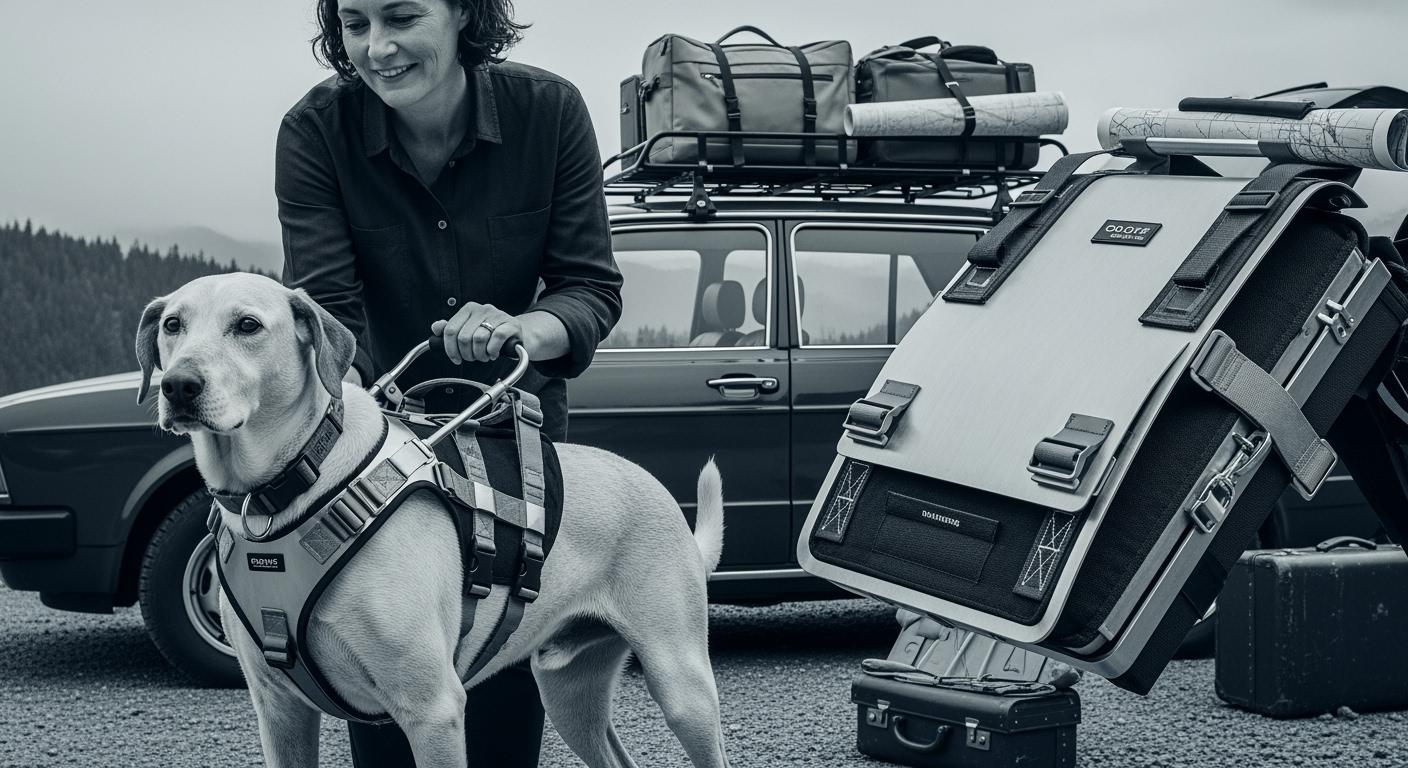
Travel can become difficult when a senior or mobility-limited dog struggles to stand after a long car ride, step down from a vehicle, cross a curb, or maintain balance on an unfamiliar floor. A senior dog travel support harness gives the handler controlled assistance during these short movement tasks.
Its role is to support car entry and exit, rest-stop bathroom breaks, ramps, stairs, hotel floors, and other situations where the dog may lose balance. A mobility-support harness is not the same as a crash-tested vehicle restraint. It should be used for assisted movement before departure, during stops, and after arrival—not as a substitute for an appropriate crate or in-vehicle restraint system.
Key Takeaways
- Choose the harness by the body area that needs support: rear, front, or full body.
- Use lift support for controlled transfers, not for uncontrolled pulling or full suspension unless the product is designed for it.
- Recheck fit after the dog has been sitting because straps and support panels can shift during travel.
- Keep mobility assistance separate from vehicle restraint. A lift harness should not be described as crash-tested unless that exact product has passed applicable testing.
- Stop use if the dog becomes more painful, more unstable, distressed, or develops rubbing, swelling, or open skin.
When a Dog May Need Travel Mobility Support
A support harness may be useful when the main problem is not ordinary leash control but assisted movement. Common travel situations include difficulty rising after sitting, hesitation at the edge of a vehicle, weak hind legs during a rest stop, poor balance on smooth floors, or trouble negotiating a curb, ramp, or short flight of steps.
- After a long ride: the dog is slow to stand or needs controlled help before taking the first steps.
- Vehicle transfers: the dog cannot enter or leave the vehicle without jumping, slipping, or twisting.
- Rest stops: the dog needs short-distance support for bathroom breaks or uneven ground.
- Unfamiliar surfaces: polished hotel floors, wet pavement, ramps, and curbs reduce stability.
- Broader recovery needs: the dog also needs help with post-surgery handling, IVDD-related transfers, or daily mobility management.
For a broader overview of braces, lift support, anti-lick protection, and movement assistance, use the Dog Recovery Support Guide as the main navigation hub.
Important: Sudden weakness, collapse, severe pain, loss of coordination, open wounds, or rapid mobility decline are not normal harness-fit issues. Contact a veterinarian before continuing assisted movement.
Choose Support by the Movement Task
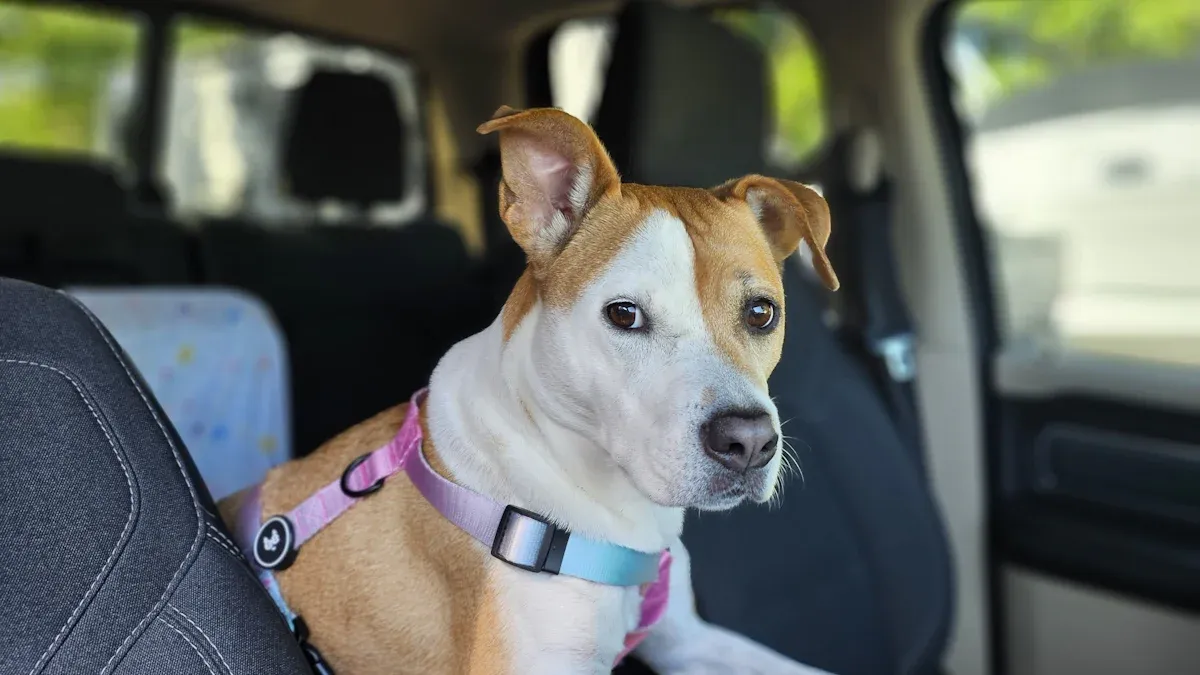
The correct harness structure depends on which part of the dog needs assistance and what movement the handler must control. Choosing only by the word “support” can lead to uneven lifting, poor handle access, or pressure in the wrong area.
| Support Type | Best Starting Point | Important Boundary |
|---|---|---|
| Rear-lift support | Hind-end weakness, rising, curbs, short bathroom breaks, or rear-leg instability. | May be insufficient if the front legs or trunk also need support. |
| Front support | Chest-side assistance or front-limb weakness when the rear remains reasonably stable. | Should not pull upward into the throat or underarm area. |
| Full-body support | Car transfers, ramps, stairs, or movement where both front and rear support are needed. | Weight must be distributed across stable support zones, not one narrow strap. |
| Everyday walking harness | Leash guidance for a dog that does not need lifting assistance. | Do not lift with it unless the product is specifically designed and rated for that purpose. |
For a closer comparison of support zones and use boundaries, see Rear-Lift vs Full-Body Dog Lift Harnesses. You can also review the current Dog Lift Harness product category to compare front, rear, and full-body configurations.
Using a Support Harness for Car Entry and Exit

Before the Transfer
- Fit and adjust the support harness before opening the vehicle or asking the dog to move.
- Clear the landing area of bags, loose leads, wet surfaces, and other trip hazards.
- Use a stable ramp or low step when the dog should not jump.
- Position the handler where both the dog and the lifting handles can be controlled without twisting.
During Entry or Exit
Guide the dog slowly and keep the body as level as the harness design allows. Support the weak area without pulling only from the neck, abdomen, or one rear strap. Avoid sudden upward force, swinging, or asking the dog to jump while partially supported.
For dogs that need broader assistance across the chest, belly, and hips, a product such as the Full Body Dog Lifting Harness illustrates the type of structure intended for supervised multi-zone support. The exact size, handle position, and lifting method must still match the dog and the product instructions.
At Rest Stops and After Arrival
Use the harness for short transfers, bathroom breaks, curbs, ramps, and uneven ground. After the dog has been sitting, recheck the belly panel, chest straps, rear loops, and handle position before lifting. A harness that fitted correctly before departure may shift as the dog changes posture.
Mobility Support Is Not a Vehicle Restraint
A lift or mobility-support harness is designed to help a dog stand, walk, use stairs, enter a vehicle, or cross a difficult surface. It should not be marketed or used as a crash-tested car restraint unless that exact product has passed the relevant testing for that purpose.
While the vehicle is moving, use an appropriate crate or restraint system according to its manufacturer’s instructions. Use the mobility harness for controlled transfers, rest stops, and movement after arrival. Do not attach a lift handle to a seat-belt connection unless the product instructions explicitly allow that use.
Fit and Pressure Checks Before Travel
A travel support harness should stay stable without cutting into the belly, chest, thighs, groin, neck, or underarm area. Fit checks must follow the product’s measurement method because rear slings, full-body harnesses, and front-support designs use different landmarks.
- Confirm the selected size against the product-specific chart.
- Check that support panels sit under the intended body area rather than over a joint, wound, or sensitive edge.
- Make sure straps do not bunch behind the front legs, inside the thighs, or across the throat.
- Watch the dog stand, take several steps, turn, sit, and rise before travel.
- Remove the harness after a short trial and inspect the skin for persistent redness, heat, dampness, pinching, or rubbed fur.
- Repeat the check after long sitting periods, coat changes, weight changes, or use with another support product.
A thicker or tighter harness is not automatically more supportive. Stable strap routing, appropriate support-zone coverage, handle placement, and pressure distribution matter more than bulk.
Ramps, Stairs, Curbs, and Slippery Floors
Travel often places the dog on surfaces that are different from those at home. Use slow, short steps and keep the support handles aligned with the dog’s movement. Do not lift forward while the dog is trying to move backward, or pull upward so strongly that the paws lose normal contact with the ground.
- Ramps: check that the surface is stable, dry, wide enough, and positioned at a manageable angle.
- Stairs: use one controlled step at a time and avoid rushing the dog from behind.
- Curbs: support the weak area before the dog reaches the height change.
- Slippery floors: shorten the route, reduce turning, and add a non-slip surface when possible.
When to Stop Using the Harness
Stop the transfer and reassess if the dog resists handling, cries out, becomes more unstable, refuses to bear weight, or moves worse after the harness is applied. Remove the harness and inspect the skin if there is persistent redness, swelling, heat, dampness, pinching, hair loss, or an open sore.
A support harness cannot correct a sudden neurological change, new injury, severe pain, breathing difficulty, or rapidly worsening weakness. These signs require professional assessment rather than a tighter fit or a stronger lift.
For Brands and Distributors Planning a Lift-Support Line
Travel-mobility products should be differentiated by support zone, handle height, lifting angle, strap stability, pressure distribution, size logic, caregiver reach, and the tasks the product is intended to manage. A rear-lift SKU should not be positioned as a full-body transfer solution, and a mobility harness should not be presented as a vehicle-restraint product without supporting test documentation.
Pet brands, rehabilitation suppliers, and distributors evaluating lift-support products can use GaitGuard’s OEM/ODM Pet Orthotics page to review product adaptation, sizing logic, strap layout, sample review, packaging, and bulk-production cooperation.
FAQ
Is a rear-lift harness enough for car transfers?
It may be enough when the main problem is hind-end weakness and the dog still has stable front-leg and trunk control. If both ends of the body need assistance, a full-body design may provide better weight distribution and handling control.
Can a senior dog wear the support harness for the whole trip?
That depends on the product instructions and the dog’s tolerance. Long wear can allow straps or panels to shift while the dog sits or lies down. Recheck fit, pressure areas, moisture, and skin condition at regular stops.
Can I use a lift harness as a car seat belt?
Not unless that exact product is specifically designed, tested, and instructed for vehicle-restraint use. A mobility harness and a crash-tested restraint serve different functions.
Should the dog be fully lifted off the ground?
Usually, mobility support is intended to assist movement while the dog contributes as much safe weight-bearing as possible. Do not fully suspend the dog unless the harness is designed for that task and the handling method has been confirmed for the dog’s condition.
What should I check after a long car ride?
Check whether the harness has shifted, whether the dog can stand comfortably, and whether there is redness, rubbing, dampness, swelling, or pressure under the support panels. Reposition and readjust before the first assisted steps.
