
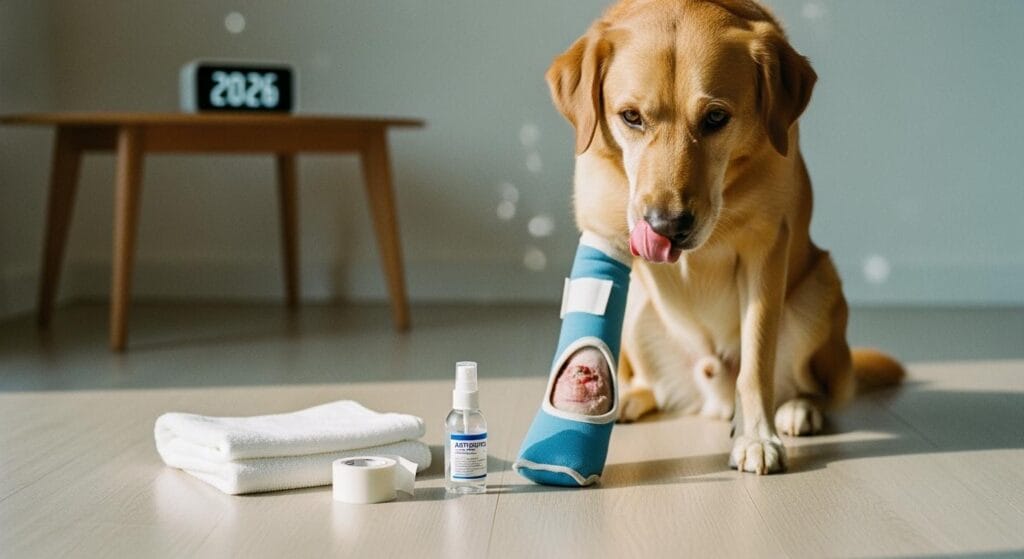
Dog recovery support is not one single product decision. A dog may need help with joint stability, safe movement, lifting assistance, wound protection, incision coverage, anti-lick control, skin checks, or daily support during a long recovery period. The right support path depends on the dog’s condition, body area, surgery history, weight, mobility level, wound location, and veterinary instructions.
This guide is the main recovery-support hub for GaitGuard resources. It connects post-surgery recovery, IVDD support, knee and patella support, mobility assistance, anti-lick protection, brace fit, pressure checks, product categories, solution pages, and B2B sourcing paths.
Important: This guide is educational and product-selection focused. It does not replace veterinary diagnosis, surgery instructions, rehabilitation planning, or emergency care. If a dog has severe pain, swelling, sudden weakness, open wounds, neurological signs, fever, discharge, or worsening lameness, contact a veterinarian before using any brace, harness, sleeve, sling, or recovery suit.
How to Choose the Right Dog Recovery Support Path
The safest way to choose recovery support is to start from the problem, not the product name. A knee brace, back brace, lift harness, recovery sleeve, anti-lick suit, or support sling may help in different situations, but each one solves a different type of recovery problem.
| Recovery Need | Support Direction | Best Starting Point |
|---|---|---|
| Post-surgery movement, stairs, potty breaks, controlled walking | Lift harness, support sling, activity control | Post-surgery recovery resources |
| IVDD, spinal weakness, back support, careful transfers | Back support, lift support, safe handling | IVDD and back support resources |
| ACL/CCL, knee instability, luxating patella support | Knee brace, controlled support, fit checks | Knee and patella support resources |
| Weakness, old-dog mobility, stairs, car transfers | Support sling, front/rear/full-body lift harness | Mobility and lifting support resources |
| Incision licking, wound biting, awkward wound location | Recovery sleeve, anti-lick suit, wound coverage | Anti-lick and wound protection resources |
| Rubbing, redness, pressure sores, brace discomfort | Fit adjustment, strap review, skin monitoring | Brace fit and pressure-check resources |
For condition-led navigation, use Dog Brace Solutions by Condition. For body-area navigation, use Dog Brace Solutions by Body Part.
1. Post-Surgery Recovery Support
Post-surgery support usually focuses on controlled movement, incision protection, safe potty breaks, stair restriction, and early warning signs. The main goal is not to make the dog move more. The goal is to reduce risky movement while helping the dog complete necessary daily activities safely.
Use these resources when the main recovery problem is surgery-related movement or aftercare:
- Dog Stairs After Surgery-for stair blocking, assisted movement, red flags, and safer home setup.
- TPLO Potty Breaks and Safe Walks-for short leash walks, potty routines, and support sling use after TPLO.
- TPLO Recovery Week by Week-for staged recovery expectations, leash-walk control, and warning signs.
- Dog Limping After Surgery-for separating expected soreness from possible complications.
Post-surgery support products should never be used to push a dog beyond the veterinary recovery plan. If the dog becomes more painful, more unstable, more swollen, or more reluctant to use the leg after support-product use, stop and ask the veterinary team for guidance.
2. IVDD and Back Support
IVDD-related recovery support needs extra caution because the issue may involve spinal pain, neurological weakness, paw dragging, poor coordination, or sudden loss of function. Support products should help with safe handling and controlled movement, not encourage activity that the dog has not been cleared to perform.
Use these resources for IVDD and back-support decisions:
- IVDD Dog Lift Harness Guide-for crate-rest movement, lifting support, potty breaks, and safer transfers.
- Dog Back Brace for IVDD-for when back support may help and when it should not be used as a substitute for care.
- Dog Back Support Brace Guide-for back-support fit, spinal support, daily use, and comfort boundaries.
For IVDD dogs, watch for worsening weakness, loss of balance, dragging paws, pain during handling, or sudden mobility decline. These are not fit problems alone; they may require urgent veterinary attention.
3. Knee, ACL/CCL, and Patella Support
Knee recovery support may involve ACL/CCL injuries, post-operative support, mild instability, or luxating patella management. A knee brace can help selected dogs by improving support and limiting unwanted movement, but it must match the dog’s condition, leg shape, joint angle, and tolerance.
Use these resources when the recovery problem is centered around the knee or patella:
- Knee Brace for Dog Guide-for knee brace types, fit logic, support needs, and product-selection boundaries.
- Luxating Patella Knee Brace-for patella support, use boundaries, and veterinary guidance points.
Knee support should be checked carefully behind the knee, around the straps, and along brace edges. Poor fit can cause slipping, pressure, rubbing, or restricted movement. A brace should not hide worsening pain, swelling, or refusal to bear weight.
4. Mobility, Lifting, and Daily Movement Support
Some dogs do not primarily need a brace. They need controlled help standing up, walking to the potty area, using a ramp, entering a car, moving across slick floors, or avoiding stairs. In these cases, a lift harness or support sling may be more useful than a joint brace.
Use these resources when the main issue is movement assistance:
- Dog Support Sling Guide-for front, rear, full-body, and adjustable support options.
- Best Dog Lift Harness Guide-for lift-harness fit, handling support, and daily-use checks.
A lift harness should support controlled assistance, not full suspension unless the product is designed and used for that purpose. For larger dogs, handle height, weight distribution, rear support, chest support, and caregiver posture all affect whether the product is practical.
5. Incision, Anti-Lick, and Wound Protection
Many recovery problems begin when a dog licks, bites, scratches, or rubs a wound or incision area. A cone may help in some cases, but awkward wound locations often need better coverage, especially on the front leg, hind leg, paw, torso, shoulder, or hip area.
Use these resources when the main problem is licking, wound access, or recovery coverage:
- Dog Recovery Sleeve Guide-for sleeve fit, wound coverage, anti-lick protection, and daily wear checks.
- Dog Anti-Lick Protection-for recovery sleeves, anti-lick suits, and wound-location protection products.
Anti-lick products should protect the wound without trapping excessive heat, holding moisture against the skin, restricting circulation, or rubbing the incision. If swelling, discharge, odor, bleeding, open skin, or worsening redness appears, contact the veterinary team.
6. Brace Fit, Rubbing, and Pressure Checks
Recovery support products often fail because of fit, not because the product category is wrong. A brace can rotate. A strap can move. A sleeve can bunch behind a joint. A stiff edge can rub. A harness can shift under the chest or belly. These small fit problems can become pressure sores if they are ignored.
Use Dog Brace Pressure Sores when the main concern is redness, rubbing, pressure, skin breakdown, moisture, or daily brace checks.
Daily recovery-support fit checks
- Check the skin every time the brace, sleeve, harness, or sling is removed.
- Look for redness that does not fade after rest.
- Check for heat, swelling, dampness, rubbing, or hard edge pressure.
- Watch whether the dog moves worse after wearing the product.
- Check whether straps, sleeves, or panels have shifted during sitting, turning, or lying down.
- Stop use and seek professional guidance if open skin, sores, swelling, or worsening pain appears.
7. Product Paths for Dog Recovery Support
After identifying the recovery problem, choose the product category that matches the support need. Do not choose only by product name. Choose by body area, movement problem, wound location, and fit boundary.
| Support Need | Product Category | Product Path |
|---|---|---|
| Knee, back, carpal, hip, elbow, leg, or body-part support | Dog braces | Dog Braces |
| Standing, walking, stairs, potty breaks, car transfers, daily mobility | Lift harnesses and support harnesses | Dog Lift Harness |
| Incision protection, wound coverage, anti-lick control | Recovery sleeves and anti-lick products | Dog Anti-Lick Protection |
8. B2B Sourcing Paths for Recovery Product Lines
For pet brands, distributors, veterinary retail suppliers, and OEM/ODM buyers, dog recovery support is also a product-line planning issue. A complete recovery-support line may include braces, lift harnesses, support slings, recovery sleeves, anti-lick suits, and wound-location protection products.
Use the right B2B sourcing path based on what you need:
- Custom Dog Brace Manufacturer-for manufacturer capability, product scope, and custom dog brace supply.
- OEM/ODM Pet Orthotics-for product adaptation, sample review, structure discussion, packaging, and brand customization.
- Private Label Dog Braces & Wholesale Supply-for private-label supply, distributor programs, and wholesale recovery-support products.
- Dog Brace MOQ & Manufacturing Cost Factors-for MOQ, cost drivers, lead time, RFQ preparation, and order planning.
If you already know the product type, estimated quantity, target market, size range, packaging needs, or customization direction, contact GaitGuard through the Contact page.
9. Related Recovery Articles
Use these detailed articles when you need a specific recovery scenario instead of a general overview:
- Dog Stairs After Surgery: Safety, Red Flags and Tips
- TPLO Potty Breaks, Safe Walks and Support Sling Recovery
- IVDD Dog Lift Harness Guide for Crate Rest and Safe Movement
- TPLO Recovery Week by Week: Leash Walks, Exercises and Red Flags
- Dog Limping After Surgery: Soreness vs Complication
- Dog Brace Pressure Sores: Prevent Rubbing and Skin Breakdown
- Dog Back Brace for IVDD: When to Use and Benefits Explained
- Luxating Patella Knee Brace: When to Use and Vet Advice
FAQ
Is this guide only for dogs after surgery?
No. This is a general dog recovery support guide. It includes post-surgery recovery, IVDD support, knee and patella support, mobility assistance, wound protection, anti-lick control, and brace fit checks.
Should I choose a brace, lift harness, or recovery sleeve first?
Choose by the recovery problem. A brace supports a joint or body area. A lift harness helps with standing, walking, stairs, transfers, and daily movement. A recovery sleeve or anti-lick product helps protect wounds, incisions, and lick-prone areas.
Can a recovery support product replace veterinary care?
No. Braces, harnesses, sleeves, and anti-lick products are support tools. They should not replace diagnosis, medication, surgery decisions, rehabilitation instructions, or emergency veterinary care.
When should a support product be stopped?
Stop use if the dog shows worsening pain, open skin, swelling, increased limping, numbness, rubbing, pressure sores, refusal to walk, or distress while wearing the product. Check the fit and contact the veterinary team if the problem does not resolve quickly.
Where should B2B buyers start?
B2B buyers should start with the sourcing path that matches their goal: manufacturer capability, OEM/ODM development, private-label wholesale supply, or MOQ and cost planning. The B2B sourcing section above links to each path.
Build a Clearer Recovery Support Path
The safest recovery-support decision starts with the dog’s real problem: movement, joint support, wound protection, skin pressure, body-area instability, or daily handling. Use this guide as the main hub, then move into the specific article, guide, product category, solution page, or B2B sourcing page that matches the case.
For ongoing product comparison, start with the dog’s support need first, then choose the brace, lift harness, recovery sleeve, anti-lick product, or sourcing path that fits that need. For B2B recovery product sourcing, use the manufacturer, OEM/ODM, wholesale, or MOQ path listed above.
