
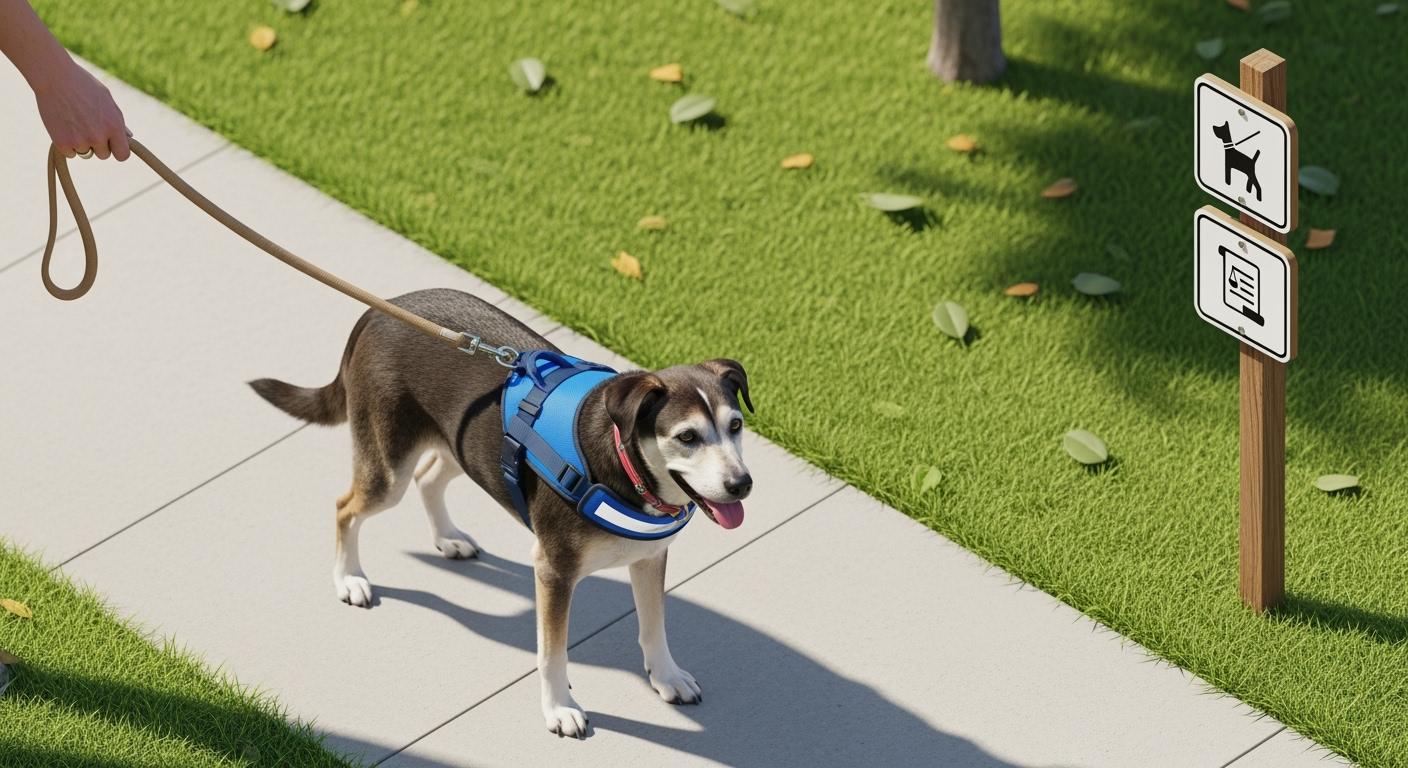
You want every walk with your senior dog to feel safe, relaxed, and under control. Daily dog walking laws in the U.S. are there to protect both people and pets, and the right safety harness for senior dogs helps you put those rules into practice. Instead of relying only on a collar that can strain the neck, a well-fitted harness keeps your older dog comfortable while giving you better control on busy sidewalks, parks, and neighborhood streets.
Each year, thousands of people – especially older adults – are injured in falls while walking leashed dogs.
Many of these accidents happen when equipment fails, does not fit properly, or when the dog suddenly pulls or changes direction.
By understanding daily dog walking laws and choosing a safety harness designed for senior dogs, you reduce the risk of accidents for both you and your pet. The right harness keeps your dog secure, protects fragile joints and the neck, and makes it easier for you to guide them calmly and confidently on every walk.
Key Takeaways
Daily walks are essential for senior dogs. They help maintain muscle strength, joint flexibility, and a healthy weight.
Regular walking can improve your dog’s mental health by providing stimulation and reducing anxiety.
Choose gentle routes and adjust the pace of walks to match your senior dog’s comfort and energy levels.
Use a safety harness for senior dogs to ensure comfort and better control, reducing the risk of injury.
Inspect your dog’s harness and leash before each walk to prevent accidents and ensure safety.
Stay informed about local dog walking laws to avoid fines and ensure a safe environment for your dog.
Monitor your dog for signs of discomfort or fatigue during walks, and adjust the routine as needed.
Consult your veterinarian for advice on exercise plans and to address any health concerns affecting your dog’s mobility.
Daily Walks for Senior Dogs
Physical Health Benefits
You help your senior dog stay healthy when you commit to a daily dog walk. Regular walks support muscle strength and joint flexibility. Your dog maintains a healthy weight and reduces the risk of obesity-related problems.
A meta-analysis of 29 published studies found that dog owners engage in more physical activity compared to non-dog owners, with dog owners reporting a median of 329 minutes of physical activity per week versus 277 minutes for non-owners. Additionally, walking dogs has been shown to promote regular physical activity, with a significant number of dog owners feeling a sense of responsibility to walk their dogs, leading to higher activity levels.
Veterinary research shows that walking prevents the decline in muscle and bone mass as dogs age. You give your dog a better chance at a longer, happier life by keeping them active. Regular walks also help manage arthritis and slow the progression of joint problems.
Research indicates that regular physical activity, such as walking, is crucial for maintaining the health and functionality of senior dogs. It helps prevent the decline in muscle and bone mass associated with aging, similar to the effects seen in humans. This exercise not only aids in weight management but also enhances overall health, thereby potentially increasing the longevity and quality of life for aging dogs.
Mental Wellbeing
Walking does more than support your dog’s body. You boost your senior dog’s mental health every time you head outside together. New sights, smells, and sounds stimulate your dog’s mind. This stimulation helps prevent boredom and reduces anxiety.
The routine of a daily walk gives your dog a sense of purpose and structure. You may notice your dog seems happier and more relaxed after a walk.
The findings suggest that dog ownership encourages older adults to engage in more physical activity, which can lead to improved quality of life and cognitive function. This correlation implies that regular walking with dogs not only benefits the dogs but also enhances the well-being of their senior owners, promoting a healthier lifestyle overall.
Common Senior Dog Issues Affecting Walks
Senior dogs face unique challenges during walks. You may notice your dog slowing down or showing signs of stiffness.
Osteoarthritis: A degenerative joint disease causing chronic pain and stiffness.
Symptoms include limping, stiffness after inactivity, reluctance to climb stairs, and joint swelling.
Management includes weight control, joint supplements, gentle exercise, and pain relief options.
Cognitive Dysfunction Syndrome: Affects mental function, leading to confusion and disorientation.
Arthritis and Disc Disease: Commonly cause pain and mobility issues in senior dogs.
Older dogs experience natural slowing down and increased stiffness.
Stiffness in the spine can lead to difficulty in jumping, putting stress on other joints.
You should watch for signs of discomfort and adjust your walking routine as needed.
Approximately 20% of adult dogs in the U.S. develop osteoarthritis.
This equates to an estimated 11 to 15 million dogs affected.
You can support senior dog walking safety by choosing gentle routes and using a safety harness for senior dogs. For more dog walking tips, consider consulting your veterinarian about the best exercise plan for your pet.
Adjusting Walks for Age and Limitations
As your dog ages, you play a vital role in adapting daily walks to fit their changing needs. Senior dogs often face mobility challenges, exercise intolerance, and slower recovery after activity. You can help your dog enjoy safe and comfortable walks by making thoughtful adjustments.
Tip: Consistency matters more than intensity. Gentle, regular walks help maintain muscle mass and joint health.
Veterinarians recommend several strategies for adjusting walk routines:
Shorter, more frequent walks keep your senior dog active without causing exhaustion.
Adjust the pace to match your dog’s comfort. If your dog starts lagging or panting heavily, slow down and offer a break.
Choose flat, soft terrain such as grassy parks or smooth paths. Avoid steep hills and uneven surfaces to reduce joint strain.
Monitor weather conditions. Walk during cooler times in summer and ensure your dog stays warm in winter.
Schedule regular check-ups with your veterinarian. These visits help you track your dog’s health and adjust walking routines as needed.
Senior dog walking safety depends on recognizing your dog’s limitations. You may notice your dog tires quickly or struggles with longer walks. If your dog shows signs of pain or discomfort, shorten the walk and provide extra support. Using a safety harness for senior dogs can make walks easier and safer. A harness distributes pressure evenly, protects sensitive joints, and gives you better control, which is especially important for older dogs.
Here is a simple table to help you adjust walks for your senior dog:
Adjustment | Why It Matters | How to Implement |
|---|---|---|
Shorter Walks | Prevents overexertion | 10-15 minutes, 2-3 times daily |
Slower Pace | Reduces fatigue and injury risk | Walk at your dog’s speed |
Soft Terrain | Lessens joint strain | Use grassy or paved paths |
Weather Awareness | Protects against heat/cold stress | Walk in morning/evening, dress appropriately |
Health Monitoring | Detects changes in mobility | Vet visits every 6-12 months |
You should also consider your dog’s breed, medical history, and lifestyle when planning walks. Some dogs need more rest, while others thrive with gentle activity. Always observe your dog’s energy level and adjust accordingly.
Daily dog walking laws require you to maintain control of your pet in public spaces. A safety harness for senior dogs helps you meet these legal responsibilities while supporting your dog’s comfort. By making these adjustments, you ensure senior dog walking safety and give your pet the best chance for a happy, active life.
Daily Dog Walking Laws in the U.S. and What They Mean for Senior Dogs
Leash and Harness Rules in Everyday Walks
You must follow leash and harness rules every time you walk your dog. In the United States, leash laws differ from state to state. Some states, such as Michigan, have statewide mandates. Most areas rely on local governments to set leash requirements. Many cities use a six-foot leash standard. Local ordinances often require dogs to be leashed in public spaces. Animal control officers enforce these rules. Penalties for breaking leash laws can include fines or even impoundment of your dog.
When you walk a senior dog, you need to pay extra attention to equipment. A safety harness for senior dogs helps you maintain control and supports your pet’s comfort. Using the right gear keeps you compliant with daily dog walking laws and protects your dog from injury. You should always check that your harness fits well and does not cause discomfort. Products like GaitGuard’s rehabilitation braces and lifting straps offer reliable support for older dogs. These tools help you meet legal requirements and improve senior dog walking safety.
Tip: Always inspect your leash and harness before heading out. A secure fit prevents accidents and keeps you within the law.
Owner Responsibilities in Public Spaces
You carry important responsibilities when you walk your dog in public. Laws require you to keep your dog on a leash and under control. You must supervise your dog at all times, especially in off-leash areas. Training your dog to avoid aggressive behavior is part of your legal duty. You need to keep your dog’s vaccinations and licenses up to date. Proper containment prevents your dog from roaming and causing problems.
Here is a quick checklist of your main responsibilities:
Leash Laws and Restraint: Keep your dog leashed in public spaces.
Supervision: Watch your dog closely, even in designated off-leash areas.
Preventing Dog Bites: Train your dog and use restraints if needed.
Vaccinations and Licensing: Maintain current records for your dog.
Proper Containment: Make sure your dog cannot escape or roam freely.
You help create a safe environment for everyone when you follow these rules. Using a daily dog walking law safety harness for senior dogs makes it easier to control your pet and meet your legal obligations.
Local Law Variations and How to Check Them
Local laws can change from one city or county to another. You need to know the rules in your area to avoid fines and keep your dog safe. Some places, like Illinois, have specific leash laws for different locations. Certain areas allow off-leash activities, but only under strict conditions. Equipment requirements may include collars for identification, leashes for control, and muzzles for aggressive dogs.
Here is a table showing common equipment requirements:
Equipment Required | Description |
|---|---|
Collar | Needed for identification and control |
Leash | Must be used in public areas |
Muzzle | Required for aggressive dogs in some cases |
You can check your local dog walking laws by:
Reviewing your city’s ordinances for extra regulations.
Looking up county-specific leash rules, especially in states like Texas.
Understanding local leash laws to avoid fines and prevent accidents.
You protect your dog and yourself when you stay informed about local regulations. Using a safety harness for senior dogs helps you comply with these laws and supports your pet’s comfort. Senior dog walking safety depends on your knowledge and preparation.
Legal Implications of Poor Control or Unsafe Equipment
You take on legal responsibility every time you walk your dog in public. If you lose control of your dog or use unsafe equipment, you risk fines, lawsuits, or even injury to others. Many states and cities enforce strict daily dog walking laws to protect people and pets. Animal control officers may issue citations if your dog runs loose or causes harm. Unsafe gear, such as a worn-out leash or an ill-fitting harness, can lead to accidents. You must check your equipment before each walk.
Poor control can result in your dog biting someone or running into traffic. You may face legal claims for damages or medical bills. Unsafe equipment increases the risk of your dog escaping or getting hurt. Courts often hold owners responsible for incidents caused by faulty gear. You protect yourself and your dog by choosing reliable products. Using a well-fitted safety harness for senior dogs is one of the easiest ways to comply with daily dog walking laws.
Note: Many insurance policies require proof of proper restraint if an incident occurs. You should keep records of your dog’s gear and training.
Here is a simple table showing possible legal consequences:
Situation | Possible Legal Outcome |
|---|---|
Dog escapes due to poor gear | Fines, liability for damages |
Dog bites someone | Lawsuit, quarantine, fines |
Unsafe harness causes injury | Owner responsible for vet bills |
You can avoid these problems by using quality equipment and following daily dog walking laws. Products like GaitGuard’s rehabilitation braces and lifting straps offer extra support for senior dog walking safety. You show responsibility when you choose safe gear and stay alert during walks.
Senior Dog Considerations: Extra Care, Same Legal Duty
Senior dogs need extra care, but your legal duties remain the same. You must keep your older dog under control at all times. Many senior dogs have mobility issues or slower reflexes. These challenges make it even more important to use a safety harness for senior dogs. The right harness gives you better control and helps prevent falls or sudden movements.
You should not assume that age excuses your dog from daily dog walking laws. Authorities expect you to use proper equipment and supervise your pet. To follow local dog walking laws and protect your senior dog’s body, switch from a collar to a safety harness. You may need to adjust your walking routine, but you must always follow local rules.
Tip: Choose a harness that fits well and supports your dog’s body. GaitGuard’s products offer adjustable features for senior dog walking safety.
Here are steps you can take to meet your legal duties while caring for a senior dog:
Inspect your harness and leash before each walk.
Walk at a pace that matches your dog’s abilities.
Avoid crowded or busy areas if your dog gets anxious.
Keep your dog’s identification tags up to date.
Monitor your dog for signs of discomfort or fatigue.
You show respect for your community and your pet when you combine extra care with legal compliance. Senior dogs deserve safe, comfortable walks. You help protect them and others by following daily dog walking laws and using supportive gear.
Safety Risks for Senior Dogs on Walks
Walking your senior dog brings many benefits, but you must stay alert to safety risks that can affect their comfort and health. Understanding these risks helps you make better choices for senior dog walking safety and ensures every outing remains enjoyable.
Joint and Mobility Concerns
Older dogs often struggle with joint and mobility issues. You may notice your dog moving with a stiff, stilted gait or limping after exercise. Some dogs tire quickly or have trouble standing up and lying down. These changes can make walks more challenging and increase the risk of injury.
Signs of joint and mobility problems include:
Stiffness after resting
Hunching of the back
Dropping hindquarters
Vocalizing during movement
Needing help to stand or climb stairs
You can support your dog by providing regular, gentle exercise. Maintaining a healthy body weight reduces stress on joints. Good traction on walking surfaces prevents slips and falls. These dog walking tips help you protect your pet and follow daily dog walking laws.
Tip: Choose a safety harness for senior dogs that offers support and stability. This gear helps distribute pressure evenly and reduces strain on sensitive joints.
Neck and Trachea Risks from Collars
Collars can pose serious risks for senior dogs, especially those with fragile necks or tracheas. Research shows that flat collars may cause tracheal collapse, particularly in small breeds. A sudden tug on the leash can lead to trauma and pressure injuries.
Collars often inflict damage to the neck and trachea.
No collar tested provided a pressure low enough to prevent injury when pulling.
Harnesses are recommended for dogs diagnosed with tracheal collapse.
Switching to a safety harness for senior dogs protects the neck and spine. You gain better control and reduce the risk of injury. Senior dog walking safety improves when you use equipment designed for comfort and support.
Slipping, Pulling, and Sudden Movement Hazards
Senior dogs face increased risks from slipping, pulling, and sudden movements during walks. Loss of balance can lead to strains or sprains. Improper leash handling may cause injuries to both you and your dog.
Common Injuries | Description |
|---|---|
Shoulder strain or sprain | Often occurs due to leash pulling |
Ankle strain or sprain | Results from loss of balance |
Wrist strain or sprain | Caused by improper leash handling |
Finger strain or sprain | Happens when the dog pulls suddenly |
Concussion or TBI | Serious risk for older adults from falls |
You can prevent these hazards by using a safety harness for senior dogs and choosing stable walking surfaces. Always check your equipment before each walk. Senior dog walking safety depends on your attention to detail and your commitment to using supportive gear.
Note: Following daily dog walking laws and using the right equipment keeps both you and your dog safe. Stay alert to changes in your dog’s mobility and adjust your walking routine as needed.
Harness vs Collar for Senior Dogs
How Pressure Is Distributed on the Body
When you walk your senior dog, the way pressure spreads across their body matters for comfort and safety. Collars focus force on the neck, which can lead to pain or injury, especially if your dog pulls or lunges. Harnesses shift pressure to the chest and shoulders, reducing the risk of harm. This difference becomes more important as your dog ages and develops mobility issues.
Take a look at how pressure compares between collars and harnesses:
Measurement Type | Collar (N) | Harness (N) | Notes |
|---|---|---|---|
Average overall peak force | 30.2 | Similar to guide dogs’ harness pressure | Harness pressure is exerted at the sternum, not the neck. |
Maximal force during pulling | 73 | N/A | Collars experience high force during pulling. |
Contact pressure | 4.58 N/cm² | N/A | Collars have a smaller contact area, concentrating pressure. |
Maximal peak contact pressure | 44.61 N/cm² | N/A | Collar cushioning creates a reduced contact area, increasing pressure. |
You can see that collars concentrate force on a small area, while harnesses spread it out. This helps prevent focal swelling and pain, similar to how a well-fitted saddle protects a horse.
The following chart shows how leash tension and pulling time differ between collars and harnesses:
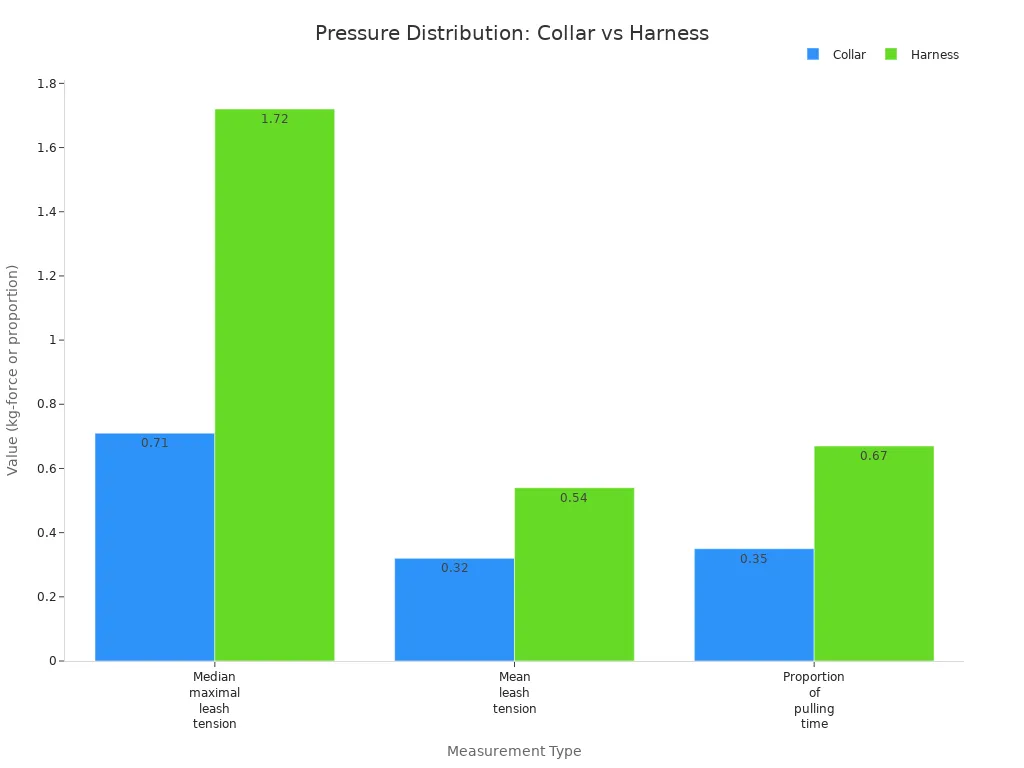
Harnesses result in higher pulling time but distribute force more safely. You support senior dog walking safety by choosing gear that reduces concentrated pressure.
Neck and Spine Protection for Older Dogs
Senior dogs need extra protection for their neck and spine. Collars can cause choking, tracheal collapse, or spinal injuries, especially in older pets with fragile bones or existing health problems. Harnesses offer a safer alternative.
Harnesses spread pressure across the chest and shoulders, keeping the neck and spine safe.
You prevent choking and neck injuries by avoiding concentrated force around the neck.
Harnesses give you better control, which helps reduce strain during daily walks.
If your dog has arthritis or disc disease, a safety harness for senior dogs can make walks more comfortable and secure. You lower the risk of injury and help your dog enjoy outings with less pain.
Control, Compliance, and Safer Handling
Daily dog walking laws require you to keep your dog under control at all times. Harnesses make this easier, especially for senior dogs who may struggle with sudden movements or balance. You gain better handling and can guide your dog gently, reducing the chance of falls or escapes.
A safety harness for senior dogs helps you comply with local regulations and supports your pet’s comfort. You avoid legal trouble and protect your dog by using reliable equipment. Senior dog walking safety improves when you choose a harness that fits well and distributes pressure evenly.
Tip: Always check your harness before each walk. A secure, comfortable fit keeps your dog safe and helps you meet your responsibilities as a pet owner.
Comfort Factors for Daily Dog Walking
Comfort plays a big role in senior dog walking safety. You want your older dog to enjoy every walk, not just get exercise. Veterinary experts highlight several comfort factors that help you create a positive experience for your pet.
Start by choosing the right gear. A safety harness for senior dogs reduces strain on the neck and shoulders. This type of harness supports your dog’s body and helps you maintain control, which is important for following daily dog walking laws. You also protect your dog from injuries that can happen with collars, especially if your dog pulls or moves suddenly.
Pay attention to your dog’s joints. Older dogs often have arthritis or stiffness. Walking on softer surfaces, such as grass or smooth paths, lowers the impact on their joints. You can also talk to your veterinarian about joint supplements to support mobility.
Adjust the length and intensity of walks. Senior dogs may not have the stamina they once did. Shorter, more frequent walks help your dog stay active without getting tired. Watch your dog’s body language. Signs like limping, heavy panting, or slowing down mean your dog needs a break or a change in routine.
Weather affects comfort, too. Plan walks during cooler times of the day in summer. In winter, make sure your dog stays warm. Older dogs can be sensitive to temperature changes, so bring water and consider a light coat if needed.
Mental stimulation matters as much as physical comfort. Let your dog sniff and explore during walks. New smells and sights keep your dog’s mind active and reduce boredom. You help your dog feel happy and engaged by allowing time for exploration.
Here is a table showing key comfort factors for senior dogs during daily walks:
Comfort Factor | Description |
|---|---|
Joint Care | Choose softer surfaces like grass to reduce impact and consider joint supplements for mobility. |
Adjusting Length and Intensity | Opt for shorter, more frequent walks to match the dog’s stamina and ensure enjoyment. |
Watching for Signs of Discomfort | Monitor body language for signs like limping or excessive panting to adjust the routine. |
Weather Considerations | Plan walks during cooler parts of the day and keep the dog warm in cold weather. |
Choosing the Right Gear | Use a harness instead of a collar to reduce strain on the neck and ensure comfort. |
Mental Stimulation on Walks | Allow exploration and sniffing to keep the dog’s mind engaged and active during walks. |
Tip: Always check your dog’s harness and leash before heading out. A well-fitted safety harness for senior dogs improves comfort and helps you follow daily dog walking laws.
You create a safe and enjoyable routine by focusing on these comfort factors. Senior dog walking safety depends on your attention to your dog’s needs and your choice of supportive gear. Every walk becomes a chance to strengthen your bond and keep your dog healthy.
Choosing a Safety Harness for Senior Dogs
Key Features to Look For in a Senior Dog Harness
When you select a safety harness for senior dogs, you want to focus on safety features that support comfort, control, and mobility. Veterinarians recommend harnesses with handles, adjustable straps, and reflective strips. These elements help you manage your dog during walks and keep them visible in low light. You also want a harness that lifts under the sternum, which reduces strain and makes it easier to assist your dog if needed.
Here is a table showing important safety features and their benefits:
Feature Description | Purpose/Benefit |
|---|---|
Front handle & ‘D’ ring to connect leashes | Provides control and safety during walks |
‘T’ pad designed to lift under the sternum | Supports lifting without straining the dog |
Adjustable strap to accommodate dogs of all lengths | Ensures a proper fit for comfort and safety |
Rear Handle with reflective strips for safety in low light | Enhances visibility during nighttime walks |
Patented hip lift for comfortable lifting | Eases the lifting process for both dog and owner |
Helps dogs stay comfortably mobile post-surgery | Aids in recovery and mobility for senior dogs |
You can find these safety features in many products, including the kong safety dog harness. These harnesses help you comply with daily dog walking laws and improve senior dog walking safety.
Tip: Always check for a secure fit and easy-to-use buckles. This helps you avoid accidents and keeps your dog comfortable.
Front-Clip vs. Back-Clip for Better Control
You may wonder whether a front-clip or back-clip harness works best for your senior dog. Front-clip harnesses attach the leash at the chest. This design gives you more control and helps reduce pulling. You can guide your dog gently and keep them close in busy areas. Back-clip harnesses connect the leash at the shoulders. These harnesses work well for dogs who do not pull and need less correction.
Many pet owners choose the kong safety dog harness because it offers both front-clip and back-clip options. You can switch between clips depending on your dog’s needs and walking environment. Front-clip harnesses help you follow daily dog walking laws by keeping your dog under control. Back-clip harnesses provide comfort for relaxed walks.
Note: If your senior dog has mobility issues, a front-clip harness may make it easier to guide them safely.
Materials, Padding, and Overall Fit
The materials and padding in a safety harness for senior dogs play a big role in comfort and durability. Look for harnesses made from soft, breathable fabrics. Padding around the chest and shoulders protects sensitive joints and prevents chafing. You want a harness that feels gentle against your dog’s skin.
A good fit matters for senior dog walking safety. Adjustable straps let you customize the harness to your dog’s body shape. You should measure your dog’s chest and neck before buying a harness. The kong safety dog harness offers multiple adjustment points, making it easier to get the right fit.
You help your dog enjoy every walk when you choose a harness with quality materials and thoughtful safety features. This supports their mobility and keeps you compliant with daily dog walking laws.
Tip: Try the harness on your dog before your first walk. Make sure it does not rub or pinch, and check that all safety features work as intended.
Adjustability and How to Get the Right Size
Finding the right fit for a safety harness for senior dogs is essential for both comfort and control. Adjustable harnesses help you accommodate changes in your dog’s body shape, weight, and mobility. As dogs age, their muscles may shrink, or their joints may swell. You need a harness that adapts to these changes to maintain senior dog walking safety.
Why Adjustability Matters
An adjustable harness allows you to fine-tune the fit. This prevents chafing, slipping, or pressure points that can cause discomfort. You also gain better control, which helps you comply with daily dog walking laws. Products like GaitGuard’s rehabilitation braces and lifting straps offer multiple adjustment points. These features support your dog’s unique needs and make walks safer.
How to Measure Your Dog for a Harness
You should measure your dog before buying a harness. Use a soft measuring tape for accuracy. Focus on these key areas:
Chest Girth: Wrap the tape around the widest part of your dog’s chest, just behind the front legs.
Neck Girth: Measure around the base of the neck, where a collar would sit.
Body Length: Some harnesses require the length from the base of the neck to the base of the tail.
Tip: Write down your measurements and compare them to the manufacturer’s sizing chart. Always choose the size that matches your dog’s largest measurement.
Fitting the Harness
Once you have the right size, adjust the straps for a snug but comfortable fit. You should be able to fit two fingers between the harness and your dog’s body. Check that the harness does not rub or pinch. Make sure all buckles and clips are secure before every walk.
Here is a quick reference table for fitting:
Step | What to Do | Why It Matters |
|---|---|---|
Measure chest/neck | Use a soft tape for accuracy | Ensures correct harness size |
Adjust straps | Tighten or loosen for a snug fit | Prevents slipping or chafing |
Check movement | Let your dog walk and move naturally | Confirms comfort and mobility |
Inspect regularly | Recheck fit as your dog ages or changes weight | Maintains senior dog walking safety |
Note: Senior dogs may need more frequent adjustments. Their bodies can change quickly, so check the fit often.
Choosing an adjustable safety harness for senior dogs helps you meet daily dog walking laws and keeps your pet comfortable. With the right fit, you support your dog’s health and enjoy every walk together.
Walking Tips for Senior Dogs: Staying Safe and Legal
Harness and Leash Check Before Every Walk
You help your senior dog stay safe by checking their harness and leash before every walk. Inspect the safety harness for senior dogs to make sure it fits snugly but does not pinch or rub. Look for signs of wear, such as frayed straps or broken buckles. Test the leash for strength and security. A sturdy leash gives you better control and helps you follow daily dog walking laws.
Tip: Run your fingers along the harness and leash to feel for rough spots or damage. Replace any gear that looks worn out.
A quick check prevents accidents and supports senior dog walking safety. You also protect your dog from discomfort and keep walks enjoyable.
Walk Duration, Pace, and Surface Choice
You improve your dog’s comfort by adjusting walk duration, pace, and the surface you choose. Senior dogs often need shorter walks with a slower pace. Watch your dog’s energy level and let them set the speed. If your dog starts to lag or pant, take a break or head home.
Choose soft surfaces like grass or smooth paths. These surfaces reduce stress on joints and help prevent slips. Avoid steep hills or rough terrain. You can find safe routes for dog walking in your neighborhood by exploring parks or quiet streets.
Here is a table to help you plan your walks:
Factor | Recommendation | Benefit |
|---|---|---|
Duration | 10-20 minutes per walk | Prevents fatigue |
Pace | Slow, steady, and gentle | Reduces risk of injury |
Surface | Grass, paved paths, flat terrain | Supports joint health |
🐾 Try different routes to keep walks interesting. This is one of the best dog walking tips for keeping your senior dog engaged.
Monitoring for Discomfort, Pain, or Fatigue
You need to watch your dog closely for signs of discomfort, pain, or fatigue during walks. Senior dogs may tire quickly or show subtle changes in behavior. Look for limping, heavy panting, slowing down, or reluctance to continue. If you notice any of these signs, stop the walk and let your dog rest.
Use these dog walking tips to monitor your dog’s well-being:
Check your dog’s gait for stiffness or limping.
Listen for vocalizations that may signal pain.
Feel your dog’s body for warmth or swelling after walks.
Observe your dog’s mood before and after exercise.
Note: If your dog shows ongoing discomfort, consult your veterinarian. This supports senior dog walking safety and helps you adjust routines as needed.
You keep your dog happy and healthy by staying alert and responsive. Following daily dog walking laws and using a safety harness for senior dogs makes every walk safer and more enjoyable.
Respecting Public Rules and Sharing Space with Others
You play a key role in creating a safe and welcoming environment when you walk your senior dog. Public spaces belong to everyone. You must follow daily dog walking laws and show respect for others who share sidewalks, parks, and trails. Senior dog walking safety depends on your awareness and courtesy.
Start by keeping your dog close and under control. Use a safety harness for senior dogs to guide your pet gently. This helps prevent sudden movements and keeps your dog from approaching strangers or other animals without permission. Many cities require you to keep your dog on a leash at all times. You should check local regulations before each walk.
You can follow these simple steps to respect public rules and share space:
Yield to pedestrians, cyclists, and runners. Step aside if someone approaches.
Keep your dog on the right side of the path. This allows others to pass safely.
Avoid blocking entrances, gates, or narrow walkways.
Pick up after your dog every time. Carry waste bags and dispose of them properly.
Prevent your dog from barking excessively or jumping on people.
Tip: If your dog feels anxious around crowds, choose quieter routes or walk during less busy hours. This supports senior dog walking safety and reduces stress for both you and your pet.
You may encounter other dogs during your walk. Ask the owner before allowing your dog to greet another animal. Not all dogs enjoy social interaction. Respect their space and move on if the owner declines. You help prevent conflicts and keep walks peaceful.
Here is a table to help you remember key etiquette rules:
Rule | Why It Matters | How to Practice |
|---|---|---|
Leash and control | Follows daily dog walking laws | |
Yielding to others | Prevents accidents | Step aside, keep dog close |
Cleaning up after your dog | Maintains public health | Carry and use waste bags |
Respecting other dogs | Avoids unwanted interactions | Ask before greeting |
Quiet walking | Reduces stress for all | Choose calm routes, monitor barking |
You set a positive example when you follow these guidelines. Senior dog walking safety improves when you respect public rules and share space thoughtfully. You help build a community where everyone feels comfortable enjoying outdoor activities with their pets.
When to Seek Professional Help
Signs It’s Time to Consult a Vet
You want your senior dog to enjoy every walk, but sometimes health issues can make outings unsafe. Watch for warning signs that suggest your dog needs a veterinarian’s attention. Common symptoms include:
Limping or favoring one leg
Sudden reluctance to walk or move
Heavy panting or labored breathing
Swelling in joints or paws
Persistent coughing or wheezing
Loss of balance or frequent stumbling
If you notice any of these signs, schedule a vet visit as soon as possible. Early intervention helps prevent serious problems and supports senior dog walking safety. Your veterinarian can recommend changes to your walking routine or suggest a safety harness for senior dogs that fits your pet’s needs.
Tip: Keep a simple log of your dog’s walking habits and any changes in behavior. Share this information with your vet for a more accurate diagnosis.
Medical Conditions That Affect Walking Safety
Certain medical conditions can make daily walks risky for senior dogs. You should know which issues require extra care or professional advice. Here is a table of common conditions and their impact on walking safety:
Condition | Walking Risk | What You Can Do |
|---|---|---|
Arthritis | Pain, stiffness, limited mobility | Use a supportive harness, choose soft surfaces |
Heart disease | Fatigue, shortness of breath | Walk slowly, monitor breathing |
Neurological disorders | Loss of coordination, weakness | Short walks, avoid obstacles |
Vision or hearing loss | Disorientation, anxiety | Guide gently, use a leash and harness |
Diabetes | Weakness, risk of low blood sugar | Carry treats, watch for fatigue |
You help your dog stay safe by adjusting your walking routine and using the right equipment. Daily dog walking laws require you to maintain control, especially if your dog has special needs. Consult your veterinarian for advice on managing these conditions during walks.
When a Trainer Can Help with Pulling or Reactivity
Sometimes senior dogs develop new behavior challenges, such as pulling on the leash or reacting to other dogs and people. You may feel frustrated or worried about keeping your dog safe and following daily dog walking laws. A professional dog trainer can help you address these issues.
Consider seeking a trainer’s help if:
Your dog pulls hard enough to risk injury to you or themselves
You struggle to maintain control, even with a safety harness for senior dogs
Your dog barks, lunges, or shows aggression toward others
Walks become stressful or unsafe for you and your pet
A trainer teaches you techniques to improve control and reduce reactivity. You learn how to use your safety harness for senior dogs more effectively. Training supports senior dog walking safety and helps you enjoy peaceful, legal walks in your community.
🐕🦺 Remember, professional help is a sign of responsible pet ownership. You give your senior dog the best chance for safe, happy walks by working with experts when needed.
You play a vital role in keeping every walk safe for your senior dog. Daily dog walking laws remind you to use proper equipment and maintain control in public spaces, while a well-fitted safety harness for senior dogs turns those rules into everyday habits. When you check your local regulations, choose supportive gear that fits your dog’s age and body, and adjust the route and pace to their needs, every outing becomes calmer and more enjoyable.
Think of each walk as a small investment in your dog’s long-term health and happiness. With the right harness, a steady routine, and a bit of preparation, you give your senior dog the freedom to keep exploring the world – safely, comfortably, and in full compliance with the law.
FAQ
What are daily dog walking laws?
Daily dog walking laws require you to keep your dog under control in public spaces. You must use a leash and follow local regulations. These laws help protect people, pets, and your community.
Why should I use a safety harness for senior dogs?
A safety harness for senior dogs distributes pressure across the chest and shoulders. You reduce the risk of neck injuries and improve control. This gear supports senior dog walking safety and comfort.
How do I choose the right harness size for my senior dog?
Measure your dog’s chest and neck with a soft tape. Compare these measurements to the manufacturer’s sizing chart. Adjust the straps for a snug fit. You should check the fit regularly as your dog ages.
Can a harness help with mobility issues?
Yes, a harness can support dogs with arthritis or joint pain. You assist your dog during walks and help prevent falls. Products like GaitGuard’s rehabilitation braces and lifting straps offer extra support for senior dog walking safety.
What should I check before each walk?
Inspect the harness and leash for wear or damage. Make sure the harness fits comfortably and does not rub. Test the leash for strength. You help ensure senior dog walking safety by checking your gear every time.
Are there special rules for walking senior dogs in public?
You must follow the same daily dog walking laws for senior dogs as for younger pets. Use proper equipment, supervise your dog, and respect public spaces. Extra care helps you meet legal duties and keeps your dog safe.
How often should I adjust my senior dog’s harness?
Check the harness fit every few weeks or after any weight change. Senior dogs may lose muscle or gain weight. You maintain comfort and control by adjusting the harness regularly.
When should I seek professional help for my senior dog’s walking routine?
Contact your veterinarian if your dog limps, tires quickly, or shows signs of pain. A trainer can help with pulling or reactivity. You support senior dog walking safety by seeking expert advice when needed.
