
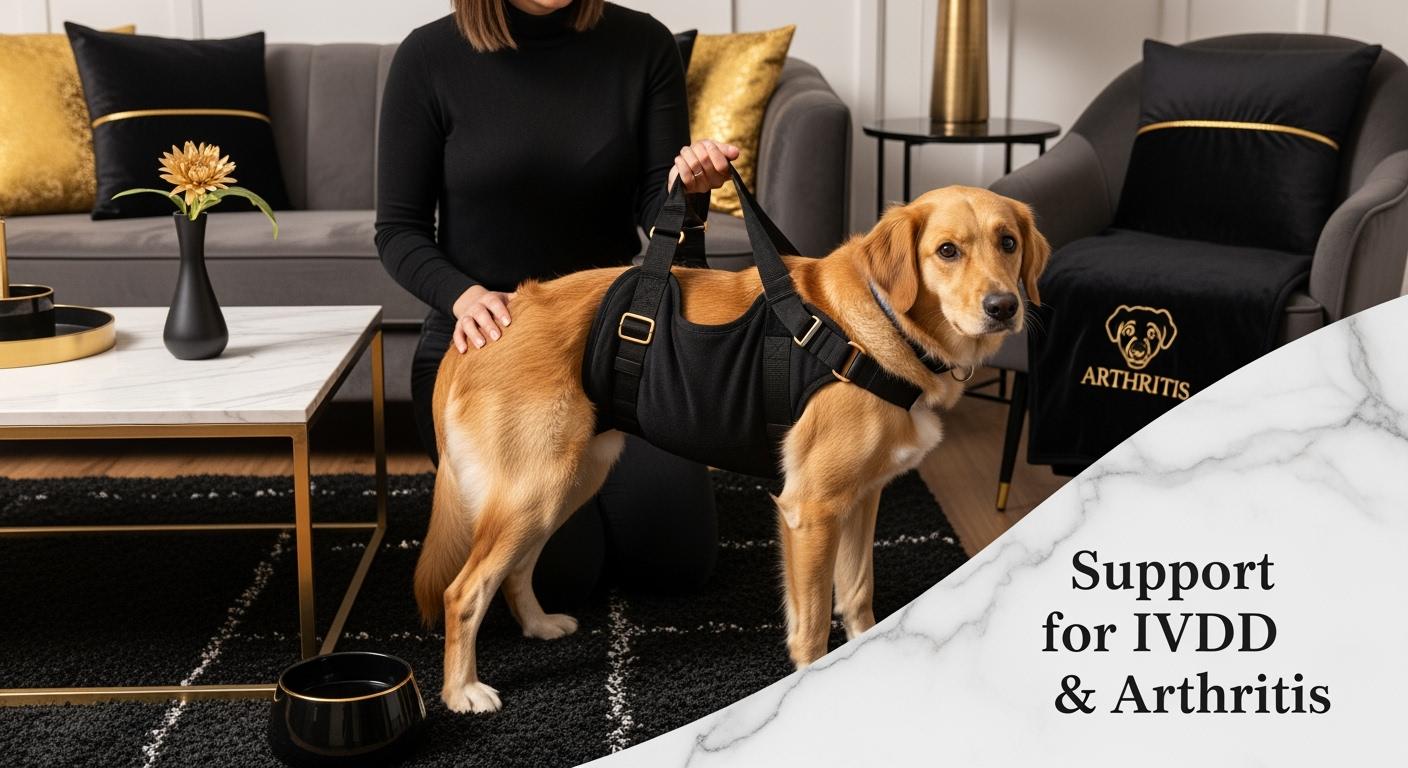
You want your dog to feel good when they have weak back legs from IVDD or arthritis. A dog mobility sling for hind leg support helps you keep your dog steady during short walks and when moving them. This tool gives the right help to keep your dog safe and comfy. You can use a sling to help your dog feel proud and make daily tasks easier. Your veterinarian’s protocol is more important than general timelines.
Key Takeaways
A dog mobility sling helps dogs with weak back legs. This can happen because of IVDD or arthritis. The sling keeps them steady when they walk.
You must put the sling in the right spot. This makes it comfortable and works well. Move the sling for bathroom breaks so your dog does not feel pain.
Pick the best support for your dog’s needs. Use a hindquarter sling for mild weakness. Use a full-body harness for severe weakness. Use a wheelchair if your dog cannot move its back legs.
Check your dog’s skin and comfort often when using the sling. This stops rubbing and makes sure the sling fits well.
Make a routine for walks and standing with help. This helps your dog get better and grow stronger over time.
What a dog mobility sling for hind leg support does
When your dog has trouble moving, you need the right tool for each task. You might help your dog move, go to the bathroom, stand up, or walk a little. Pick the support that fits what your dog needs today. Your veterinarian’s protocol is always more important than general timelines.
Stability and fall prevention
A hindquarter sling helps your dog keep balance and stops falls. You use the sling to steady your dog when walking, especially if their hind legs are weak from IVDD or arthritis. The sling holds your dog’s body so they do not put too much weight on one leg. This lowers the chance of injury and helps your dog feel braver.
Tip: Put the sling in the right spot for support, then move it if your dog needs to pee. This keeps your dog comfy and lets them go to the bathroom.
You can use a hindquarter sling in many ways:
After surgery, to protect the cut and lower strain.
During recovery from injury, to help your dog get stronger.
For arthritis, to ease pain and help your dog move.
For nerve problems, to give your dog balance.
For older dogs, to help with daily things.
When getting in or out of cars or going up stairs, to stop falls.
The sling supports the middle of your dog’s body, making walks easier for both of you. Soft padding and straps make it cozy and warm, especially when it is cold. Sling walking lets your dog stay active without hurting their joints and ligaments.
Rear vs full-body support
You must choose if a hindquarter sling is enough or if your dog needs more help. Rear support works for dogs with mild or medium weakness in their back legs but who can still use their front legs. If your dog has very weak or paralyzed hind legs, a full-body harness or wheelchair may be better.
Full-body harnesses give support for dogs who need help with both front and back legs.
Wheelchairs are best for dogs who cannot move well, like those with paralysis or serious problems.
A hindquarter sling is good for short-term help and safe walking. If your dog cannot stay steady with just rear support, use a full-body harness or ask someone to help you. Your veterinarian’s protocol is always more important than general timelines.
When a sling is a short-term tool
You use a dog mobility sling for hind leg support as a short-term tool in many cases. If your dog has a sore muscle, joint strain, or feels weak after activity, the sling helps until your dog gets stronger. During therapy or recovery, the sling helps your dog move safely.
Note: Slings give support and balance. They do not fix the main problem. Always listen to your veterinarian about how long to use the sling.
If your dog gets better, you can stop using the sling and let them walk normally. If your dog does not get better or gets worse, call your veterinarian for help.
Who benefits from a dog mobility sling
A dog mobility sling for hind leg support helps many dogs with mobility issues. You may see your veterinarian recommend this tool for dogs after surgery, with IVDD, or for senior dogs who struggle to walk. Your veterinarian’s protocol overrides general timelines.
Post-op dogs and controlled walks
After surgery, your dog may feel weak or stiff. Many US veterinarians include a sling in their discharge instructions for orthopedic or neurologic cases. You use the sling when your dog cannot bear weight, needs help getting up, or risks falling. This support keeps your dog safe during short, controlled walks outside. It also helps you protect the surgical site and avoid extra strain on healing legs.
Tip: Use a harness or sling if your dog struggles to walk, feels weak, or needs help going outside. If your dog tires quickly or cannot balance, ask your veterinarian if a wheelchair or more support is needed.
Sling walking gives your dog a chance to move safely during post-surgery recovery. You help your dog stay active without risking injury. Your veterinarian’s protocol overrides general timelines.
IVDD and rear leg weakness
Dogs with IVDD often have weak or paralyzed hind legs. Some breeds, like Dachshunds and Bulldogs, have a higher risk of IVDD. In these breeds, up to 24% may develop this condition. If your dog has IVDD, you may notice trouble standing, walking, or keeping balance. A dog mobility sling for hind leg support gives your dog the help needed to move safely.
You use the sling to steady your dog and prevent falls. This support lets your dog go outside for bathroom breaks and short walks. If your dog cannot move both back legs, your veterinarian may suggest a full-body harness or wheelchair for extra support.
IVDD affects about 2-3% of all dogs.
Some breeds have a much higher risk.
Slings are often prescribed for dogs with rear leg weakness or paralysis.
Senior dogs with arthritis
Senior dogs often struggle with arthritis and balance problems. You may see your dog hesitate to stand, walk, or climb stairs. Mobility aids like slings, hip braces, and rear-lifting harnesses help your dog stay active and comfortable. These tools support your dog’s back legs, making daily life easier.
If your senior dog cannot exercise due to weak hind legs, a sling can improve quality of life. You help your dog move more freely and avoid falls. Senior dogs benefit from gentle support during walks, bathroom trips, and transfers.
Note: Always check your dog’s skin and comfort when using a sling. Adjust the fit as needed to prevent rubbing.
A dog mobility sling for hind leg support is especially useful for dogs with back leg problems, instability, or after surgery. You give your dog the support needed to stay safe and mobile.
Choosing the right dog support harness
Selecting the best dog support harness depends on your dog’s needs and your ability to help them. You want to keep your dog safe and comfortable during transfers or short walks. Your veterinarian’s protocol overrides general timelines.
Rear sling vs towel sling vs full-body harness
You have several options for helping dogs with mobility issues. A hindquarter sling gives targeted support for the back legs. A towel sling can work in a pinch, but it may slip or bunch up. A full-body harness supports both the front and back, which helps dogs with more severe weakness.
Tool | Area of Support | Best For | Ease of Use | Comfort | Notes |
|---|---|---|---|---|---|
Hindquarter sling | Rear legs | Mild-moderate weakness | Easy | High | Adjustable, padded |
Towel sling | Rear legs | Short-term, emergencies | Moderate | Low | Can slip, less durable |
Full-body harness | Front & rear legs | Severe weakness | Moderate | High | More straps, more coverage |
Wheelchair/cart | Full body | Paralysis, long-term | Moderate | High | Needs fitting, for outdoors |
No-gear carry | Whole body | Small dogs only | Hard | Low | Not safe for most situations |
When choosing, consider these factors:
Size and weight of your dog
Area needing support
Material and durability
Ease of use and adjustability
When to use a wheelchair or cart
A wheelchair or cart works best for dogs who cannot use their back legs at all. You may use a cart for long-term support if your dog has paralysis or cannot walk with a sling. Always measure your dog’s height, length, chest girth, and weight before choosing a device. The product must fit your dog’s body to prevent discomfort.
Matching tool to dog size and caregiver
You must match the tool to your dog’s size and your own strength. If your dog weighs over 40 lb (18 kg), two people should help with lifting. Look for a dog support harness with adjustable straps and a handle that feels good in your hand. The harness should spread weight across strong areas of your dog’s body. Your veterinarian’s protocol overrides general timelines.
Tip: Always check the fit and comfort of any harness or sling before each use.
Fit and handling for safety
You want your dog to feel safe and comfortable every time you use a mobility sling. Paying attention to fit and handling helps you protect your dog’s skin and joints. Your veterinarian’s protocol overrides general timelines.
Proper sling placement
Before you move your dog, check that the sling sits centered under the belly and does not twist the spine. Make sure your dog’s paws rest flat on the ground. The sling should lift evenly and provide gentle support without pulling or pinching. Always confirm the straps are secure but not too tight. If the sling slips or twists, stop and adjust it before walking.
Tip: Position for support, then reposition for urination if needed.
Male dog urination tips
Male dogs need extra help during bathroom breaks. Move the sling away from the penis so your dog can urinate normally. You may need to shift the sling slightly forward or backward. Watch your dog’s posture and make sure the sling does not block the flow. If your dog struggles, pause and adjust the sling until he feels comfortable. Your veterinarian’s protocol overrides general timelines.
Preventing chafing and discomfort
You can prevent chafing and discomfort by following these steps:
Inspect the areas where the sling touches your dog’s skin every day.
Adjust the fit as your dog’s body changes.
Keep your dog’s coat clean and well-groomed.
Allow breaks so your dog’s skin can breathe.
Apply soothing cream to irritated spots and ask your veterinarian for advice.
Monitor how long your dog wears the sling.
Talk to your veterinarian about any skin problems before using a sling.
A well-fitted sling gives your dog the support needed for safe movement. Regular checks and comfort routines help you avoid skin problems and keep your dog happy.
2-week potty-walk routine
A 2-week potty-walk routine helps your dog recover safely after surgery or injury. You use a mobility sling to guide your dog during short walks. This routine focuses on rest, gentle movement, and safety. Your veterinarian’s protocol overrides general timelines.
5-minute, 3-times-a-day plan
You should limit walks to potty breaks only during the first two weeks. Each walk lasts up to five minutes. You take your dog out three times a day. This plan gives your dog enough movement without causing stress or overexertion.
Use a mobility sling to help your dog balance and walk.
Keep walks short and controlled.
Focus on rest and pain control between walks.
Try gentle range-of-motion exercises to prevent stiffness.
Here is the math for planning:
Potty Walks | Minutes per Walk | Walks per Day | Total Minutes per Day | Total Minutes in 2 Weeks |
|---|---|---|---|---|
1 | 5 | 3 | 15 | 210 |
You spend 15 minutes a day on sling walking. Over two weeks, this adds up to 210 minutes. Your veterinarian’s protocol overrides general timelines.
Avoiding slippery surfaces
You want to keep your dog safe during walks. Smooth floors like tile, laminate, and hardwood can cause slips and falls. Senior dogs and those with mobility issues have trouble with traction. You can use non-slip rugs, adhesive traction aids, or ramps to improve safety. Paw wax also helps your dog grip the floor.
Tip: Walk your dog on textured surfaces or use non-slip mats. This lowers the risk of accidents and keeps your dog steady.
Tracking progress safely
You can track your dog’s progress with simple tools. Measure muscle mass weekly using a soft tape around the thigh. Record the results to see changes. Take short videos of your dog walking each week. These videos help you and your veterinarian see improvement. Use a standard leash for better control and slow walking. This helps your dog build strength and stability.
Measure muscle mass weekly.
Record videos for progress checks.
Use a standard leash for safe walking.
Always watch for signs of pain or weakness. Stop and contact your veterinarian if your dog struggles. Safety comes first.
Assisted standing sessions
Assisted standing sessions help your dog get stronger after injury or surgery. You use a dog mobility sling to give gentle support while your dog stands. These sessions let your dog practice standing and balancing in a safe way. Your veterinarian’s protocol is more important than general timelines.
1–2 minute micro-sessions
Begin with short sessions. Let your dog stand for one or two minutes. Do this exercise three to five times each day. Your dog gets three to ten minutes of assisted standing every day. This routine fits most rehab plans and helps your dog build muscle without getting too tired.
Here is a simple table for planning:
Session Length | Sessions per Day | Total Time per Day |
|---|---|---|
1–2 minutes | 3–5 | 3–10 minutes |
Always watch your dog for signs of being tired. If your dog looks uncomfortable or worn out, let them rest.
Weight bearing cues
You can use different ways to help your dog stand and put weight on their legs. Place your dog’s feet flat on the ground. Use the sling to keep your dog steady. Try gently tickling your dog’s paw or brushing their back to help them feel their legs. Slowly loosen the sling so your dog learns to stand with less help. Give your dog breaks when needed.
Technique | Description |
|---|---|
Proper Support | Use the sling to help your dog stand safely. |
Limb Positioning | Put your dog’s feet flat and steady on the ground. |
Proprioceptive Feedback | Tickling or brushing helps your dog notice their legs. |
Gradual Assistance | Loosen the sling to help your dog stand on their own. |
Rest Periods | Give breaks to match your dog’s needs. |
Your veterinarian’s protocol is always more important than general timelines.
When to pause and call the vet
You need to know when to stop and call your veterinarian. Watch for sudden changes in your dog’s health. If your dog cannot stand, falls down, or has new pain, stop the session. Safety is always first.
Universal stop-and-escalate triggers:
Stop and call the clinic quickly if:
Pain or weakness gets worse fast
The dog cannot get up or falls down even with sling help
The dog starts dragging feet or looks very upset
Use more support today if:
The sling slips, twists, or rubs the skin
The dog is too wobbly for rear-only support (try a full-body harness or get help from another person)
You help your dog recover by following these steps and staying alert. Always ask your veterinarian if you have questions about your dog’s progress.
Quick reference, tables, and scripts
You want easy tools to help you care for your dog. Quick reference cards, tables, and scripts make daily routines simple and safe. Your veterinarian’s protocol overrides general timelines.
Traffic-light decision table
Use this table to decide if a rear mobility sling is enough today. Check your dog’s stability and comfort before each walk.
Color | What You See | What You Do |
|---|---|---|
🟢 Green | Dog walks with sling, steady, no pain | Use rear sling for short walks and transfers |
🟡 Yellow | Dog wobbles, sling slips, mild pain | Adjust sling, check fit, consider more support |
🔴 Red | Dog collapses, severe pain, drags legs | Stop, call vet, switch to full-body support |
Your veterinarian’s protocol overrides general timelines.
Comparison table of support tools
See which tool fits your dog’s needs. Pick the best option for comfort and safety.
Tool | Area Supported | Best For | Comfort Level | Caregiver Ease | Notes |
|---|---|---|---|---|---|
Rear sling | Hind legs | Mild weakness | High | Easy | Thick, fluffy, adjustable |
Towel sling | Hind legs | Emergencies | Low | Moderate | Can slip, less durable |
Full-body harness | All legs | Severe weakness | High | Moderate | More straps, more coverage |
Wheelchair/cart | Full body | Paralysis, long-term | High | Moderate | Needs fitting, outdoor use |
B2B clinic script for owners
You can use this script when talking to your veterinarian or clinic staff. It helps you ask the right questions and share updates.
“I am using a rear mobility sling for my dog’s hind leg weakness. I follow the 5-minute, 3-times-a-day potty-walk plan and check for skin comfort daily. My dog stands with support for 1–2 minutes, 3–5 times a day. I will bring progress notes and videos to the 14-day recheck. Is this routine right for my dog today?”
Quick Reference Card Examples
Potty-walk math:
Take your dog out for 5 minutes, 3 times a day. That adds up to 15 minutes daily and 210 minutes over 2 weeks.Supported-standing daily range:
Help your dog stand for 1–2 minutes, 3–5 times a day. Total time is 3–10 minutes each day.Recheck planning:
Schedule your incision check or staple removal at 14 days after surgery.
You keep your dog safe and comfortable by using these tools. Always check fit, comfort, and stability before each walk.
Top mistakes and troubleshooting
Common mistakes list
You want to avoid common errors when using a hindquarter sling for dogs with mobility issues. Here are 12 mistakes you might encounter, along with prevention tips:
Sling slipping off—Check the fit before each use.
Blocking urination—Position for support, then reposition for urination if needed.
Overdoing walks—Limit walks to short, controlled sessions.
Ignoring skin checks—Inspect your dog’s skin daily for redness or sores.
Using the wrong size—Choose a sling that matches your dog’s weight and body shape.
Twisting the spine—Keep the sling centered under your dog’s belly.
Not adjusting for stairs—Hold the sling steady and guide your dog slowly up or down.
Forgetting to help with car transfers—Use the sling to support your dog when getting in or out of the car.
Allowing paws to drag—Make sure your dog’s feet stay flat on the ground.
Leaving the sling on too long—Give your dog breaks to prevent discomfort.
Not checking for pain—Watch for signs of distress or new weakness.
Lifting alone with heavy dogs—Ask for help if your dog weighs over 40 lb (18 kg).
Your veterinarian’s protocol overrides general timelines.
Troubleshooting guide
If you notice problems with your hindquarter sling, try these solutions:
Problem | Quick Fix |
|---|---|
Sling slips | Tighten straps and check placement |
Dog refuses to walk | Offer treats and gentle encouragement |
Caregiver back pain | Use a sling with a padded handle or ask for help |
Chafing or rubbing | Adjust fit and check for soft padding |
Dog struggles on stairs | Move slowly and keep the sling steady |
Always monitor your dog’s comfort and stability. If you see sudden changes, stop and contact your veterinarian.
Your veterinarian’s protocol overrides general timelines.
FAQs
How do I help my dog use stairs with a sling?
Hold the hindquarter sling steady and guide your dog one step at a time.
Can I use the sling to help my dog get into the car?
Yes, the sling provides support for safe car transfers.
Is the sling useful for bathroom breaks?
The sling helps your dog stand and walk outside to pee.
How long should my dog use the sling after surgery?
Follow your veterinarian’s instructions for post-op recovery.
What if my dog refuses the sling?
Try gentle encouragement and check for proper fit.
Can the sling help with arthritis?
The sling offers support for dogs with joint pain or weakness.
What should I do if my dog’s skin gets irritated?
Remove the sling, let the skin breathe, and ask your veterinarian for advice.
A dog mobility sling for hind leg support helps your dog stay steady and feel good while getting better from IVDD or arthritis. You help your dog move without falling and build confidence again. Here are some important benefits:
Benefit | Description |
|---|---|
Post-Surgery Recovery | Helps your dog move safely after surgery. |
Arthritis Management | Lessens pain and makes daily tasks easier. |
Senior Dog Support | Supports older dogs with weak muscles or joints. |
Always make sure the sling fits well and take it off when your dog is resting. Your veterinarian’s plan is more important than general advice. Checking in often and using the right support helps your dog live better. Your veterinarian’s plan is always most important. You help your dog every day.
