
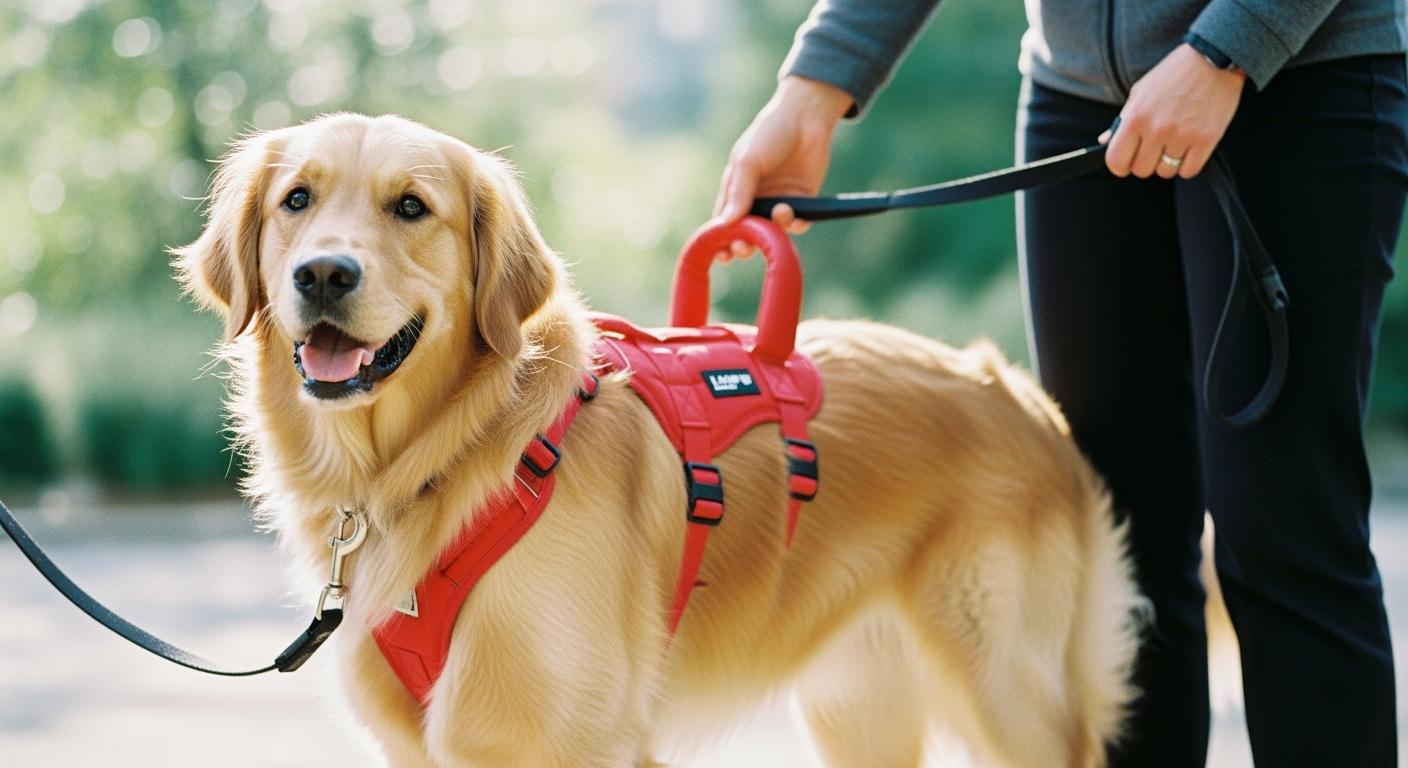
A dog harness with lift handle is commonly used when a dog needs guided support for standing, walking, stairs, or short assisted transfers. It is often considered for senior dogs, post-op recovery, hind leg weakness, and other mobility-limiting conditions where controlled lifting and handling are needed. The right setup depends on fit quality, handle stability, weight distribution, and how the dog will use the harness day to day.
Study Focus | Key Findings |
|---|---|
Pressure distribution under harnesses | The study looked at the load from three harness types on different parts of a dog’s body. It found big pressure changes, especially under the trunk strap. |
A dog harness with lift handle lets you control the dog directly and keeps both you and the dog safe when lifting or moving.
Key Takeaways
A dog harness with lift handle gives practical support to dogs that need safer handling during walking, standing, stairs, or short transfers.
The harness must fit right. Always measure your dog’s neck and chest. Make sure the harness is snug but not too tight. You should be able to fit two fingers under the straps.
Use the harness every day for things like walks, bathroom trips, and going up or down stairs. This helps your dog stay safe and do more on their own.
Check the harness often for any damage. Change the fit if needed so your dog does not get hurt or feel pain.
Pick the best harness by comparing support coverage, fit quality, padding, and whether the dog needs full-body or rear-end help.
Dog Harness with Lift Handle: Who Benefits
Mobility Challenges Addressed
Many dogs have trouble moving every day. Some dogs lose strength in their back legs. Others struggle after surgery or as they get older. A dog harness with lift handle gives safe support. This tool helps dogs stand, walk, or go up stairs. It lowers the chance of falling. Knowing when to use a harness can stop injuries. It also makes a dog’s life better.
Some dogs need this harness more than others:
Senior dogs often get arthritis or weak muscles. They need extra help to move safely.
Dogs healing from surgery may have balance problems. A harness lets you guide them gently.
Large breed dogs can have joint issues. You can use a harness to spread their weight and lower strain.
For a narrower read on harness-led support for older dogs with weakness or arthritis, see our senior dog mobility support harnesses guide.
Knowing when to use a harness is important at clinics and at home. You can help dogs during therapy, recovery, or daily life.
For a solution-led overview focused on stairs, walking, and bathroom support for weak rear legs, continue with our dog lift harness solutions for hind leg weakness.
Ideal Users and Use Cases
You might work in a clinic, rehab center, or care for dogs at home. Each place has different needs. The table below shows common ways to use a harness and how it helps:
Use Case | Description |
|---|---|
Veterinary and Rehabilitation Clinics | Use the harness for safe movement during therapy or after surgery. It lowers stress on weak legs. |
| Home Care and Assisted Walking | Help dogs with stairs, bathroom trips, car entry, and short daily transfers using safer lifting control. |
Aging and Disability Care Facilities | Help older or disabled dogs with daily tasks. Encourage independence and stop problems from not moving. |
A dog harness with lift handle meets many support needs. It works for daily life, therapy, and special training. You help dogs move safely and feel confident.
What Is a Dog Harness with Handle
Key Features and Structure
A dog harness with handle gives you a practical way to support dogs with mobility needs. You will notice that this harness stands out from standard harnesses because of its special design. The handle sits on the back panel, making it easy for you to lift or guide the dog. Many models, like the CNEO Dog Lift Harness, are made for dogs who are elderly, disabled, or have joint problems such as arthritis or hip dysplasia.
You can see the main differences between a dog harness with handle and a standard harness in the table below:
Feature | Dog Harness with Lift Handle | Standard Harness |
|---|---|---|
Back panel size | Supports handle, allows movement | Varies, may limit movement |
Adjustment points | Fine-tune neck and girth | Basic adjustments |
Handle height and softness | Easy to grab, stable | Not applicable |
Clip layout | Back, front, or dual-clip | Typically back-clip only |
Weight and padding | Supportive for size | Lightweight options |
Stability during use | Remains centered when lifted | May rotate under tension |
Fit checks | Ensures proper placement | Basic fit checks |
You can adjust the harness at several points to fit the dog’s body. The handle is soft and stable, so you can grip it without hurting your hand. The harness stays centered when you lift the dog, which helps keep the dog safe and comfortable.
Main Support Functions
A dog harness with handle helps you give direct support to dogs with mobility challenges. You can use it in many daily situations:
You help senior dogs who have joint pain move more easily.
You assist injured pets so they can stay mobile during recovery.
You support paralyzed dogs by reducing pressure on their back legs.
You aid dogs during emergency bathroom breaks.
You help dogs get in and out of the car.
You safely lift dogs off the floor when needed.
You support dogs as they go up or down stairs.
You guide dogs through tight spaces indoors.
You use the harness during canine rehabilitation sessions.
Tip: Always check the fit before each use. A well-fitted dog harness with handle gives the best support and comfort.
A dog harness with lift handle gives you a reliable way to help dogs move, recover, and stay active every day.
For product-side comparison of lift-assist and assisted-walking designs, review our dog lift harness options.
Types of Dog Harnesses with Lift Handles
Full Body and Rear Support
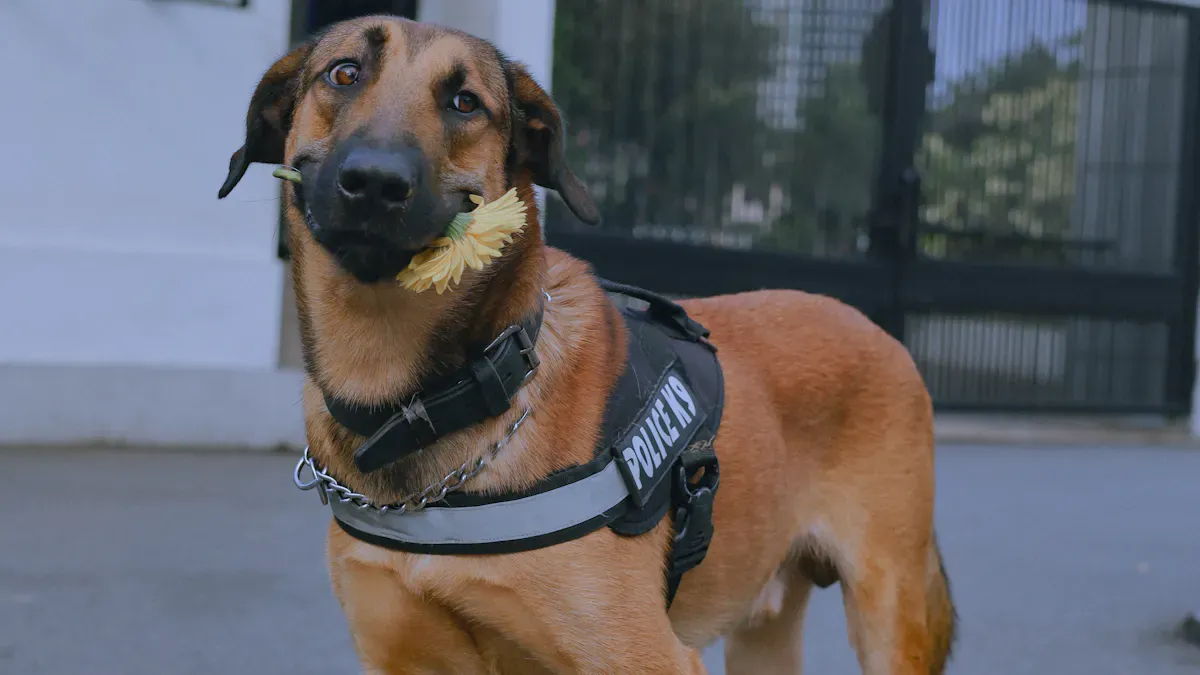
You can pick a full body or rear support harness. The choice depends on what your dog needs. Full body harnesses help both the front and back legs. Rear support harnesses only help the back legs. The table below shows how they are different:
Feature | Full Body Harness | Rear Support Harness |
|---|---|---|
Handles | Front and rear handles for lifting | Rear handle for assisting rear legs |
Support Areas | Supports both front and rear quarters | Primarily supports rear legs |
Design | Includes a patented hip lift for comfort | Includes rear leg straps and a belly band for support |
Usage | Ideal for post-surgery, rehabilitation, and elderly dogs | Suitable for dogs needing assistance with rear mobility |
Full body harnesses are good after surgery or during rehab. Rear support harnesses help dogs with weak back legs. You can read more in guides like dog lift harness full body and dog lift harness for back legs.
Tip: Rear lifting handles and leg straps give more help to dogs with weak back legs. Chest lifting panels let you lift the front part safely.
Specialty and Recovery Harnesses
Specialty and recovery harnesses are made for special health problems. You might need these for dogs with hip or back pain. They also help dogs with weakness from arthritis or old age. Some dogs have nerve problems like IVDD or are healing from injury. These harnesses have soft padding and protect sore spots. You can compare these harnesses by support area, lifting needs, and daily handling demands.
Specialty harnesses give extra help for dogs with special needs.
Recovery harnesses help dogs move again after surgery or injury.
Extra padding keeps sore spots safe during rehab.
Choosing the Right Type
Pick a dog harness with lift handle that fits well and is easy to adjust. Check the material, safety parts, and design. The table below helps you compare what to look for:
Criteria | Description |
|---|---|
Fit | Make sure the harness fits tight but is still comfy and safe. |
Adjustability | Find harnesses you can change to fit your dog’s size and shape. |
Material | Pick strong materials that last long and feel good for your dog. |
Safety Features | Look for harnesses with extra straps or parts that stop escapes and keep your dog safe. |
Design | Choose harnesses with handles for more help, especially for dogs who have trouble moving. |
Check that the girth strap sits on the ribs, not the soft belly. Make sure you can slide your hand under the harness for good support. Check whether the girth strap sits on the ribs, the handle stays centered, and the harness does not twist during assisted movement.
Note: A harness that fits well makes your dog safer and more comfortable every day.
Step-by-Step Guide: Fitting a Dog Harness with Lift Handle
A well-fitted harness is essential for providing effective support and ensuring safety during daily use. This step-by-step guide will help you measure, fit, and adjust a dog harness with lift handle with lift handle for optimal comfort and function. You can use these steps in clinics, rehabilitation centers, or at home.
Measuring for Proper Fit
Accurate measurements are the foundation of a secure and comfortable fit. Follow these steps to measure your dog before you put on a dog harness:
Gather Your Tools
Use a flexible measuring tape. Keep paper and pen nearby to record each measurement.Measure Neck Girth
Wrap the tape around the widest part of your dog’s neck. Leave enough space for two fingers between the tape and the fur.Measure Chest Girth
Find the widest part of your dog’s chest, usually just behind the front legs. Measure here, again allowing two fingers of space for comfort.Measure Body Length
Measure from the base of the neck to the base of the tail. This helps you choose the right harness length.
Tip: Always double-check your measurements. A harness that fits well will provide better support and reduce the risk of chafing or slipping.
For more details on professional measuring standards, see our fitting guides.
Fit Checks and Adjustments
Once you have the correct size, you need to perform fit checks and make dog harness adjustment for a secure and comfortable fit. Use this step-by-step guide to ensure proper placement:
Position the Harness
Slip the neck opening over your dog’s head. Make sure the back panel sits evenly along the spine.Secure the Buckles
Locate the two buckles on the chest piece, one on each side behind the front legs. Fasten both buckles.Adjust the Sides and Belly
Tighten the side straps so the harness fits snugly. You should be able to fit only two fingers between the harness and your dog’s body. Adjust the belly strap if your harness has one.Adjust the Neck
Make sure the neck area is snug but not tight. Again, use the two-finger rule for comfort.Final Fit Checks
Check that the harness does not shift or rotate when you lift the handle. The girth strap should rest on the ribcage, not the soft belly. The harness should not pinch or rub sensitive areas.Daily Monitoring
Inspect the harness each day for signs of wear or changes in fit. Dogs can gain or lose weight, so regular fit checks are important.
Note: Repeat fit checks after walking, rest periods, and any strap adjustment to make sure the harness stays centered.
Comfort and Safety Tips
Veterinary professionals recommend several features and practices to maximize comfort and safety for both you and your dog. The table below highlights key features and their benefits:
Feature | Benefit |
|---|---|
Ergonomic design | Enhances comfort for the dog and makes handling easier for you |
Patented hip lift | Prevents strain on joints and sensitive abdominal areas |
Weight distribution | Allows you to lift your dog evenly, reducing stress on any one area |
You should always check that the harness sits flat against your dog’s body. Avoid twisted straps or uneven pressure. Choose a harness with soft padding and an ergonomic design for daily use. Distribute weight evenly when lifting to prevent injury.
Safety first: Never leave a harness on an unsupervised dog for long periods. Remove the harness if you notice any redness, hair loss, or discomfort.
A well-fitted harness and regular adjustment will help you provide safe, reliable support every day.
Dog Harness How to Use: Daily Support and Handling
A dog harness with lift handle gives you a practical way to help dogs move safely every day. You can use it in clinics, rehabilitation centers, or at home. This section explains how to use a dog harness with lift handle in daily routines, focusing on lifting, assisting, and supporting dogs during common activities.
Lifting and Assisting Safely
You need to follow best practices when lifting or assisting a dog with a harness. Proper technique keeps both you and the dog safe. The table below shows important steps for safe handling:
Best Practice | Description |
|---|---|
Use a full-body lift harness | Supports both chest and hindquarters, keeping the spine straight. |
Lift slowly without twisting | Prevents injury to the dog’s spine. |
Hold the dog close to your body | Gives stability during lifting. |
Team lift for dogs over 40 lb | Ensures safety for both dog and handler. |
Check harness fit | Straps should be snug, allowing two fingers under each strap. |
Regular skin checks | Prevents pressure sores under the harness. |
Use positive reinforcement | Helps dogs adjust and reduces anxiety. |
Avoid lifting by the belly only | Always support both front and back. |
Use good posture when lifting | Bend your knees to avoid back strain. |
Extra caution on stairs | Two people may be needed for support. |
For safer transfer technique, handler body mechanics, and large-dog support checks, review our lift a large dog safely guide.
You should always check the harness fit before lifting. Make sure the straps are snug but not tight. Hold the dog close to your body and lift slowly. For large dogs, ask for help. Never lift by the belly only. Support both the front and back to protect the spine. Use treats and calm words to help the dog feel safe. Regularly check the skin under the harness for any signs of redness or sores.
Tip: For more details on safe handling, visit our safe handling guides.
Support for Stairs and Transfers
Many dogs need extra help on stairs or during transfers, such as getting into a car or moving from one surface to another. You can use a dog harness with lift handle to provide steady support in these situations. Here are some key techniques:
Use a rear lifting harness to support the hindquarters when going up or down stairs.
Choose a front lifting harness if the dog needs help with the front legs.
Slide the harness on gently and make sure it does not block natural movement.
Attach a leash to the harness for extra stability when the dog stands or walks.
Adjust the harness for a snug fit, using the two-finger method.
Distribute the dog’s weight evenly to reduce strain on joints and your own back.
For dogs with severe injuries, consider a pet stretcher for transfers.
The patented Hip Lift design can reduce strain on joints during movement.
When you help a dog on stairs, align yourself with the dog’s body. Support the back end when going up and the front end when going down. Move slowly and use a calm voice. If possible, have another person assist for added safety. Always check that the harness allows the dog to urinate or defecate without restriction.
Note: For more information on mobility support, see our mobility support guides.
Daily Routines and Mobility Aid
You can use a dog harness with lift handle as part of your dog’s daily routines. This tool helps with daily walks, bathroom trips, and moving around the house. Here are some tips for daily use:
Check the harness fit each morning using the two-finger method.
Remove the harness before bedtime to prevent discomfort.
Use the harness to help your dog during bathroom breaks, especially if they have trouble standing.
Support your dog during daily walks, providing balance and control.
Use the harness for navigating stairs or uneven surfaces.
Watch for any signs of discomfort or skin irritation.
Clean the harness regularly to maintain hygiene and safety.
A dog harness how to use guide can help you build a routine that supports your dog’s independence. You can help your dog stay active and safe during daily walks and activities. Harnesses and slings are essential for dogs with mobility issues, allowing them to bear weight and build strength. Proper fitting and regular checks prevent complications and make caregiving easier.
Reminder: Always monitor your dog’s comfort and adjust the harness as needed. For more tips on daily routines, visit our fitting guides.
By following these steps, you can use a dog harness with lift handle to provide safe, reliable support every day. This approach works well in clinical, rehabilitation, and home settings.
For broader setup advice on walking support, stability, and daily comfort routines, review our dog mobility support solutions.
Troubleshooting and Maintenance
Common Fit and Comfort Issues
You may notice your dog showing signs of discomfort or irritation while wearing a dog harness with lift handle. Common issues include rubbing, pinching, or shifting of the harness. If the harness rotates or slips, check the adjustment points and straps. Make sure the girth strap sits on the ribcage, not the belly. Look for redness or hair loss where the harness touches the skin. If you see these signs, adjust the fit or try a different size. Always check the harness before each use to prevent problems.
Tip: If your dog resists wearing the harness, use positive reinforcement and check for any areas that cause discomfort.
Cleaning and Care
Proper cleaning keeps the harness in good condition and helps prevent skin issues. Follow these steps for routine care:
Check the care label before washing.
Machine wash the harness in a mesh garment bag if allowed.
For leather harnesses, hand wash with hot water and mild dish soap.
Shake off dirt and debris before washing.
Soak and scrub the harness, then rinse and hang dry.
Avoid chemical-based detergents. Use pet-safe options.
Clean the harness regularly, especially after outdoor use. Dry the harness completely before putting it back on your dog. This routine helps maintain hygiene and comfort.
Monitoring Wear and Longevity
You should monitor the harness for signs of wear and tear. Limit harness wear to 30–60 minutes per session, 3–5 times per day. Remove the harness at night to let your dog’s skin rest. Check the skin for redness or sores every time you remove the harness. If the harness gets wet, dry it to prevent chilling and skin issues. Reassess your dog’s health and harness fit every 3–6 months. Schedule vet visits to monitor weight, skin, and joint health.
Note: Regular checks and maintenance help you provide reliable support and maintain safety for your dog.
You help dogs most when you make sure the harness fits right, give daily support, and check the harness often. Studies show that a dog harness with lift handle can stop neck and windpipe injuries if it fits well. You should look at your dog’s needs often and ask a vet for help if you need it. For more details, read these guides:
Use a soft tape to measure your dog’s neck and chest.
Look at sizing charts before you pick a harness.
Make the harness fit close around the chest and shoulders.
Give treats so your dog feels happy about the harness.
Change the straps so the harness does not rub or slip.
Vest-style harnesses help older dogs stay steady. Harnesses keep dogs safe if they move fast or jump.
FAQ
How do you choose the right size for a dog harness with lift handle?
You measure your dog’s neck and chest with a soft tape. Check the sizing chart for each harness. Make sure you can fit two fingers under the straps for comfort.
Can you use a dog harness with lift handle for daily walks?
Yes, you can use this harness for daily walks. It gives you control and support. Attach a leash to the harness for extra stability. Always check the fit before each walk.
What dogs benefit most from a lift handle harness?
Senior dogs, dogs recovering from surgery, and dogs with weak back legs benefit most. You help them move safely and reduce strain. Clinics and rehab centers use these harnesses for mobility support.
How often should you check the harness fit?
You should check the harness fit every day. Look for signs of rubbing, slipping, or discomfort. Adjust the straps as needed. Regular checks keep your dog safe and comfortable.
Is it safe to lift a dog using only the handle?
You should always support both the front and back of your dog. Never lift by the handle alone. Use proper lifting techniques to protect your dog’s spine and joints.
