
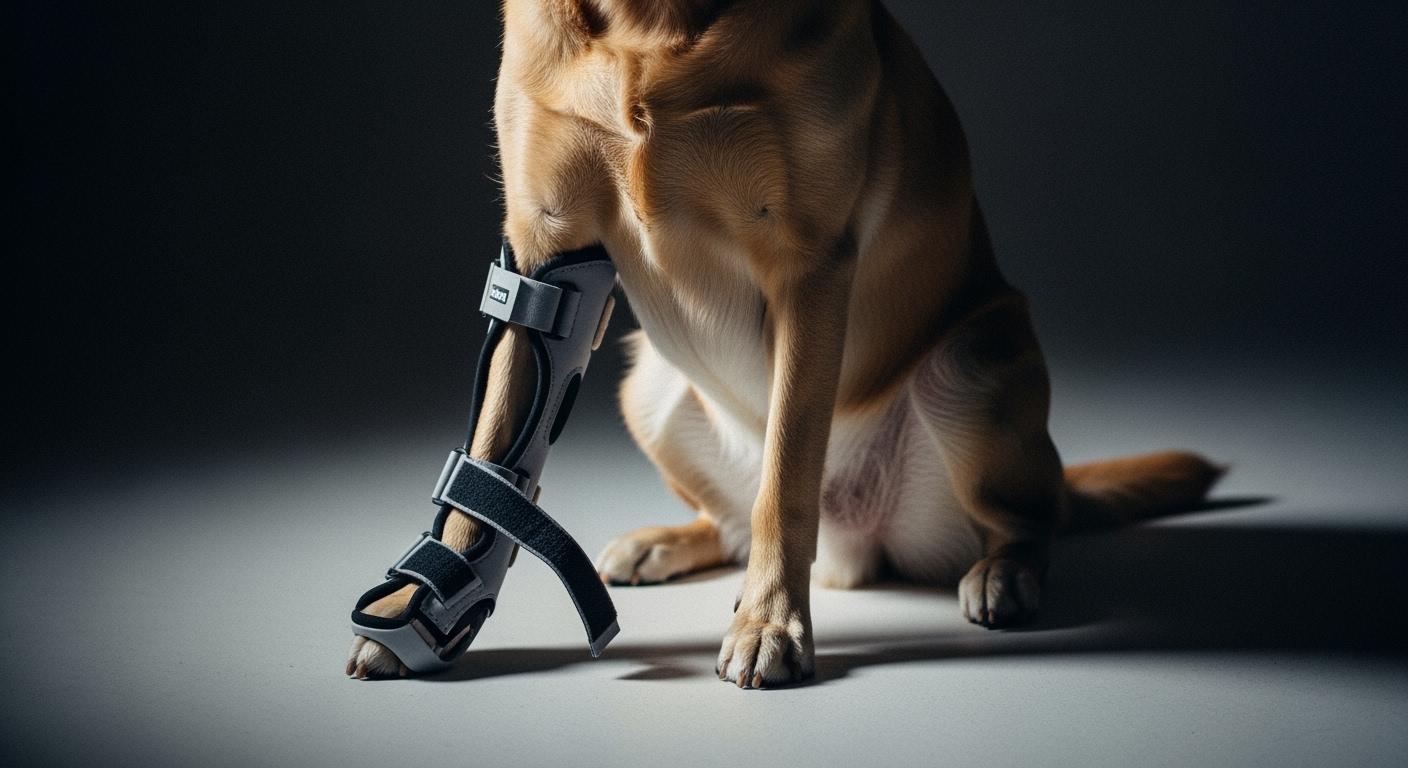
狗狗十字韧带支具与膝盖的每一次移动都紧密贴合。外壳包裹着关节,绑带将其牢牢固定,铰链则能适应膝盖的自然弯曲。然而,一旦支具滑落,这一切都将毫无意义。
绑带移位、铰链旋转和边缘受压并非舒适度问题,而是接触面失效。每一种情况都会使支撑力远离膝盖,使支具变成绑在腿上的死重物。而且,狗狗戴着支具跛行得比不戴时更严重。
接下来将详细介绍支撑失效的原因、哪些设计细节可以防止或导致每种失效,以及如何判断支架是否仍在发挥作用。
狗狗十字韧带支具首先失去膝盖支撑的位置
绑带移位导致支撑力偏离膝盖
膝关节支具通过保持铰链与关节轴线对齐来支撑膝盖。这种对齐至关重要,它构成了整个支撑机制。当绑带沿腿部下滑时,铰链也会随之移动。此时,膝盖弯曲的位置比原本的铰链低了半英寸。关节承受的角度完全超出了支具的设计初衷。
这并非臆测,而是力路径问题。大腿固定点是主要的防移位面。当固定点较窄时,接触面积也较小。在运动的犬只的拉力作用下,较小的接触面积会将剪切力集中在短边上。这个短边会勾住毛发,导致支架滚动,整个支架会缓慢下移。膝关节支架哪怕只移动半英寸,就已经造成了关节错位。铰链会压迫原本无法承受侧向力的组织。犬只要么缩短步幅,要么拒绝负重。这种跛行并非伤情加重,而是支架给膝关节引入了原本无法承受的力。
可观察的检查方法:在步行十分钟前,将铰链位置与骨性标志物进行比对并标记。步行结束后再次检查。如果铰链位置移动超过半英寸,则表示锚固面未牢固固定。调整绑带松紧度无法解决接触面积问题。锚固需要的是接触面积,而不是更大的张力。
| 实际应用问题 | 为什么支持会失败 | 更清晰的支架细节 |
|---|---|---|
| 肩带下滑 | 支撑物从膝盖处移开 | 更宽的大腿锚点 |
| 支架向外旋转 | 铰链偏离膝关节中心 | 可调节肩带路径 |
| 铰链未对准膝盖中心 | 稳定性下降,关节未受保护 | 低轮廓铰链与膝盖对齐 |
| 肩带边缘勒进皮肤 | 压力增大,皮肤痕迹加深 | 防滑内衬,透气衬垫 |
| 衬垫会吸收水分 | 皮肤摩擦,痕迹加重 | 吸湿排汗衬垫 |
| 狗狗戴上支架后跛行更严重了 | 支持丧失,痛苦加剧 | 尺寸正确,定期进行合身度检查 |
铰链旋转导致支架错位
旋转故障与漂移故障不同。漂移是向下的,而旋转是围绕腿部的。这种情况最常发生在犬只坐下、站立或转身时。支具发生扭转,铰链轴偏离膝关节轴,支撑消失,外壳就变成了一个套筒。
这个装置的结构很简单。一条平行于腿部的绑带形成一个圆柱体。圆柱体在扭矩作用下可以自由旋转。当狗坐着时,由于大腿相对于小腿旋转,就会产生这种扭矩。如果绑带没有对角线分量,膝关节上方也没有防旋转固定点,支架就会旋转。铰链也会随之转动。膝盖就失去了保护。
一款能够在坐姿和转身时保持正确位置的矫形膝关节支具,需要采用能够打破圆柱体运动的绑带路径。斜向绑带或在大腿上方设置辅助固定点,可以将旋转力转化为分散的张力,而不是让支具外壳自由旋转。这并非增加绑带数量的问题,而是绑带几何形状的问题。
可观察的检查方法:在狗狗坐下和站起三次后,从侧面观察关节。它应该仍然与您标记的骨性标志点对齐。如果它明显旋转,则说明绑带路径无法抵抗扭矩。无论怎么拧紧都无法解决几何形状问题。
肩带边缘压力是接触面积问题,而不是舒适度问题。
狗狗感觉到的是一种环状的压力。背带应该起到定位的作用,而绑带应该起到固定的作用。当绑带试图同时承担这两项功能时,它们就两方面都失败了。坚硬的背带边缘、在绑带拉力下容易塌陷的薄垫层,以及位于骨骼突出部位的缝线,都会造成集中的压力点。
在有效范围内,无论你收紧还是放松肩带,肩带施加的力都不会改变。改变的是力的分布面积。两平方英寸的衬垫和半平方英寸的边缘,决定了肩带承受的压力是可承受的还是会造成组织损伤。这是一个接触面积的问题。仅仅称之为舒适度问题忽略了其中的物理原理。
检查方法:佩戴20分钟后取下支具。用手指沿着每条绑带边缘接触的皮肤轻轻按压。如果取下支具20分钟后仍有压痕可见,则说明绑带的接触面积过小,无法承受其张力。如果压痕过深超过20分钟,则表明压力已超过皮肤表面的毛细血管再充盈时间。此时,支具需要的是更宽的衬垫分布,而不是更小的张力。具有足够衬垫面积的CCL膝关节支具可以将绑带的压力分散到足够宽的接触区域,从而确保压力低于组织损伤阈值。
狗狗感觉到的不适感源于一圈压力。狗窝的外壳应该起到定位作用,而绑带应该起到固定作用。如果绑带同时承担这两项功能,那么它们就两方面都失效了。坚硬的外壳边缘、在绑带拉力下容易塌陷的薄垫层,以及位于骨骼突出部位的缝线,都会造成集中的压力。这不是舒适度问题,而是接触面积的问题。
Design Features That Determine Whether a Knee Brace Stays Put
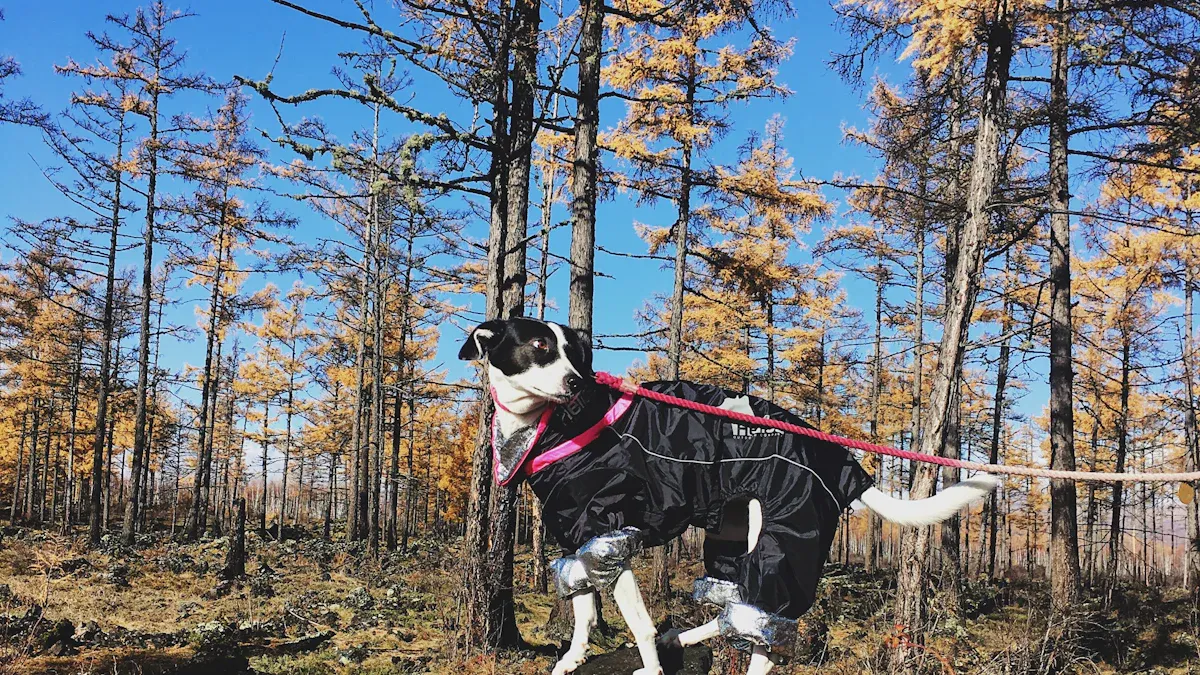
Wider Thigh Anchors Spread the Load
A narrow thigh anchor concentrates the entire anti-drift load onto a band of fabric maybe an inch and a half wide. Every step pulls on that band. Fur compresses under it. The band rolls. The brace drops.
Widen the anchor to three inches and the math changes. The same force distributes over twice the surface area. Fur compression is shallower because pressure is lower at any single point. The anchor surface stays planted. The brace does not drift. This is not about making the brace bigger. It is about giving the primary anti-drift surface enough area to do its job without exceeding fur and skin grip limits. A cruciate ligament knee brace with a wider anchor platform stays centered through walks, sits, and turns because the load never concentrates enough to break friction at any single point.
Anti-Slip Liners Reduce Over-Tightening
Anti-slip liner material creates a high-friction interface between brace and leg without relying on strap tension alone. The liner grips fur and skin at low contact pressure. This means the straps secure the brace without having to also generate all the friction that prevents drift. The liner handles friction. The straps handle positioning. Each does one job.
Moisture-wicking properties in the liner matter just as much as grip. A liner that traps sweat turns the contact surface slick within twenty to thirty minutes of activity. Grip vanishes. The brace slides. A stifle brace that uses a moisture-wicking anti-slip liner maintains friction through longer wear sessions because the contact surface stays dry.
Adjustable strap paths add a second layer. Dogs change shape across weeks of recovery. Swelling recedes. Muscle atrophies or rebuilds. A fixed strap path that fit at week one gaps at week four. Adjustable paths let you move the strap position to match the leg as it changes, keeping the hinge centered without changing the brace itself.
Low-Profile Hinges Reduce Rotation and Rubbing
A hinge that protrudes far from the shell catches on surfaces. The dog brushes a doorway. The hinge snags. The brace twists. A low-profile hinge sits close to the shell and moves within the brace envelope rather than outside it. Less lever arm for external forces to grab. Less rotation.
The check after a walk through doorways and around furniture corners: is the hinge still flush against the shell and centered on the knee? If it has twisted outward, the profile created a catch point. A cruciate brace with a low-profile hinge design stays in plane because there is less surface for the environment to grab and torque.
Moisture and fur compression interact with every design feature above. Wet fur compresses deeper. Deep compression reduces the effective diameter of the leg. The brace that fit snugly on dry fur gaps on wet fur. The check: after activity in wet grass or rain, slide a finger under the top strap edge. If the gap is larger than it was when dry, moisture compression has loosened the fit. Dry the leg and the liner before reapplying. This is not a brace failure. It is a physics reality. Wet fur is thinner than dry fur.
| Status | What you see | What to do |
|---|---|---|
| Green | Brace stays centered, skin normal, gait not worse | Keep using, routine checks |
| Yellow | Slight drift, mild marks, short-term rubbing | Recheck fit, adjust straps |
| Red | Deep marks, swelling, cold paw, worsening limp, repeated slipping, pain | Stop use, veterinary consult |
When This Brace Is the Right Support — And When It Is Not
When Small Adjustments Are Enough
Minor drift that stays under half an inch across a full walk. Skin marks that fade within ten to fifteen minutes of removal. Strap position that shifts only after the dog runs or plays hard. These are adjustment signals, not stop signals.
A strap path that worked during the first week of use may gap as swelling goes down. Moving a strap half an inch up or down the shell re-centers the hinge and restores contact. These small corrections are normal. The leg changes. The brace should be adjustable enough to follow.
When Drift Signals Structural Mismatch
Drift past half an inch on every walk. Rotation that happens every time the dog sits. The hinge never stays centered regardless of strap adjustment. These are not fit problems. They are brace-to-leg mismatches. The brace geometry does not match this particular leg shape. Adjusting strap tension cannot compensate for an anchor that is too narrow or a strap path that cannot create anti-rotation geometry for this dog’s leg conformation.
The brace is not defective. It is mismatched. Continuing to use it under these conditions subjects the knee to misaligned loading that defeats the purpose of wearing a brace at all.
Disclaimer: The fit checks described here assume a short-coated dog where strap edges and skin marks are visible without parting fur. Double-coated breeds compress fur differently under strap tension, and rub marks may form beneath the coat where they are not visually obvious. For these dogs, hand-check the skin surface under each strap edge rather than relying on visual inspection alone. If the dog’s leg conformation falls outside the breed norms this brace design was patterned for — particularly dogs with angular limb deformities or very deep chests that change thigh-to-stifle geometry — the drift and rotation checks described here may not catch every pressure point. In these cases, a veterinary assessment of brace-to-leg compatibility is the safer path.
When Skin Marks Become a Stop Signal
矫正器取下二十分钟后仍可见的深压痕;按压后不会褪色的红肿;绑带边缘处的任何皮肤破损、肿胀或发热;一只爪子比另一只爪子感觉更凉。这些都不是调整提示,而是停止佩戴的信号。
佩戴支具期间无法恢复的皮肤会逐渐退化。支具持续压迫退化的皮肤,会导致伤口愈合时间比最初韧带损伤稳定所需的时间更长。支具必须停止使用,皮肤必须恢复。只有这样,才能考虑采用不同的支具适配方案或不同的支具几何形状。
何时需要进行兽医重新评估
持续跛行,佩戴支具后比不佩戴时更严重;尽管支具佩戴良好,但功能仍连续多日下降;狗狗拒绝用佩戴支具的腿负重;支具曾经改善了步态,但现在却没有明显改善。这些情况可能反映的是潜在损伤的变化,而非支具本身的问题。兽医需要将支具的佩戴情况与关节状况区分开来。任何家庭自行进行的佩戴检查都无法区分这一点。
常问问题
多久应该检查一次支具的贴合度?
至少每天检查两次。第一次在首次佩戴前,第二次在佩戴时间最长的活动后。注意观察是否出现移位、旋转和皮肤痕迹。只需30秒的检查即可发现大多数问题,避免其恶化。
如果调整后支具仍然不断滑落怎么办?
如果多次调整后偏移量持续超过半英寸,则锚点几何形状可能与狗腿不匹配。仅调整绑带张力无法解决接触面积不匹配的问题。请停止使用,并寻求重新适配或更换其他类型的支撑结构。
哪些迹象表明支具太紧?
如果移除矫形器二十分钟后皮肤上仍留有较深的压痕;发红现象持续不消退;绑带位置出现肿胀或发热;一只爪子明显比另一只爪子凉,以上任何一种情况都表明矫形器对组织施加的压力超过了安全限度。请放松或停止使用。
膝关节支具可以在没有兽医指导的情况下使用吗?
膝关节支具会对关节施加力。这种力的作用是稳定还是不稳定取决于支具的贴合度、铰链对齐情况以及韧带损伤的具体情况。兽医评估可以确定支具是否适合特定的损伤,并提供正确尺寸的测量基准。如果没有这个基准就使用支具,可能会导致受力错位。
