
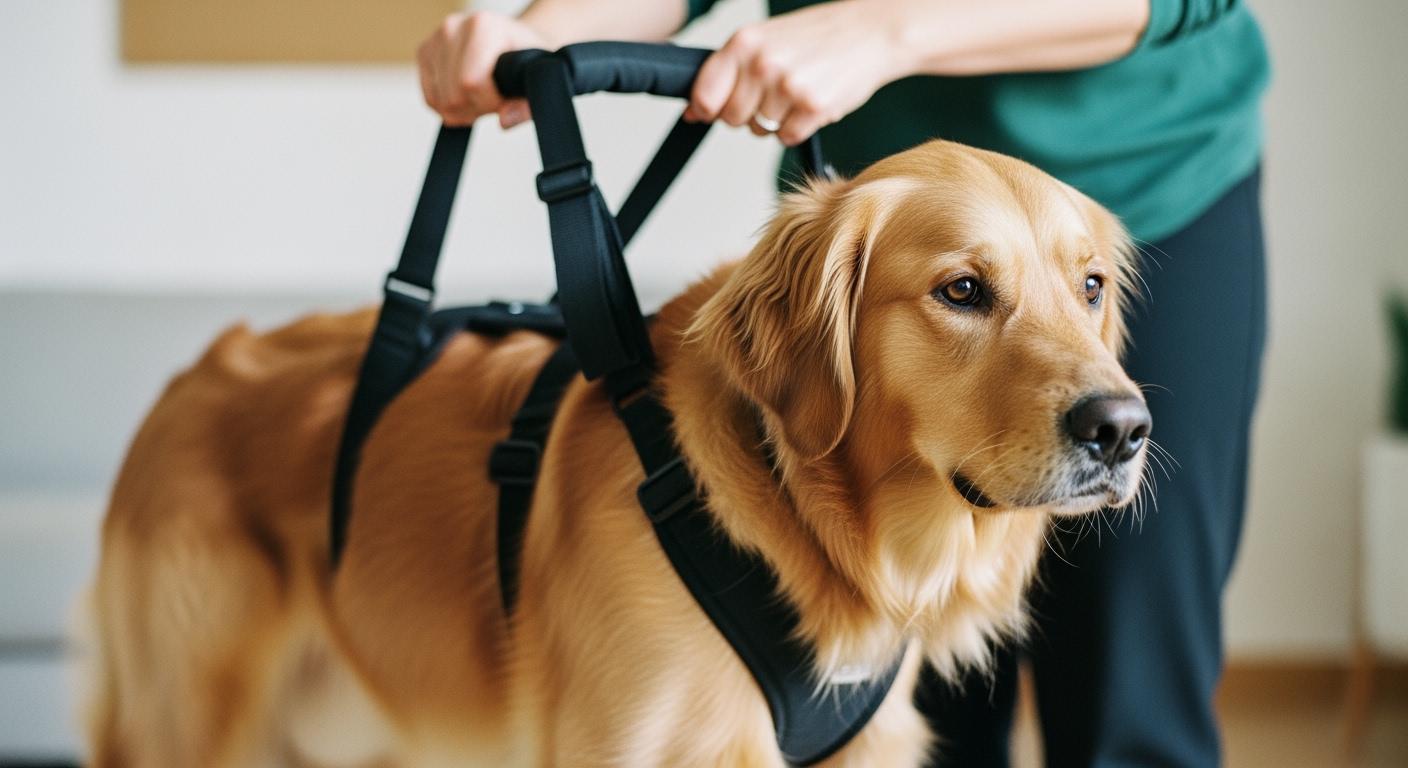
One strap tightens. The other stays slack. The dog tilts.
That is not a sizing error. When a lift harness pulls unevenly, the problem sits deeper — in strap routing, panel width, handle placement, and how the harness structure distributes load across the dog’s body. A shoulder strap that grabs before the opposite side does means the lift force is traveling through a single narrow path instead of spreading across the chest, belly, and rear zones together. The dog’s weight shifts off-axis, and you are fighting the tilt instead of assisting the dog.
The failure is mechanical, not mysterious. Each time you lift, the harness structure makes a choice: route force symmetrically through paired load paths, or dump it into whichever strap has the shorter pull distance. Understanding where that choice breaks down is what turns a frustrating lift into a stable one.
Why One Shoulder Strap Tightens Before the Other
Lift a dog with a harness that uses a single long shoulder strap, and the mechanism is predictable. The handle applies upward force at one point. That force looks for the shortest path to resistance — the dog’s body weight — and travels through whichever strap segment has less slack or a more direct line of pull. One side engages first. The dog feels asymmetrical pressure and compensates by leaning, bracing, or twisting.
Narrow straps make this worse. A thin strap concentrates tension along a line no wider than your finger. Under load, that line has no surface area to resist rotation. The strap edge digs in, the panel shifts, and the harness body rotates around the tension line like a hammock twisting under an off-center occupant. The dog is now being lifted partially sideways — not because you pulled wrong, but because the structure gave the load only one path to travel.
Wider padded panels change the equation. A panel that spans several inches across the chest or belly creates a load-spreading surface. Instead of a single tension line, force distributes across the panel face. The panel has enough contact area to resist torque — the rotational force that tries to roll the harness — so the lift stays flatter. Paired lift points add a second load path, splitting the force so neither side can pull ahead of the other.
You can verify this before the dog leaves the ground. Place the harness and pull up gently with just enough force to see which strap engages. If the left strap pulls skin before the right one does, the load path is asymmetric. Stop. Adjust. The check takes five seconds. Skipping it means the dog learns that the harness predicts discomfort.
When the Rear Panel Cannot Carry Its Share
Some dogs stand on strong front legs and need only a rear lift — a rear support harness that cradles the hindquarters while the dog bears weight through the shoulders. That works. But the moment rear leg weakness is paired with even mild front-end instability — a dog that dips at the shoulder, hesitates on stairs, or shifts weight forward — a rear-only panel becomes a liability.
What happens structurally: the rear panel carries the hindquarters, but the front of the dog is unsupported. As the dog fatigues, weight drifts forward. The front legs take more load. The shoulder straps — now handling weight they were not designed to carry alone — tighten asymmetrically. The rear panel, no longer centered under the load, sags or rolls. What started as a rear-lift task has turned into a front-heavy drag, and the harness was not built for that shift.
This is where the distinction between a rear-support lift harness and a full-body harness becomes structural, not semantic. A full-body design distributes lift force across chest, belly, and rear zones through separate panels stitched into a single load-bearing chassis. If one zone weakens — the rear legs give out on step four — the front and belly panels already have tension and can absorb the shift without the harness rotating. The chassis does not rely on one zone to stay centered.
To check whether your harness is handling the rear-to-front shift: walk the dog ten slow assisted steps, then stop and look at the belly panel position relative to where you placed it. A panel that has drifted forward by more than half an inch signals that the rear support zone lost tension mid-walk and the front straps picked up the difference. The harness moved. The load was not distributed. That shift, repeated daily, is what turns a support tool into a source of compensatory strain.
Disclaimer: This check assumes a short-coated dog where panel position is visible during use. Double-coated or very thick-furred breeds may show subtler shifts — run your hand along the panel edges after ten steps instead of relying on visual inspection alone. If the dog has angular limb deformities or a very deep chest that falls outside the breed norms this harness was patterned for, the fit checks described here may not catch every pressure point.
Where the Harness Fit Reaches Its Limits
No single lift harness works for every dog or every situation. The design choices that make a harness stable on a broad-chested Labrador — wide panels, fixed strap geometry — are the same choices that cause gaping and panel drift on a narrow-bodied Greyhound. The structure does not change. The dog does.
A rear-support lift harness makes sense when the front legs are genuinely stable and the dog’s primary need is hind-end assistance during short, controlled transfers. If the dog hesitates on stairs, dips at the shoulder, or needs whole-body balance for car entry, a full-body lift harness with front and rear handles provides better structural coverage. The difference is not about which is “better” — it is about which load paths the harness is built to handle.
The daily-use fit of a lift harness also has boundaries. A harness worn longer than six to eight hours accumulates moisture, heat, and friction in the panel contact zones. Materials that breathe well during a fifteen-minute walk can trap enough heat over several hours to soften the skin underneath. Remove the harness during rest periods. Check for indentations that persist more than five minutes after removal — those signal sustained pressure above what the tissue can tolerate.
When a dog freezes, yelps, or suddenly refuses a lift that was previously tolerated, the harness is communicating a structural limit. The dog cannot explain where the pressure point is, but the refusal itself is data. Remove the harness. Recheck panel flatness, strap tension symmetry, and the position of every load-bearing edge. If the problem repeats after adjustment, the harness type itself may be the wrong match for that dog’s weight distribution or movement pattern — and continuing with it shifts risk onto joints that were already compromised.
Design Details That Change Daily Use
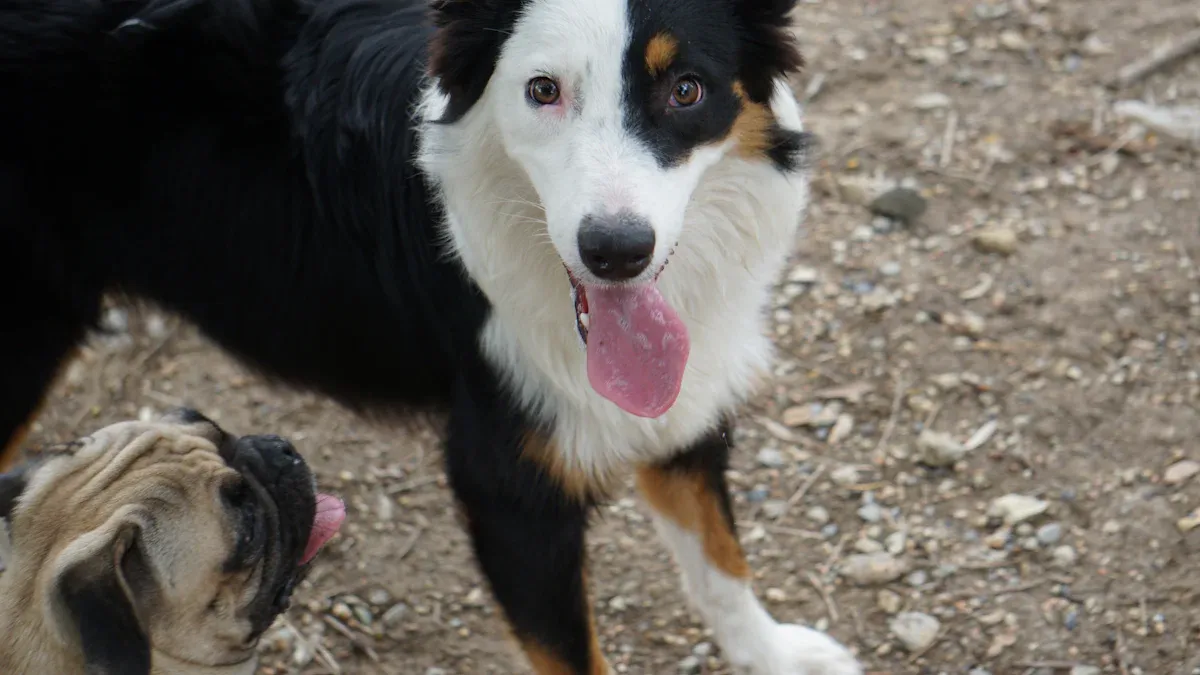
Two harnesses can look similar on a product page and behave nothing alike during a lift. The differences hide in details that only show up under load.
Anti-slip lining is the most underrated variable. Without it, every step the dog takes applies a micro-shear force between the inner panel surface and the coat. Over ten steps, those micro-slides accumulate into a panel that has walked itself half an inch off-position. Half an inch is enough to change which strap segment carries more tension. Neoprene linings add grip through surface friction; microfleece does it through soft mechanical interlock with the coat. Either approach anchors the panel so the load path stays where you set it.
Adjustable left-right strap tension is the second detail that separates harnesses built for real use from those built to look right in a photo. Dogs are not symmetrical. One side of the chest may be slightly deeper, one shoulder slightly more muscular, one leg favored from months of compensation. Fixed strap lengths force the harness to conform to the dog — which means uneven tension from the first lift. Independent left-right adjustment lets you match the harness to the dog’s actual shape, so both load paths engage at the same moment.
| Performance Difference | Why It Matters | Main Limitation |
|---|---|---|
| Narrow strap vs. wide padded panel | Concentrated tension rolls the harness; wide panels resist rotation | Wider panels trap more heat in warm weather |
| Single lift point vs. paired handles | A single point creates a dominant load path; paired handles split force symmetrically | Paired handles require the user to coordinate both hands evenly |
| Smooth lining vs. anti-slip surface | Smooth linings allow micro-shift with every step; anti-slip anchors panel position | Anti-slip materials may collect loose fur and require more frequent cleaning |
| Fixed straps vs. adjustable left-right tension | Fixed straps cannot match body asymmetry; adjustable straps let each side engage at equal tension | More adjustment points add setup time before each use |
| Rear-only panel vs. full-body chassis | Rear-only works for stable front legs; full-body handles front-to-rear load shift during fatigue | Full-body designs cover more surface area and may be overbuilt for short, simple transfers |
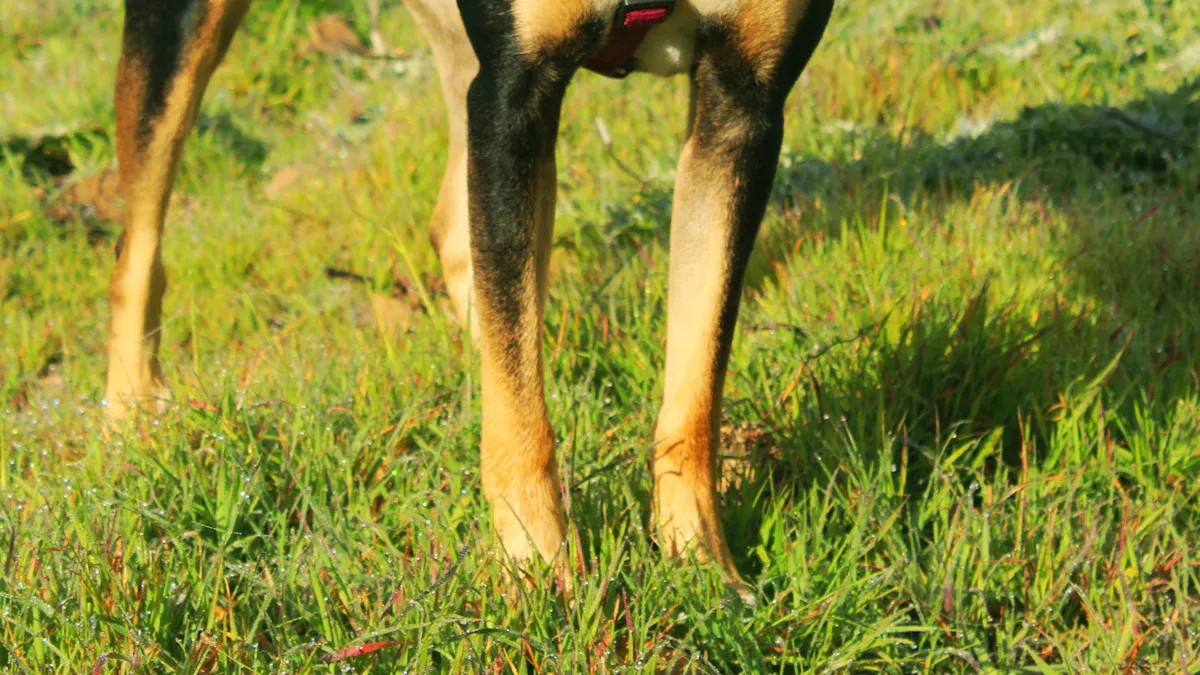
Shoulder clearance is the third detail that fails quietly. When a chest strap crosses too close to the shoulder joint — particularly when it sits forward of the last sternebra — it restricts forelimb extension. The dog shortens its stride to avoid the pressure. That shortened stride may not be obvious on step one or step five, but after twenty steps the compensation pattern is set. The dog moves differently in the harness than without it. The fix is not padding — it is strap routing that leaves the scapula free to rotate through a full range of motion.
Check this by watching the dog take ten steps without the harness, then ten steps with it. A stride that visibly shortens in the harness — the paw lands closer to the body than it did without — means the shoulder strap placement is interfering with forelimb reach. That is not a fit preference. That is a structural conflict between strap routing and joint kinematics.
| What You See | Likely Structural Cause | Pass Signal | Fail Signal |
|---|---|---|---|
| One strap tightens first | Single load path, off-center handle, or asymmetric strap length | Both straps engage simultaneously under gentle upward pull | One side pulls skin or fabric before the other engages |
| Dog tilts or twists mid-lift | Lift line not centered, rear panel collapsed | Dog rises level, spine stays aligned | Dog leans, braces, or sidesteps during lift |
| Rear end sags while front lifts | Rear panel too narrow or rear zone unsupported | Hindquarters stay at the same height as chest during lift | Rear dips visibly lower than the front within the first few inches of lift |
| Belly panel rolls or drifts | Narrow panel or slippery inner surface | Panel stays within half an inch of original position after ten steps | Panel has rotated or migrated beyond half an inch |
| Front legs brace or stride shortens | Strap crosses shoulder joint, restricting forelimb extension | Stride length with harness matches stride length without | Paw lands noticeably closer to body in harness vs. without |
| Dog refuses the next lift | Pain, pressure point, or learned discomfort association | Dog accepts lift without freezing or resisting | Dog freezes, yelps, or actively avoids the harness |
A lift harness matched to hind-leg weakness works within a clear performance envelope. When the dog’s condition shifts — front-end strength fades, balance worsens, or transfers involve more stairs and angled surfaces — the harness structure that worked last month may no longer have enough load paths to keep the lift stable. Recognizing that shift before the dog signals it through refusal or strain is the difference between using a harness well and using it past its design boundaries.
FAQ
Why does one shoulder strap tighten before the other?
A single long strap or off-center handle creates an asymmetric load path. The force travels through whichever strap segment has the shortest pull distance, leaving the opposite side slack. Paired lift points and independent left-right strap adjustment solve this by splitting force across two paths that can be tensioned separately.
How can I tell if the harness panels are shifting during use?
Mark the panel edge position against a reference point on the dog’s body — a rib, a hip point, a visible coat marking — before starting a ten-step walk. After ten steps, check whether the panel has drifted more than half an inch from that reference. Any drift beyond that threshold means the lining or panel width is not holding position under load.
When is a rear-only lift harness the wrong choice?
A rear-only harness becomes the wrong tool when the dog’s front legs show any sign of instability — dipping at the shoulder, hesitating on stairs, or shifting weight forward during transfers. At that point the load shifts onto shoulder straps not designed to carry it alone, and a full-body harness with front and rear handles provides the load-spreading structure the situation requires.
