
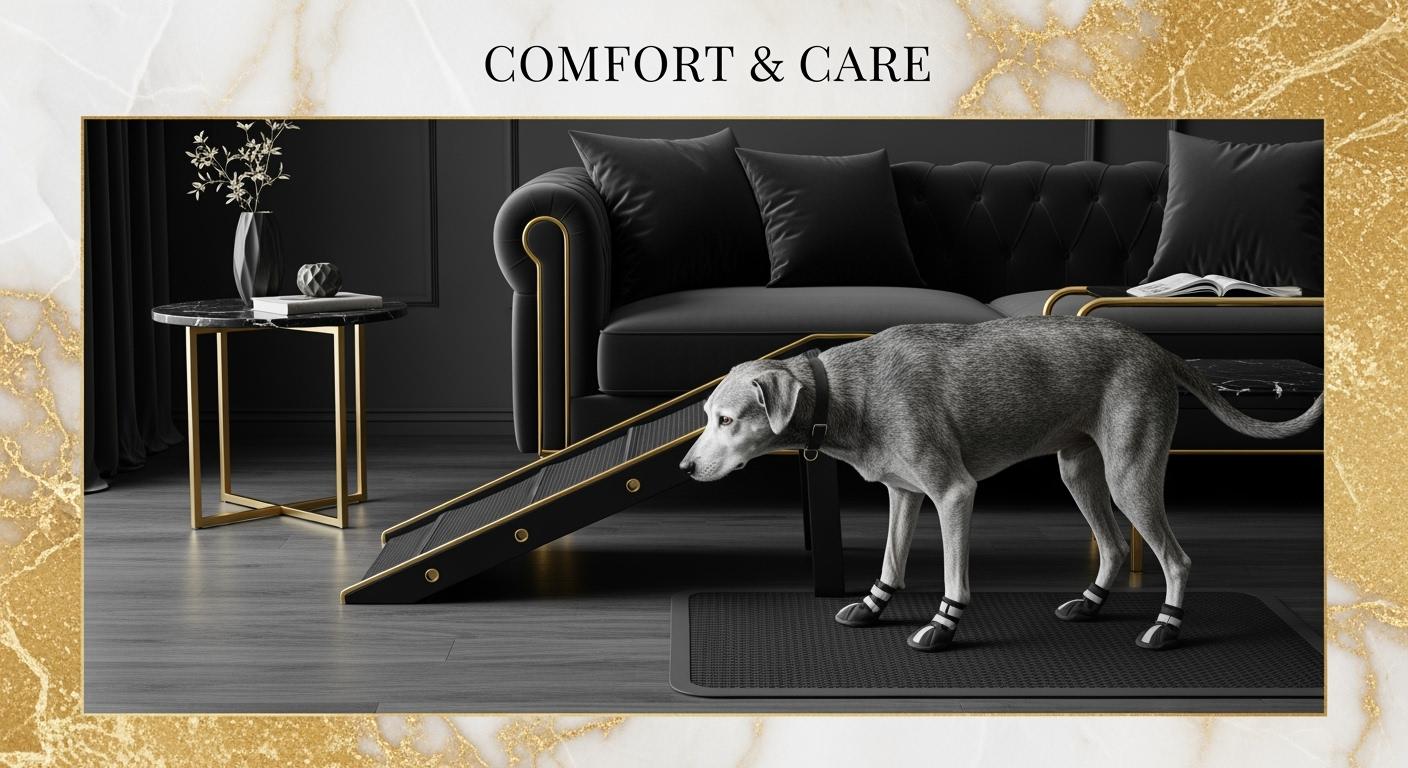
Your dog should have a safe and cozy home to support their dog arthritis mobility at home. Small changes can significantly help your dog feel better. Non-slip mats, ramps, and soft beds are essential for dogs with arthritis, making it easier for them to move around. These modifications lower the chance of injury and facilitate walking for your dog.
Around 20–37% of dogs experience arthritis and joint pain.
Non-slip floors, orthopedic beds, and ramps contribute to enhancing dog arthritis mobility at home, ensuring your pet feels safe and comfortable.
Always follow your veterinarian’s advice first. Use the Quick Reference Card and checklists to assist your dog now.
Key Takeaways
Put non-slip mats and rugs where people walk a lot. This stops your dog from slipping. It helps your dog move better.
Add ramps and lift harnesses for your dog. These help your dog get on furniture. They also help your dog go up stairs safely. This lowers stress on your dog’s joints.
Give your dog an orthopedic bed. This bed supports your dog’s joints. It gives your dog a soft place to rest and heal.
Dog arthritis mobility at home: understanding daily challenges
Stiffness, slipping, and reluctance to move
Dogs with OA can have trouble moving. They may feel stiff or slip on floors. Some older dogs do not like walking on smooth floors. They might wait before standing up. Rugs or mats on slippery floors help your dog walk better. These also stop falls. Soft beds near favorite places help sore joints. This makes it easier for your dog to rest.
Support and stability vs. longer walks
Short walks are better for dogs with OA. Do not take your dog on long walks. Use a harness to guide your dog on safe, non-slip paths. A lift harness or sling helps on stairs or bumpy ground. Your older dog needs support and gentle exercise. Hard exercise is not good for them.
When to consult your veterinarian
Watch your dog for any changes in how they move. If your dog seems to hurt more, will not walk, or starts limping, call your veterinarian. Your veterinarian’s advice is most important. Dogs with OA might need new routines or gear to stay safe.
Quick Reference Card for daily mobility
Quick Reference Card
Prevalence: 20–37% of dogs show signs of OA
Ideal body condition score: 4–5/9
Step 1: Place non-slip mats in high-traffic areas
Step 2: Use ramps or harnesses for stairs and furniture access
Step 3: Offer supportive bedding and elevate food/water bowls
Step 4: Track mobility daily (slips, hesitation, time to stand)
Step 5: Schedule potty breaks every 2–3 hours while awake
Gear Element | Purpose |
|---|---|
Traction socks/booties | Prevent slipping |
Ramps/steps | Reduce joint strain |
Lift harness/sling | Support safe movement |
Supportive bedding | Relieve joint pressure |
Home environment modifications: room-by-room checklist
Making your home better for OA starts with simple changes in each room. Use this checklist to help your dog stay safe and comfortable every day. Always follow your veterinarian’s plan first.
Entryway: mats and easy access
Step 1: Put non-slick mats at the entryway. Step 2: Move shoes and bags away from where your dog walks. Step 3: Put traction socks or booties on your dog when they go in or out, especially if it is wet outside.
Tip: Entryways often have tile or wood floors. Non-slip mats stop your dog from slipping when coming inside.
Living room: rug runners and clear paths
Step 1: Place yoga mats, carpet pieces, or rubber-backed rug runners in busy spots. Step 2: Move furniture to make safe paths for your dog. Step 3: Pick up small things or cords from the floor.
Yoga mats and carpet pieces stop slips.
Non-slip rugs or mats on tile and wood lower falls.
Rubber-backed runners in halls and main paths help your dog walk safely.
Older dogs walk better on rough, non-slip floors. These changes lower fall risk and help with dog arthritis mobility at home.
Bedroom: orthopedic bed and nighttime safety
Step 1: Put an orthopedic bed in a quiet spot near your dog’s favorite place. Step 2: Use a night light so your dog can see at night. Step 3: Raise water and food bowls for easy reach.
Feature | Benefit |
|---|---|
Support for joint health | Spreads weight evenly and takes pressure off sore joints. |
Temperature regulation | Lifts your dog off cold floors and keeps joints warm. |
Ease of cleaning | Removable covers make washing easy and keep the bed clean. |
Durability | Stays supportive longer than regular beds. |
Orthopedic beds give foam support and lower joint pressure.
These beds help stop pressure sores and calluses.
A soft bed helps your dog sleep and heal.
Stairs: ramps and slip prevention
Step 1: Add ramps or steps with non-slick floors for stairs. Step 2: Stick non-slip tape or carpet treads on each step. Step 3: Use a lift harness or sling to help your dog go up and down.
Non-slip tape and carpet treads help your dog grip the stairs.
Rugs or runners add more traction.
Ramps with rough surfaces lower joint strain and make stairs safer.
Slip-proof floors help your dog feel safe when walking. Always watch your dog on stairs if they have arthritis.
Yard: outdoor traction and potty breaks
Step 1: Put mats or outdoor runners on patios and decks. Step 2: Clear the way to the potty spot and remove things in the path. Step 3: Take your dog out for potty breaks every 2–3 hours while they are awake.
Note: Traction socks or booties protect paws outside. Ramps help your dog get to the yard without jumping.
Outdoor changes keep your dog safe during potty time. Short walks with a harness on non-slick floors help your dog move safely.
Printable Checklist for Each Room:
Entryway: Non-slick mats, clear path, traction socks/booties
Living room: Rug runners, safe paths, moved furniture
Bedroom: Orthopedic bed, night light, raised bowls
Stairs: Ramps/steps, non-slip tape, lift harness/sling
Yard: Outdoor mats, clear potty path, traction gear
These home changes make safe paths and help your dog feel good. Check each area often for dangers. Change things as needed to keep your home OA friendly for your dog. Always follow your veterinarian’s plan first.
Home modifications for better traction and footing

Slip-resistant mats and rug runners
You can make it safer for your dog to walk by using slip-resistant mats and rug runners. Pick mats that do not slide around.
Yoga mats help your dog grip the floor and feel steady.
CarpetSaver runners have foam backs and are easy to wash.
Regular carpet runners help your dog stay steady on hard floors.
ToeGrips go on your dog’s nails and help them not slip.
First, put mats where your dog walks the most. Next, use runners in halls and near places your dog likes. Your veterinarian’s advice is always most important.
Traction socks vs. protective booties
Traction socks and protective booties both help with dog arthritis mobility at home. Socks are best for inside and help your dog not slip. Booties can turn around on the paw and may not fit tight. Use socks for walking inside and booties for going outside.
Feature | Traction Socks | Protective Booties |
|---|---|---|
Traction | Better traction for indoor use | May not provide adequate traction |
Breathability | Made of breathable cotton blend | Typically less breathable |
Comfort | More comfortable, can be layered | Can spin on the paw, less snug |
Usage | Recommended for indoor use | Not ideal for indoor use |
Risk of slipping | Less risk of slipping | Higher risk due to spinning |
Nail and paw care reminders
Trim your dog’s nails to help them walk better. Check your older dog’s paws every week. Sedentary dogs need nail trims every 2–3 weeks. Active dogs need trims every 4–6 weeks. Clean your dog’s paws after walks to get rid of dirt.
Dog Type | Recommended Frequency |
|---|---|
Active dogs | every 4-6 weeks |
Sedentary dogs | every 2-3 weeks |
Puppies/Seniors | weekly monitoring with trimming as needed |
Gear-by-task table for traction
Daily Task | Risk at Home | Best Gear Option | Fit/Use Tip |
|---|---|---|---|
Walking on hard floors | Slipping, hesitation | Yoga mat, runner, ToeGrips | Place mats in main walkways |
Getting up from bed | Paw sliding | Traction socks, booties | Use socks indoors, booties outdoors |
Stairs or steps | Falls, joint strain | Carpet treads, ramp | Add treads or ramp for safe access |
Potty breaks outdoors | Wet, slick surfaces | Booties, outdoor mat | Clean paws after each outing |
These changes at home help your dog move more easily. Always make sure gear fits well and feels good. Non-slip floors and clean paws help stop falls and make arthritis easier to manage.
Ramps and steps: reducing joint strain

Ramps and steps help your dog move safely and lower the strain on sore joints. You can use these tools to make daily life easier for dogs with arthritis. Your veterinarian’s plan overrides general tips.
Couch and bed access
Many dogs want to rest on the couch or bed. Ramps or steps let your dog reach these spots without jumping. This reduces joint pain and helps with dog arthritis mobility at home.
Step 1: Place a ramp or set of steps next to the couch or bed.
Step 2: Make sure the ramp has a wide walking path and a slip-resistant surface.
Step 3: Let your dog explore the ramp flat on the floor before adding an incline.
Step 4: Use treats to guide your dog up and down the ramp.
Step 5: Slowly reduce treats as your dog gains confidence.
Car entry with ramps
Getting in and out of the car can be hard for dogs with arthritis. A ramp makes this safer and easier.
Choose a ramp that is easy to lift and set up.
Check the weight capacity to match your dog’s size.
Look for a ramp with strong traction to prevent slipping.
Make sure the ramp lines up with the car floor.
Feature | Description |
|---|---|
Wide Walking Path | At least 12 inches for safety |
Slip-Resistance Surface | Raised rubber bars for grip |
Lightweight Design | Easy to carry and fold |
Safety Anchor | Prevents ramp from sliding off the vehicle |
Choosing non-slip surfaces
Pick ramps with 100% rubber mats and raised bars. These give your dog grip and comfort. Rubber mats work well in most weather, but keep them cool in hot sun.
Training your dog to use ramps
Place the ramp where your dog walks most.
Start with a low incline.
Give your dog space to approach the ramp.
Adjust the ramp’s height to fit your dog’s needs.
Try different ramp angles for comfort.
Ramps and steps reduce joint strain, help with car rides, and make home life easier for your dog.
Lift harnesses and slings: safer movement support
Rear sling vs. full-body harness
Lift harnesses and slings help you support your dog safely. You can pick a rear sling or a full-body harness. Rear slings hold up only the back legs. These are good for dogs who cannot use their back legs for a short time or are healing from surgery. Full-body harnesses hold up your dog’s whole body. These are best for dogs who have trouble moving all over and need more help.
Type | Best For | Limits | Bathroom Access | Caregiver Strain |
|---|---|---|---|---|
Rear Sling | Temporary rear leg weakness | No front leg support | Easy | Moderate |
Full-Body Harness | Progressive mobility loss | Bulky for small dogs | May need adjustment | Low (even weight) |
Handle placement and caregiver comfort
Where the handle sits is important for you and your dog. Some harnesses, like the Help ‘Em Up, spread your dog’s weight evenly. This lets you lift your dog without hurting your back or arms. The PetSafe Solvit CareLift harness lifts from the hips and belly. This helps lower stress on your dog’s body. Pick harnesses with soft handles for comfort. Always check if the harness fits before you use it.
Tip: Even weight helps keep your dog safe and makes lifting easier for you.
Potty breaks and outings
A rear lift harness can help your dog during potty breaks. It stops slips and helps your dog stand steady. Step 1: Make sure the harness fits before you go out. Step 2: Keep potty trips short, about five minutes. Put runners on slippery floors and walk your dog in straight lines. Pick harnesses with soft and padded parts for comfort. Always follow your veterinarian’s plan first.
Lift harnesses and slings give safe support for dog arthritis mobility at home. You help your dog move better and lower the chance of falls.
Orthopedic bed and rest zones for joint relief
Supportive bedding basics
You help your dog feel better by choosing the right orthopedic bed. Clinical studies show that large dogs with arthritis sleep better and move more easily when you use orthopedic beds. These beds reduce joint pain and stiffness. You see your dog rest longer and get up with less trouble. Supportive bedding spreads your dog’s weight and relieves pressure on sore joints. Your veterinarian’s plan overrides general tips.
Feature | Description |
|---|---|
Joint Relief | Provides a supportive, pressure-relieving surface that helps reduce discomfort and pain. |
Machine Washing Capabilities | Ensures easy maintenance and hygiene, which is crucial for the health of arthritic dogs. |
Stiffer Base | Offers better support and comfort, preventing further joint issues and promoting restful sleep. |
Orthopedic Foam Base | Conforms to the dog’s body, delivering targeted support to sore joints and promoting alignment. |
Heated Beds | Soothes aching joints, enhancing comfort and sleep quality. |
Elevated Beds | Allows easy access for dogs, reducing strain on joints when getting in and out of bed. |
Warmth and easy turn-around space
Heat therapy helps your dog by reducing stiffness and pain. Heated beds or mats keep your dog warm at night. You can use hot water bottles for extra comfort. Elevated heated beds prevent heat loss from cold floors. Dog nesting beds give your dog a cozy place to curl up and turn around easily. You make sure your dog has enough space to move and stretch.
Heated dog beds provide warmth and comfort.
Hot water bottles or heated mats help maintain body heat.
Elevated heated beds prevent heat loss.
Nesting beds add extra comfort for elderly dogs.
Nighttime safety and getting up
You place the orthopedic bed in a quiet spot near your dog’s favorite area. Step 1: Use a night light so your dog sees the path at night. Step 2: Keep the bedding close to water and food bowls for easy access. You choose beds with non-slip bottoms to prevent sliding. You check that the bedding has enough room for your dog to stand up and turn around. Orthopedic beds with machine-washable covers help you keep the area clean and safe.
Tip: Supportive bedding and a safe rest zone help your dog sleep better and get up with less pain.
Daily routine and mobility tracking
Short, frequent movement sessions
You can help your dog move better with short, gentle walks. Try walking your dog for 5 to 10 minutes. Do this two or three times each day. Use a harness to guide your dog on non-slip floors. Traction socks or booties give extra grip. Watch your dog for tiredness, like heavy breathing or slowing down. If your dog seems tired, stop and let them rest. Always follow your veterinarian’s plan before trying new things.
Potty routine planning
Plan potty breaks to keep your dog comfortable and safe.
Use indoor potty pads or a dog litter box for easy use.
Put a ramp by the door to help your dog go outside.
Make sure there is enough light for nighttime potty trips.
Take your dog out every 2 to 3 hours while they are awake.
Mini-calculation example: If your dog is awake for 12 hours, plan 4 to 6 potty breaks each day.
7-day mobility log
Keep track of your dog’s walks and how they feel each day. Write down if your dog limps, shakes, or does not want to walk. Count how many walks you take and how long each one lasts. If your dog feels sore, give them a rest day. Use soft beds and harnesses to help your dog move safely.
Sample 7-Day Mobility Log:
Day 1: 2 walks, 10 min each, mild limping
Day 2: 3 walks, 8 min each, no fatigue
Day 3: 2 walks, 12 min each, panting after walk
Day 4: Rest day, gentle strolls only
Day 5: 3 walks, 10 min each, scuffing toenails
Day 6: 2 walks, 9 min each, decreased interest in treats
Day 7: 3 walks, 8 min each, sitting down mid-walk
Traffic-light table for mobility days
Check this table to see how your dog is moving each day:
Indicator | Green (Good) | Yellow (Caution) | Red (Concern) |
|---|---|---|---|
Slipping | None | Occasional | Frequent |
Willingness to stand | Eager | Hesitant | Refuses |
Stair ability | Normal | Needs help | Avoids stairs |
Comfort in harness | Relaxed | Mild resistance | Refuses |
Appetite/behavior changes | Normal | Slight change | Major change |
Tip: Use traction socks, ramps, and soft beds to help your dog move safely.
Troubleshooting common home mobility issues
Slipping when standing up
You may notice your dog slips when trying to stand. This often happens on smooth floors. Place nonslip rugs or runners in areas where your dog stands up most. Keep your dog’s nails trimmed to help with traction. Traction socks or booties can also prevent slipping. Step 1: Add a rug or mat under your dog’s favorite resting spot. Step 2: Check paw pads for dryness or hair that needs trimming.
Refusing stairs or car entry
Some dogs hesitate or refuse to use stairs or get into the car. Ramps or steps with slip-resistant surfaces make these tasks easier. Use a lift harness or sling for extra support. Block off stairs with a baby gate if your dog cannot use them safely. Step 1: Place a ramp next to stairs or the car. Step 2: Guide your dog slowly, using treats for encouragement.
Chafing or harness refusal
If your dog resists wearing a harness or shows signs of chafing, stop using the gear right away. Check for rubbing, pinching, or panic. Reassess the fit and try a different style if needed. Soft padding and proper adjustment help prevent discomfort.
When to call the vet:
Sudden worsening of mobility
Collapse or severe pain
New inability to bear weight
Your veterinarian’s plan overrides general tips.
Troubleshooting table: problems and solutions
Problem | Common Cause | Gear Fix | Vet Advice |
|---|---|---|---|
Slipping on floors | Smooth surfaces, long nails | Traction socks, rugs | Trim nails, check paws |
Refusing stairs or car entry | Pain, fear, weak joints | Ramps, lift harness | Assess for pain |
Chafing from harness | Poor fit, rough material | Adjust fit, add padding | Stop use if skin breaks |
Trouble getting up from bed | Weakness, slippery bed area | Orthopedic bed, rug | Monitor for changes |
You can make your dog feel safe and comfy with small changes at home.
Put rugs or mats on slippery floors.
Use non-slip runners and ramps to help your dog walk.
Give your dog an orthopedic bed and raised food bowls.
Trim your dog’s nails and try traction socks.
Your veterinarian’s plan is always the most important. Try one change first and see if your dog feels better.
FAQ
How often should you use traction socks or booties for your arthritic dog?
You can use traction socks indoors every day. Booties work best outside. Always check the fit. Your veterinarian’s plan overrides general tips.
What is the safest way to help your dog up the stairs?
Step 1: Use a ramp or carpeted steps. Step 2: Guide your dog with a lift harness or sling. Your veterinarian’s plan overrides general tips.
Can you leave an orthopedic bed in every room?
Yes, you can place supportive bedding in different rooms. This gives your dog easy access to rest zones. Your veterinarian’s plan overrides general tips.
