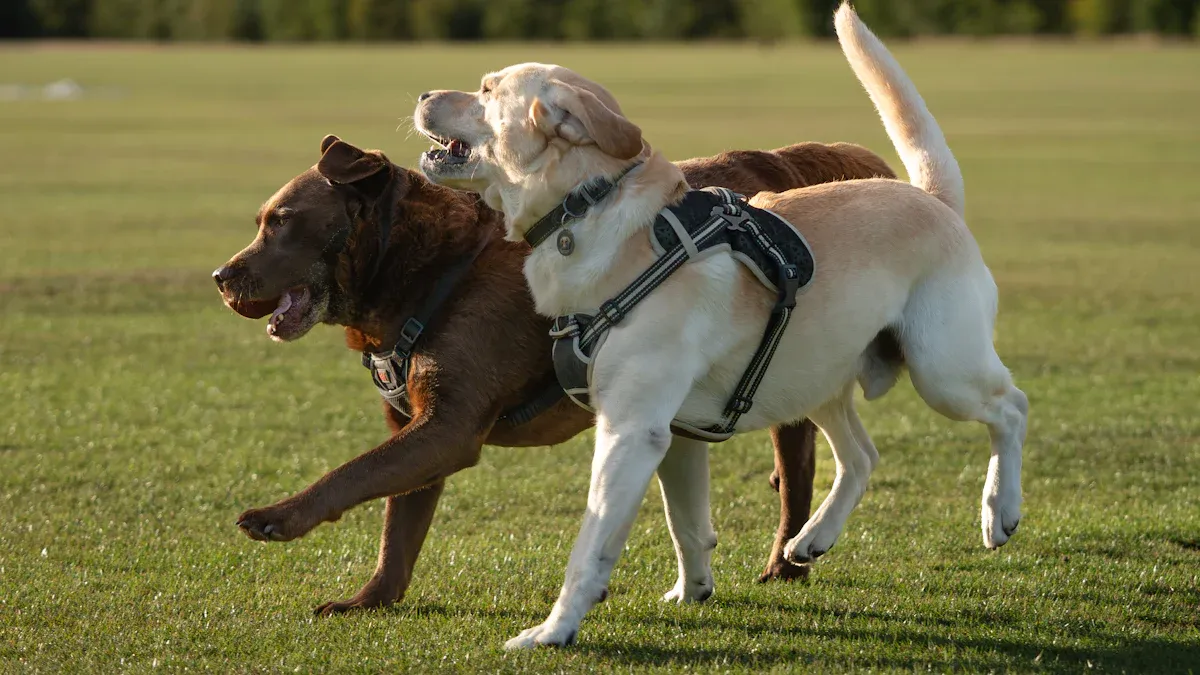
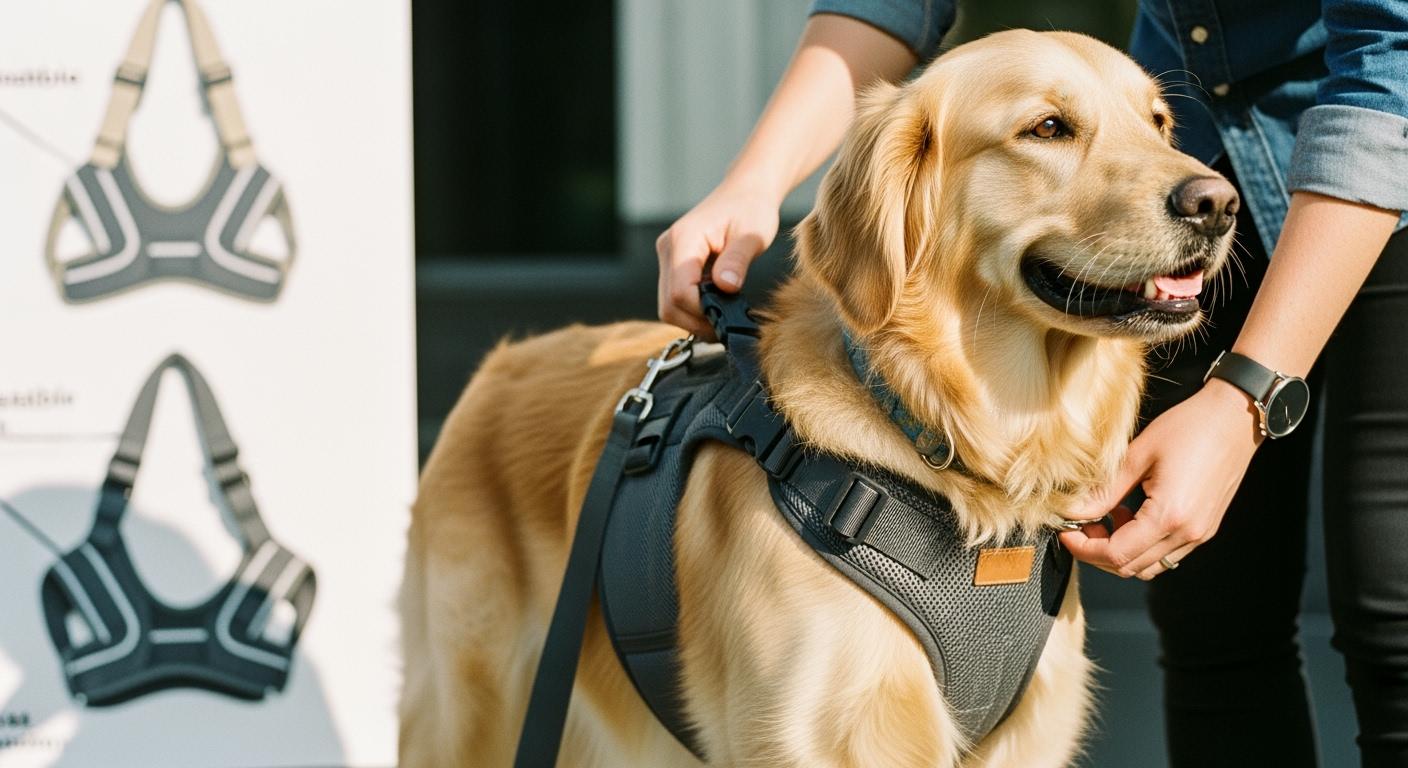
A front strap that rubs the armpit is not a minor fit issue. It is a load-path failure. When the chest strap sits too close to the axilla — the soft fold of skin behind the front leg — every step the dog takes turns that strap edge into a low-grade saw. Loose webbing amplifies the movement. Rough materials accelerate the damage. And the wrong strap path, once locked in by a poor lift angle, keeps delivering friction to the same square inch of skin, session after session.
Heat and moisture build inside the armpit fold within minutes of assisted movement. That wet, warm skin is softer and more fragile than dry skin. The combination — a migrating strap edge passing over heat-softened tissue — creates the conditions for a dog lift harness front strap to rub armpits raw before the handler notices anything wrong.
Why the Front Strap Migrates Into the Armpit During Lifting
The armpit is not just soft. It is a high-motion zone where the skin folds and unfolds with every stride. When a harness front strap drifts into that fold, the strap gets caught between two moving surfaces — the chest wall and the inner upper leg. Neither surface stays still long enough for the strap to settle into a stable position. It rides up, drops back, then rides up again. That oscillation is what turns contact into abrasion.
Load Imbalance Pushes the Strap Forward
The failure starts at the rear. When a lift harness has weak rear support — thin webbing under the belly, no structured rear panel, a handle placed too far forward — the handler’s lift force pulls the entire harness toward the front of the dog. The front strap, designed to sit behind the armpit on the chest, gets dragged forward into the axilla.
Here is the causal chain that matters: rear support collapses under load → the harness rotates forward around the dog’s torso → the front chest strap shifts from its intended position into the armpit fold → the strap edge now sits directly on soft, mobile tissue → each assisted step applies shear force to that single contact line → skin breaks down within sessions, not weeks.
Narrow chest straps make this worse. A half-inch strap concentrates the forward-pulling force onto a contact patch roughly the width of a pencil. Under a 40-pound dog’s body weight shifted during a stair assist, that narrow band can apply enough localized pressure to leave a visible red line after a single use. A full-body lift harness that balances front and rear support points keeps the load distributed so no single strap carries enough force to migrate.
Strap Edge Geometry Determines Whether Contact Becomes Damage
A soft, rolled edge and a hard, cut edge produce different outcomes even when the strap sits in the same place. A die-cut nylon strap edge has a near-90-degree corner. When that corner passes over an armpit skin fold under tension, it does not glide — it scrapes. A strap with a folded-and-stitched edge, or one wrapped in a sleeve of softer material, distributes the same tension across a curved surface.
This is not about padding thickness. It is about edge radius. Padding behind the strap does nothing for the leading edge that makes first contact with the skin fold. What changes the outcome is whether that edge is sharp enough to concentrate shear force into a line narrow enough to break the stratum corneum.
In practice: After 10 slow assisted steps, slide your finger along the inner edge of the front strap where it approaches the armpit. If the edge feels sharper than the corner of a credit card, it will abrade skin under repeated motion — regardless of how soft the padding behind it is.
Design Features That Change Whether the Armpit Gets Rubbed
Two harnesses can look similar on a product page and perform completely differently after five minutes of stair assists. The difference is rarely visible in photographs. It lives in strap path geometry, panel coverage, and where the lift handle sits relative to the dog’s center of mass.
Chest Panel Shape vs. Straight Strap Path
A straight front strap runs horizontally across the chest. On a deep-chested dog, that horizontal line naturally sits closer to the armpit fold than on a barrel-chested dog. A shaped chest panel — one that dips lower across the sternum and rises behind the front legs — creates standoff distance from the armpit without requiring the handler to loosen the straps. The panel follows the dog’s thoracic contour instead of cutting a straight line across it.
The difference is measurable. After a 10-minute assisted walk, check whether the front strap has drifted closer to the armpit than where it started. If it moved more than half an inch, the chest piece geometry is not holding position under dynamic load. A lift harness with a structured chest panel resists that forward creep because the panel distributes tension across a surface area rather than concentrating it on a strap line.
Rear Support Must Carry Half the Load — or the Front Pays
A lift harness with a strong rear panel and a second handle behind the ribcage changes the physics of the lift. Instead of all upward force routing through the front chest strap, the load splits between front and rear contact zones. The front strap stays put because it is no longer the sole anchor point for the handler’s pull.
Watch the dog during a lift. If the rear end sags while the front end rises first, the harness is not sharing the load. The front strap is acting as a fulcrum with the dog’s body weight pivoting against it. That pivoting force — body weight times the lever arm from the rear handle position to the front strap — gets delivered directly into the armpit soft tissue.
Check this yourself: lift your dog slowly using both handles if the harness has them. If the dog’s body stays level — hindquarters and chest rising together — the load is balanced. If the front rises first and the rear lags, the front strap is carrying too much. A rear lift harness with properly positioned support corrects this by anchoring the lift closer to the hind legs, reducing the forward rotational force that pushes the chest strap into the armpit.
| What the handler sees | Likely failure reason | Why it matters | Better design response |
|---|---|---|---|
| Front strap sits in the armpit after 5 steps | Strap path too close to axilla | Friction directly on soft tissue fold | Shaped chest panel that rises behind front legs |
| Red line appears within 10 minutes of use | Narrow strap concentrates shear force | Stratum corneum breakdown begins | Wider padded contact zone with rolled edge |
| Dog takes short, choppy front-leg steps | Strap restricts shoulder range of motion | Gait compensation, secondary strain | 2-3 cm armpit clearance, articulated chest panel |
| Harness slides forward on stairs or ramps | Lift angle pulls harness toward head | Strap saws into armpit fold repeatedly | Balanced front-rear lift points, anti-slip body lining |
| Rear end still drops during assisted lift | Weak or absent rear support panel | Front strap bears nearly full body weight | Structured rear panel with dedicated lift handle |
| Dog freezes, chews strap, or refuses stairs | Pain or acute skin irritation | Continued use risks open wounds | Stop use immediately, check skin, reassess harness type |
| Design issue | Why it causes armpit rubbing | Better structure |
|---|---|---|
| Narrow front strap with cut edge | Pressure focused on a line, sharp edge scrapes skin fold | Wide padded strap with rolled or sleeved edge |
| Front-only lift anchor point | Strap pulled forward into axilla during every lift | Balanced front and rear lift points |
| No rear support panel | Entire lift load routes through chest strap | Structured rear panel with leg-separator design |
| Loose or non-adjustable side webbing | Harness rotates and shifts under load | Multi-point adjustable side straps with anti-slip backing |
| Hard, unshaped strap edge | Sawing motion against moist skin fold | Contoured chest panel with soft-lined edges |
| No grip lining on body contact surfaces | Harness creeps forward during dynamic movement | Silicone-dot or neoprene grip lining across chest and belly panels |
| Level | Signs |
|---|---|
| Green | Strap clears armpit by at least 2 cm, dog walks with normal stride, no skin marks after 20 minutes of use |
| Yellow | Faint pink line fades within 30 minutes, strap drifts less than half an inch, dog occasionally shortens front steps |
| Red | Broken or weeping skin, persistent heat or swelling, dog limps, chews at strap, or refuses to move toward stairs |
Handle Position Controls the Lift Angle — and the Strap Path
A lift handle placed too far forward — near the shoulder blades — turns the harness into a fulcrum that rotates the front strap upward into the armpit. A handle positioned closer to the dog’s center of mass, or a two-handle system with a rear grip point, keeps the lift vector more vertical. The front strap sees less forward pull and stays behind the armpit fold.
The handler can feel this. When the handle is too far forward, the dog’s front end lifts before the rear — a diagonal pull. When the handle sits at the balance point, the whole dog rises evenly. That even rise is the visible signal that the front strap is not getting dragged into the axilla.
Material Choice at the Contact Surface
The lining material that touches the armpit-adjacent zone determines whether heat and moisture accumulate or dissipate. Closed-cell neoprene traps heat — within 15 minutes of active use, the skin underneath can become damp enough to soften the outer epidermal layer. That softened skin is more vulnerable to friction damage than dry skin.
Open-weave air mesh allows evaporation through the fabric. The skin stays drier, the stratum corneum retains its normal tensile strength, and the same strap movement produces less damage. For dogs with thick or double coats, the difference is amplified — the coat itself traps moisture against the skin, so a non-breathable lining creates a wet microclimate faster.
Test this directly: after 20 minutes of harness use, lift the front chest panel and press the back of your hand against the skin underneath. If the skin feels damp or warmer than surrounding areas, the lining material is not moving moisture away fast enough. A harness that slips or rubs on large breeds often fails at this exact point — the combination of greater body mass and thicker coat creates more trapped heat, and the lining that works for a 15-minute walk fails during a longer assisted session.
When a Lift Harness Is the Wrong Tool — and What the Limits Are
A lift harness solves one problem: safely transferring a dog’s body weight when the dog cannot manage stairs, car entry, or standing on its own. It does not solve structural joint instability, neurological deficits, or pain from an underlying condition. Using a lift harness on a dog that needs a rigid brace for joint alignment can make things worse — the soft harness allows the limb to move through a range that the joint should not be moving through.
Dogs with very deep chests and narrow waists — typical of sighthounds and some large working breeds — present a specific fit challenge. The chest-to-waist taper means a harness sized to the chest girth may be too loose around the belly, creating slack that lets the front strap creep forward. A harness tight enough at the belly may compress the deep chest. No single harness geometry fits every thoracic conformation.
Dogs with angular limb deformities or significantly asymmetric forelimb conformation may experience pressure at unexpected points even when the harness fits correctly by standard measurements. The strap path that clears the armpit on a straight-legged dog may ride into the fold on a dog whose elbow stance is wider or narrower than breed average.
| Where a lift harness works | Where it reaches its limit |
|---|---|
| Assisted stair climbing for hind-leg weakness | Joint instability that requires rigid bracing |
| Car entry and exit support | Neurological conditions causing unpredictable leg placement |
| Short-distance standing transfers | Full-body-weight suspension for non-weight-bearing dogs |
| Post-surgery mobility assistance when cleared by a vet | Open wounds or surgical incisions in strap-path zones |
| Senior dogs needing balance support on walks | Dogs that panic or thrash when lifted — harness becomes a restraint hazard |
Disclaimer: The fit checks and clearance measurements described here assume a short-coated dog where skin and strap position are directly visible. Double-coated or very thick-coated breeds may show subtler rub marks that require hand-checking rather than visual inspection — run your fingers under the strap edge after every session rather than relying on what you can see. If the dog’s leg or chest conformation falls outside typical breed norms — particularly dogs with angular limb deformities, very deep chests relative to waist circumference, or significant left-right asymmetry — the standard clearance and fit checks described here may not catch every pressure point. In those cases, begin with shorter wear sessions and check skin after each one.
Design Details That Change Everyday Performance
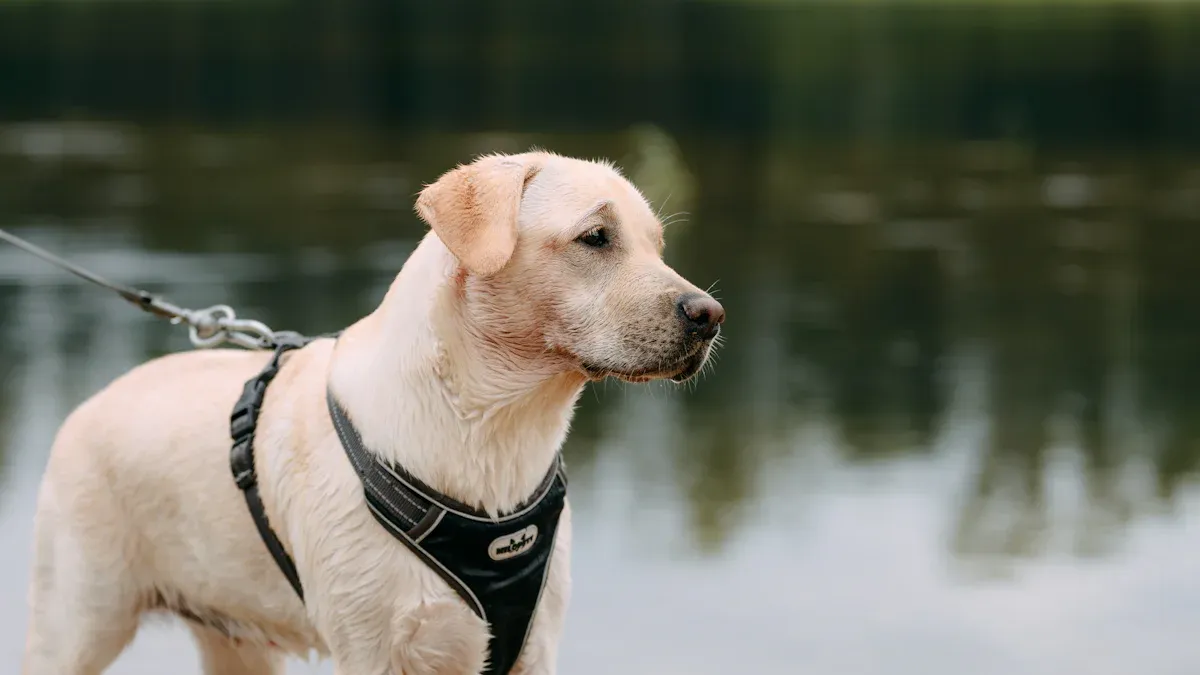
Three features separate a harness that can be used daily from one that fails after the first week. None of them show up in product photography at a glance, but all three change the mechanical reality of how the harness behaves under load.
Adjustable Side Straps That Lock Position
Side straps that allow independent adjustment of the chest and belly girth create a harness that fits dogs whose proportions do not match a single size template. A dog with a broad chest and narrow waist needs different tension on the front and rear straps. Without independent adjustment, the handler must choose between a chest that fits and a belly that sags — or vice versa. That slack is where strap migration begins.
Once adjusted, the straps need to hold position. Cam-lock buckles that release under sustained tension let the harness loosen during use. The handler tightens before the walk, the buckles slip during the walk, and the front strap drifts into the armpit halfway through. Side-release buckles with a secondary locking gate or friction-lock adjusters hold the set position through dynamic loading. Lift harness solutions designed for hind-leg weakness need this positional stability because the dog’s movement pattern — uneven weight distribution, frequent stumbling — applies more lateral force to the harness than a steady walk does.
Anti-Slip Lining Across Contact Panels — Not Just Trim
Anti-slip material that appears only as a narrow trim strip along the edge of a panel is cosmetic. It does not prevent the panel from shifting because the main contact surface — the center of the panel — has no grip. For the lining to actually stop migration, it needs to cover the full contact area where the panel meets the dog’s coat.
Silicone-dot patterns applied across the interior of the chest and belly panels create uniform grip without adding thickness. Neoprene-backed panels provide grip through material friction alone but sacrifice breathability. The trade-off is real: more grip usually means less airflow. For short-duration use — under 20 minutes — grip matters more. For all-day wear or hot-weather use, breathability may matter more than the incremental grip gain.
Strap Width and the Pressure-Per-Area Equation
Pressure equals force divided by area. A strap that is twice as wide delivers half the pressure for the same tension. But width alone does not fix everything — a wide strap with a hard edge still concentrates force at the edge line. The combination that works is width plus edge treatment: a strap that is at least one inch wide across the chest with a rolled, folded, or sleeved edge.
Wide panels also change how the harness behaves during turns. When the dog pivots, a narrow strap twists along its long axis. That twist narrows the effective contact patch even further — a half-inch strap twisted 45 degrees presents an effective width closer to a third of an inch. A wide chest panel resists twisting because its broader surface area has more rotational inertia against the dog’s body. A lift harness built with wide, multi-point contact panels maintains its position and pressure distribution through turns, stairs, and car transfers — the exact movements where narrow-strap harnesses fail.
| Material | What it does for armpit friction | Main limitation |
|---|---|---|
| Open-weave air mesh | Allows evaporation through the fabric; keeps skin drier and stratum corneum stronger under friction | Less durable at edge stitching; may pill or fray after repeated washing |
| Brushed fleece or velvet-finish polyester | Very low coefficient of friction against short-coated skin; minimizes shear during strap movement | Traps shed fur and debris; loses softness after multiple machine washes |
| Silicone-backed neoprene | High grip prevents panel shift; cushions high-pressure points | Zero breathability; skin underneath becomes damp within 15-20 minutes of active use |
| Nylon webbing with folded-edge sleeve | Strong, lightweight, dries fast; sleeved edge eliminates the cut-edge shear point | Sleeve can rotate under heavy load and expose the hard edge underneath |
FAQ
Why does tightening the front strap usually make armpit rubbing worse?
Tightening pulls the strap deeper into the armpit fold rather than keeping it clear. The strap path closes around the axilla instead of staying behind it. A strap that is already too close becomes embedded when tension increases. The fix is not more tension — it is a different strap path geometry or better rear support to reduce the forward pull on the chest strap in the first place.
How fast can skin damage develop from a poorly positioned front strap?
Visible erythema can appear within 10 minutes of sustained rubbing on moist, warm skin. A single stair-climbing session with a badly positioned strap can leave a red line that persists for hours. If the same strap position is used daily, the skin progresses from redness to abrasion to open wound within a week — faster on short-coated breeds where the skin has less natural cushioning from the coat.
Does breed chest shape change which harness design works?
Yes — and this is one of the most overlooked variables. Deep-chested breeds like Dobermans and Greyhounds have a sharper taper from chest to waist. A straight horizontal chest strap sits naturally higher relative to the armpit on these dogs. Barrel-chested breeds like Labradors and Rottweilers have a rounder thoracic cross-section where the same strap may sit lower and farther from the axilla. A shaped chest panel that follows the sternum contour adapts to both shapes better than a straight strap does.
Can a dog wear a lift harness all day without armpit issues?
Most lift harnesses are not designed for all-day wear. The front chest strap, even when well-positioned, places sustained pressure on the sternum and surrounding soft tissue. Over hours, that constant low-level pressure can restrict lymphatic drainage and cause fluid accumulation in the front leg — visible as mild swelling or a cooler paw on the harness side. A lift harness is a mobility tool, not a garment. It should go on for assisted movement and come off afterward.
What is the single most reliable check that a front strap will not rub?
After a 10-minute assisted session — not a static fit check in the living room — run your index finger along the skin under the front strap edge, from the sternum up to the armpit fold. If the skin feels tacky, warmer than surrounding areas, or shows any visible depression from the strap edge, the fit is not safe for repeated use. A harness that passes a static two-finger check but leaves skin marks after 10 minutes of movement has a geometry problem, not a tension problem.