
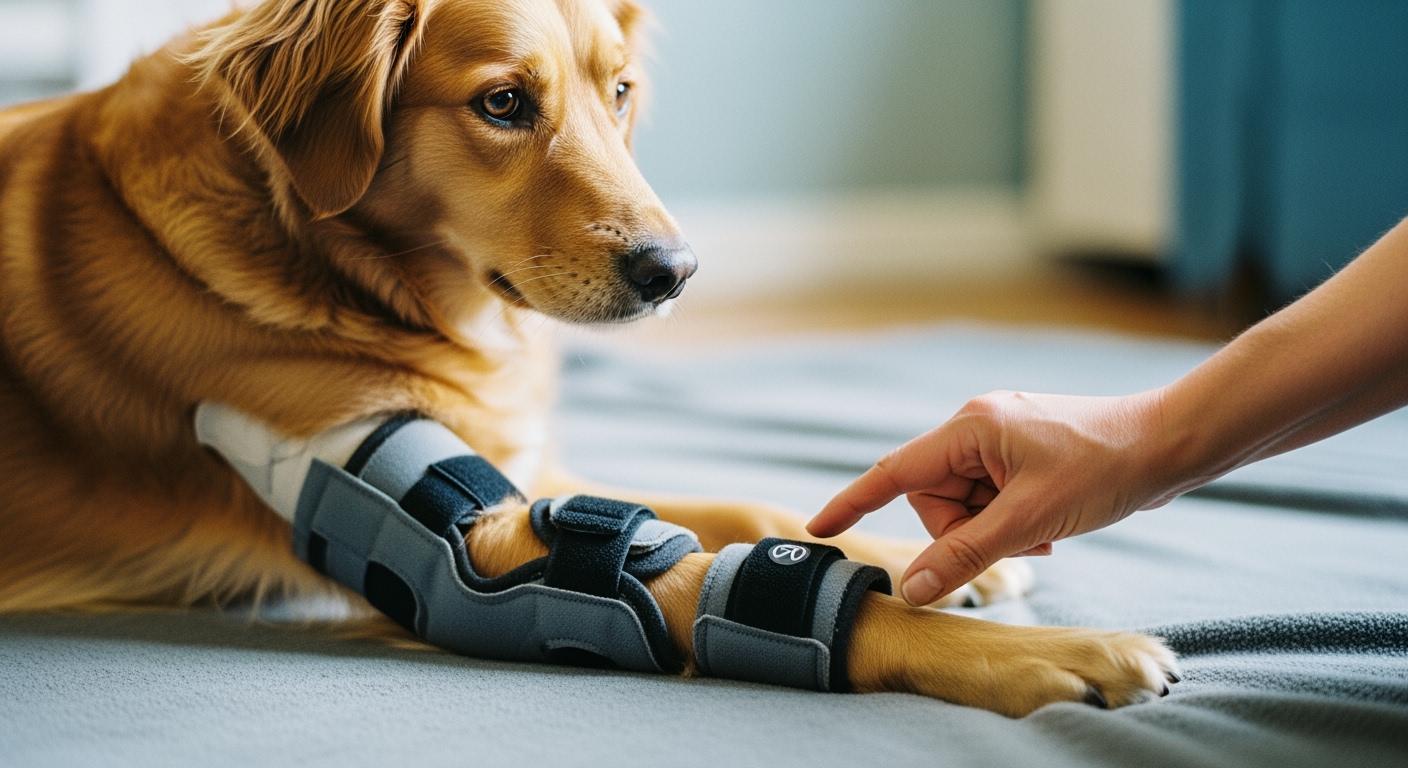
The real question is not which brace is strongest. It is which brace matches your dog’s actual condition, body shape, and daily life. Owners searching for the best dog knee brace for torn ACL often reach for the most rigid option, but a brace that fights your dog’s movement can fail faster than a well-fitted one that gives less resistance. The better brace is not the one with more structure. It is the one that stays where it should, lets you spot problems early, and fits the support goal your veterinarian helps you define.
Why a Better Match Beats a Stronger Brace
ACL or CCL: What Owners Need to Know
Your veterinarian may say CCL when you say ACL, but both terms point to the same ligament inside your dog’s knee. The cranial cruciate ligament keeps the knee stable during walking, turning, and rising. In dogs, this ligament runs at a different angle than in humans, which is why the veterinary term differs. What matters for brace selection is not the name but the stability the knee has lost and how much help it needs.
What a Knee Brace Can Help With and What It Cannot Do
A well-fitted dog knee brace can improve weight-bearing, reduce limp severity, and help a dog move with more control during recovery. For many dogs, especially those with partial tears or non-surgical care plans, the right brace keeps the joint steadier through daily walks. It can help preserve muscle and maintain a more normal gait pattern during rehab.
But a brace cannot repair the torn ligament itself. It cannot restore normal joint mechanics the way surgery can. It cannot protect the meniscus from further damage if the knee remains unstable. And it cannot replace a veterinarian’s diagnosis, a rehab plan, or the decision about whether surgery is the right path for your dog.
Note: Ask your veterinarian whether a brace fits your dog’s specific injury and overall care plan. A brace is one part of recovery, not a standalone fix.
When the Wrong Support Creates New Problems
A brace that is too rigid or too tight can restrict blood flow, irritate skin, and cause muscle loss from over-dependence. Owners sometimes assume a stiff, heavy brace is safer, but that feeling of security can lead to letting a dog do too much too soon, which risks further injury.
A brace that is too loose or too soft for the level of instability can slip, twist, or fail to control the joint. The dog may limp more, skip steps, or refuse to walk. Swelling, heat, redness, or discharge around the brace area can signal trouble. Cold toes, toe dragging, or an unusual paw position may mean the brace is compromising circulation or nerve function.
| What the brace is meant to do | What a stronger brace risks | What a weaker brace risks |
|---|---|---|
| Stabilize the knee during controlled movement | Skin damage, muscle loss, over-confidence that leads to re-injury | Slipping, twisting, and insufficient joint control during walks |
| Reduce pain-driven limping | Masking pain signals so the dog overloads the leg | Worsening limp and continued skip-step gait |
| Support safe daily walking | Restricted circulation, cold toes, nerve pressure | Brace migration during movement, no real support |
| Match the dog’s body and activity level | Chewing, freezing, panic, repeated refusal to wear | Dog ignores the brace because it does nothing useful |
Quick decision rule: Choose a soft or semi-rigid brace when your dog has mild to moderate instability and walks mostly on flat surfaces. Choose a hinged or custom brace when instability is severe or the knee shifts during standing. Reassess if gait worsens, skin breaks down, or your dog refuses the brace repeatedly.
Matching Support Level to the Injury
Picking the right support level for a torn ACL in dogs starts with an honest assessment of what the knee can and cannot do right now. The goal is enough control to keep walks safe without over-bracing to the point of discomfort or refusal.
Soft Braces: Comfort-First for Mild Instability
Soft braces give gentle compression and light joint awareness. They work best for dogs with mild instability, dogs in early recovery who need a reminder to move carefully, or older dogs whose main need is comfort during short, flat walks. A soft brace can improve weight-bearing and reduce subtle limping, but it cannot control a knee that shifts sideways or buckles under load. If you see the brace slide down or the dog’s gait does not improve within the first few sessions, the support level is likely too low.
Semi-Rigid Braces: Controlled Support for Daily Walks
Semi-rigid braces add stabilizing elements such as flexible stays or limited hinges while keeping the overall design wearable for daily use. For dogs with moderate instability who still walk on the leg but show a clear limp, this level often hits the right balance. The brace can spread load away from the injured ligament and help the dog move with a more even stride. It can reduce strain during controlled walks, but it cannot eliminate instability during sudden movements, sharp turns, or stair climbing. Fit and alignment become critical: a semi-rigid brace that twists under load quickly stops doing its job.
Hinged and Custom Braces: Maximum Control for Severe Cases
Dogs with severe instability, a knee that visibly shifts, or repeated brace failures with lower support levels may need a hinged or custom-fitted brace. These braces offer the most joint control and can be shaped to match unusual leg contours. A hinged knee brace can limit harmful range of motion while allowing safe forward movement, but it cannot make an unstable knee fully stable under all conditions. Custom braces require precise measurements and regular follow-up checks. The payoff is the closest fit available, but the tradeoff is higher cost and a longer break-in period.
When to Involve Your Veterinarian
You need a veterinarian to confirm the injury, assess knee stability, and help you set a realistic support goal before you choose a brace. A veterinarian can also rule out a full rupture that needs surgery rather than bracing alone. Do not guess the support level. If your dog cannot bear weight, shows significant swelling, or has a knee that gives way during standing, start with a veterinary exam, not a brace purchase.
| Support Level | Decision Direction | Main Limitation | What to Check Before Continuing |
|---|---|---|---|
| Soft | Mild instability, comfort-first walking, early rehab | Insufficient for knees that shift or buckle | No slipping, visible gait improvement within days |
| Semi-Rigid | Moderate instability, daily controlled walks | Cannot prevent sudden-twist injuries or stair falls | Brace stays aligned throughout a full walk |
| Hinged / Custom | Severe instability, repeated shifting, unusual leg shape | Longer break-in, higher cost, still not a surgery replacement | Gait quality, sitting comfort, skin after each session |
| Severe Pain / Cannot Bear Weight | Veterinary exam required before any brace | Bracing when surgery is the right path delays proper care | Full veterinary assessment first, brace second |
Workflow tip: The right support level is the one your dog tolerates without chewing, freezing, or worsening gait. If you are fighting the brace daily, the match is wrong regardless of the support rating.
Fit Checks That Catch Problems Early
Even the best-matched knee brace for dogs fails if it does not stay where it should. Daily fit checks take under a minute and prevent the two most common failure paths: migration that leaves the joint unsupported, and pressure that damages skin.
What a Good Fit Looks Like in Motion
| Check Point | Pass Signal at Rest | Fail Signal During Movement | Why It Matters |
|---|---|---|---|
| Brace alignment | Centered over the knee, no visible gaps | Slides down, twists sideways, or rides up | Support shifts away from the joint that needs it |
| Strap tension | Snug and secure, no pinching or digging | Leaves red marks, loosens during walking | Pressure or looseness both cause skin and gait problems |
| Gait quality | Steady steps, dog rises and stands without struggle | More limping, skipping, stumbling, stopping mid-walk | Brace may be wrong type, wrong size, or poorly fitted |
| Surface handling | Stable on flat, non-slip ground | Hesitates or slips on stairs, turns, or slick floors | Environment may exceed the safe support plan |
When Your Dog Rejects the Brace
Chewing, freezing, panic, or repeated refusal to move are not stubbornness. They are pain or fear signals. If your dog stops accepting a brace that previously seemed fine, check for new pressure points, skin changes, or worsening knee discomfort. A brace that was tolerable last week can become intolerable if swelling shifts or a strap stretches out.
| What You See | Likely Problem | Why It Matters | Next Step |
|---|---|---|---|
| Brace slips or twists during walking | Wrong size or poor strap adjustment | Joint support is lost when it is needed most | Refit, verify measurements, consult veterinarian |
| Redness, sores, or hair loss under straps | Rubbing, pressure, or trapped moisture | Skin breakdown risks infection and pain | Remove brace, let skin recover, adjust fit |
| Chewing, freezing, or refusal to move | Discomfort, fear, or pain under load | Dog gets no benefit if it will not wear the brace | Stop use, reassess fit and support level |
| Limp worsens or gait pattern changes | Brace is insufficient or causing new strain | Injury may progress instead of stabilizing | Review brace type and support level with veterinarian |
| Panic, shaking, or repeated escape attempts | Over-bracing, pain, or poor tolerance | Stress and struggling can worsen the injury | Remove brace immediately, seek veterinary advice |
Warning Signs That Mean Stop and Reassess
Some signals mean the brace should come off and a veterinarian should weigh in before the next use. Do not wait through multiple sessions hoping these resolve on their own.
| Warning Sign | What It May Indicate | What to Do |
|---|---|---|
| Sudden limping or refusal to put weight on the leg | New injury, worsening tear, or brace-induced pain | Stop brace use, contact veterinarian |
| Bunny-hopping gait or skipping steps on the braced leg | Insufficient support or worsening instability | Stop and reassess support level with veterinarian |
| Knee swelling, warmth, or visible joint shape change | Active inflammation, possible meniscal injury | Remove brace, schedule veterinary exam |
| Clicking or grinding sound from the knee during movement | Possible meniscal damage or joint surface change | Stop use, contact veterinarian promptly |
| Muscle wasting or noticeably less activity over weeks | Brace not enabling enough safe use of the leg | Re-evaluate the full rehab plan with veterinarian |
Escalation rule: If gait worsens, skin breaks down, or your dog refuses the brace for more than two sessions in a row, stop and contact your veterinarian. Do not keep adjusting the same failing setup.
Daily Wear: Break-In and Routine Checks
Getting a dog comfortable in a knee brace is not instant. A short, structured break-in period helps you catch fit problems before they become injuries.
Start with a 10-to-30-minute indoor session on a non-slip surface. Watch how your dog stands, walks a few steps, and settles. After removal, check the skin over the knee, along strap lines, and anywhere the brace makes contact. If the skin looks normal and your dog stayed calm, repeat for a few days before extending wear time gradually.
Increase duration in small steps. Move from quiet standing to short flat walks. Check skin and strap tension after every session during the first week. A daily knee brace fit routine prevents pressure sores and helps you spot strap loosening before the brace starts to migrate. Changes in swelling, hair coat thickness, or weight can shift how the brace sits from week to week.
Braces are for controlled, leashed movement on predictable surfaces. Do not let a dog run, jump, climb stairs, or play roughly while wearing one unless your veterinarian has specifically cleared that activity.
Tip: If you remove the brace and see deep strap marks that do not fade within 15 to 20 minutes, the fit is too tight. Redness that persists after removal is a stop signal, not a minor annoyance.
Putting It Together: Fit Over Strength
The best dog knee brace for torn ACL is not the one with the most hinges, the thickest straps, or the highest support rating. It is the one that matches your dog’s actual instability, stays in place during real walks, and passes daily skin and gait checks without a fight.
Choosing a knee brace for ACL recovery means weighing fit tolerance and support level together, not picking the stiffest option and hoping it works. The difference between a brace that helps and one that sits in a drawer usually comes down to three things: the right support category, a fit that holds during motion, and a break-in plan that does not rush the dog.
A successful brace routine looks quiet: the dog walks with more even steps, the brace stays put, skin stays healthy, and you spend minutes checking, not hours fighting. If that is not what you are seeing, the brace, the fit, or the support level needs to change. A rehab brace program built around fit and comfort keeps the focus on what actually moves recovery forward.
FAQ
How do I know if a dog knee brace fits correctly?
The brace stays centered over the knee during a full walk, straps feel snug without digging, and your dog moves with steady steps rather than limping or freezing. After removal, skin should look normal with no lasting red marks or indentations.
Can a dog wear a knee brace all day?
No. Start with short sessions and build up gradually under your veterinarian’s guidance. Remove the brace during rest and overnight. Extended wear without skin checks risks pressure sores and skin breakdown that can take longer to heal than the original injury.
Does a knee brace replace ACL surgery?
No. A brace supports controlled movement and can help a dog walk more comfortably during non-surgical recovery, but it cannot repair the torn ligament or restore normal joint mechanics. Whether surgery is needed is a decision for you and your veterinarian based on the tear severity, your dog’s age and size, and the knee’s functional stability.
What if my dog chews or refuses the brace?
Stop using the brace and check for pressure points, rubbing, or skin irritation. Your dog may need a different size, a different support level, or a slower break-in. If refusal continues after adjustments, ask your veterinarian to reassess the fit and the brace type.
When should I stop using the brace and call the veterinarian?
Stop and call if you see a sudden worsening limp, knee swelling or heat, a clicking or grinding sound during movement, cold toes, or skin that stays red or broken after brace removal. These are not normal break-in reactions.
Disclaimer: This article is for educational use. It does not replace a veterinary exam, diagnosis, or treatment plan. Always consult your veterinarian before starting, changing, or stopping brace use for a knee injury.
