
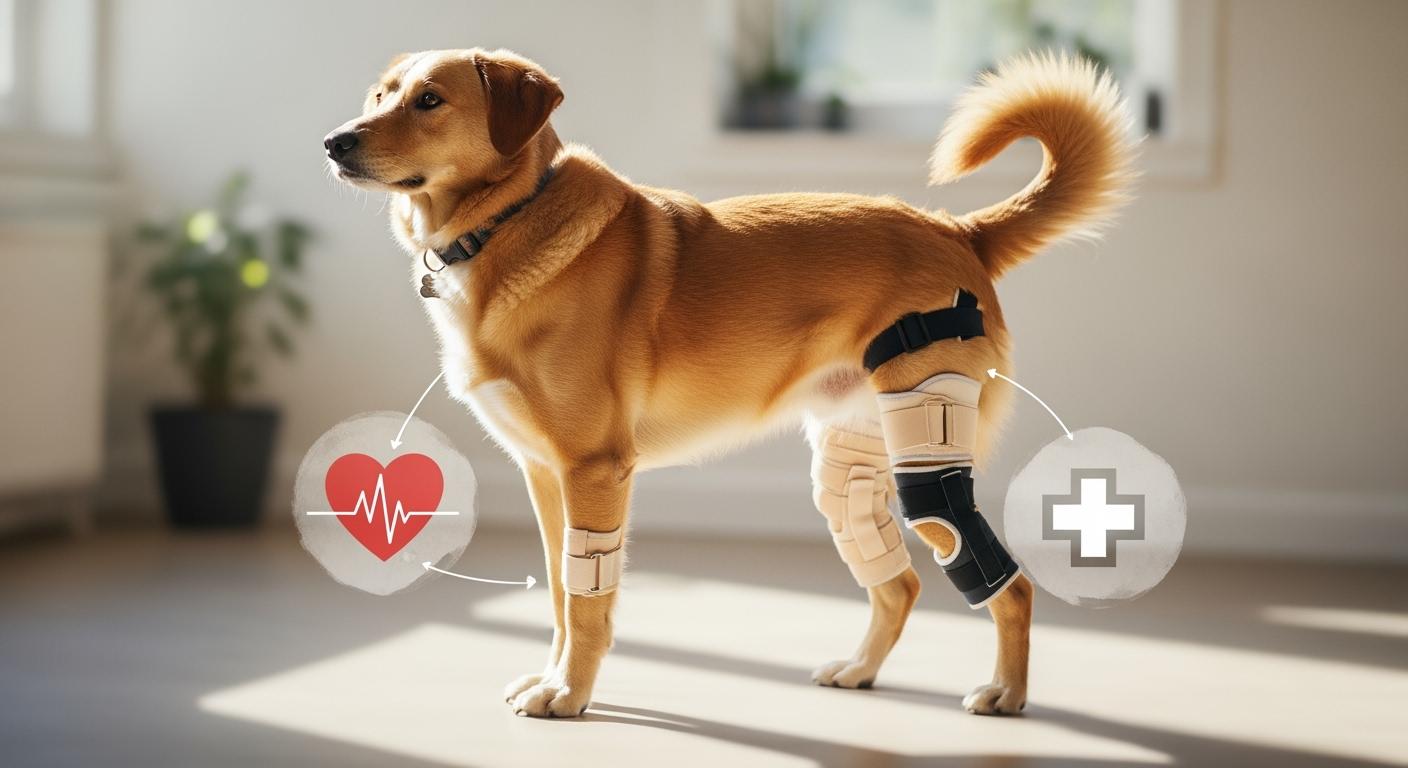
The real question after an ACL tear is not whether to brace the injured knee. It is whether bracing only one knee puts the other leg at risk. A dog leg brace for ACL injury can stabilize the torn side, but the opposite knee takes on more load the moment your dog shifts weight away from the pain. Choosing single or double support is a matching problem, not a strength problem. The right answer depends on what the stable leg is actually doing under that extra load.
Why a Single Knee Brace Can Leave the Other Leg Exposed
Weight Shifting After an ACL Tear
When a dog tears an ACL, the body does something predictable: it shifts weight off the painful leg and onto the other three. You will see it as a head bob, a shortened stride on the injured side, or the dog holding the leg up entirely at a stand. What you cannot see is the cumulative strain building in the opposite knee. A dog leg brace for ACL injury supports the torn side, but it does not stop the contralateral leg from absorbing more work with every step. Over weeks and months, that extra load can turn a stable knee into the next injury site.
The observable signals owners can watch for include a skip-step motion where the dog barely touches the ground with the injured leg, sitting with the affected leg angled out to the side, slower rising after rest, and reluctance after longer walks. These signs help you track whether the single-brace strategy is working or whether the opposite leg is starting to show strain.
Diagnosis Before Bracing
Before choosing between single and double support, a veterinarian needs to assess both knees. A physical exam checks for swelling, pain, and joint stability on each side. Radiographs can rule out other problems and show whether arthritic changes are already present in the uninjured knee. Without a clear picture of both knees, the single-or-double decision is a guess. A brace can stabilize a joint, but it cannot correct a missed diagnosis on the other side.
| Diagnostic Step | What It Reveals for the Brace Decision |
|---|---|
| Physical Examination | Identifies swelling, pain response, and drawer sign in each knee separately |
| Radiographs | Shows joint effusion, arthritic changes, and whether the uninjured knee is already compensating |
| Gait Observation | Reveals weight-shift patterns and whether the dog is loading the contralateral leg abnormally |
Opposite Knee Risk: What the Evidence Shows
Many dogs with a torn ACL in one knee will eventually injure the other side. Published veterinary data report contralateral rupture rates in the range of 40 to 60 percent within 12 to 18 months of the first tear, with some studies documenting the second tear at a median of roughly two and a half years after the first. This does not mean every dog needs a double brace. It means the decision hinges on whether the uninjured knee is truly stable or merely uninjured for now. Matching knee support to the actual stability of each leg is more important than defaulting to a single brace because only one side looks injured today.
| Scenario | Starting Approach | Why | Watch For | Main Limitation |
|---|---|---|---|---|
| One knee torn, other knee stable on exam and gait | Single knee brace | Targeted support conserves the uninjured leg’s natural muscle tone | New limp, sitting shift, or reluctance on the previously sound side | Does not prevent contralateral overload if weight-shift is severe |
| Both knees show instability or early lameness | Double knee brace | Balanced support reduces asymmetric loading across both joints | Heat buildup, fit tolerance, skin under both braces | Bulk and heat may reduce compliance in warm weather or small dogs |
| Large, active dog with severe single-knee instability | Vet-directed treatment plan | Brace alone may be insufficient for high-force knees | Pain escalation, refusal to bear weight, joint swelling | Surgical stabilization may be the more appropriate path |
| Refusal, worsening gait, skin breakdown under brace | Stop bracing and reassess | Support that causes new problems is not supporting recovery | Chewing at brace, pressure marks, cold toes, swelling | Poor fit or wrong support category can create more harm than no brace |
Quick decision rule: Choose a single knee brace when the opposite leg is confirmed stable on exam and gait. Choose a double knee brace when both knees show instability or when the dog has already started limping on the second side. Reassess immediately if gait worsens, skin breaks down, or the dog refuses the brace.
When a Single Knee Brace Is the Right Match
The Stable Opposite Leg
A single knee brace makes sense when one specific condition is met: the other knee passes a veterinary exam with no drawer sign, no pain on manipulation, and no gait abnormality. The dog limps on one side only. Stiffness after rest resolves within a few steps. You may hear an occasional click from the injured knee, but the sound leg moves through its full range without hesitation. These are the cases where targeted support helps the torn ligament heal or stabilize without creating a new problem on the other side.
A single brace can stabilize the joint and reduce painful motion during recovery, but it does not restore the ligament. It supports controlled movement during rehab. It can help a dog through conservative management when surgery is not an option, yet it cannot replicate the mechanical stability of an intact ACL. Rear-leg knee bracing works best when the support category matches the injury severity and the opposite leg is genuinely sound.
First-Week Monitoring for a Single Brace
The first seven days determine whether the single-brace strategy holds. Start with supervised sessions of 30 to 60 minutes, two to three times per day, and increase gradually only if the dog tolerates the brace without distress. Remove the brace at night and during crating unless a veterinarian instructs otherwise.
Check skin under the straps and around the knee after every session. Look for redness, indentations that do not fade within a few minutes, or any sign the dog has been licking at the brace. Watch the dog walk on a flat surface — if a new limp appears on the previously sound leg, the single-brace strategy may need to be reconsidered. Record gait changes, skin condition, and tolerance in a simple daily note so patterns become visible before they become problems.
| What to Record Daily | Why It Matters |
|---|---|
| Gait on the unbraced leg — any new skip, short stride, or head bob | Early sign that the opposite knee is absorbing too much load |
| Skin under straps — redness, indentation, hair loss, moisture | Fit problems cause skin breakdown that can force brace discontinuation |
| Willingness to move — reluctance, freezing, or refusing to walk | Pain or poor fit signals that the current approach is not working |
| Toe warmth and color on the braced leg | Cold or pale toes may indicate the brace is too tight and restricting circulation |
Tip: Remove the brace at night. Check skin twice a day. If swelling, slipping, or a new limp appears on the other leg, stop and contact your veterinarian before continuing.
When a Double Knee Brace Becomes the Safer Choice
Both Knees Are Involved
A double knee brace is not about more support being better. It is about matching the reality that both knees are compromised. Some dogs present with bilateral instability from the start. Others start with one torn ACL and develop a limp on the second side weeks or months later as weight-shift overload takes its toll. In either case, bracing only one knee leaves the other exposed to progressive damage.
Signs that both knees may need support include the dog shifting weight from one hind leg to the other rather than settling on a single lame side, difficulty rising from a down position without using the front legs to pull up, and stiffness that appears symmetric rather than one-sided. A veterinarian can confirm bilateral instability with a drawer test and gait assessment on each knee.
What a Double Brace Can and Cannot Do
A double knee brace balances weight across both hind legs and reduces the asymmetric loading that drives contralateral injury. It can protect both joints during rehab and provide stability for dogs that are not surgical candidates. A double brace cannot correct underlying joint deformity, cannot restore a fully ruptured ligament, and cannot replace surgical stabilization when the tear is complete and the knee is grossly unstable. It also adds bulk and heat that some dogs will not tolerate, especially in warm weather or with heavy coats. Orthopedic knee brace fit and daily wear tolerance determine whether double bracing is sustainable, not just whether it is biomechanically logical.
Single vs Double: Decision Comparison
| Decision Dimension | Single Knee Brace | Double Knee Brace | What to Watch |
|---|---|---|---|
| Support Target | One confirmed injured knee with a stable contralateral leg | Both knees when instability, pain, or lameness is bilateral | Unilateral brace may mask early contralateral signs; check the sound leg daily |
| Weight Distribution | Can shift load to the unbraced leg, creating secondary risk | Balances load across both hind legs, reducing asymmetric strain | Even bilateral bracing does not eliminate all gait asymmetry |
| Fit and Daily Tolerance | Easier to fit, less bulk, higher initial acceptance | More bulk, more heat, longer adaptation period | Heat and chafing under two braces can force early discontinuation |
| Monitoring Burden | Track braced knee fit plus contralateral gait daily | Track fit, skin, and gait on both legs every session | Double the brace surface means double the skin-check diligence |
| Best Use Case | Single confirmed tear, opposite leg clean on exam, small to medium dog | Bilateral instability, second-side lameness, large dog with high contralateral risk | Not every large dog needs double bracing; match support to exam findings |
Tip: Start double bracing with short, supervised indoor sessions. Check gait, skin, and toe temperature on both legs after each session. If the dog moves worse or refuses the braces, stop and reconsider the approach rather than forcing tolerance.
Fit, Tolerance, and Warning Signs Across Both Approaches
Gradual Introduction
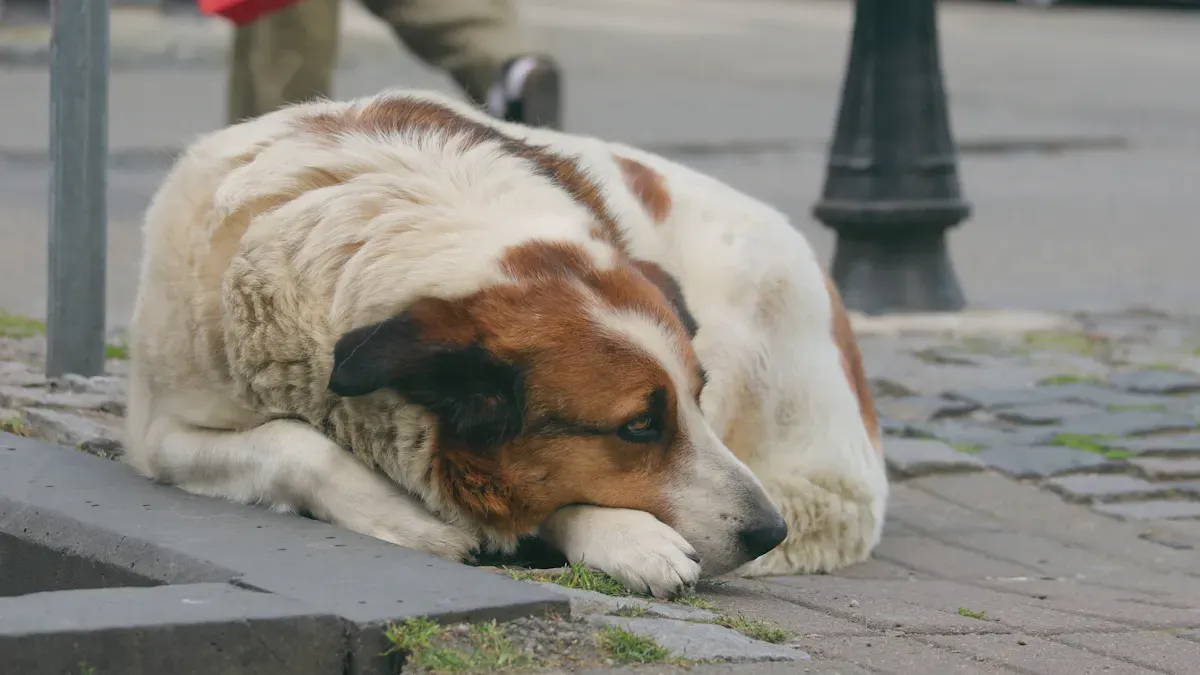
Whether you choose a single or double brace, the introduction follows the same principle: start short, watch closely, increase slowly. Begin with sessions of 30 to 60 minutes, three to five times per day. Increase wear time by roughly 25 percent every three to four days only if the dog tolerates the brace without skin changes, gait worsening, or behavioral resistance. Remove the brace during rest periods. A brace is a rehab tool, not a permanent accessory.
Skin, Gait, and Circulation Checks
Daily checks are not optional. Inspect the skin under every strap and contact point for redness, hair loss, or moisture. Check toes on the braced leg for warmth and normal color — cold or pale toes mean the brace is too tight. Watch the dog walk on a flat surface after putting the brace on: any new limp, shortened stride, or reluctance to move is a stop signal. Recognizing when brace support is insufficient or causing harm is as important as knowing when to start bracing in the first place.
Green, Yellow, Red: When to Continue, Adjust, or Stop
| Status | What You See | What to Do |
|---|---|---|
| Green | Stable gait on both legs, warm toes, skin clear under straps, dog moves willingly | Continue current plan; increase wear time gradually as tolerated |
| Yellow | Mild strap rubbing, slight unevenness in gait, fatigue earlier than expected, occasional licking at brace | Adjust strap tension, shorten sessions, increase skin-check frequency, reassess fit |
| Red | Limping on either leg, swelling around the knee, cold or pale toes, open skin, refusal to bear weight | Stop brace use immediately, contact your veterinarian, do not resume until reassessed |
Note: A brace that causes a new limp is not supporting recovery. Stop and seek veterinary guidance before the problem compounds.
Choosing between a single and double knee brace after an ACL injury comes down to one question: what is the opposite knee actually doing? A single brace supports the torn side effectively when the contralateral leg is confirmed stable. A double brace protects both joints when instability is bilateral or when the dog has already started compensating on the second leg. More support is not automatically better — better matching is better. The hinge type and fit stability of a knee brace matter as much as the single-or-double decision itself, because a poorly fitted brace on either leg undermines the entire support strategy. For dogs that need an adjustable ACL brace with precise strap control, getting the fit right during the first week determines whether the brace helps or ends up in a drawer.
FAQ
Can a knee brace replace ACL surgery for my dog?
A knee brace can stabilize the joint and reduce painful motion, but it does not repair a fully ruptured ligament. For partial tears or dogs that are not surgical candidates, bracing can be part of a conservative management plan. For complete tears in large, active dogs, surgical stabilization is often the more appropriate path. The decision should be made with a veterinarian based on tear severity, the dog’s size and activity level, and the stability of the opposite knee.
How do I know if my dog needs a single or double brace?
The deciding factor is the status of the uninjured knee. If a veterinary exam confirms the opposite leg is stable with no drawer sign, no pain, and no gait abnormality, a single brace is a reasonable starting point. If the dog has already started limping on the second leg or the exam reveals bilateral instability, a double brace matches the reality of the condition more closely.
What should I watch for in the first week with a knee brace?
Check the skin under straps twice daily for redness, indentations, or hair loss. Watch for a new limp on the unbraced leg, which signals contralateral overload. Monitor toe warmth and color on the braced side — cold or pale toes indicate the brace is too tight. Record these observations daily so patterns become visible before they escalate.
What signs mean I should stop using the brace and call the vet?
Stop and call your veterinarian if you see swelling around the knee joint, cold or pale toes, open skin or pressure sores under the straps, a new or worsening limp on either leg, or if the dog refuses to bear weight. These are not adjustment issues — they are signals that the current support approach is not working.
How long does it take for a dog to adjust to wearing a knee brace?
Most dogs need roughly one to two weeks of gradual introduction. Start with 30-minute sessions and increase by about 25 percent every three to four days as long as skin and gait remain normal. Some dogs accept the brace within days; others need a longer adaptation period, especially with double bracing.
A knee brace is a support tool, not a cure. It works best as part of a veterinary-directed plan that includes controlled activity, daily monitoring, and a clear understanding of what the brace can and cannot accomplish for the specific injury in front of you.
